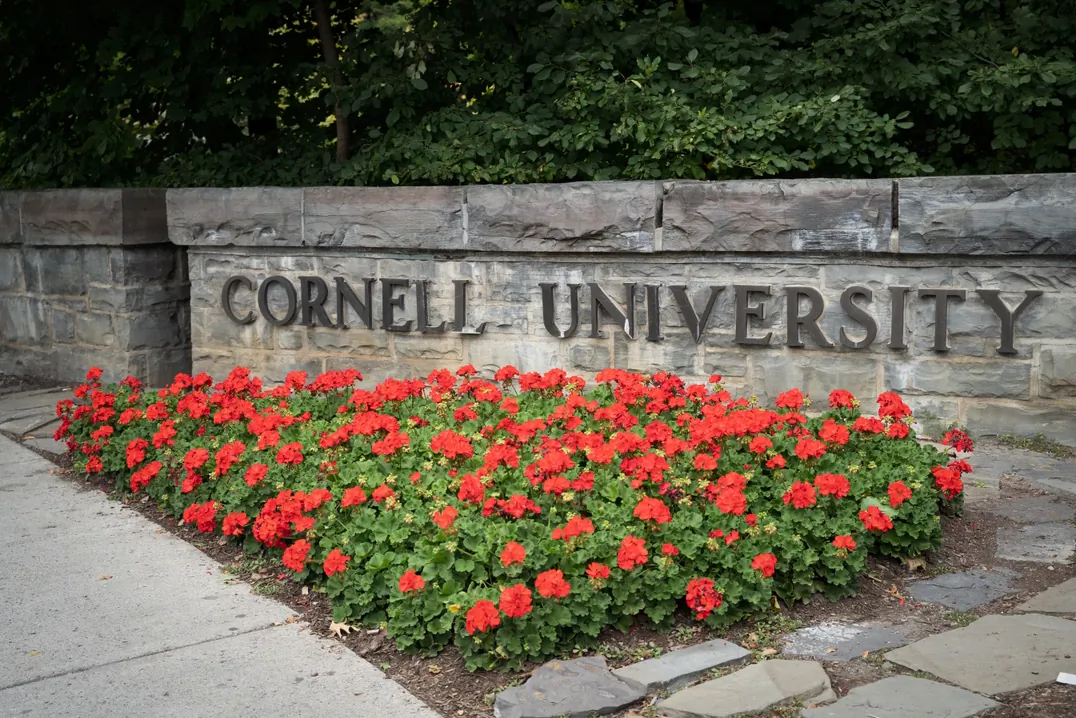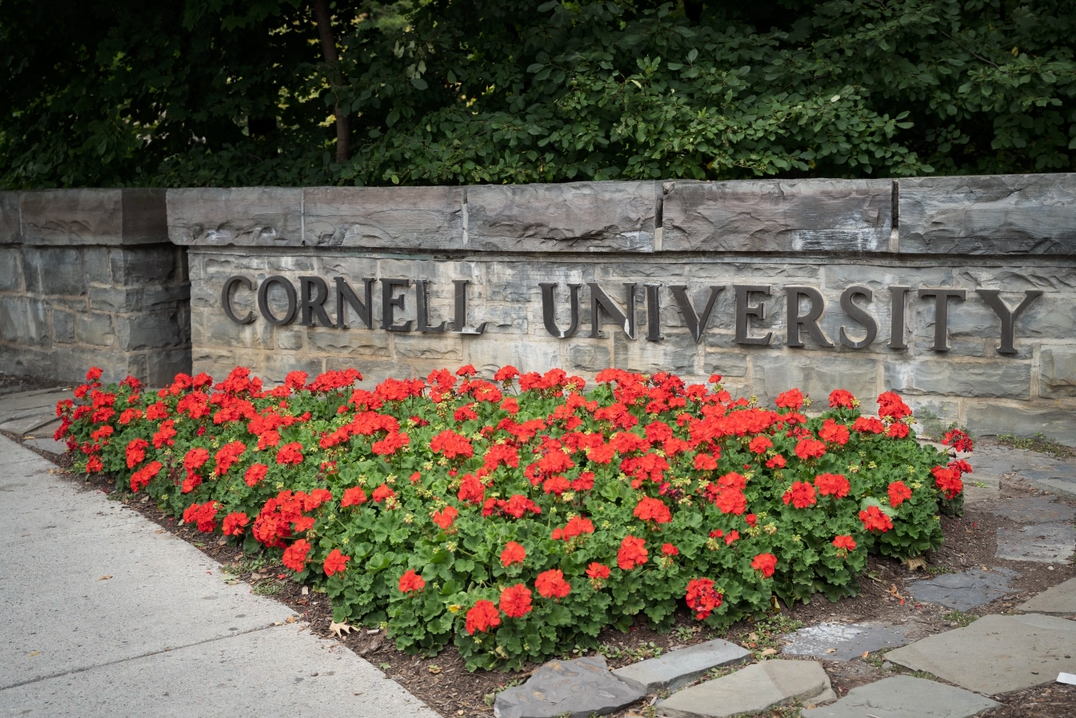

The Cornell Free Speech Alliance (CFSA) has issued a statement about what it calls “deeply concerning allegations” against Cornell University outlined in a federal civil rights complaint filed on June 26 by the America First Policy Institute (AFPI).
In that complaint, AFPI requests a federal investigation into Cornell University, alleging that the Ivy League institution illegally hired, promoted, and issued scholarships based on diversity, equity, and inclusion (DEI) metrics.
The complaint alleges discrimination based on race, sex, and ethnicity, and says that applicants for faculty positions were eliminated from consideration based on ideological statements.
“Internal documents, public policies, and archived webpages” reveal a “university-wide culture that places an illegal identity-based ideology above equal opportunity and merit, leading to a coercive and hostile environment,” the complaint states.
AFPI also questions whether Cornell misled the federal government about its compliance with civil rights law while receiving more than $1 billion in federal funding.
“While our organization did not file this complaint, the detailed claims it outlines demand our attention as alumni committed to integrity, fairness, and open inquiry at our alma mater,” CFSA wrote in a July 7 statement.
“If true, these practices represent not only a betrayal of the principle of equal treatment under the law, but a profound threat to the spirit of academic excellence and free inquiry that once defined Cornell.”
The Cornell Free Speech Alliance (CFSA), according to its website, is “an independent, non-partisan organization of Cornell alumni and faculty dedicated to protecting free expression, viewpoint diversity, and academic freedom at Cornell University.”
The alliance urged Cornell leadership to “respond transparently to these serious claims and to recommit publicly and meaningfully to nondiscrimination, academic merit, and the free exchange of ideas.”
Lodged with the Department of Justice and the Education Department, the 10-page complaint alleges that the university passed over qualified applicants to advance equity.
It includes emails provided by unnamed Cornell faculty to back up those allegations.
Alleged Discriminatory Hiring
Internal communications among Cornell faculty, which are included as supporting exhibits in the complaint, indicate that some positions were reserved for candidates with preferred identities, while the majority of other candidates were excluded.
A Dec. 23, 2020, email from a Cornell STEM department chair to 34 recipients confirms that a tenure-track faculty position would be filled through a process that excluded the great majority of qualified candidates.
The email’s subject line is “diversity hire.”
In that email, the department chair, whose name is redacted, explains that the department’s “hoped-for diversity hire” process is “a little out of the ordinary.”
Candidates appear to have been prescreened and selected, then invited one at a time, in a secret process with no advertised position opening.
The email said that it would be “best to invite just one person whom we have identified as being somebody that we would like to join our department and not have that person in competition with others.”
“So, the plan would be to invite [redacted], who is clearly our top candidate among those we have been comparing,” the email said. “If she is not interested, then we would move on to [redacted] and so on.”
The department chair describes the “tremendous commitment [redacted] has shown toward diversity and inclusion” and thanks faculty for their “enthusiasm for this hiring initiative.”
On Dec. 13, 2022, a second Cornell staff member, whose name is also redacted, wrote an email to “faculty colleagues” that explained how candidates for an assistant professor position were prescreened based on their DEI statements, with an otherwise qualified candidate eliminated from consideration immediately due to a “weak DEI narrative.”
That email describes an applicant pool that is “well aligned with the values of diversity and inclusion.”
“As pre-planned as best practice, we first did a pre-screening of just the D&I statements submitted by the candidates,” the email says. Those that were “flagged as suboptimal were also reviewed by a third committee member with high DEI expertise,” it states.
The hiring committee dropped one candidate “because their DEI statement was so seriously and ambiguously weak that we could not imagine them being a finalist,” the email said.
That same process “led us to identify a few others who also had weak D&I statements,” the email said, adding that that led to “unanimous support to exclude these” candidates along with “seven others who did not meet basic qualifications.”
It goes on to say that the “full committee was in favor of not considering substantially more advanced candidates, partly for reasons of equity.”
The email states that DEI was the first of five evaluation criteria in its hiring rubric.
Identity-Based Preferences
AFPI’s complaint details more examples of Cornell practices that it said promote “identity-based hiring preferences” that are “sanctioned and operationalized throughout the university.”
It claims Cornell’s “Toward New Destinations Rubric” provides evidence of systematic endorsement of discriminatory hiring.
The rubric evaluates departments based on their ability to “demonstrate measurable progress in compositional diversity” in hiring and retention efforts.
It awards high marks for “explicit goals for diversity within hiring,” including efforts “to attract and retain a more diverse faculty and staff.”
The rubric emphasizes “quantitative evidence of progress” in achieving these compositional goals, placing pressure on departments to prioritize immutable traits like race and sex in their hiring decisions.
Cornell’s “Diversity Dashboard” states that “social categories such as race, income, and gender intersect to create overlapping and interdependent systems of advantage and disadvantage”—a declaration that AFPI claims “explicitly justifies unequal treatment based on identity.”
“These policies reflect not just a tolerance for race and sex-conscious practices but a deliberate, systematic effort to prioritize them—an effort made undeniable by internal communications,” AFPI’s complaint says.
Quotas Versus Merit
The complaint further accuses Weill Cornell Medical School of illegally tying funding to racial and ethnic identity as part of a five-year, $5 million Mastercard Diversity-Mentorship Collaborative Program launched in 2021.
In a press release announcing the program, the associate dean for diversity and inclusion, Said Ibrahim, said that “advancing diversity and inclusion is a top priority for this institution, and one of our leading objectives is to boost the number of URiM [underrepresented in medicine] faculty through recruitment, retention, advancement and mentoring.”
A now-unavailable page on Weill Cornell’s website described a “Faculty Diversity Hiring Incentive Program” that awarded direct financial bonuses based on the race and ethnicity of faculty hires, according to the complaint.
A page archived on Aug. 27, 2024, shows that “departments are eligible for up to $50,000 in subsidies for the hiring of faculty from groups that are URiM,” with additional funds for hiring two URiM candidates.
The eligibility criteria are explicit: “Applicants must be underrepresented minorities in medicine (URiM).”
“These practices violate not only the law but also the most basic principles of academic integrity and fairness,” AFPI’s complaint states.
They also directly contradict Cornell President Michael Kotlikoff’s claims that merit governs Cornell’s hiring decisions, AFPI states.
“Cornell is committed to merit-based decisions in all of its processes,” Kotlikoff wrote in a Feb. 21, 2025, letter in response to the Trump administration’s crackdown on DEI.
“Just as we do not exclude anyone at Cornell for reasons irrelevant to merit, neither do we admit or evaluate students, hire or promote employees, award chairs or tenure, or make any other merit-driven decisions at Cornell based on race, ethnicity, or other attributes not relevant to merit.”
AFPI called the statement “demonstrably false.”
“Despite public statements to the contrary, internal emails and public documents show that the Office of the Provost—led by Kotlikoff at the time—oversaw a hiring scheme that excluded the vast majority of qualified candidates based solely on race and sex,” AFPI wrote.
Monica Yant Kinney, interim vice president for university relations, dismissed AFPI’s allegations in a June 27 statement.
“The university strongly disputes the America First Policy Institute complaint that references a number of outdated websites or programs that have not been in use for many years,” she wrote.
“Over the past year, the university has further enhanced its compliance with civil rights laws by engaging outside law firms to audit policy and practices to reflect changes in law or regulations, taking swift corrective action where necessary.”
AFPI Urges Review
“The discrimination at Cornell is widespread, deliberate, and ongoing,” wrote AFPI’s Jessica Hart Steinmann and Leigh Ann O’Neill, who co-wrote the complaint.
“We believe this is only the tip of the iceberg. It must be exposed and addressed without delay.”
 Friends Read Free
Copy
Facebook
Tweet
Friends Read Free
Copy
Facebook
Tweet