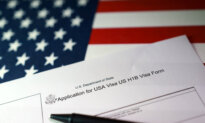

A federal appeals court on July 24 denied the Trump administration’s bid to stay a lower court ruling that blocked the implementation of a new $100,000 fee for H-1B visas.
The U.S. Court of Appeals for the First Circuit said the administration had not demonstrated that it will likely succeed on the merits of its appeal challenging U.S. District Judge Leo Sorokin’s June 8 ruling, which found that the fee amounted to a tax imposed without congressional authorization.
The administration had argued in a June 12 motion that the fee was justified as an exercise of the president’s foreign commerce and immigration powers. Following that filing, Sorokin agreed to stay his order while the First Circuit reviewed the administration’s appeal.
The appeals court has now concluded that the administration failed to show that it was likely to prevail on appeal in establishing that the fee was imposed within its legal authority.
The White House did not return a request to comment by publication time.
The H-1B visa program allows U.S. companies to temporarily employ foreign workers for jobs that require “the theoretical and practical application of a body of specialized knowledge and a bachelor’s degree or the equivalent in the specific specialty.”
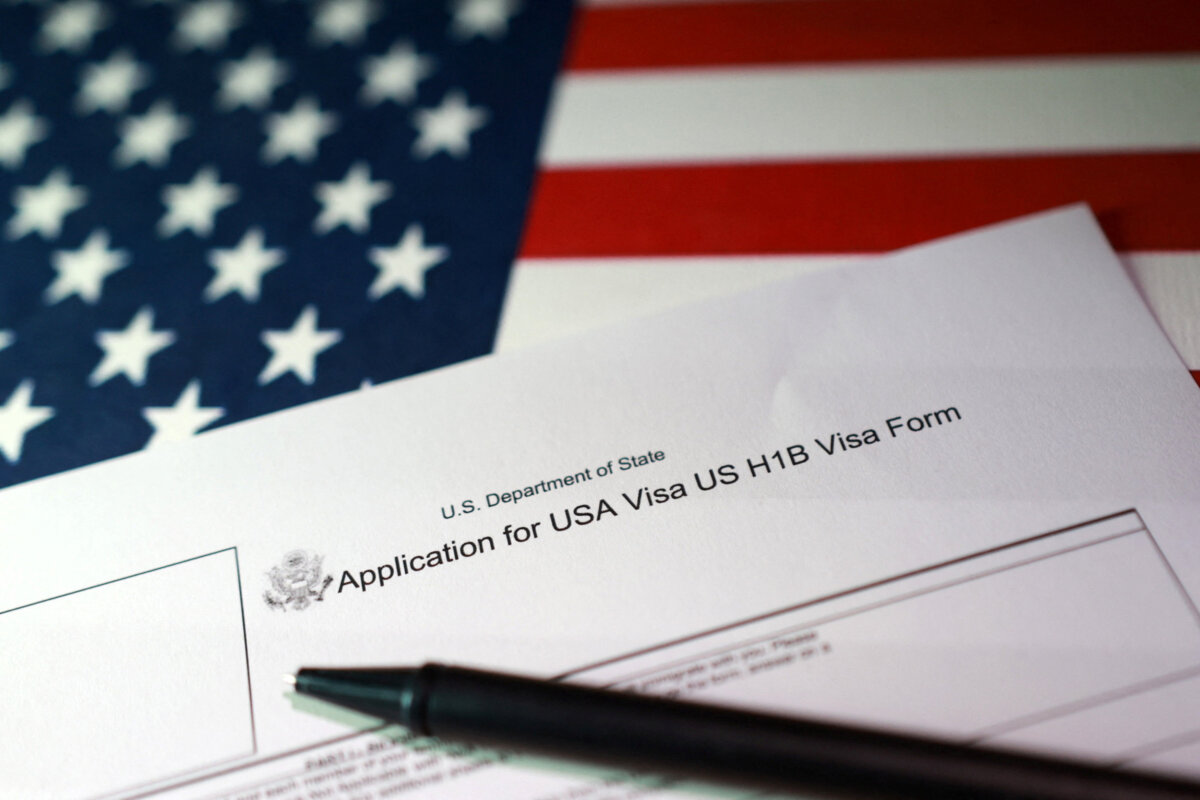
President Donald Trump issued a proclamation last September introducing a one-time $100,000 fee for H-1B visa applications in a bid to curb the abuse of the visa program that he said reduces job opportunities for American workers. This marked an increase from the previous baseline fees of $2,000 and $5,000 for the visas.
The proclamation states that the visa program was designed to bring in foreign workers on a temporary basis to perform high-skilled functions, but “it has been deliberately exploited to replace, rather than supplement, American workers with lower-paid, lower-skilled labor.”
“The severe harms that the large-scale abuse of this program has inflicted on our economic and national security demands an immediate response,” Trump wrote in the proclamation.
A White House fact sheet states that U.S. companies were “laying off their American technology workers and seemingly replacing them with H-1B workers,” noting that the share of H-1B workers in the IT industry has increased from 32 percent in 2003 to over 65 percent in recent years.
Attorneys general from California and 19 other states brought the case in December 2025 that led to Sorokin’s ruling, alleging that the fee violated the law because it imposed a massive charge beyond the authority granted by Congress and contrary to Congress’s intent in establishing the H-1B visa program.
They also argued that the administration bypassed required rulemaking procedures when imposing the fee and exceeded its authority under the Administrative Procedure Act.
“President Trump’s illegal $100,000 H-1B visa fee creates unnecessary—and illegal—financial burdens on California public employers and other providers of vital services, exacerbating labor shortages in key sectors,” California Attorney General Rob Bonta said at the time.
Zachary Stieber contributed to this report.
 Friends Read Free
Copy
Facebook
Tweet
Friends Read Free
Copy
Facebook
Tweet