



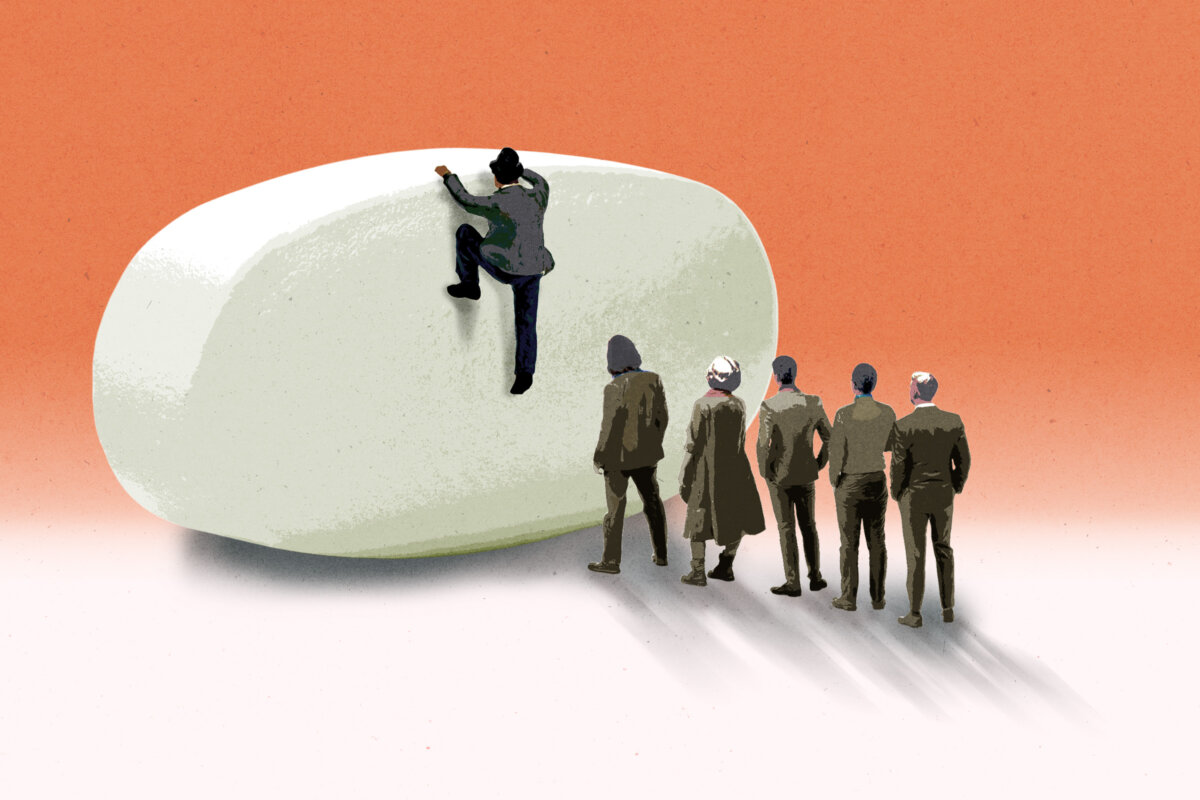
For about a decade, the most powerful cholesterol treatment came as a shot you gave yourself at home every two weeks. It slashed levels of low-density lipoprotein (LDL) by more than half, far more than statins alone.
This month, that changed. The Food and Drug Administration approved Lipfendra, the first daily pill that lowers “bad” cholesterol as sharply as the injections. For people whose numbers stay stubbornly high despite statins or who can’t tolerate them, the news feels like a long-awaited breakthrough.
However, the approval was based on how sharply the pill lowers LDL. Whether Lipfendra actually prevents heart attacks, strokes, or deaths is still being tested. And the answers aren’t expected until late 2029.
In the meantime, a drug this easy to start risks reaching far beyond the patients who need it most.
Which makes the question less about the pill than about you. Here are four questions worth answering before you say yes to Lipfendra.
1. How High Is My Actual Risk?
An LDL of 130 is far more concerning in someone who has already had a heart attack than in an otherwise healthy person. For the patient who has had a heart attack, driving LDL down further could make a significant difference. For the otherwise healthy person, the extra benefit may be small or close to nothing.
In the main trial supporting Lipfendra’s approval, the average starting LDL was 96—a number that doesn’t sound especially scary. But these patients were already on statins and still above the safe range for people carrying higher heart risk. The study tested how much further down the drug could push LDL in people already on treatment.
Dr. Gregory Katz, a cardiologist at NYU Langone, described the benefit of lower LDL as a curve, not a straight line. The first big drop usually delivers the most protection, he told The Epoch Times. Each additional drop helps less.
So the first question isn’t simply “Is my number high?” It’s “Do I look like the patients in the studies?” Have you had a heart attack or stroke? Do you have inherited high cholesterol? Is your LDL still above target despite a statin?
These questions matter because the same cholesterol reading doesn’t carry the same risk for everyone, Nicholas Norwitz, a Harvard-trained medical doctor and expert in metabolic health, told The Epoch Times.
“By way of analogy, eating a doughnut will have a very different metabolic impact on someone with diabetes than it will on a healthy teenager,” Norwitz said.
The doughnut is the same. The person is not.
For low-risk patients, the risk of overtreatment is real. However, this risk can overshadow the opposite problem: Some experts say high-risk patients still are not treated aggressively enough. Most Americans with established heart disease never reach recommended cholesterol levels, and about one in four take no cholesterol-lowering medication at all.
Katherine Wilemon, founder and CEO of the Family Heart Foundation and someone who lives with hereditary high cholesterol (familial hypercholesterolemia), sees undertreatment as the bigger issue. People born with her condition face nearly 20 times the normal risk of heart disease, often in the prime of life, she told The Epoch Times in an email.
Most need more than one medication to reach safe levels. Having more tolerable options increases the chances patients will stick with treatment long-term, she said. The Family Heart Foundation receives funding from pharmaceutical companies.
The patients Katz pushes hardest to treat are not the borderline cases. They are the ones who have already survived a heart attack or stroke, yet their LDL remains above 100. For them, stronger treatment may be long overdue.
For lower-risk people, the calculation is different. Dr. Rita Redberg, a University of California–San Francisco cardiologist known for cautioning against overtreatment, told The Epoch Times in an email that “it is really hard to improve on the risk profile of a lower risk person and medications all carry risks.”
“I would stick with lifestyle measures, eat well, and keep moving,” Redberg said.
2. Will Lipfendra Actually Prevent a Heart Attack or Stroke?
Lipfendra can lower LDL by about 56 percent to 60 percent. While it will be a few years before we know its effects on heart attacks, strokes, and mortality, most cardiologists expect it to work because it targets the same PCSK9 pathway as injectable drugs that already reduce cardiovascular events.
Think of it this way: Your liver has receptors that act like vacuum cleaners, pulling bad LDL out of your blood. PCSK9 is the protein that destroys those receptors. If PCSK9 is blocked, more receptors survive to clear the cholesterol.
Dr. Ann Marie Navar, a cardiologist at UT Southwestern Medical Center who helped lead the Lipfendra trials, expects the pill to perform as intended.
“There is no biological reason to believe it matters if you do it with a macrocyclic peptide or a monoclonal antibody,” she told The Epoch Times in an email, referring to the different structures of the pill and the injection. “I would be shocked if the outcomes trial did not show benefit.”
Katz said he finds the biology persuasive, too, but he’s careful not to treat a strong expectation as proven fact.
“There’s a difference between ‘it should probably work’ and ‘it actually works,’” he said. “It’s hard for me to say this is definitely true when I think that it is probably true.”
His caution is not specific to Lipfendra. Katz takes a similar approach to other cholesterol drugs whose outcome trials are not yet finished.
“We’ve just seen this before—where things that look like they should work don’t really work,” he said. “Biology is complicated.”
A perfect lab result doesn’t guarantee that a drug is life-saving.
The trials supporting Lipfendra’s approval followed participants for about a year. Cardiovascular disease is managed over decades.
Redberg takes a more cautious stance. She has questioned how much the injectable cholesterol drugs have extended patients’ lives and whether some events counted as heart attacks in a major trial were serious enough to affect patients’ health. She and Dr. Vinay Prasad, a hematologist-oncologist and health policy researcher, raised those concerns in a letter to The New England Journal of Medicine.
Redberg said she would not recommend Lipfendra, even to people with inherited high cholesterol, until its own outcomes trial is complete. That view sits outside the cardiology mainstream.
Katz said he believes that the evidence from the injectables is strong enough to support their use in the specific patients. One major trial even suggested a survival benefit, he said.
“I don’t necessarily think they’re drugs that everybody should be on,” he said.
For now, Katz would wait. He said he can imagine narrow exceptions—such as a patient who has already had a heart attack, can’t tolerate other options, or refuses injections. But that’s a small group.
When asked what evidence would change his approach, Katz did not point to a better cholesterol number. He pointed to what patients actually care about: fewer heart attacks, fewer strokes, and longer lives.
Until those results arrive, Lipfendra comes with two truths. It produces a large, reliable drop in LDL, and its cardiovascular benefit has not yet been demonstrated.
3. What Should I Try Before a Newer Drug?
Lipfendra was not studied as a first-step treatment. Patients in the trials were already on statins, still above their cholesterol goals, and at elevated heart risk. The new pill was added on top—and approved as an addition to diet and exercise, not a replacement.
Lifestyle should come first and remain the foundation, Katz said. The doctor’s job is to decide who needs medication added to it.
“There’s never a lifestyle or medications,” he said. “It’s lifestyle and medications.”
Redberg pointed to the benefits healthy habits offer beyond cholesterol. A healthy lifestyle helps prevent cancer and diabetes, lowers blood pressure, eases joint problems, improves mood and thinking, and is linked to living longer.
“None of that is true for another pill,” she said.
But lifestyle has limits. Dr. Bret Scher, a preventive cardiologist and medical director at the Baszucki Group, told The Epoch Times that diet and exercise are often oversold as ways to lower LDL itself. Their greater value lies in improving metabolic health and reducing a person’s overall cardiovascular risk, he said.
Healthier habits can improve the whole patient without producing the dramatic change on a cholesterol panel that medication can.
They also require more than advice. A doctor can write a prescription in seconds. Helping someone sustainably change how they eat, move, and sleep takes time, support, and follow-up that most clinics are not set up or paid to provide.
When medication is needed, the order still matters. Under current guidelines, statins have the most evidence. Inexpensive generic ezetimibe is often the next step, followed by bempedoic acid for those who can’t tolerate statins.
None lowers LDL as dramatically as Lipfendra, but each has something the new pill doesn’t yet: completed trials showing that they reduce actual cardiovascular events.
The point is not to make patients try every older drug first. It is to make sure the foundation is in place, including lifestyle changes and the proven, lower-cost treatments that fit the patient, before moving to a newer option.
4. What Will This Drug Ask of Me Over Time?
The list price is $315 per month—about $10.50 per day. That is noticeably cheaper than the injectable PCSK9 drugs, which often run $500 to $600 or more. However, the sticker price is rarely what patients actually pay.
“The list price is not the same as the price our patients or even our payers will end up paying,” Navar said.
She said that she expects Merck to offer direct-purchase discounts and hopes insurance negotiations will keep copays reasonable.
The real number depends on your health plan. Insurers have long required prior authorization for PCSK9 drugs, meaning documentation that other treatments were tried first. Those barriers have eased somewhat, Katz said, but coverage still varies widely by plan.
The commitment goes well beyond money. Lipfendra is taken every morning on an empty stomach with water, black coffee, or plain tea, followed by a 30-minute wait before eating or drinking anything else. It’s a small daily step, but one you will likely repeat for years or decades.
That may seem like a small inconvenience. However, cholesterol treatment often lasts for decades. At the current list price, 10 years of Lipfendra would cost nearly $38,000 before discounts or insurance, not including follow-up visits, cholesterol tests, or future price increases.
Early safety data are reassuring. In the main trials, side effects were generally similar to placebos. A few issues, such as dizziness and diarrhea, were more common with the drug, but few people stopped treatment because of them. However, the approval trials followed patients for only about a year. The injectable versions have a decade of real-world experience; Lipfendra, being new, has less.
Getting Lipfendra
Merck plans to offer discounted cash pricing through TrumpRx. The exact price has not been announced yet, but for people facing high deductibles or insurance denials, cash-pay options can be simpler and cheaper than fighting for coverage. A valid prescription is still required.
What can quietly change is everything around that prescription. Under usual care, a doctor who knows your history weighs your overall risk, decides what should come first, orders follow-up labs, and watches for side effects. A prescription obtained through a brief telehealth visit may come with far less support.
The easier this pill becomes to get, the more the decision rests with you. Before filling it, ask:
-
Is my risk high enough that Lipfendra is clearly the right next step, or am I reaching for it because it’s easy?
-
Have I truly maximized lifestyle changes and the proven, lower-cost treatments?
-
Who is watching my care over the long haul?
Drugs are not never the answer—and they are not always the answer either, Scher said.
“People don’t like a ‘messy’ answer like that,” he said. “But that is where proper medical care resides.”