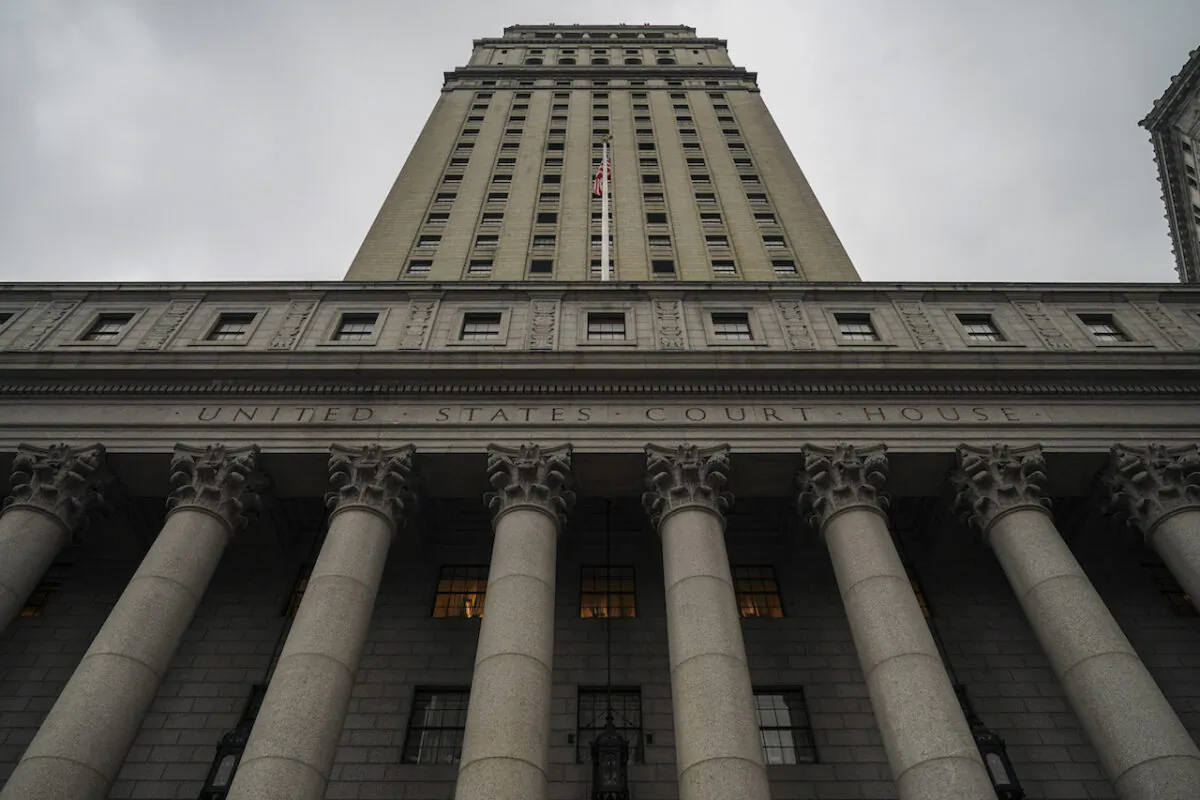

A federal appeals court on Friday revived a lawsuit filed by four female athletes challenging a Connecticut policy that allows transgender students born male to compete against girls in high school athletic events.
The full 2nd Circuit Court of Appeals ruled that the case should return to the district court for review because the plaintiffs have standing in the litigation and have alleged injuries that may qualify for monetary relief.
“We do not consider whether plaintiffs’ Title IX claims have any merit or whether they would be entitled to the relief that they seek as a matter of equity, but rather whether the district court has jurisdiction to hear their claims in the first instance,” the judges said in a ruling on Dec. 15.
The plaintiffs—Selina Soule, Chelsea Mitchell, Alanna Smith, and Ashley Nicoletti—argued they were “deprived of honors and opportunities” to compete at higher levels because of a policy that allowed males who identify as female to compete against girls.
According to the court, all four plaintiffs had personally competed in Connecticut high school track and identified instances in which they raced against and finished behind one or both transgender athletes Andraya Yearwood and Terry Miller.
“For each plaintiff, the complaint identifies at least one race in which she allegedly competed against and lost to one or both intervenors [referring to the transgender athletes],” the ruling states.
The plaintiffs said the Connecticut Interscholastic Athletic Council (CIAC) policy discriminated against them by requiring them to compete against transgender athletes, who have a “physiological athletic advantage.”
The 2013 CIAC policy allows transgender students to compete in high school competitions designated for the gender they identify with.
However, the plaintiffs argued that the CIAC policy violated Title IX, a federal law designed to create equal opportunities for women in education and athletics.
“Plaintiffs allege—and we must assume—that but for intervenors’ [or transgender athletes’] participation in these specific races, they would have placed higher.
“For the purposes of the standing inquiry, we must also assume that plaintiffs are correct that allowing intervenors to compete in those races violated Title IX,” it added.
It concluded that the plaintiffs pleaded “a concrete, particularized, and actual injury in fact: the alleged denial of equal athletic opportunity and concomitant loss of publicly recognized titles and placements” during track competitions where they finished behind the transgender athletes.
Important Ruling for All Female Athletes
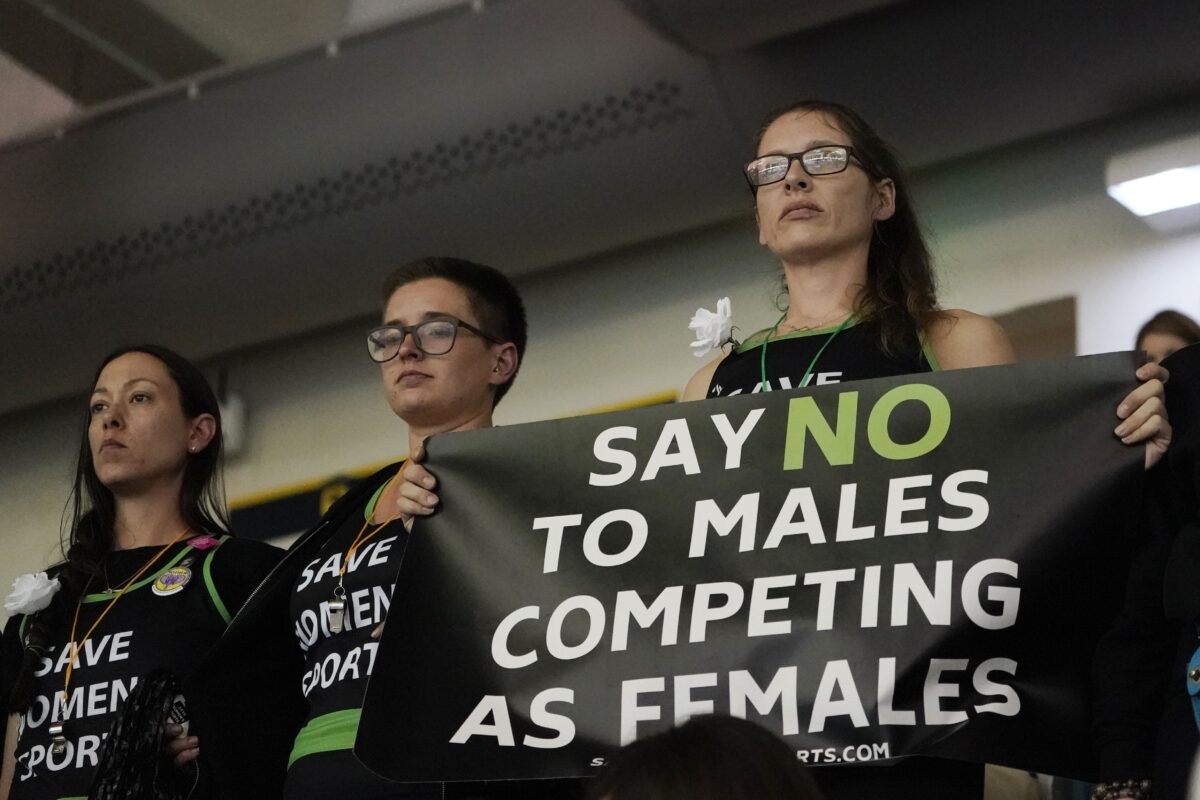
Conservative legal group Alliance Defending Freedom (ADF), which represents the plaintiffs, praised the court’s decision as an important victory for female athletes across the country.
“Selina, Chelsea, Alanna, and Ashley—like all female athletes—deserve access to fair competition,” ADF Senior Counsel Roger Brooks said in a press release.
“The CIAC’s policy degraded each of their accomplishments and scarred their athletic records, irreparably harming each female athlete’s interest in accurate recognition of her athletic achievements,” he added.
A three-judge 2nd Circuit panel last year agreed with a federal judge that the plaintiffs had not shown they were deprived of opportunities because all of them regularly competed in state track championships and won some of them.
The full court said it would reconsider the case in February.
Title IX made it illegal for federally supported educational institutions to discriminate against students and workers based on sex. Its enactment in 1972, in its original form, led to more girls finishing high school and college and boosted the number of female athletes in high school and college sports and athletics.
The protection extended to transgender students once the definition of “sex” was expanded under the Biden administration to include the fuzzier political concept of gender identity.
Caden Pearson and Reuters contributed to this report.
 Friends Read Free
Copy
Facebook
Tweet
Friends Read Free
Copy
Facebook
Tweet