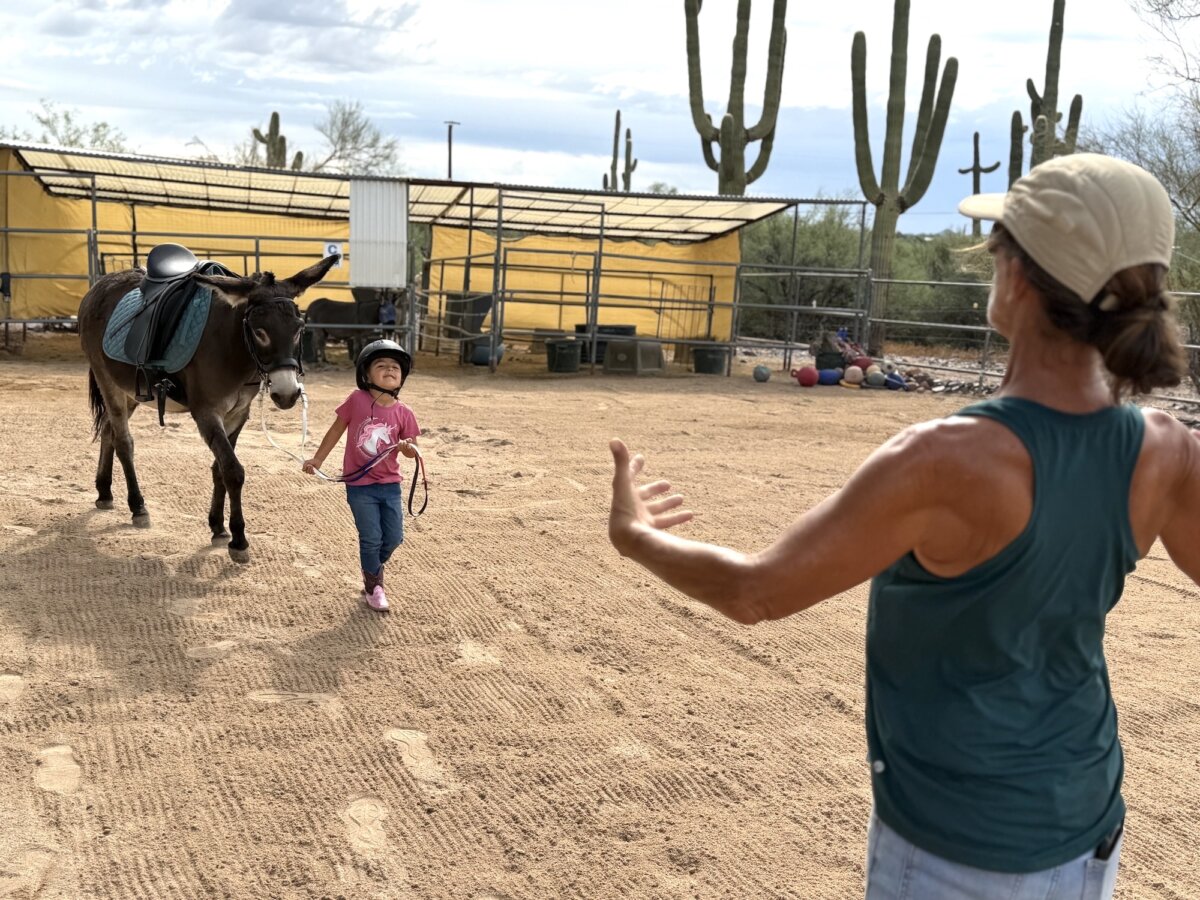

CAVE CREEK, Ariz.—Four-year-old Dylan came to improve her riding skills, and there was no better teacher than Alfred, an 11-year-old donkey.
Dylan looked tiny in her pink unicorn blouse and matching sparkly cowgirl boots as her favorite burro stood patiently beside her.
Her instructor, Sophie Rainer, helped her into the saddle and adjusted the straps.
“OK, Dylan, what shall we do now that Alfred is ready?”
“Walk on,” Dylan said.
For the next hour, the trio moved around the pen.
Dylan held her hands high to work on her balance. At other times, she led Alfred around the dirt enclosure by his halter, always looking ahead and safe in the saddle.
“She’s here just to enjoy and to learn,” said Dylan’s caretaker, Jane Howard.
About a year ago, a volunteer friend introduced Howard to Donkeys of the Heart, a nonprofit donkey-assisted education and therapy program Rainer founded in 2019 in Cave Creek.
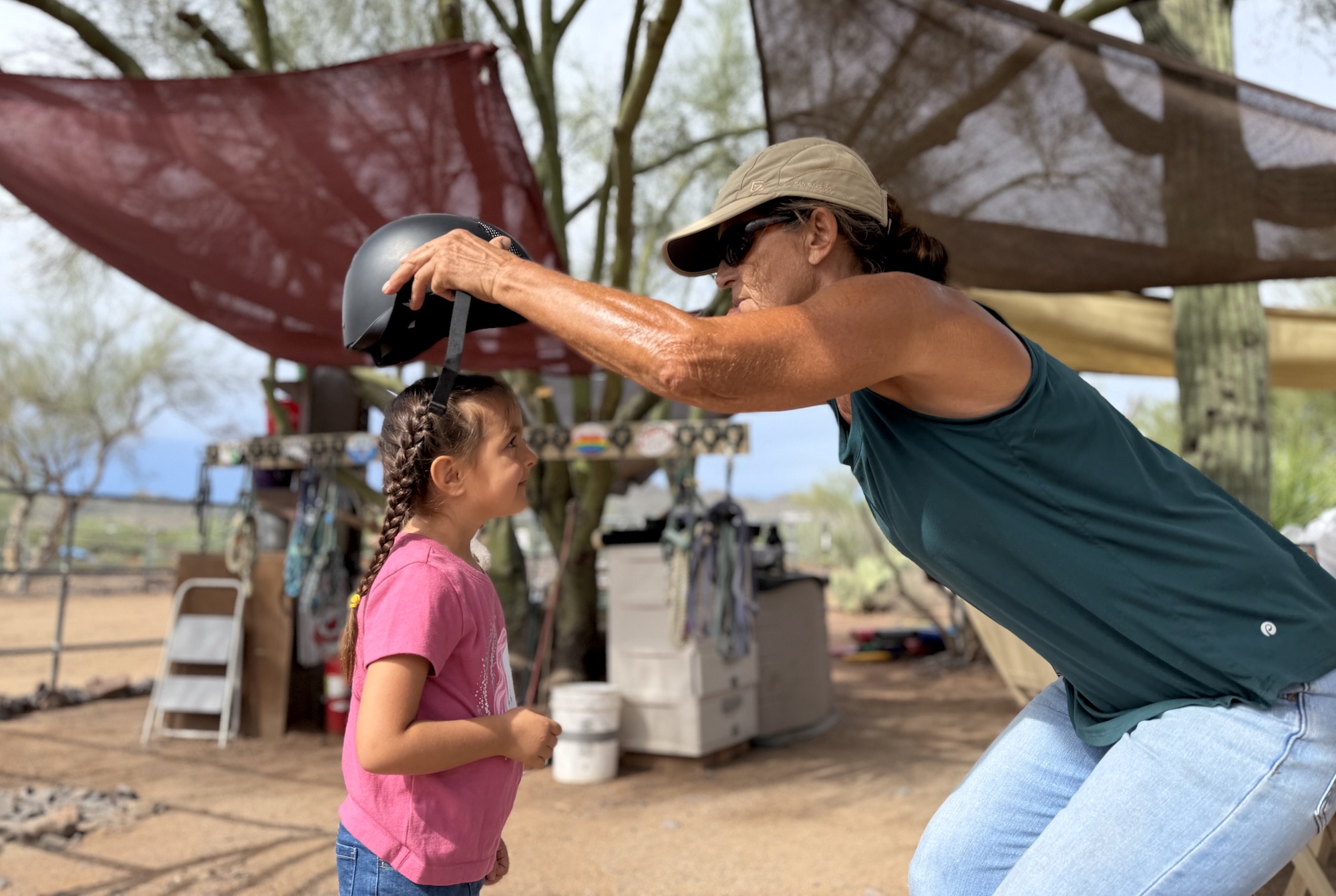 Sophie Rainer (R), founder of Donkeys of the Heart in Cave Creek, Ariz., helps Dylan, 4, with her safety helmet on Sept. 24, 2026. (Allan Stein/The Epoch Times)
“We’ve got to spread the love a little bit, you know?” Howard told The Epoch Times.
“It’s very therapeutic.”
She said Donkeys of the Heart was formed to help young people with diagnosed disabilities improve their lives.
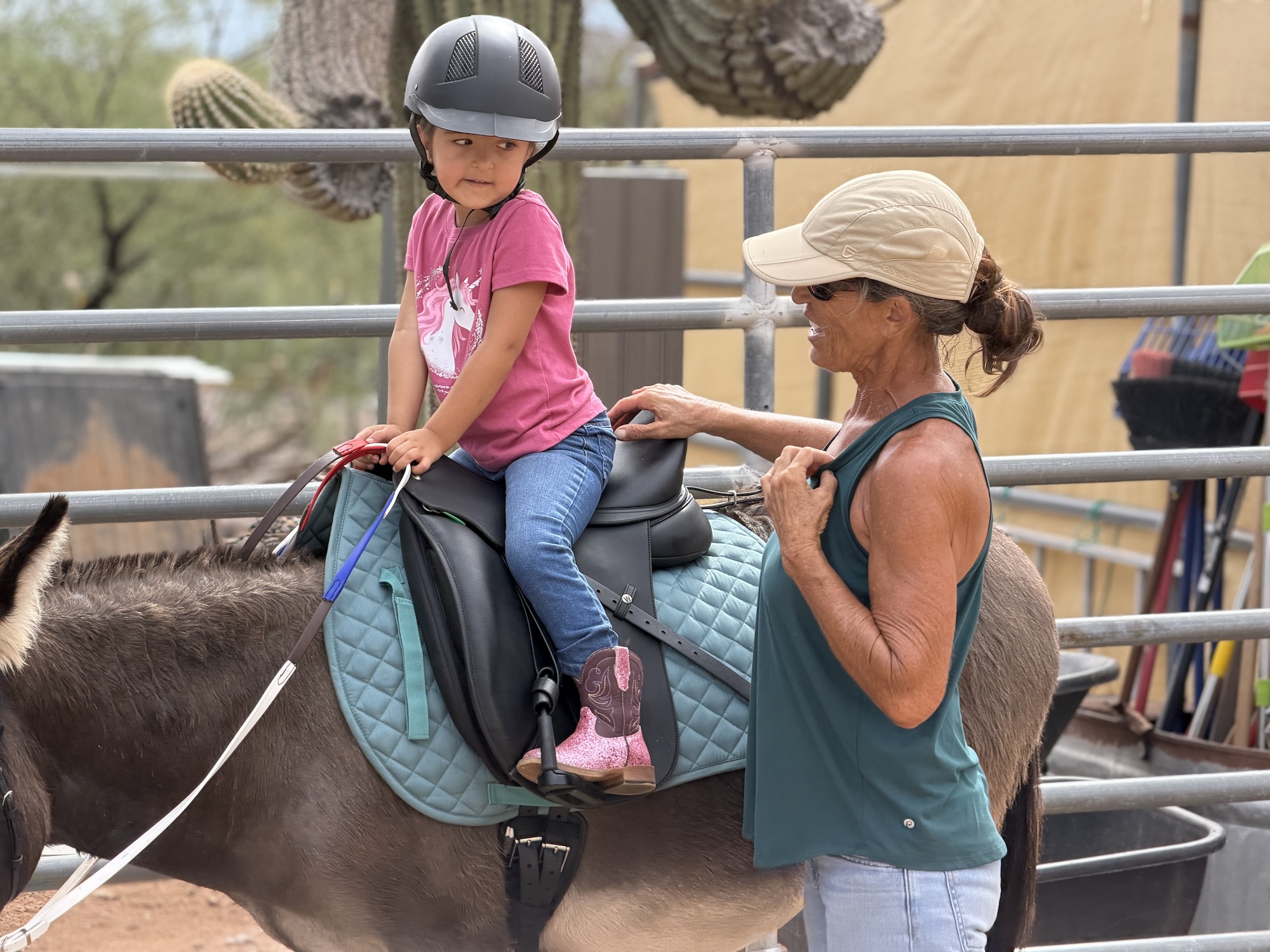 Sophie Rainer, founder of Donkeys of the Heart, a donkey-assisted therapy program in Cave Creek, Ariz., helps Dylan, 4, stay safe in the saddle with Alfred, an 11-year-old donkey, on Sept. 24, 2026. (Allan Stein/The Epoch Times)
“I only help the children with the consequences of their diagnosis,” Rainer said. “So most of them have a light physical disability.
“And with riding, of course, it’s the connection between the brain and body.”
“Donkeys do not judge or criticize,” she said. “They are safe animals”—gentle, affectionate, always craving attention.
They are also very smart.
“A donkey, if he thinks there is a potential danger, he will stop and process the information” rather than become spooked, Rainer said.
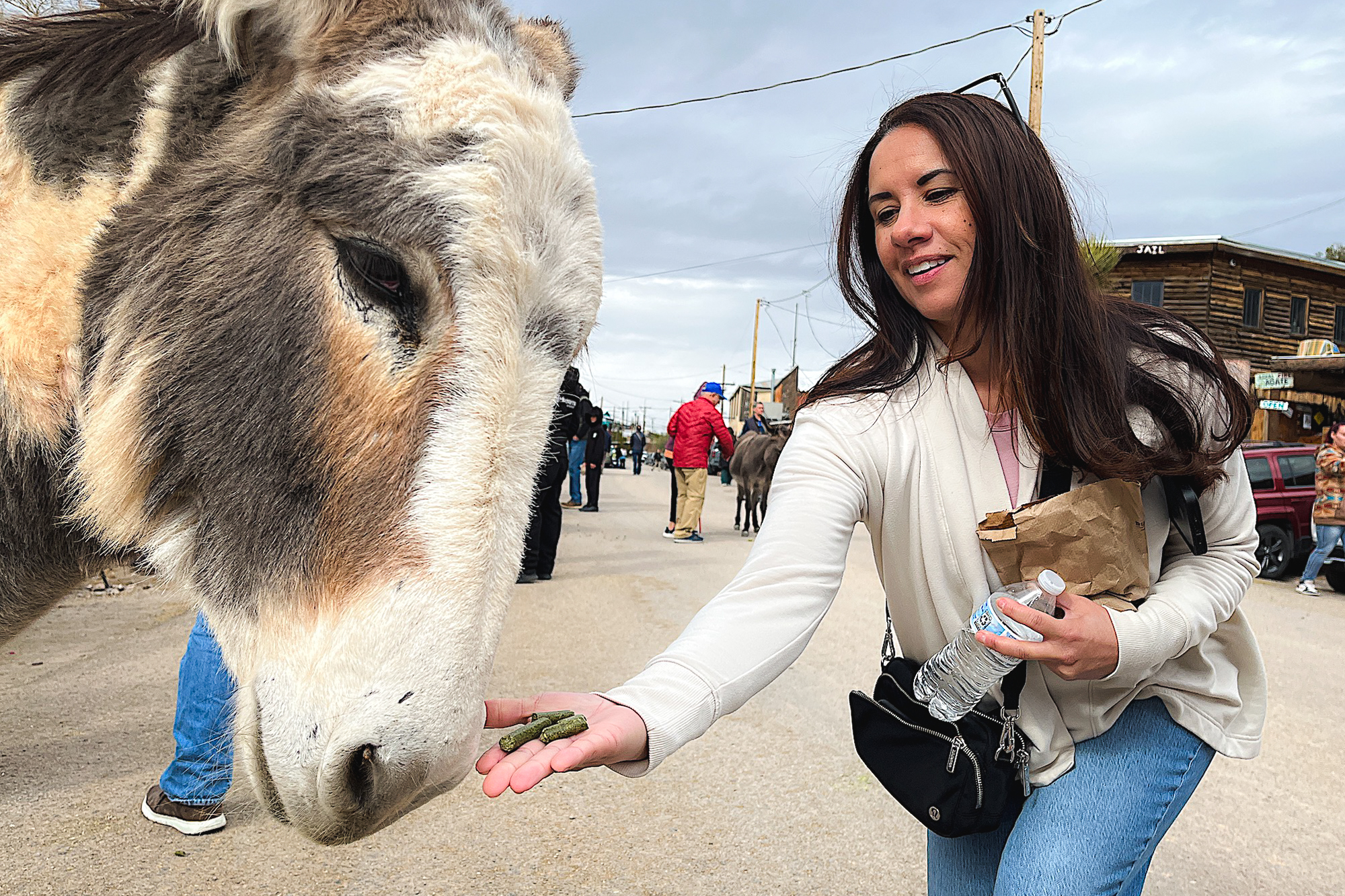 A visitor feeds hay pellets to a wild donkey in downtown Oatman, Ariz., on Jan. 24, 2026. (Allan Stein/The Epoch Times)
“From all the research I did, it appears that I’m the only one working on a riding program with donkeys” in Arizona, Rainer told The Epoch Times.
You could say the opportunity landed on her doorstep.
“I discovered the donkeys because one day a friend of mine dropped an abused donkey at my house. I’ve always been with horses in Europe,” Rainer said.
“From the day I discovered the donkeys, I said, ‘Wow, they are amazing.’”
According to Tally Ho Talent, donkey-assisted therapy can promote responsibility, confidence, empathy, and social connections.
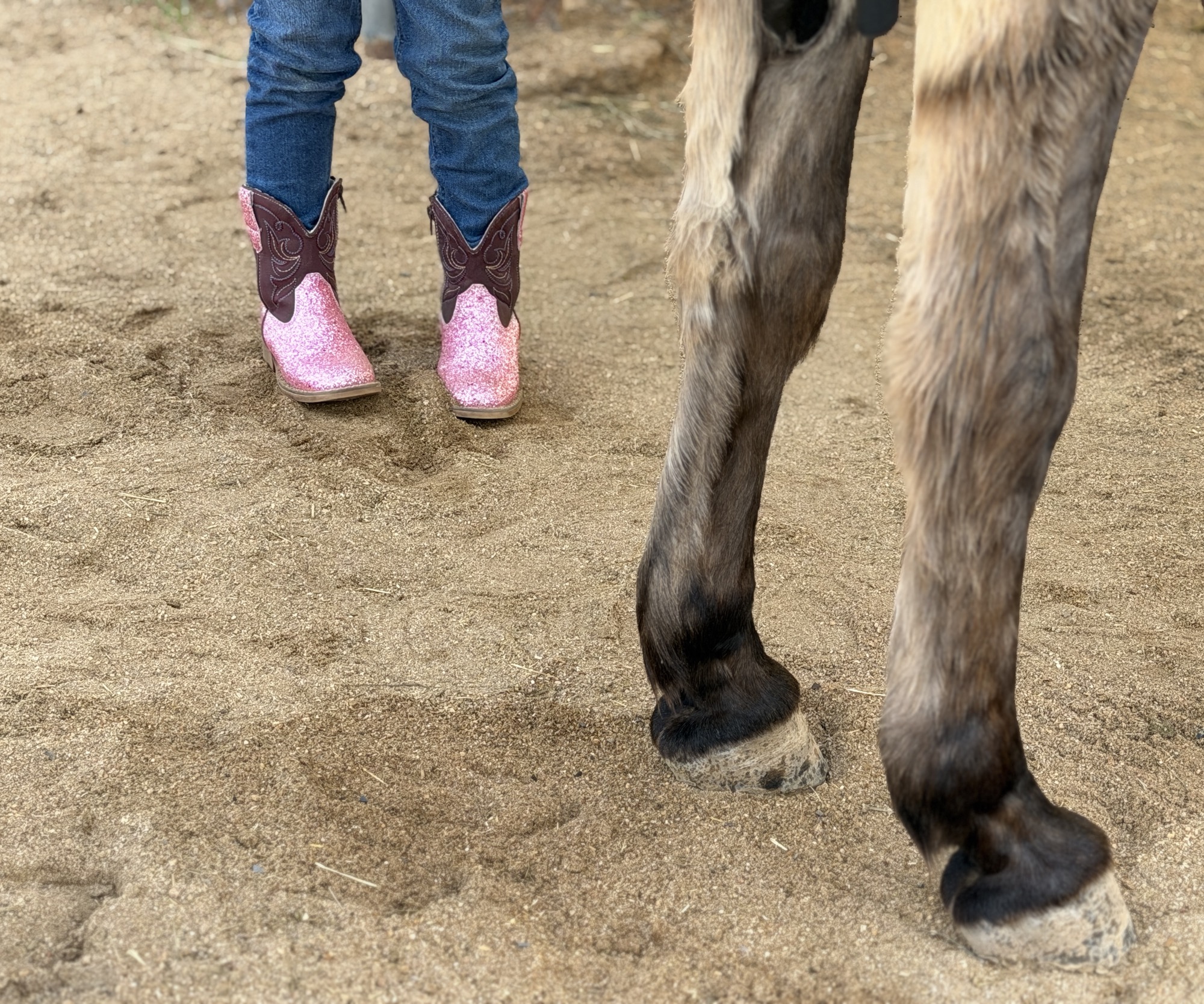 Four-year-old Dylan (L) shows off her pink cowgirl boots beside Alfred, an 11-year-old donkey, in Cave Creek, Ariz., on Sept. 24, 2026. (Allan Stein/The Epoch Times)
At Loving Long Ears in Texas, Jules Peterson began her nonprofit donkey-assisted therapy and sanctuary program in 2017 with two donkeys—Miss Taco and Belle.
Her goal was to help people heal through interactions with rescue donkeys, and help the donkeys heal, too.
“Loving Long Ears is the new beginning for donkeys who have been neglected, abused, surrendered by their owners, or saved from going to slaughter and need a good, loving forever home,” according to Loving Long Ears.
Many of the donkeys arrive emotionally damaged, without a safe home or grieving the loss of their longtime owners.
Some are also sick or physically weakened.
Peterson said the organization works to restore their health and give them a permanent home where they can thrive again.
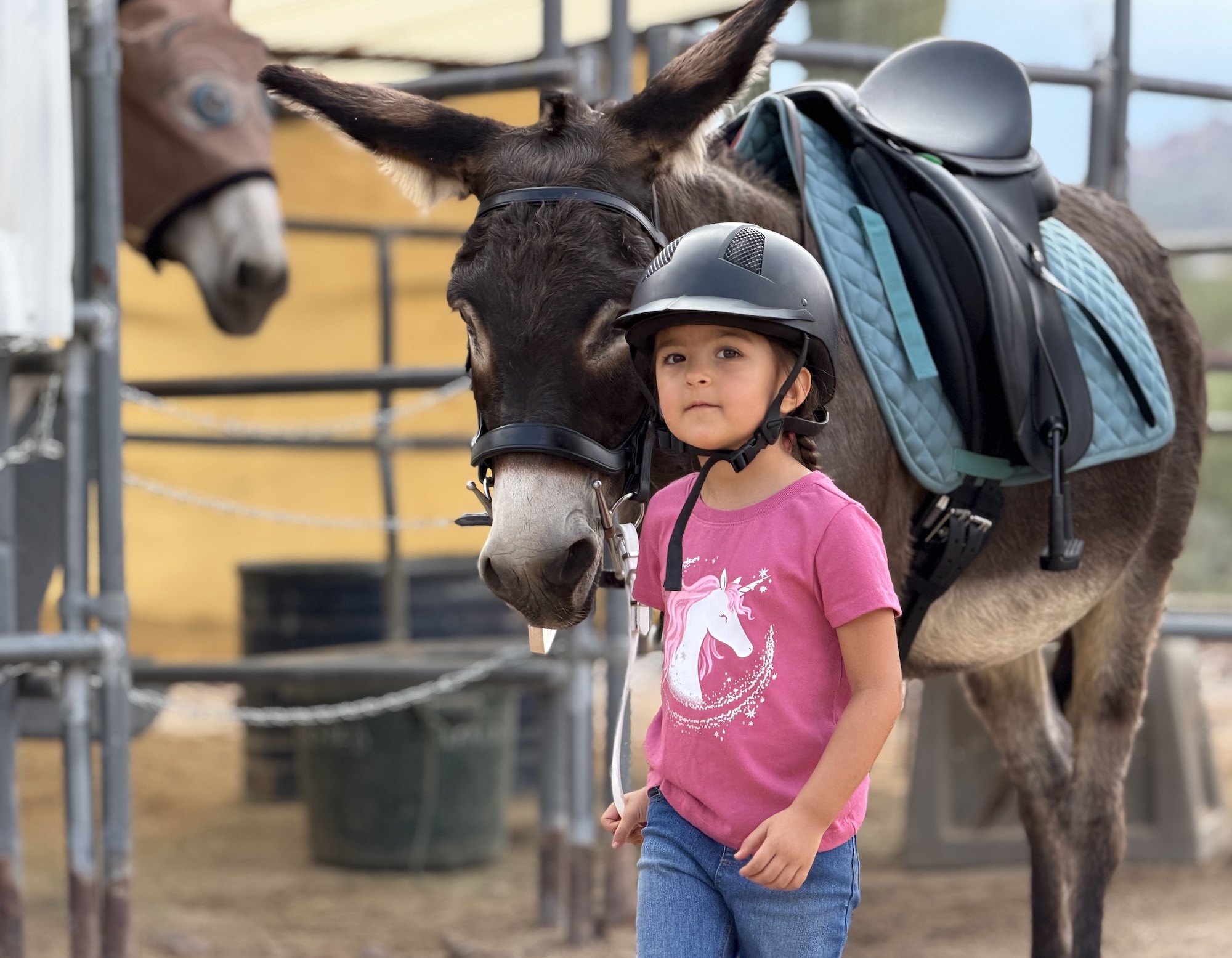 Dylan, 4, leads her donkey teacher Alfred by his halter strap at Donkeys of the Heart in Cave Creek, Ariz., on Sept. 24, 2026. (Allan Stein/The Epoch Times)
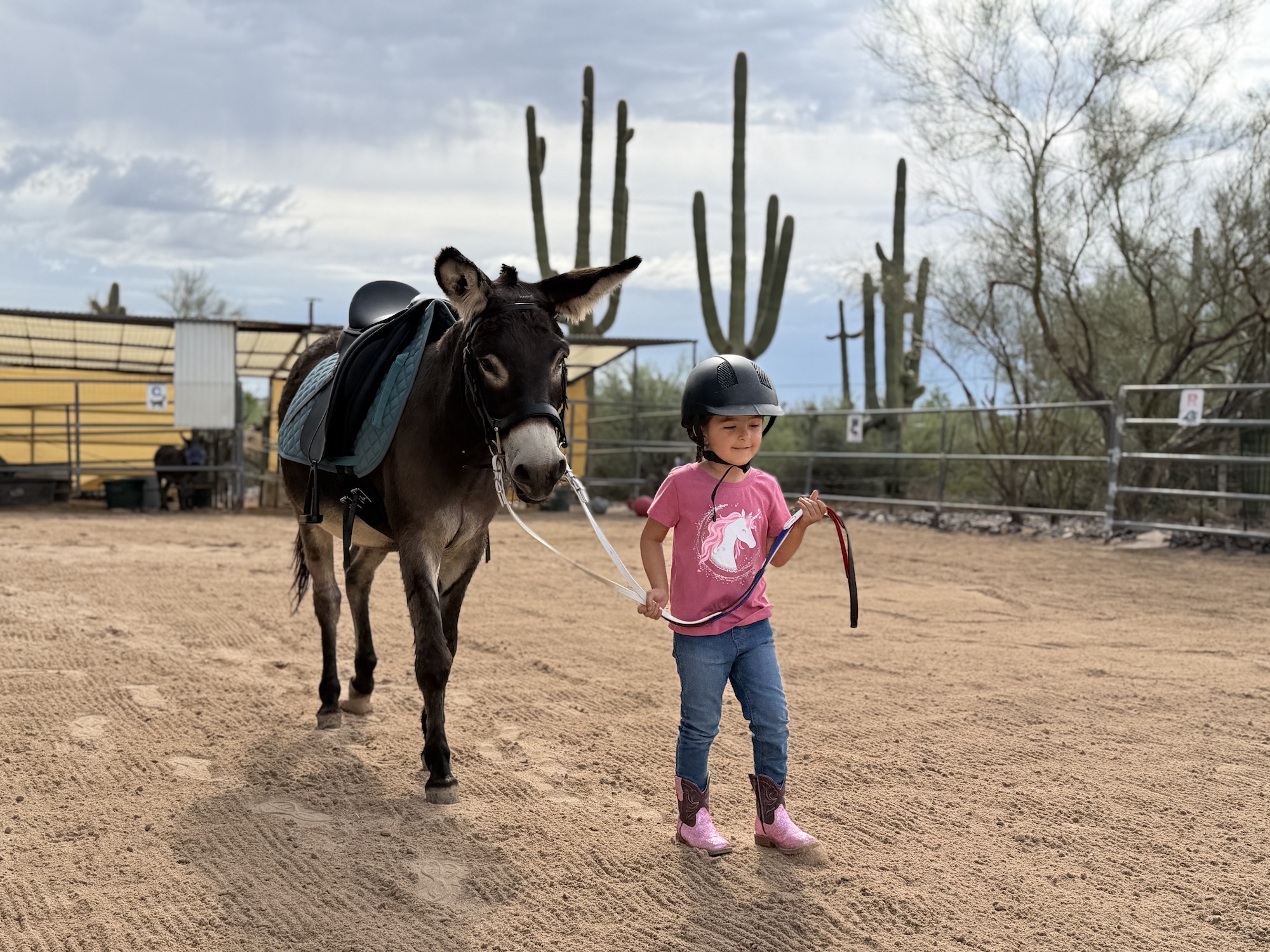 Dylan, 4, takes Alfred for a walk inside the pen at Donkeys of the Heart in Cave Creek, Ariz., on Sept. 24, 2026. (Allan Stein/The Epoch Times)
Latham Centers in Massachusetts, a residential care and treatment facility for children and adults founded in 1970, is another program that uses donkeys in therapy.
Since 2008, the program has grown to six miniature donkeys that work with residents.
“Donkeys are known for their good nature, their craving for attention, and their patience,” the Latham Centers said on its website.
“This program provides many opportunities for learning, nurturing, and building trust and self-esteem while teaching empathy, responsibility, and appropriate boundaries.”
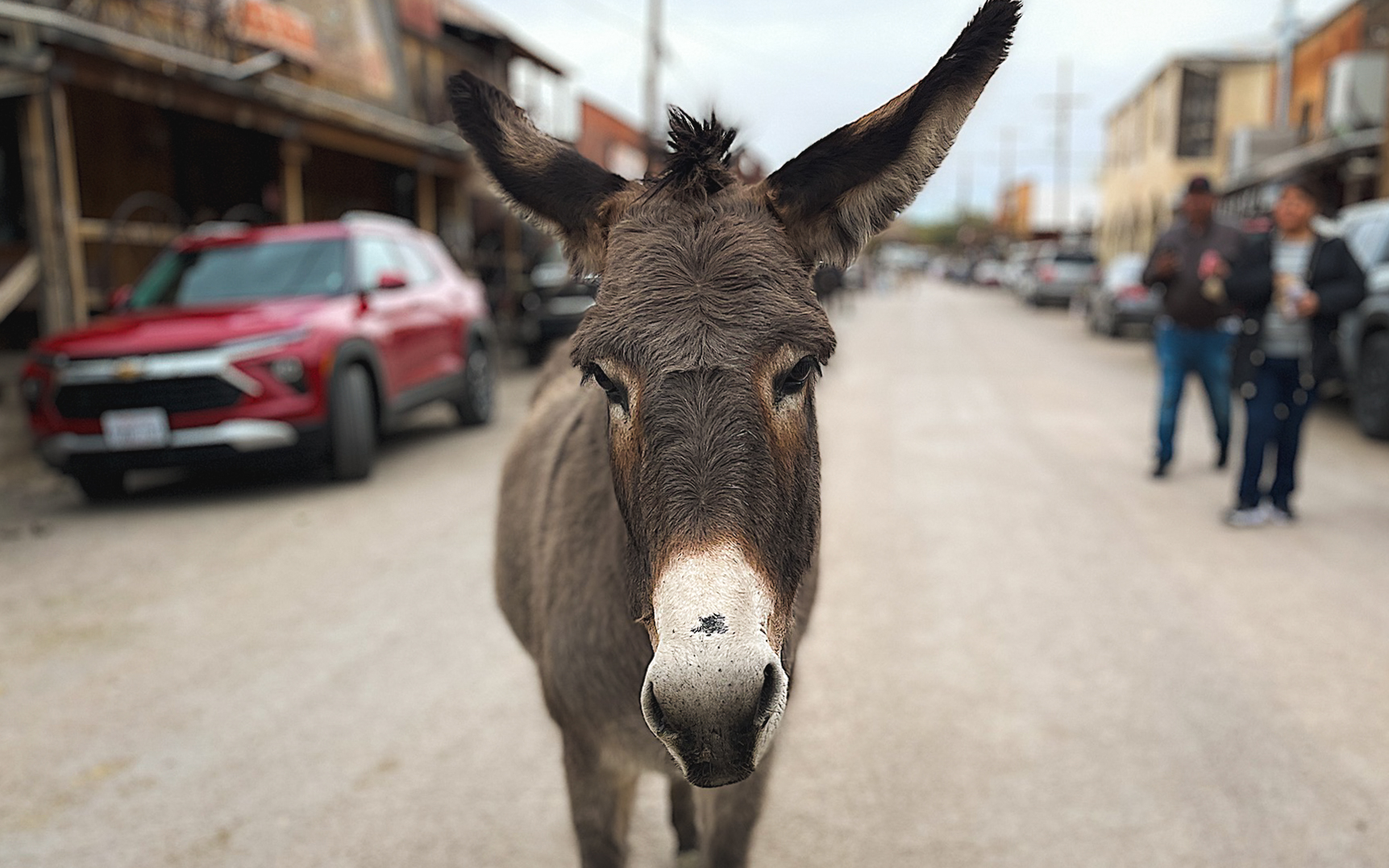 A wild donkey wanders through the center of Oatman, Ariz., on Jan. 24, 2026. (Allan Stein/The Epoch Times)
“We found Sophie and the donkeys, and fell in love [with the program],” Koch said.
Her main job is caring for the donkeys, “which means several times a week we come to the facility.”
“We clean up after the donkeys, clean stalls, help Sophie with whatever organization … she needs,” Koch told The Epoch Times. “My daughter helps Sophie with exercising the donkeys.”
Perhaps the best part is being outside in the fresh air, surrounded by towering saguaro cactus and working with one of nature’s most loving animals, Koch said.
“These guys are so fun to work with. They all have their own little personalities.”
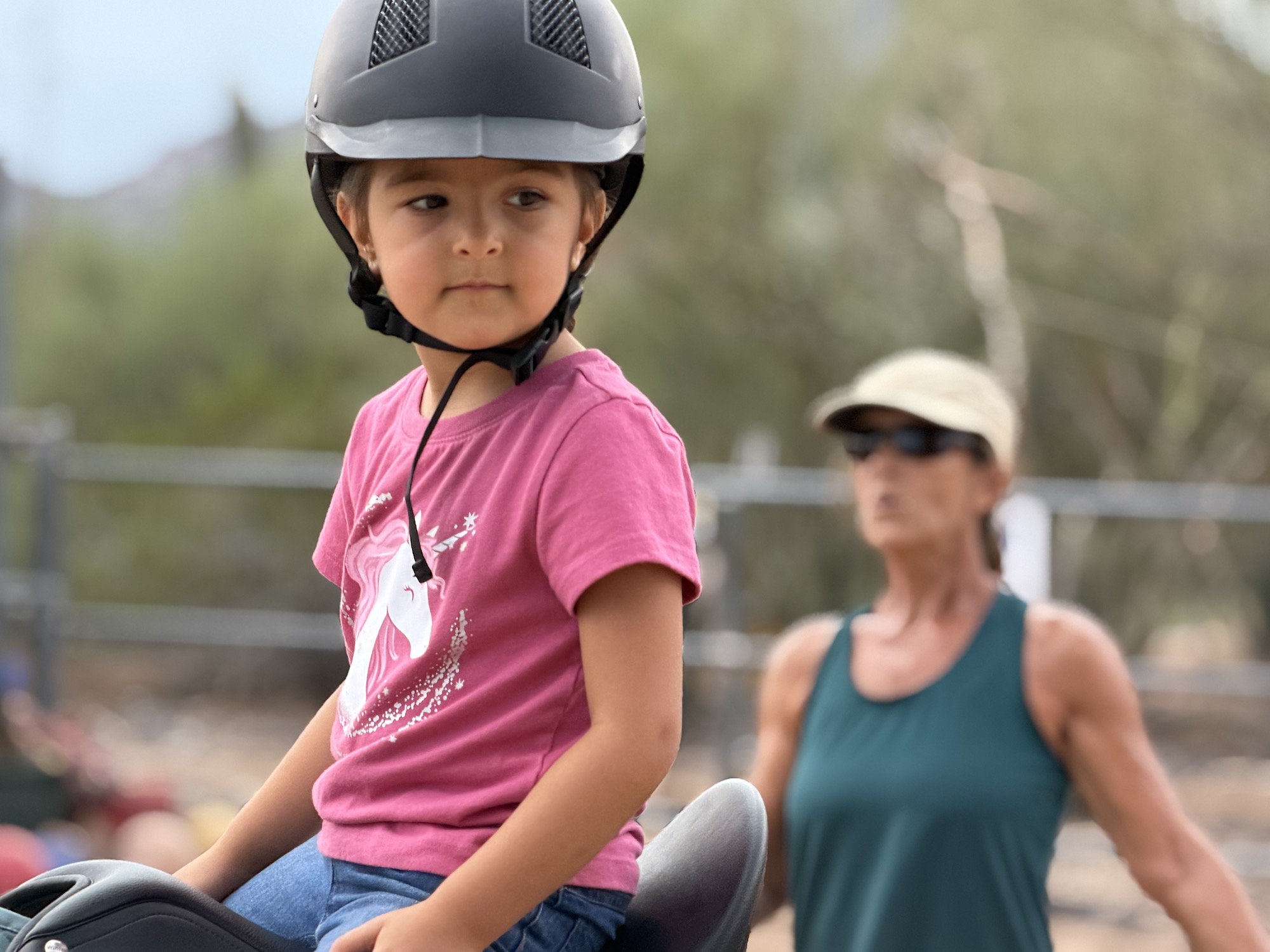 Dylan, 4, steers her donkey Alfred guided by riding instructor Sophie Rainer (R) on Sept. 24, 2026. (Allan Stein/The Epoch Times)
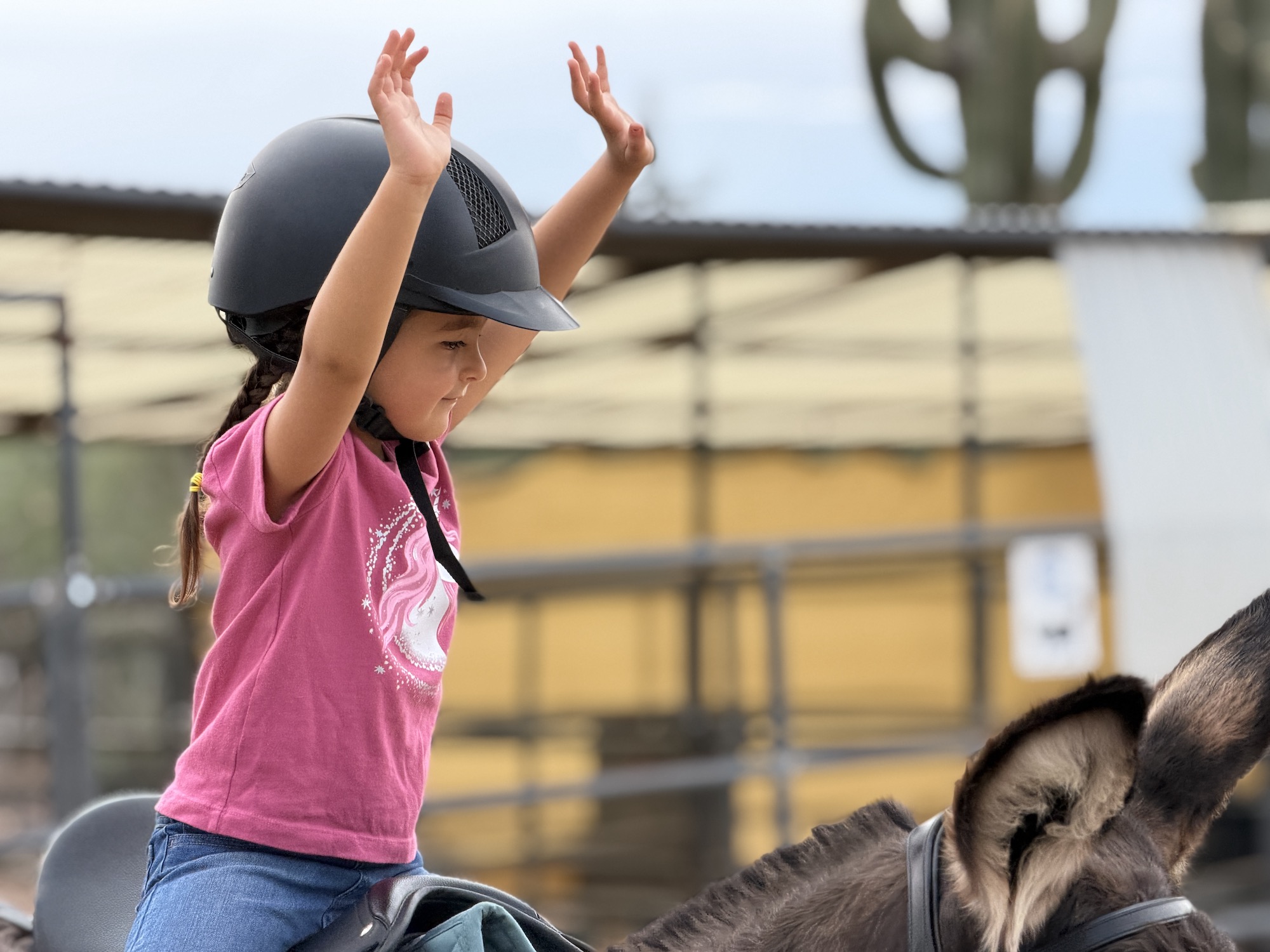 Dylan holds both arms high as she learns how to stay balanced in the saddle. (Allan Stein/The Epoch Times)
Authenticity counts.
“If you are pretending to be something else, they just walk away, very calm,” she said. “You will never see them run away, grumpy or whatever. No, they just walk away. They’re not interested.”
“Be yourself, and you will become friends.”
Her program serves up to 20 children and adolescents ages 4 to 14, including 15 currently in private sessions.
She hopes to expand to a five-acre location to broaden her services.
“The big dream is to find the property that we need to extend those programs. I’m very limited where we are,” Rainer said.
On a warm and sunny Thursday morning, Dylan’s lesson was to improve her riding skills, balance, and use of the stirrups.
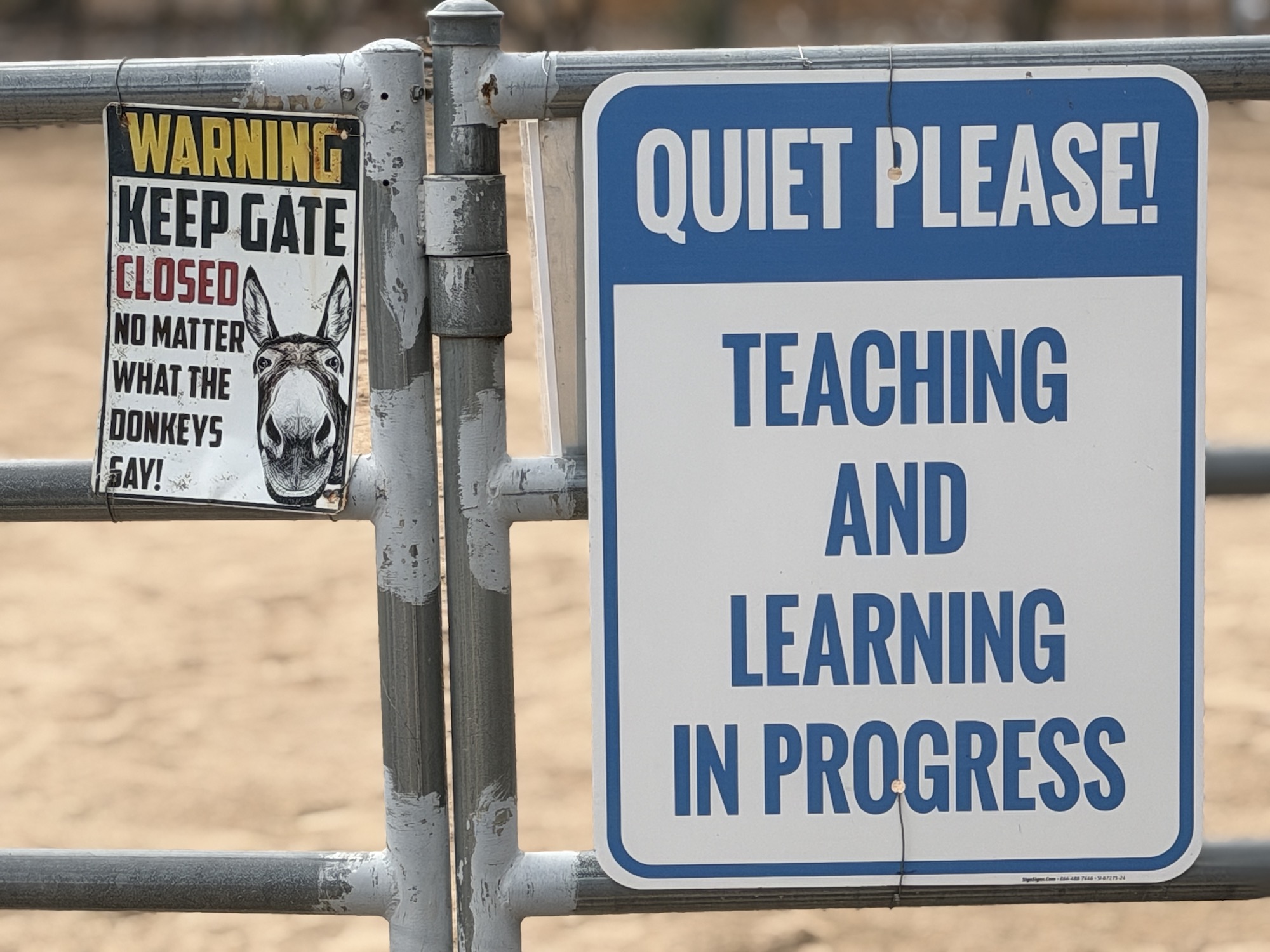 Visitor signs at Donkeys of the Heart in Cave Creek, Ariz., on Sept. 24, 2026. (Allan Stein/The Epoch Times)
Using mounting stairs, Rainer helped Dylan’s tiny frame into the saddle and strapped her in tight.
“What do we say?” Rainer asked.
“Walk on,” Dylan said, and Alfred obeyed without hesitation.
Together, they walked around the pen as Rainer kept a firm hand on the halter strap.
“You’re a proud princess, Dylan. You’re doing very well,” Rainer said encouragingly. “One step more, Alfred. Good boy.”
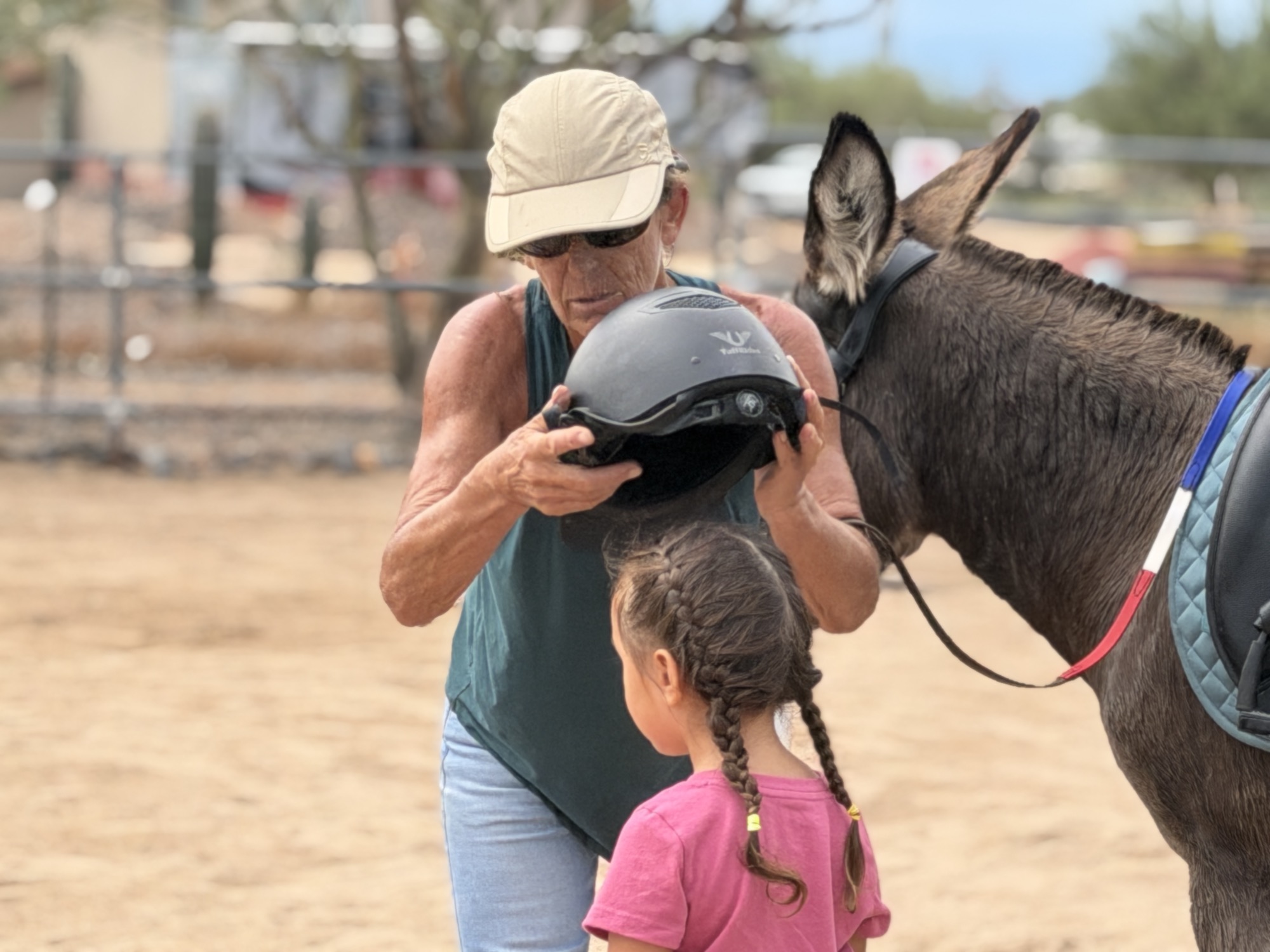 Sophie Rainer (L) removes the safety helmet from Dylan, 4, at the end of her riding lesson on Sept. 24, 2026. (Allan Stein/The Epoch Times)
“Are you proud of yourself?” she asked Dylan.
“Yes,” Dylan said.
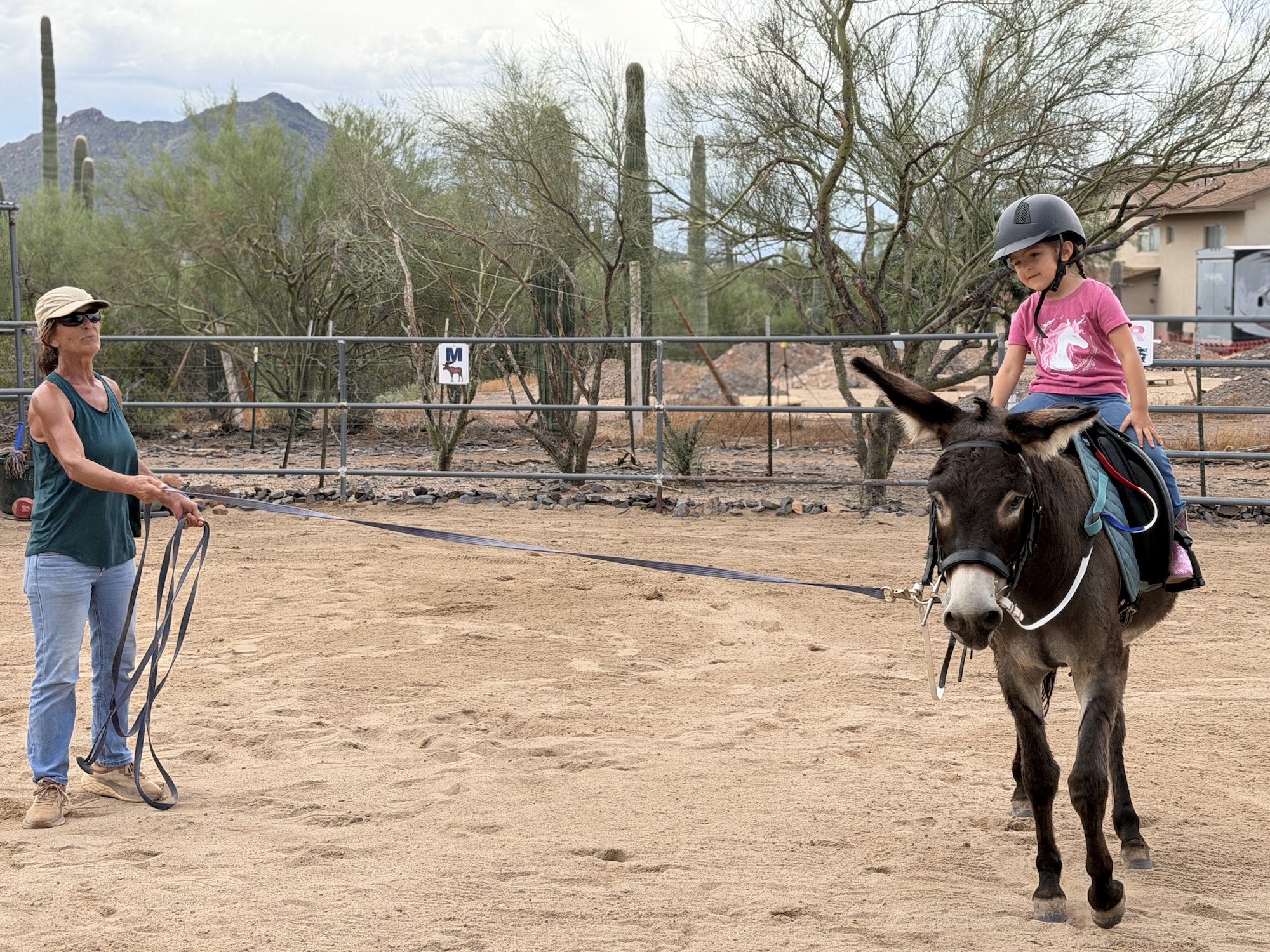 Sophie Rainer (L) guides donkey Alfred and rider Dylan, 4, around the pen enclosure at Donkeys of the Heart in Cave Creek, Ariz., on Sept. 24, 2026. (Allan Stein/The Epoch Times)
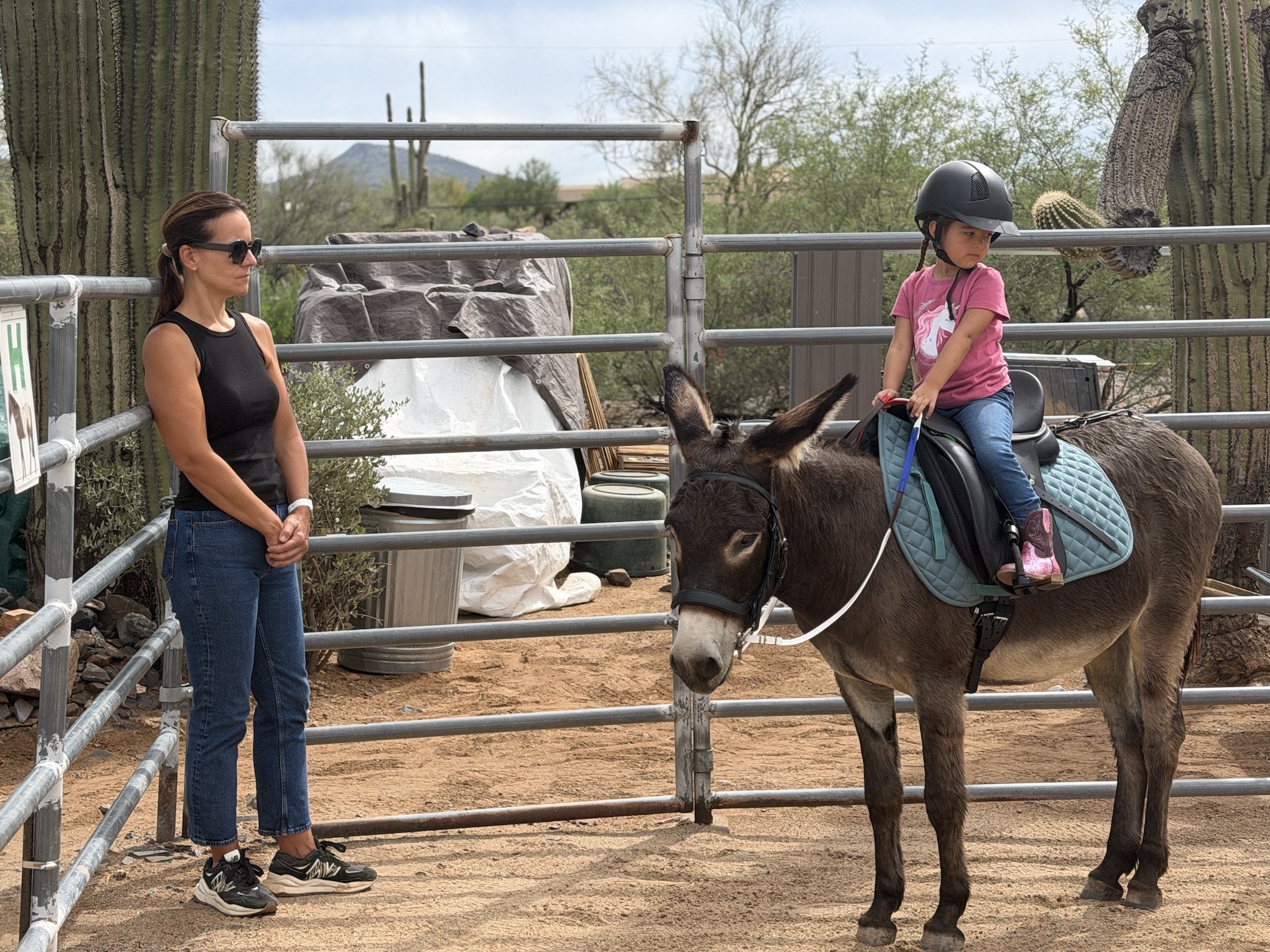 Amanda Koch (L), a volunteer at Donkeys of the Heart in Cave Creek, Ariz., advises Dylan, 4, on her riding lesson on Sept. 24, 2026. (Allan Stein/The Epoch Times)
 Friends Read Free
Copy
Facebook
Tweet
Friends Read Free
Copy
Facebook
Tweet