
Nebraskan political parties are preparing to select nominees for dozens of local, state, and federal offices that will be on the ballot in November. But one comparatively small congressional district is drawing attention from outside the state as well as from local politicians.
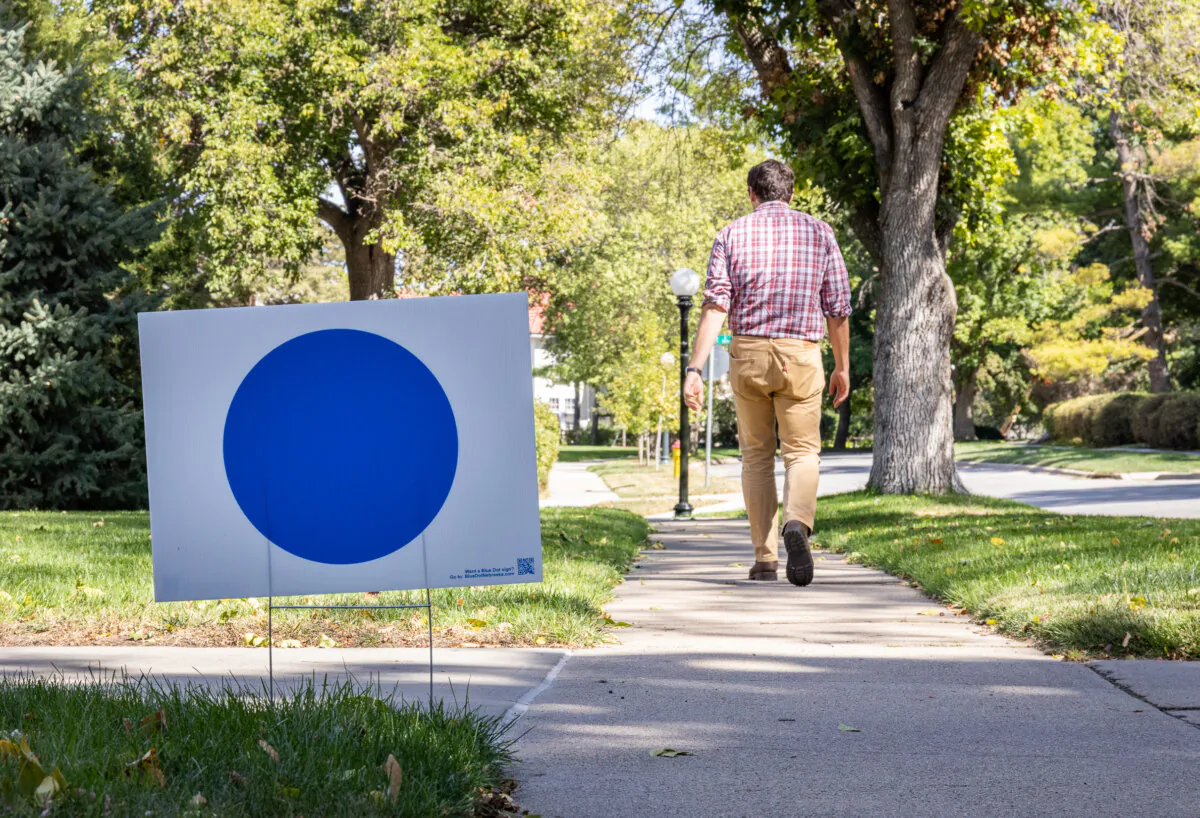
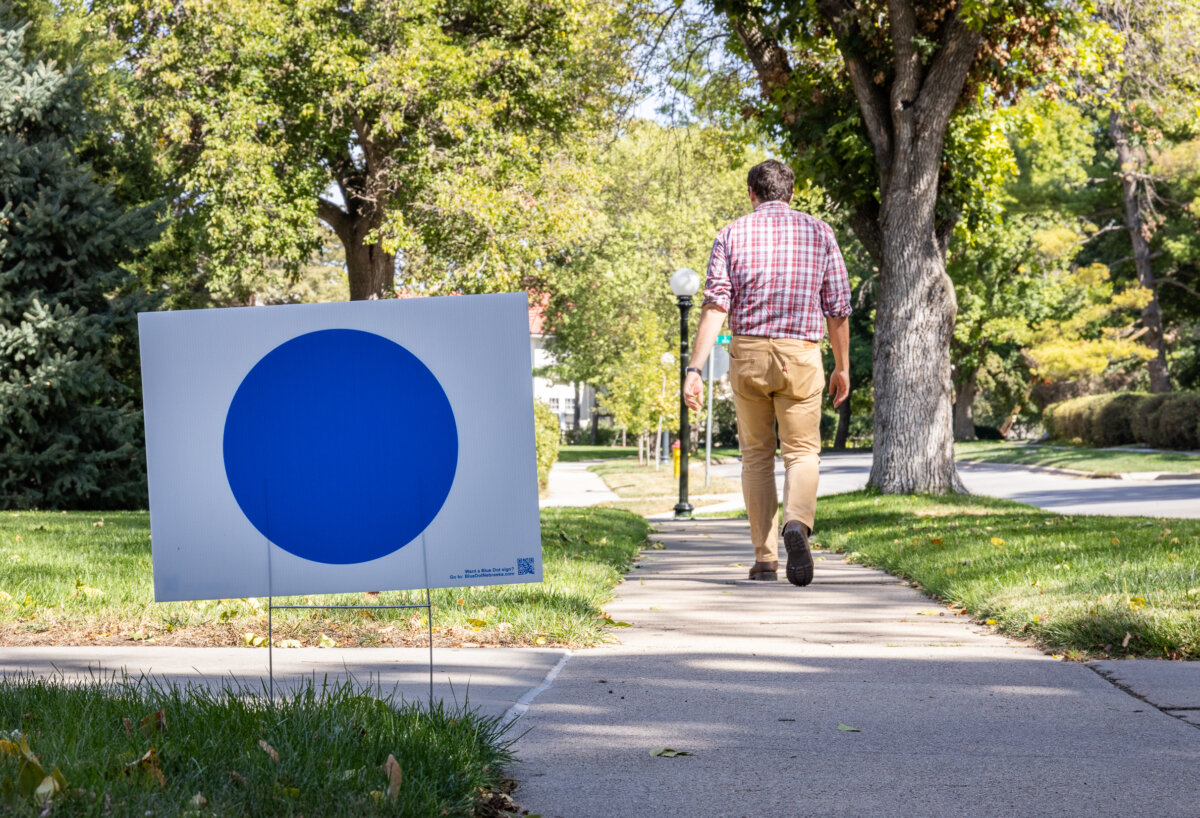
Congressional District Two, which encompasses the city of Omaha and its environs, is known as the Blue Dot because it stands out as a Democratic district in a largely Republican state. One senator and all three representatives—all Republicans—are on the November 2026 ballot.
Democrats, who say they are working hard to make as many gains as possible in a bid to shift the balance of power in Congress, are focusing money and manpower on the second district, which contains Douglas and Saunders counties as well as western Sarpy County.
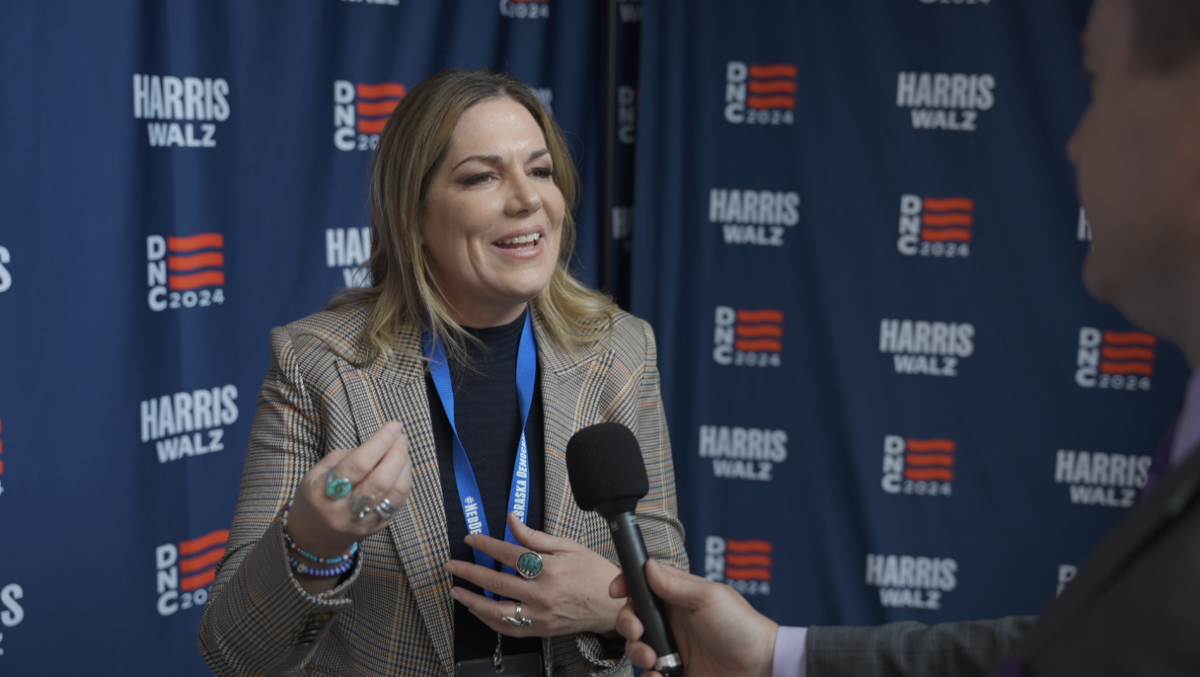
Jane Kleeb, chair of the Nebraska Democratic Party, said District Two is one of the few reliable footholds for Democrats in the state.
“The second congressional district is the most diverse district that we have, not only … in racial breakdown, but it’s also in education, in wealth, in military service. It’s definitely a slice of America. So that’s why it’s always been a really competitive district for us, not just this cycle, but in previous cycles as well,” Kleeb told The Epoch Times.
Combined with Nebraska’s formula for divvying up its electoral votes, this makes District Two vital even though this isn’t a presidential election year. Winning the district is expected to put them in a better position for 2028.
Nebraska and Maine are the only states that award their Electoral College votes proportionally.
In Nebraska, the overall winner receives two of the state’s five electoral votes. The remaining three votes go to the winner of each of the state’s three congressional districts. In a close race, this makes winning each of the three districts imperative.
Nebraska began the practice in 1996. It split its vote in 2008 and 2020, resulting in District Two supporting the Democratic candidate each time, while Republicans took the state overall.
In 2024, Republicans in Nebraska’s unicameral legislature pushed a bill supported by Republican Gov. Jim Pillen to switch the state to a “winner-take-all-model.” But their efforts were rebuffed.
Democrats consider the district so important that the House Majority PAC (HMP) is sending $2.9 million to Omaha for television and digital advertising, according to the HMP website.
HMP is a Super PAC started in 2011 to elect Democrats to the House of Representatives.
“HMP’s historic television and digital ad reservations reflect that Democrats are firmly on offense heading into November,” HMP President Mike Smith stated.
Mary Jane Truemper, chair of the Nebraska Republican Party, would like to see Nebraska become a winner-take-all state. She said she believes that this would reduce the incentive for out-of-state donors to send money to Nebraska.
“That’s one of the reasons that I have been so firmly in favor of a winner-take-all system to [remove] extra money out of the state system,” Truemper told The Epoch Times. “It really has [an] effect on the down ballot races as well.”
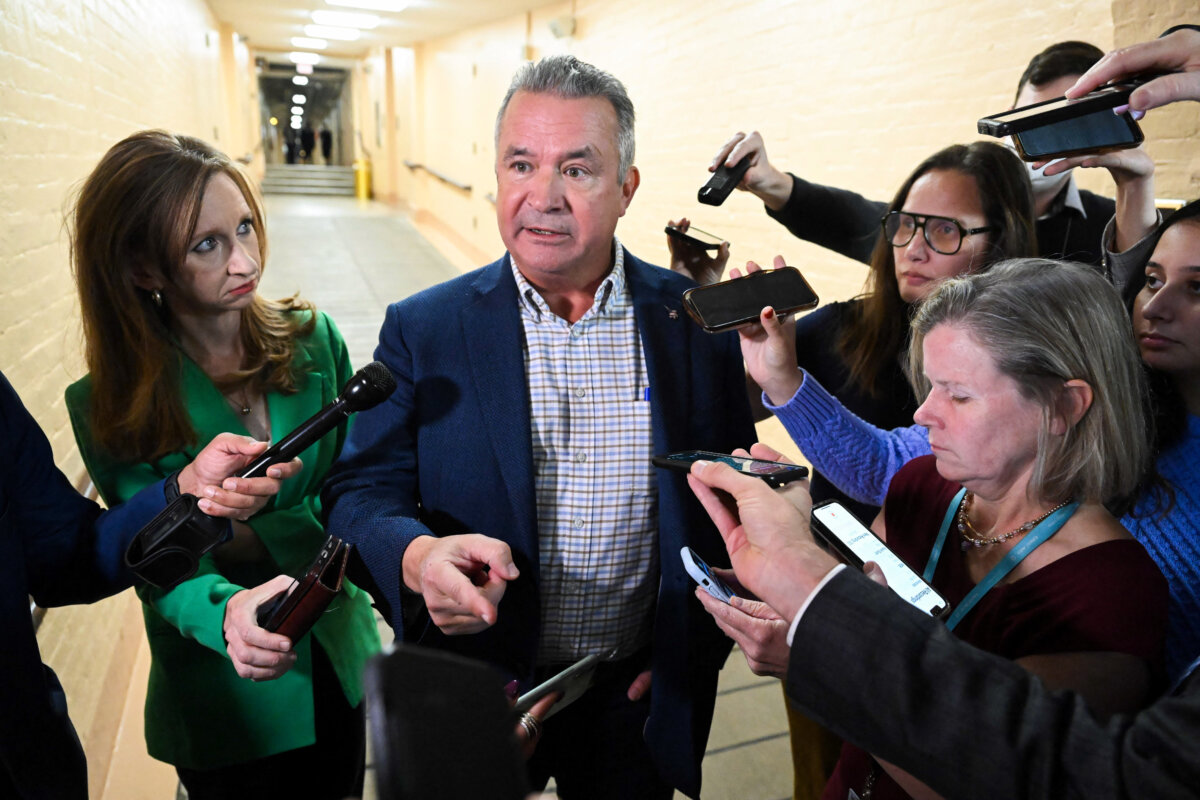
District Two incumbent Rep. Don Bacon (R-Neb.) is stepping down from the seat he has held since 2017.
Brinker Harding, a 65-year-old commercial real estate broker and a member of the Omaha City Council since 2017, is the presumptive Republican nominee as he is unopposed.
On social media, Harding boasts President Donald Trump’s endorsement, and he vows to bring accountability to Congress.
Six Democrats, state Sen. John Cavanaugh, Denise Powell, Crystal Rhoades, Van Argyrakis, Kishla Askins, and Melanie Williams, are vying for their party’s nod.
Kleeb said she hasn’t seen polling data, but based on campaign contributions, Powell and Cavanaugh appear to be the front-runners for the nomination.
Cavanaugh, 45, is in his second term as state senator for Legislative District Nine in midtown Omaha. Cavanaugh said that if he is elected to Congress, he will “fight Trump’s chaos and defend the values Democrats stand for.”

His FEC report shows that he has raised $981,800.96. This is the second highest total among Democrats in the race.
Denise Powell has raised the most, at roughly $1.6 million, according to her FEC filings.
Powell, 47, of Omaha, is a small-business owner and head of the Women Who Run political action committee. On her website, she states that she will work to undo Trump administration policies that have allegedly hurt average Nebraskans. This includes reversing tax cuts for the rich, stopping trade policies that drive up prices for consumers, and reversing changes to Medicare.
“John has a very strong family legacy name, and so especially in the early polls, he was very high because of his name ID,” Kleeb said. “But Denise Powell has the support of a lot of outside groups that are increasing her name ID. So it will be very interesting to see where the electorate falls.”
Democrat James Leuschen, will be on the ballot, although he dropped out of the race on March 30.
Libertarian Eric Michael Foreman is seeking his party’s nomination as well.
 Friends Read Free
Copy
Facebook
Tweet
Friends Read Free
Copy
Facebook
Tweet