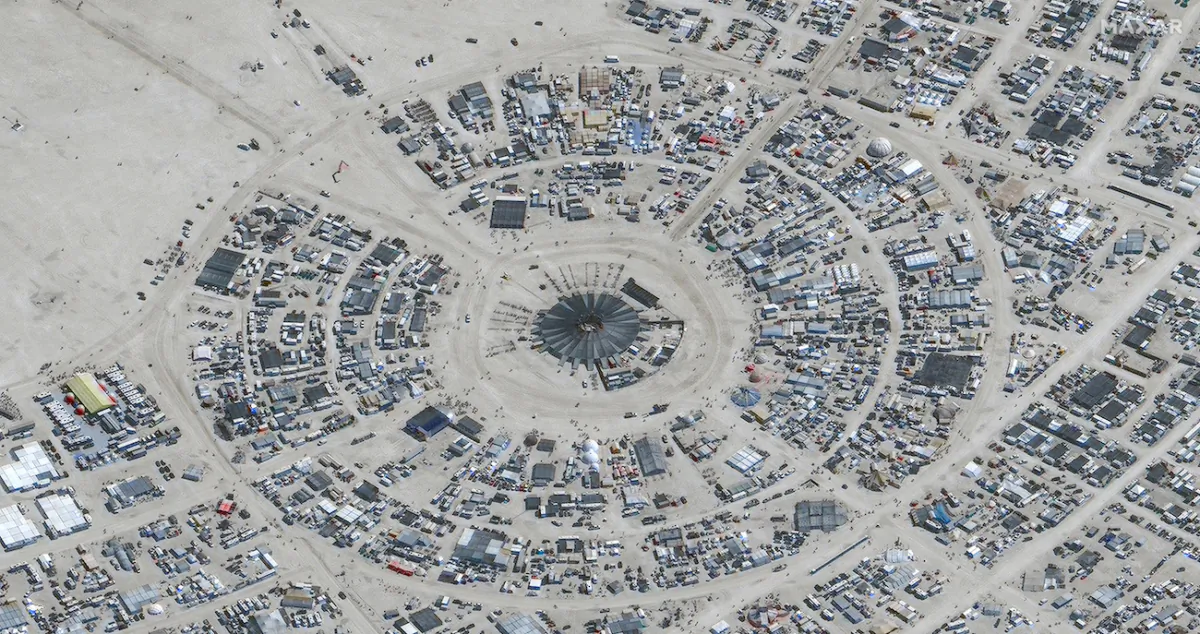

Thousands of Burning Man attendees who are stuck at the festival in the Nevada desert because of muddy conditions are being advised to leave on Sept. 5, according to organizers, as CEO Marian Goodell told people to stay calm.
“Consider delaying your departure from Black Rock City until Tuesday 9/5. This will alleviate large amounts of congestion throughout the day today, Monday 9/4,” an update on the official website reads.
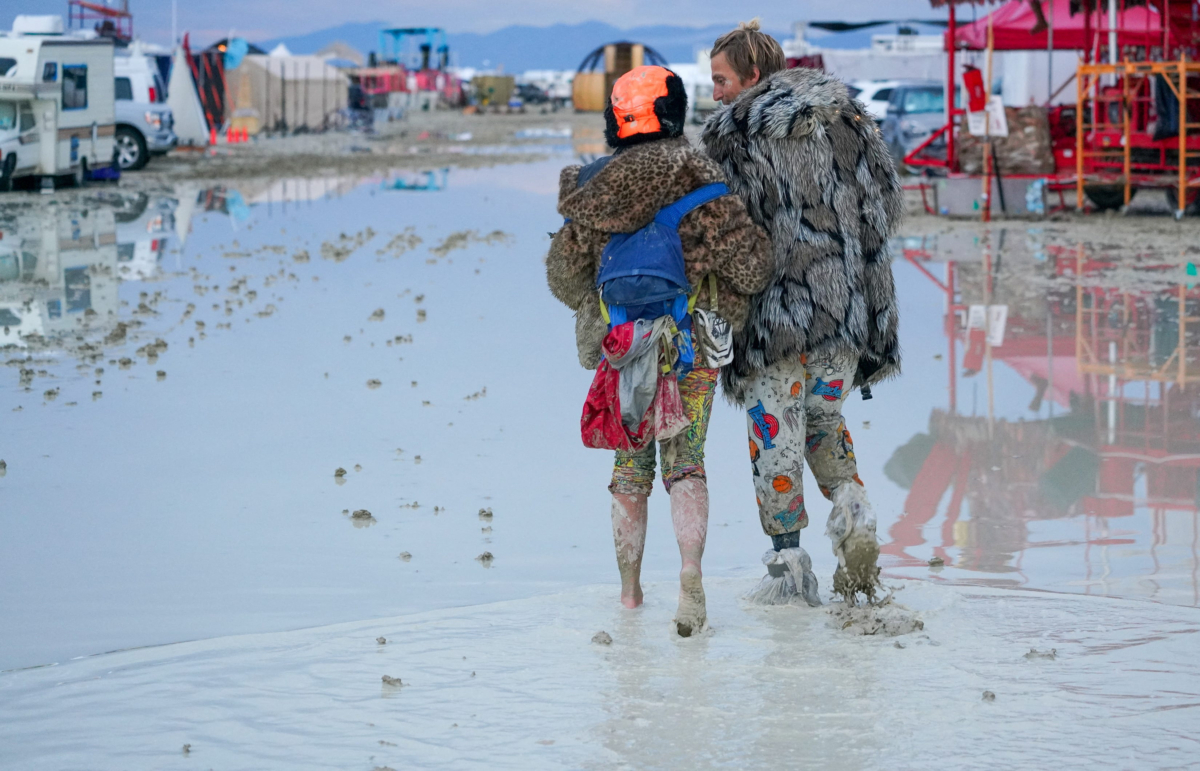
The social media account Burning Man Traffic, which posts updates about the annual event, wrote on X, formerly known as Twitter, that Gate Road “remains too wet [and] muddy for most vehicles to safely navigate,” but it is “drying.” The “exodus” is most likely going to start at around “midday” on Sept. 4, it said.
Organizers also asked attendees not to walk out of the Black Rock Desert, about 110 miles north of Reno, as some others had done throughout the weekend. They didn’t specify why.
“Obey all traffic laws and respect our neighbors and law enforcement as you travel through Gerlach, Empire, Nixon, and Wadsworth, and the Pyramid Lake Paiute Tribe reservation,” the update also stated.
Reports say the area is beginning to dry because of sunnier conditions. Some 70,000 people are estimated to be stuck there because of the muddy conditions, while at least one death has been reported.
Meanwhile, Ms. Goodell said “there is no cause for panic” and urged people who are still stuck in the muddy Nevada desert to remain calm.
“We’ve made it really clear that we do not see this as an evacuation situation,” she told NBC News on Sept. 3. “The water is drying up.”
Flooding Begins
While the event started on Aug. 27, the chaos began on Sept. 1, when event attendees, known as “burners,” were told to shelter in place to conserve water, fuel, and food after flooding transformed the dried-up alkaline lake bed into a muddy pit. Organizers closed the roads and gates on Sept. 2 after they became impassable for many vehicles because of the mud.
The road closures came just before “the Man” was to be set on fire on the night of Sept. 2. The event traditionally culminates in the torching of the large wooden effigy of a man and a wooden temple structure during the final two nights; the fires were postponed to the night of Sept. 4, which was scheduled to be the last day of the event, as authorities worked to reopen exit routes by the end of the Labor Day weekend.
The annual gathering, which started on a San Francisco beach in 1986, attracts nearly 80,000 artists, musicians, and activists for a mix of wilderness camping and performances. Disruptions are part of the event’s recent history: Dust storms forced organizers to temporarily close entrances to the festival in 2018, and the event was twice canceled altogether during the pandemic.
At least one fatality has been reported, but organizers said the death of a man in his 40s wasn’t weather-related. The sheriff of nearby Pershing County said he was investigating but hasn’t identified the man or a cause of death.
President Joe Biden told reporters in Delaware on Sept. 3 that he was aware of the situation at Burning Man, including the death, and that the White House was in touch with local authorities.
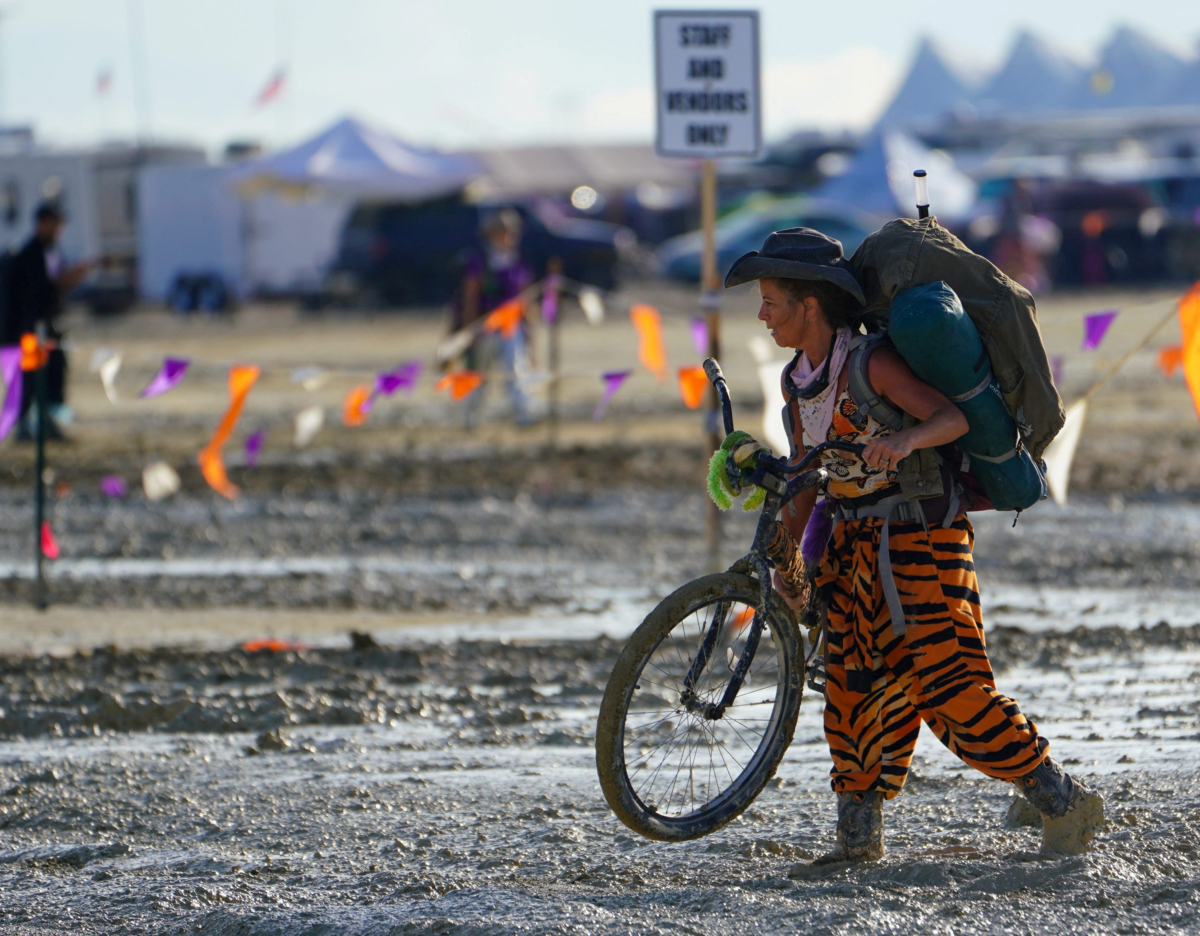
Attendees Trying to Leave
Local officials have said hotels can help some attendees, although the airport in Reno may not be able to deal with all the travelers.
“We are discouraging people from camping out at the airport. We really don’t have the space,” Reno-Tahoe International Airport spokesperson Stacey Sunday told The Washington Post on Sept. 4. “Don’t come to the airport unless you have a boarding pass and you’re ready to board a flight.”
The Associated Press contributed to this report.
 Friends Read Free
Copy
Facebook
Tweet
Friends Read Free
Copy
Facebook
Tweet