Sixteen drugmakers have entered into or are negotiating confidential pricing deals with the Trump administration. Apart from the broad strokes laid out in public announcements, most details remain unknown.
President Donald Trump’s aim in making the deals is to correct the long-standing practice by pharmaceutical companies of charging Americans about three times more for prescription medications than those in other countries.
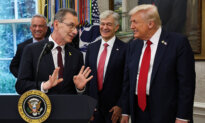
The president announced the most favored nation prescription drug policy in May 2025, saying in a social media post, “The United States will pay the same price as the Nation that pays the lowest price anywhere in the World.”
Six weeks later, he stated the terms of the policy in a July 31 letter to pharmaceutical companies, offering relief from certain tariffs to those who agreed to comply.
Yet the confidential nature of the agreements makes their impact difficult to assess.
The Epoch Times combed through corporate filings with the Securities and Exchange Commission (SEC), quarterly earnings calls, press releases, and White House statements to obtain a fuller picture of the scope of the most favored nation prescription drug pricing agreements.
Here is what we know about the most favored nation agreements.
Some Drugs Excluded
Trump’s vision was for drugmakers to offer their best price to Medicaid on their “full portfolio of existing drugs” and to do the same for “all new drugs” offered in Medicaid, Medicare, and through commercial insurers.
Yet some drug companies have said their agreements exclude certain new and existing medications.
For example, Merck, the world’s largest pharmaceutical maker, stated that it agreed to offer existing medicines at a discount to Medicaid, “excluding certain products.”
Merck also said new medications would be offered at most favored nation pricing “with certain exceptions.”
Sanofi, the 10th-largest drugmaker, said it agreed to offer discounts on “select medicines.”
Pfizer said it has agreed to offer a large majority of its primary care treatments and some select specialty brands at reduced prices.
Some Negotiations Ongoing
Preliminary most favored nation agreements were announced between Sept. 30, 2025, and Jan. 12, 2026, and some companies indicated that final details were yet to be worked out.
Some companies now appear to have concluded their agreements.
Genentech’s agreement is a contract with the government, not a non-binding letter of intent, CEO Thomas Schinecker told investors on Jan. 29.
Adam Lenkowsky, executive vice president of Bristol Myers Squibb, told investors on Feb. 5 that the company had finalized a Medicaid agreement with the government.
Others recently indicated that their agreements are still in progress.
Pfizer said in a Feb. 26 statement that it was “in the process of entering into binding final agreements.”
Most Prices Unclear
Trump has consistently defined most favored nation pricing as the lowest price available in any developed nation.
When manufacturers mention specific discounts on products, those discounts are substantial.
Bristol Myers Squibb will offer Eliquis to Medicaid patients for zero dollars. Merck will offer Januvia, Janumet, and Janumet XR at a 70 percent discount. Pfizer will offer primary care medications at an average discount of 50 percent.
Yet some manufacturers leave pricing vague.
Eli Lilly & Co.’s SEC statement states that it will introduce new medications with “a more balanced pricing approach” across developed nations.
Sanofi, the 10th-largest drugmaker, said it agreed to offer “substantial discounts.”
Genentech promised prices “comparable” to those in other developed nations.
Maziar Doustdar, CEO of Novo Nordisk, appeared to downplay the effect of most favored nation prices in a Feb. 6 investor call, saying that the prices were not “night and day different.”
Partial savings from the most favored nation policy might be calculated through a quarter-to-quarter comparison of Medicaid prescription drug spending. However, data for the next full quarter, April through June, likely will not be released before February 2027.
3-Year Term
Merck and Sanofi said their agreements with the government are for a three-year term.
Gilead Sciences said the tariffs were “paused” for three years. Eli Lilly & Co. also mentioned the three-year duration of the tariff relief.
Some manufacturers mentioned three-year certainty on tariffs and pricing as a benefit of the deals, yet they appear concerned about what will happen after that.
Sanofi’s Feb. 17 SEC filing states that the company has secured “near-term clarity” during the three years the deal is in effect but that “uncertainty remains” about the potential impact on future product launches.
Merith Basey, CEO of the advocacy group Patients for Affordable Drugs, said the limited duration would allow drugmakers to increase prices as soon as the deals expire.
“Patients can’t rely on voluntary agreements to deliver lasting savings,” Basey told The Epoch Times by email. “Americans need permanent reform with real enforcement, not deals relying on the ‘goodwill’ of drug corporations that are designed to run out.”
Sanofi declined to provide comments to The Epoch Times beyond the information in a December 2025 statement.
Workaround for New Releases
Trump asked drugmakers to offer new medications at most favored nation prices. Yet some manufacturers are evaluating whether to release all-new products in certain markets under the most favored nation agreements.
Merck said a possible consequence of its agreement is that “certain of the Company’s products may not be launched in the [most favored nation] Countries or their launch may be delayed.”
When pricing constraints reach a certain point, companies may simply decide to allocate their investment elsewhere, Marsha Cohen, emeritus professor at the University of California College of the Law–San Francisco, told The Epoch Times.
“At what point do they not choose to sell in a country?” Cohen said. “Or at what point do they not sell?”
Drugmakers could decide not to offer certain drugs elsewhere to keep prices high in the United States, C. Michael White, professor and chair of pharmacy practice at the University of Connecticut School of Pharmacy, told The Epoch Times.
“If pharmaceutical companies have what look like mildly effective experimental drugs in their pipeline that can only fetch lower prices overseas, those drugs will be shelved,” White said.
Merck did not respond by publication time to a request for comment.
Limited Direct-to-Consumer Products
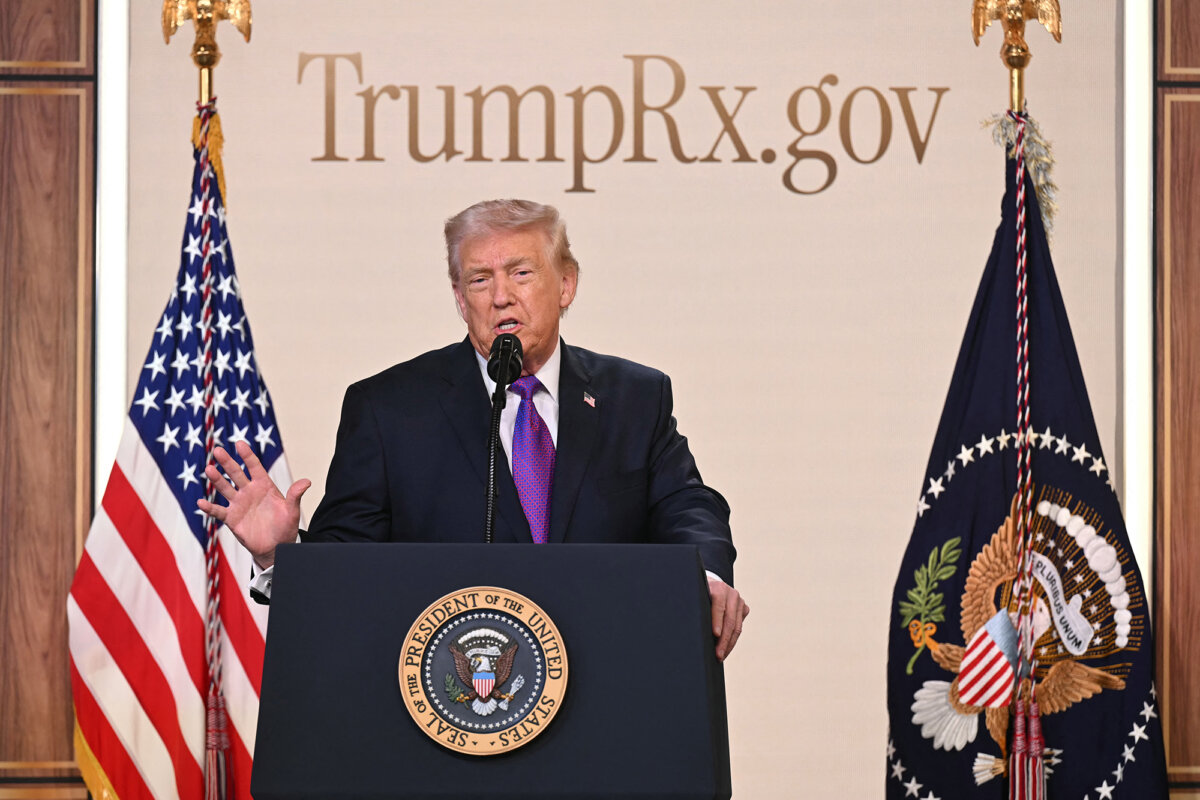
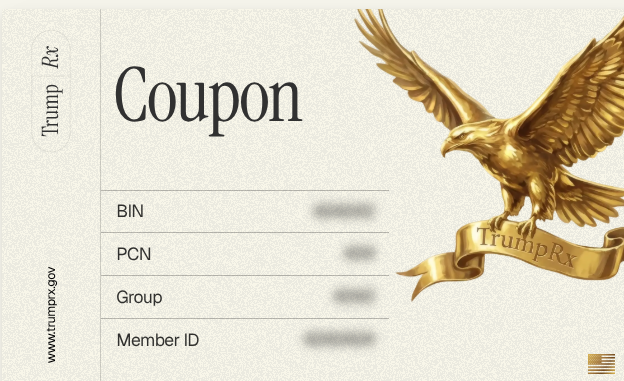
Trump called for drugmakers to offer “high-volume, high-rebate prescription drugs” directly to consumers through sites such as TrumpRx.gov to ensure that all customers can get medications at the same prices offered to third-party payers.
Yet the number of drugs included for direct-to-consumer sales appears limited so far.
TrumpRx currently lists 44 medications available for direct purchase from manufacturers, although some drugmakers offer consumer sales through other platforms.
Some manufacturers have mentioned only a few drugs intended to be sold directly to consumers.
Manufacturers did not say the listings were exhaustive, allowing the possibility that others could be added.
Other Terms
Novartis said its agreement included applying to participate in the generating cost reductions for U.S. Medicaid model. Participants in this five-year program offer rebates to states for drugs included in the project to align with prices in other selected countries.
A spokesperson for the Centers for Medicare and Medicaid Services told The Epoch Times that some drug manufacturers have applied to participate in that program but did not say which ones.
The spokesperson did not directly say whether participation in the program is required for companies entering most favored nation agreements but stressed the voluntary nature of the program.
Trump also asked drugmakers to return the increased revenue from higher prices charged abroad to the United States. Nearly all mentioned multibillion-dollar investments in U.S. manufacturing, infrastructure, or research are to be made within five years.
‘It’s Complicated’
Consumer savings from most favored nation agreements appear difficult to calculate.
“It’s complicated,” Cohen said, noting that the United States has a large number of buyers, such as government programs Medicare and Medicaid, private insurance companies, large health care providers, and individual consumers.
“Canada negotiates for the drug prices for everybody in its health care system,” Cohen said. “Countries with central health care systems have had buying power that we didn’t have.”
The most favored nation agreements were made at least in part not to close a big sale but to avoid a tariff. Several company statements indicate that their deals with the administration have not been finalized.
Trump has called on Congress to codify the most favored nation policy into law, which some manufacturers have mentioned as a source of uncertainty.
As it stands, most favored nation tariff relief is in effect until January 2029, which is the last month of Trump’s term.
The White House did not respond by publication time to a request for comment.
 Friends Read Free
Copy
Facebook
Tweet
Friends Read Free
Copy
Facebook
Tweet