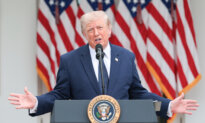
President Donald Trump has told CEOs of the world’s leading pharmaceutical companies that he expects them to implement Most Favored Nation drug pricing within 60 days.
The president sent letters to 17 drug makers, including several headquartered overseas, announcing that he would “deploy every tool” available “to protect American families from continued abusive drug pricing practices.”
Fulfilling a campaign promise, Trump issued the Most Favored Nation Prescription Drug Pricing executive order on May 12, asking drugmakers to offer their lowest price on a slate of drugs in the United States.
Prescription drug prices are higher in the United States than anywhere else in the world, more than twice as much on average, according to a 2024 report from the Department of Health and Human Services. For the most expensive medications, the disparity is even greater.
In his May 12 executive order, Trump asked drug makers to voluntarily offer the lowest price to U.S. customers. If they did not, Trump said he would “take additional aggressive action.”
Since then, Trump said drug makers have responded with blame shifting and requests for policy changes that would amount to billions of dollars in “handouts” to the industry.
Lower prices are available in other countries in part because those with centralized health care systems can essentially dictate pricing.
The president characterized this arrangement as freeloading by other nations.
“Moving forward, the only thing I will accept from drug manufacturers is a commitment that provides American families immediate relief from the vastly inflated drug prices and an end to the free ride of American innovation by European and other developed nations,” Trump wrote.
Identical letters were sent to AbbVie, Amgen, AstraZeneca, Boehringer Ingelheim, Bristol Myers Squibb, Eli Lilly and Company, EMD Serono, Genentech, Gilead Sciences, GSK, Johnson & Johnson, Merck, Novartis, Novo Nordisk, Pfizer, Regeneron Pharmaceuticals, and Sanofi.
Trump asked the companies to make “binding commitments” to the Most Favored Nation plan by Sept. 29.
That includes offering the most-favored-nation price to Medicaid, guaranteeing the most-favored-nation price for new medications, and using revenue gained from price hikes overseas to pay for the price cuts to American consumers.
The Medicaid program spends more than $80 billion a year on prescription drugs.
Stephen J. Ubl, president of Pharmaceutical Research and Manufacturers of America, said Trump is right that Americans pay too much for medications while other countries pay too little.
However, in a July 1 statement, Ubl blamed pharmacy benefit managers, companies that act as middlemen in the drug supply chain, a lack of transparency in the supply chain, and other factors for high prices in the United States.
Manufacturers have argued that if they lower prices in the United States, they will not be able to recoup research and development costs for expensive drugs, which can top $1 billion. The effect would be the slowing of development of new medications.
“Consider Europe, which invented a majority of the world’s new drugs in the 1980s, while the United States produced less than one-third,” Ubl said. “Today, that dynamic has flipped—the United States now develops more than twice as many new treatments as Europe.”
Trump’s policy extends to payments made by the federal government, principally Medicare and Medicaid. Medicare now negotiates prices for a few drugs through the Medicare Drug Price Negotiation Program, which was established in 2022.
That covers just 10 medications so far in the Medicare Part D program. The lower prices will take effect in January.
A second round of 15 drugs is slated for price negotiation, effective in 2027.
Advocacy group Patients for Affordable Healthcare told The Epoch Times via email, “Yesterday’s letters make clear that the administration recognizes that drug companies are gaming the system to keep prices high here in the U.S.; however, the letters still leave far too much room for the industry to protect its profits while also raising prices for patients abroad.”
A representative from AbbVie responded to a request for comment by email, saying, “We’re optimistic that our proposed solutions can meet the Administration’s goals without sacrificing our ability to advance future medical breakthroughs for patients and maintain U.S. leadership in innovation. We look forward to continued engagement with President Trump and his Administration.”
A representative from Gilead Sciences told The Epoch Times that the company had received Trump’s letter and would respond.
A representative from Eli Lilly said that the letter was under review and referred The Epoch Times to Pharmaceutical Research and Manufacturers of America for comment.
The Epoch Times did not receive responses to requests for comment before publication time from the Pharmaceutical Research and Manufacturers of America, Pfizer, Johnson & Johnson, Bristol Myers Squibb, and Regeneron.
 Friends Read Free
Copy
Facebook
Tweet
Friends Read Free
Copy
Facebook
Tweet