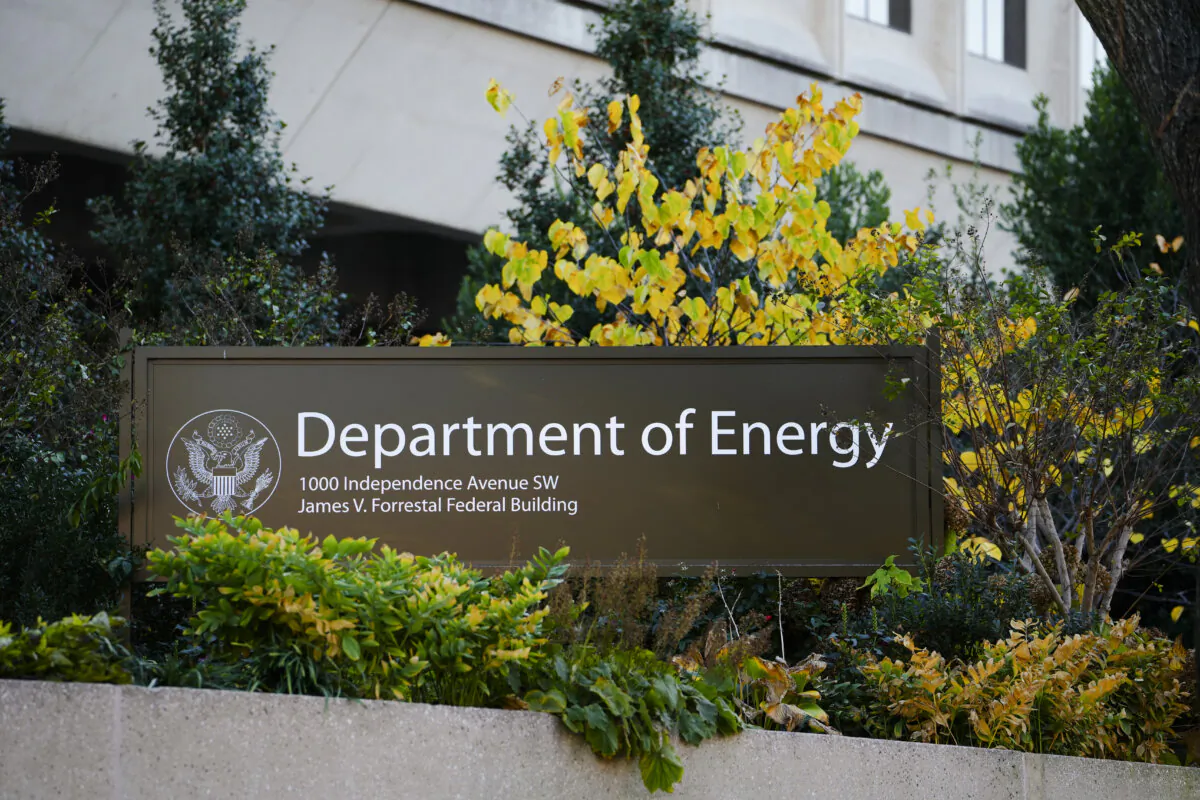

The third advanced nuclear reactor authorized by the Department of Energy (DOE) went critical on June 30, meeting a deadline set by President Donald Trump in May last year, the department said in a July 1 statement.
Criticality is the point at which a nuclear reactor has achieved a perfectly stable state, under which a power plant can generate electricity round the clock.
In May 2025, Trump signed an executive order directing the DOE to launch a pilot program to accelerate the testing of advanced reactor designs outside of national labs, setting July 4, 2026, as the deadline for at least three advanced reactor concepts to hit criticality. Unity, the demonstrator nuclear reactor developed by Deployable Energy, “successfully completed a zero-power fueled criticality demonstration at Idaho National Laboratory” on June 30, the DOE said.
Earlier in June, Antares Nuclear’s Mark-0 and Valar Atomics’ Ward 250 had also achieved criticality under the DOE’s Reactor Pilot Program. This makes the United States “the first country in history to achieve criticality in three unique advanced microreactor designs in a single month.”
According to a July 1 statement from Idaho-based Deployable Energy, the company is developing Unity as a compact, one-megawatt electric, water-moderated, gas-cooled deployable nuclear battery that can provide “reliable, carbon-free power” in situations in which conventional energy cannot be deployed.
The battery is expected to be used for defense missions, powering remote communities, ensuring the resilience of critical infrastructure, and meeting the industrial energy needs of the United States.
The company will now be entering a phased testing program that includes validating the reactor’s inherent safety, physics, and full-power operations.
Secretary of Energy Chris Wright said: “America’s nuclear renaissance is underway because of President Trump’s bold vision and ambitious goals. Yesterday, we accomplished a significant milestone on a timeline many thought was unachievable.”
“Advanced nuclear technologies like Unity will help power the next generation of American industry, strengthen our energy security, and ensure the United States remains the world’s nuclear innovation leader,” he said.
The Unity criticality experiment was completed by Deployable Energy under the DOE’s Nuclear Energy Launch Pad initiative, managed by the National Reactor Innovation Center at Idaho National Laboratory.
The initiative leverages DOE authorization to speed up certification and construction of advanced nuclear technologies for demonstration purposes.
US Nuclear Power
The Trump administration has promoted the development of zero-carbon nuclear energy, and Trump has set a target of expanding the country’s nuclear energy capacity from roughly 100 gigawatts in 2024 to 400 gigawatts by 2050, according to a Jan. 19 DOE fact sheet.
“More than 100 gigawatts (GW) of firm reliable power were projected to retire by 2030,” the DOE said. “Without the election of President Trump and a dramatic shift in energy policy, blackouts could have increased 100 times in 2030.”
“Nuclear Power will play an important role in unleashing more affordable, reliable, and secure electricity to the American people,” it stated.
Last month, the DOE announced that the Trump administration will offer funding to help rebuild America’s commercial nuclear supply chain.
The department’s finance office has started a $17.5 billion loan program that is expected to cut down construction costs of nuclear reactors, according to Wright. The loans are projected to speed up the deployment of 10 new large nuclear reactors by up to three years.
“Just over one year ago, President Trump directed the Energy Department and its agency partners to unleash the next American nuclear renaissance,” Wright said. “To accomplish that mission, these conditional loans will play an important role in reviving the supply chain needed for America to once again build large-scale commercial reactors.”
Meanwhile, on July 1, the Nuclear Regulatory Commission, a federal agency overseeing licensing and regulation of radioactive materials and nuclear energy, proposed implementing reforms to modernize reactor licensing and safety practices.
The regulatory updates are expected to help accelerate the construction of nuclear reactors. Commission Chairman Ho Nieh said that the agency’s regulations have not kept pace with the United States’ energy needs and new developments in technology.
The proposed rule will strip “rigid frameworks and unnecessary conservatism” to speed up nuclear deployment in the country, Nieh said.
 Friends Read Free
Copy
Facebook
Tweet
Friends Read Free
Copy
Facebook
Tweet