
The Trump administration will provide funding to help rebuild the U.S. commercial nuclear supply chain, the Energy Department announced on June 23.
To carry out President Donald Trump’s May 2025 executive order—Reinvigorating the Nuclear Industrial Base—the Energy Department’s finance office has launched a $17.5 billion loan program.
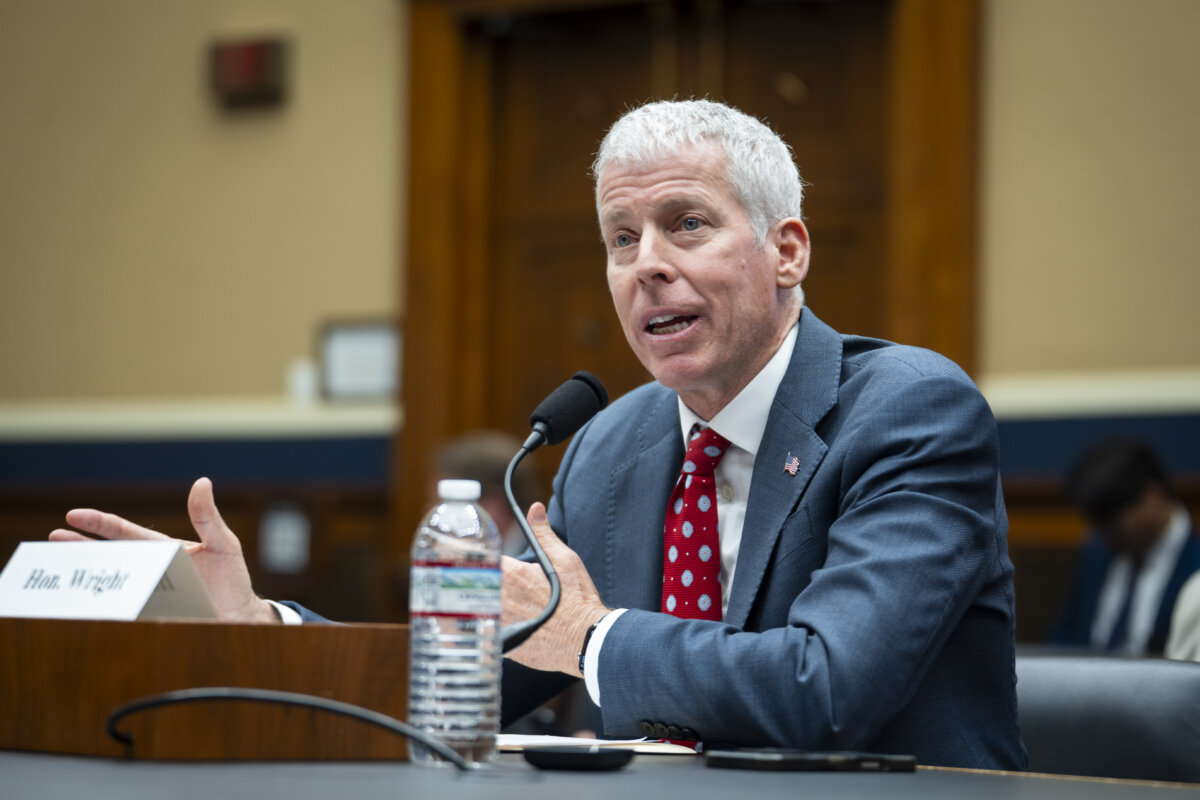
The funds will reduce construction costs, cover large equipment purchases for five utility-backed projects, and accelerate the rollout of 10 new large nuclear reactors by up to three years, Energy Secretary Chris Wright said.
“Just over one year ago, President Trump directed the Energy Department and its agency partners to unleash the next American nuclear renaissance,” Wright said in a statement. “To accomplish that mission, these conditional loans will play an important role in reviving the supply chain needed for America to once again build large-scale commercial reactors.”
All five projects plan to use Westinghouse’s AP1000 reactor, a 1.1‑gigawatt design capable of powering more than 800,000 homes.
Westinghouse expects to work with up to five qualifying utilities or energy firms and has already signed preliminary agreements with seven potential partners, each tied to a specific project site.
The loans will not be directly given to Westinghouse.
“Both Westinghouse and the partner are required to fully commit their project equity, $500 million each ($1 billion total per project), upfront prior to accessing DOE loan funds,” the statement reads.
Wright will visit the Idaho National Laboratory on June 25 to unveil more details and outline the White House’s nuclear power ambitions.
The announcement received applause from the Citizens for Responsible Energy Solutions.
“Nuclear power is the cornerstone of America’s energy future, and no administration has moved more aggressively to support the industry than President Trump’s,” Heather Reams, president and CEO of Citizens for Responsible Energy Solutions, said in a statement.
“This investment will play a critical role in scaling nuclear resources to meet growing electricity demand and ensure the United States remains an energy leader on the global stage.”
Investors also cheered the news, with shares of Westinghouse’s parent company, Cameco Corp., climbing by more than 1 percent after the announcement.
Nuclear has played a significant role in the current administration’s energy initiatives.
Last year, the president set an objective to quadruple U.S. nuclear capacity to 400 gigawatts by 2050. This will be achieved by bolstering supply chains, restarting shuttered reactors, and completing partially constructed plants.
According to last year’s executive order, the White House also wants to expand uranium mining and enrichment, reduce reliance on foreign suppliers, and increase spent-fuel management.
The private sector is also aiming to revive nuclear power to keep data centers across the country running.
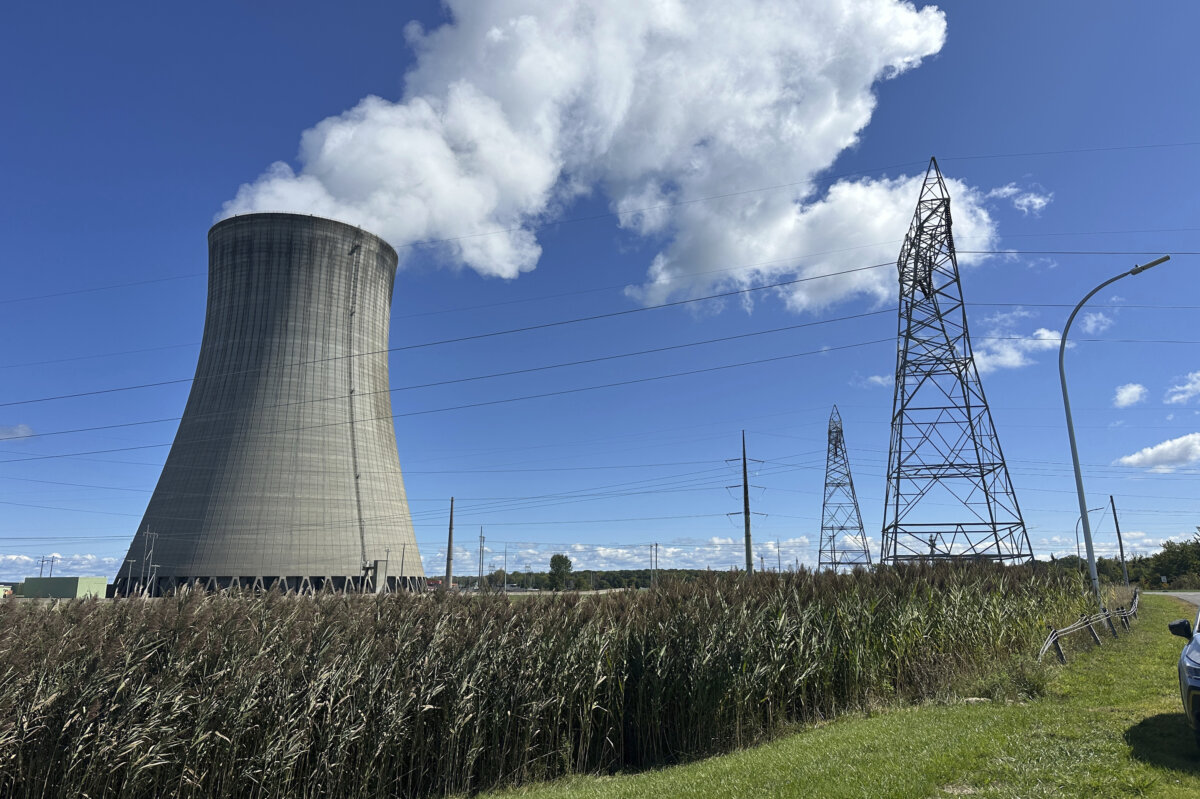
Microsoft signed a 20‑year agreement in 2024 to buy power from Constellation Energy as part of a plan to restart the shuttered Three Mile Island Unit 1 reactor in Pennsylvania.
Constellation stated that bringing the unit back online would add about 835 megawatts of capacity to the grid, support about 3,400 direct and indirect jobs, and generate more than $3 billion in state and federal tax revenue.
With $1 billion in federal loans, the plant could begin generating power again in 2027—one year ahead of schedule.
Last fall, Alphabet’s Google entered an agreement with NextEra to revive Iowa’s Duane Arnold Energy Center by 2029.
The National Electrical Manufacturers Association stated in May that annual U.S. electricity consumption will grow by about 55 percent by 2050, driven mainly by data centers. This is up from the initial 50 percent forecast a month earlier.
“A year ago, we sounded the alarm on the scale of what was coming,” group president and CEO Debra Phillips said in a May 7 statement. “Today’s update makes clear that the trajectory has only steepened. The good news is that we don’t have to wait for the next generation of infrastructure to begin closing the gap between grid capacity and real needs.”
Nuclear accounts for almost a fifth of the country’s power generation. Natural gas remains the top source, representing 43 percent. This is followed by renewables (21 percent) and coal (16 percent).
 Friends Read Free
Copy
Facebook
Tweet
Friends Read Free
Copy
Facebook
Tweet