


Parkinson’s disease steals movement. Yet one of the most popular therapies asks patients to dance.
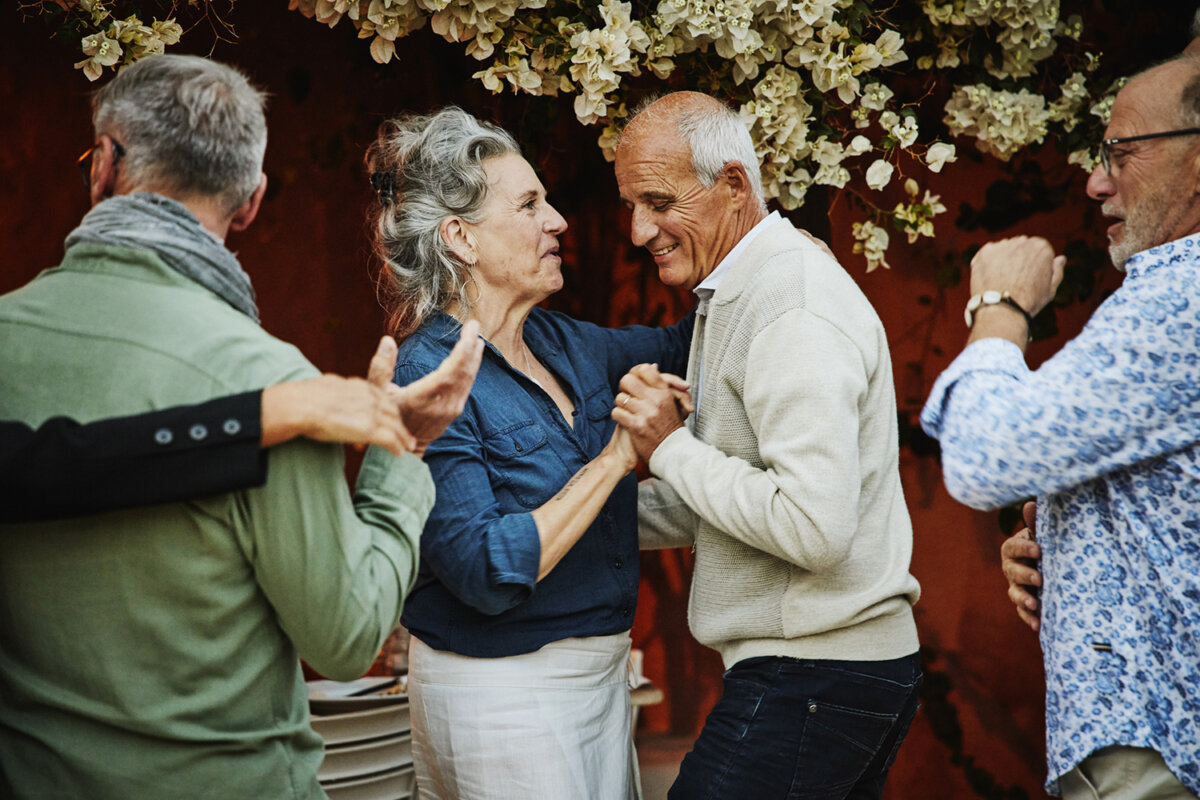
In studios from Brooklyn to the UK, dance is happening and is increasingly discussed in clinical conversations as well. Studies now support the notion that dance benefits people with Parkinson’s in ways that go beyond what medication alone can achieve.
“Medication manages symptoms,” Dr. Fiona Gupta, a board-certified neurologist and director of the Division of Movement Disorders at New York Neurology Associates, told The Epoch Times. “Dance may help rewire compensatory neural pathways.”
Why It Works
Dance has been proposed as a multimodal form of neurorehabilitation.
“It simultaneously combines physical movement, cognitive challenge, music processing, rhythm, emotional engagement, and social interaction in a way that generic exercise like treadmill walking simply does not,” Gupta said. “This multi-system stimulation is especially relevant because Parkinson’s affects multiple brain networks at once.”
Central to dance’s effectiveness is the role of music. External auditory cues help people with Parkinson’s improve walking speed and stride length, which music achieves more effectively than a simple metronome because it provides both rhythm and emotional engagement.
On a biological level, music triggers positive emotional responses that are linked to dopamine activity in the brain’s reward system—particularly relevant in Parkinson’s disease, which is characterized by a loss of dopamine-producing cells in the brain.
Specific dance forms have been studied in detail. Tango improves balance and general mobility, and mixed dance programs reduce freezing of gait, one of the most disabling symptoms of the disease.
Learning new choreography appears to drive structural changes in the brain, particularly in the basal ganglia, which is the network of structures responsible for controlling movement that is most directly affected by Parkinson’s. This may help the brain relearn how to observe and imitate movement, according to Gupta, building workaround pathways that compensate for damaged ones. It is neuroprotective territory that dopamine-replacement medications do not reach.
Dance Floor Stories
David Leventhal is a founding teacher of Dance for PD at the Mark Morris Dance Group in Brooklyn. His program using dance as a tool for people with Parkinson’s began not in a laboratory but with a conversation.
“It actually began because Parkinson’s chose us, in a way,” he told The Epoch Times.
The program started in 2001 when Olie Westheimer, founder of the Brooklyn Parkinson Group, approached the Mark Morris Dance Group with an idea: creating a real dance class for people with Parkinson’s. Westheimer believed that dancers’ understanding of balance, rhythm, coordination, sequencing, and expressive movement could help people dealing with movement challenges in ways that clinicians could not.
“I witnessed, after teaching the first class, that the combination of dance and music could transform the physical and emotional experience of our Parkinson’s dancers over the course of just an hour,” Leventhal noted. “It was dramatic.”
More Than Movement
Ask people with Parkinson’s why they keep coming back to class, and the conversation quickly moves beyond mobility and balance.
One participant, a former Marine and a hard-driving New York litigator who, at first glance, seemed unlikely to fall in love with dance, came to the class after his Parkinson’s diagnosis, discovered tap dance, and eventually performed a solo that he had worked on for months.
“The pride and joy on his face were unforgettable,” Leventhal said.
Another participant found the confidence and stamina to dance at a family wedding, something that she had deeply wanted to do.
“These may sound like small moments, but for people living with Parkinson’s, reclaiming that kind of confidence, pleasure, and agency can be enormous,” Leventhal said.
Parkinson’s often affects far more than movement: Confidence, identity, speech, and social connection are all frequently disrupted. Facial masking, the disease’s tendency to reduce visible emotional expression, can strain close relationships. In this context, dance offers something that medicine does not: a space for creativity, self-expression, and genuine human connection.
“We wanted to create something that addressed the whole person rather than focusing only on symptoms,” Elaine Harvey, director of Moving Minds and lead facilitator for Finding Flow, its Parkinson’s dance program, told The Epoch Times.
The benefits extend to caregivers and family members as well, she said.
Shared creative experiences can shift relationships away from purely caring roles and allow moments of joy and partnership that the illness can otherwise crowd out, Harvey said.
Many participants attend with partners, which adds further benefits through shared activity and connection, she noted.
In the UK, Keith Wilson, who lives with Parkinson’s and advocates for others with the condition, describes his weekly dance class as a true highlight.
“I used to enjoy ballroom dancing before my diagnosis, but I can’t hold my posture any longer,” he said. “Even so, the Parkinson’s dance class is one of the most enjoyable sessions of the week.”
What a Class Looks Like
While dance classes may vary slightly depending on the teacher and setting, they tend to follow a similar structure and are designed to be accessible to people with different levels of ability.
A typical Dance for PD class begins seated so everyone can warm up and move without worrying about balance. From there, participants may move into standing work, chair-supported movement, barre work, or traveling and group dances, depending on their ability and comfort, with seated options always available.
More unique sessions combine expressive movement, rhythm, and improvisation—all supported by carefully chosen music. The atmosphere matters as much as the movement. Sessions feel connected and mutually supported.
“Wherever sessions take place, the goal is never perfection; it’s to help people move with more confidence, imagination, musicality, and joy while building strong social bonds,” Leventhal said.
Creative health approaches are sometimes underestimated because they don’t always fit neatly into traditional medical models, Harvey said. But evidence and practice suggest that they should.
“Dance offers simultaneous physical, cognitive, emotional, and social stimulation in a way that feels motivating and deeply human,” she said. “The impact can be incredibly significant.”