
A long and “dangerous” heat wave will target a large swath of the central and eastern United States this week, according to the National Weather Service (NWS). Heat-related alerts impacting tens of millions of Americans were issued on Monday morning.
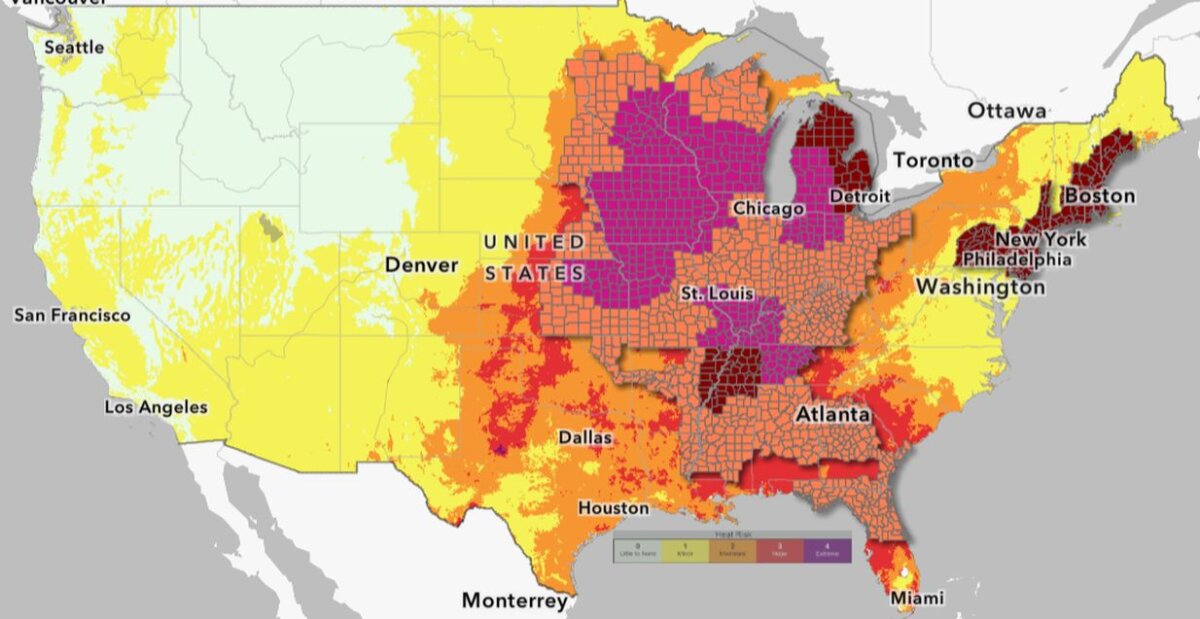
A tracker posted on the NWS’s heat.gov website shows that around 60 million people are under some form of heat alert as of June 29.
Extreme heat warnings were issued across the Midwest and South, affecting cities such as Chicago, St. Louis, Kansas City, Milwaukee, Minneapolis, Nashville, and more. Extreme heat watches were in effect in other areas, including New York City, Boston, Providence, Detroit, and Memphis.
Heat watches were issued across a broad section of the South and Midwest, according to a map provided by the NWS. An extreme heat watch means that dangerous heat is possible, while an extreme heat warning means that dangerous heat is happening or is about to happen, according to the NWS.
An NWS bulletin said that “dangerous heat” with temperatures in the 90s and lower 100s Fahrenheit across much of the central and eastern parts of the country will start this week. The combination of high humidity and high temperatures “will produce heat indices” around 105 to 115 F in areas of the southern Plains, the Mississippi Valley, and the Mid-Atlantic.
Meanwhile, overnight temperatures will have a relatively limited drop, with many locations seeing lows in the mid to upper 70s F.
“The combination of prolonged daytime heating and limited nighttime relief will increase the risk of heat-related illnesses, especially for vulnerable populations and those without adequate cooling,” the NWS said.
The weather service also issued red flag warnings for wildfires in the southwestern United States because of extremely dry and windy conditions.
How to Avoid Heat Stroke
Excessive heat has killed 211 Americans per year on average over the past 30 years or so, outpacing the average number of people killed by floods, tornadoes, hurricanes, and lightning, the NWS said.
In a notice published on the Federal Emergency Management Agency (FEMA) website, the agency warned that extreme heat is “the leading weather-related cause of death” in the United States.
The agency says people should avoid leaving their children or pets in hot vehicles. They should stay hydrated, use air conditioning, and check air quality before going outside.
“Fans alone aren’t enough in high heat and high humidity,” the agency says. “FEMA encourages people, and especially those that are vulnerable, to go somewhere with air conditioning or visit a public place like the library, museum, or shopping mall to stay cool.”
“Other ways to keep cool include wearing lightweight, loose-fitting clothing, taking a cool shower or bath to cool off, and if you are at home, keep curtains closed to keep the heat out,” the agency advises.
Symptoms of heat stroke include a body temperature of 103 degrees or higher; red, hot, dry, or damp skin; a rapid and strong pulse; nausea, confusion, dizziness, and a headache, or a loss of consciousness, according to the U.S. Centers for Disease Control and Prevention.
People suffering from heat stroke, a life-threatening condition, should receive immediate medical attention, and 911 should be called, authorities say.
If someone is showing signs of heat stroke, that person should be cooled by any means necessary before they get medical attention. Officials recommend using a garden hose, cool cloths such as a wet towel, and moving the person to a cooler place.
“While all heat-related illnesses can require medical attention, heat stroke is always a medical emergency. If you experience or notice someone else experiencing the symptoms of heat stroke, call 9-1-1 and get the person to a cooler place right away,” the Ohio Department of Health says on its website.
 Friends Read Free
Copy
Facebook
Tweet
Friends Read Free
Copy
Facebook
Tweet