
A coalition of 25 states and the District of Columbia sued the Trump administration on June 29 over a new federal rule implementing Medicaid work requirements, arguing the regulation impermissibly rewrites the underlying law and will strip coverage from people who remain eligible.
The lawsuit, filed in the U.S. District Court for the District of Massachusetts, was co-led by the attorneys general of Massachusetts, California, and New Jersey—Andrea Joy Campbell, Rob Bonta, and Jennifer Davenport, respectively.
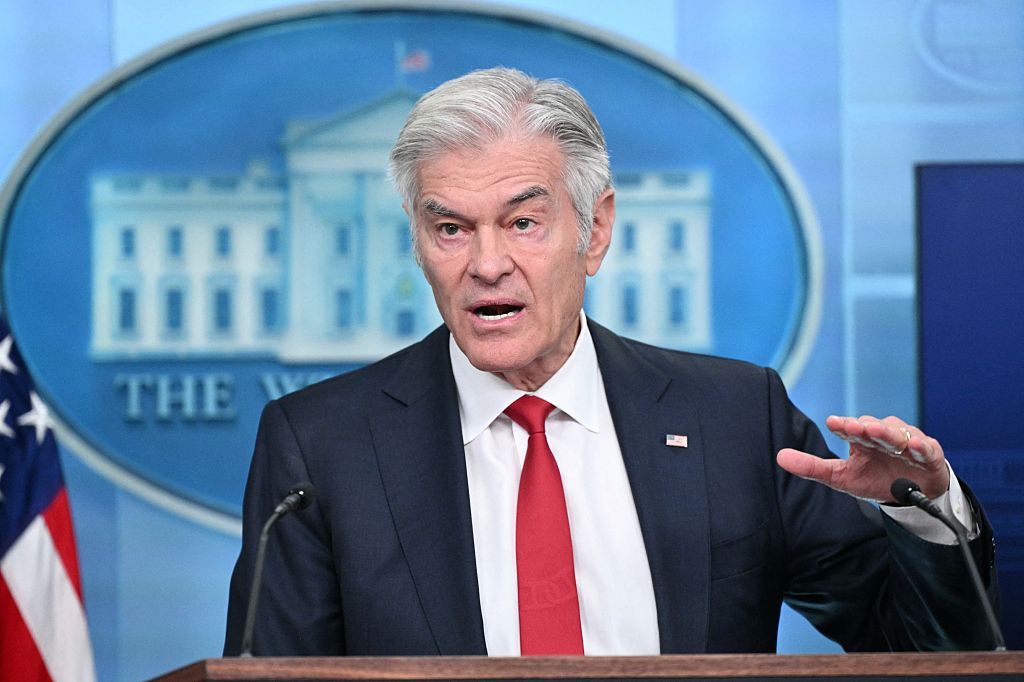
It targets an interim final rule issued June 1 by the Centers for Medicare and Medicaid Services (CMS), an agency within the Department of Health and Human Services (HHS), and names CMS Administrator Mehmet Oz and HHS Secretary Robert F. Kennedy Jr. as defendants in their official capacities, alongside their agencies.
At the center of the dispute is the rule’s treatment of the “medically frail” exemption to the work requirements. The requirements stem from the 2025 One Big Beautiful Bill Act, and apply to the 42 states and the District of Columbia that expanded Medicaid under the Affordable Care Act.
Beginning on Jan. 1, 2027, affected enrollees ages 19 to 64 must work, volunteer, or train for at least 80 hours a month, or attend school at least half-time, to keep their coverage. Congress exempted several groups, including pregnant women, parents and caregivers, American Indians and Alaska Natives, and people who are medically frail or have special medical needs, a category it defined to include those with disabilities, substance use disorders, serious mental health conditions, and serious or complex medical conditions such as cancer or end-stage renal disease.
CMS issued the regulation as an interim final rule, which is open for public comment through July 31.
The rule directs states to verify eligibility at least every six months or at renewal, and CMS is providing $200 million in grants and technical assistance to help states modernize their eligibility systems in order to comply. Some states moved ahead of the January 2027 deadline: Nebraska began requiring Medicaid expansion enrollees to meet work or community engagement standards on May 1, 2026.
The states contend that CMS’s rule narrows that exemption by adding a test Congress did not write: that a person’s condition must “significantly impair” their ability to meet the work requirements before they can qualify. The coalition argues that standard appears nowhere in the statute and was absent from months of prior CMS guidance that states had relied on to build their systems.
“Added administrative burdens will cause individuals who are eligible for Medicaid to lose or be denied coverage,” the states wrote in the complaint.
The states also challenge other parts of the rule, including new limits on self-attestation set to take effect in 2028 and a 12-month cap on the claims data states may use to verify eligibility.
Several of the Democratic officials who joined the suit framed it in stark terms.
“New Yorkers who are battling cancer, living with a disability, managing a serious mental health condition, or recovering from addiction should be able to get the health care they need without being buried in paperwork,” New York Attorney General Letitia James said in a statement.
Pennsylvania Gov. Josh Shapiro said in a post on X that his state sued “the Trump Administration for trying to rip away Medicaid from Pennsylvanians who need it most,” adding, “here in Pennsylvania, we’re going to keep standing up to protect our most vulnerable Pennsylvanians.”
The complaint claims that the rule violates the Administrative Procedure Act because it is contrary to law and because it is arbitrary and capricious, and that it exceeds the constitutional limits on Congress’s spending power by imposing unclear, after-the-fact conditions on states. The coalition asks the court to halt the challenged provisions while the case proceeds and ultimately to vacate them.
The administration has cast the requirements as a benefit to enrollees. Announcing the rule on June 1, Oz said it “helps Americans build skills and independence through work, education, job training, or community service.”
At a June 2 White House briefing, he described the requirements as “a path to prosperity” and said that some able-bodied Medicaid recipients are, on average, “spending 6.1 hours watching television or just hanging around,” comments cited by the states in the suit as unsubstantiated.
Federal officials also project the rule will cut federal Medicaid spending by roughly $350 billion over a decade, and an HHS analysis estimated it could reduce the number of people in poverty by as many as 2.9 million.
The Epoch Times reached out to CMS and HHS for comment but did not immediately receive a response.
The other plaintiffs are Arizona, Colorado, Connecticut, Delaware, Hawaii, Illinois, Maine, Maryland, Michigan, Minnesota, Nevada, New Mexico, New York, North Carolina, Oregon, Rhode Island, Vermont, Virginia, Washington, and Wisconsin, the District of Columbia, and the governors of Kentucky and Pennsylvania.
Kimberly Hayek, Sylvia Xu, and The Associated Press contributed to this report.
 Friends Read Free
Copy
Facebook
Tweet
Friends Read Free
Copy
Facebook
Tweet