
Democratic voters outnumbered Republicans in the U.S. Senate primaries on March 3 in both Texas and North Carolina, according to unofficial returns. This is a reversal from recent cycles.
In Texas, more than 2.2 million voters had cast ballots in the Democratic Senate primary as of the morning of March 4, compared with roughly 2.1 million in the Republican contest, according to preliminary data from the Office of the Texas Secretary of State, with ballots still being tabulated.
Democrats accounted for about 52 percent of all primary ballots cast. It was the first time that Democrats outvoted Republicans in a Texas midterm Senate primary since 2002, according to the secretary of state’s historical data analyzed by The Epoch Times.
Democrats also outvoted Republicans in the 2008 Senate primary, but that was a presidential primary year in which the contest between then-Sen. Hillary Clinton (D-N.Y.) and then-Sen. Barack Obama (D-Ill.) drove record Democratic participation.
With ballots still being counted, the 2026 Democratic Senate primary has already drawn more votes than any previous Democratic Senate primary in Texas, including the 2008 primary, which drew roughly 2.18 million votes, according to secretary of state records.
The Democratic turnout edge came despite the Republican primary generating the most expensive Senate primary ad campaign in U.S. history.
The GOP contest alone drew nearly $100 million in ad spending, with more than $71 million spent in support of the candidacy of Sen. John Cornyn (R-Texas)—more than for any other incumbent in a primary on record, according to the advertising tracking firm AdImpact.
Total ad spending across both parties’ primaries surpassed $122 million, eclipsing the previous record of $109.5 million set in Arizona’s 2022 Senate primary.
In North Carolina, roughly 825,000 voters cast ballots in the Democratic Senate primary, compared with about 626,000 on the Republican side, according to the North Carolina State Board of Elections. That reversed the dynamic from 2022, when Republicans outvoted Democrats in the Senate primary by more than 145,000 ballots.
The shift in Texas was driven largely by a surge in Democratic participation. Democratic primary turnout more than doubled compared with 2024, when roughly 968,000 voters cast ballots in the Democratic Senate primary during a cycle dominated by the largely uncontested reelection bid of incumbent Sen. Ted Cruz (R-Texas). This time around, Republican turnout dropped by roughly 7.5 percent from 2024.
Compared with the 2020 Texas Senate primary, Democratic turnout rose by roughly 19 percent while Republican turnout grew by about 7 percent. The 2020 cycle featured a competitive, multi-candidate Democratic primary—with Mary “MJ” Hegar, Texas state Sen. Royce West, Cristina Tzintzún Ramirez, and others vying for the nomination.
At the same time, incumbent President Donald Trump faced no major challenge on the Republican side, depressing GOP primary participation. Cornyn also ran largely unopposed that year, winning 76 percent of the Republican primary vote.
The Texas Democratic Party said in a statement that the primary “underscored the growing enthusiasm and participation among Democratic voters across Texas—particularly in Dallas and Williamson Counties—where voters showed up in strong numbers despite obstacles that made casting a ballot more difficult.”
The party was referencing rules changes in those counties, where voters who had previously been able to cast ballots at any polling location in their county were required this year to vote at their assigned precinct, a modification that caused widespread confusion and led to a court battle over extended polling hours. The change coincided with new precinct lines that were finalized only in December 2025.
The Harris County Republican Party, which encompasses Houston, struck a different tone, acknowledging high turnout on both sides.
“Republicans—thank you for showing up and making your voices heard,” the party said in a post on X. “We’re seeing record turnout, and that’s something to celebrate. Democrats are energized as well—competitive races naturally drive participation, and that’s no surprise. Tomorrow, we unite, rally behind our nominees, and get ready to win in November.”
Texas state Rep. James Talarico won the Texas Democratic nomination for U.S. Senate, defeating Rep. Jasmine Crockett (D-Texas) with roughly 53 percent of the vote, according to the most recent data.
On the Republican side, Cornyn and Texas Attorney General Ken Paxton will advance to a May 26 runoff after neither cleared the 50 percent threshold. Cornyn led with roughly 42 percent, and Paxton trailed at 41 percent. The remainder of the vote was split among six other candidates, including Rep. Wesley Hunt (R-Texas), who received 13.4 percent of the vote.
The runoff will cost Republicans more campaign money, but it will give the party an additional mobilization opportunity before the November general election, while Democrats have already settled on their nominee.
Cooper Cruises in North Carolina
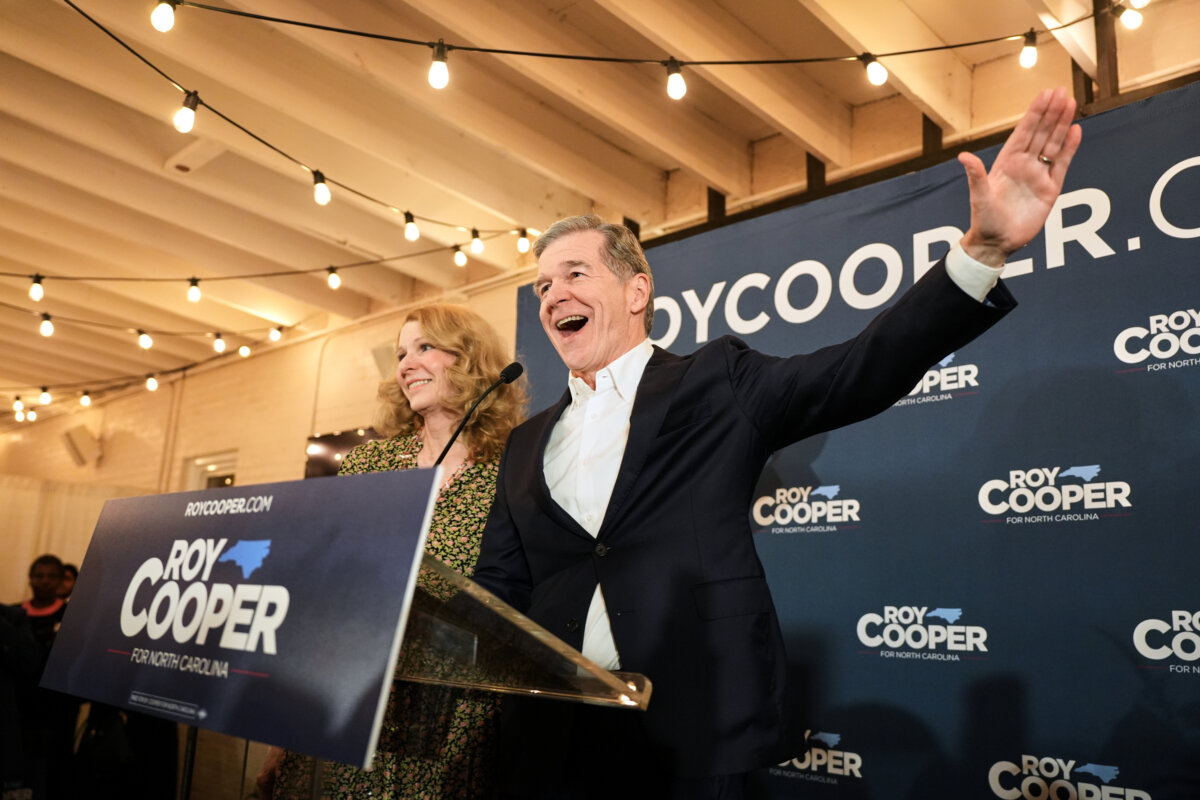
In North Carolina, former Gov. Roy Cooper won the Democratic Senate nomination with 92 percent of the vote. Former Republican National Committee Chairman Michael Whatley, who carried an endorsement from Trump, won the GOP primary with roughly 65 percent. They will compete in November for the seat being vacated by retiring Sen. Thom Tillis (R-N.C.).
North Carolina Democratic primary turnout rose by 33 percent compared with 2022, when Cheri Beasley won the party’s nomination. Republican turnout fell by 18 percent from 2022, when a competitive three-way race between then-Rep. Ted Budd (R-N.C.), former Gov. Pat McCrory, and former Rep. Mark Walker (R-N.C.) drew more than 764,000 voters.
Democratic National Committee Chairman Ken Martin said in a statement that Cooper “is a fighter who has always put working North Carolinians first,” noting that “the [Democratic National Committee] will be on offense, supporting him to ensure that North Carolinians have leaders who put them first.”
Republican National Committee Chairman Joe Gruters congratulated Whatley, calling him “a true workhorse and a relentless fighter for President Trump and the America First agenda.” Gruters said that “Republicans are united and ready to win.”
Early voting data from Texas underscored the Democratic participation advantage. More than 1.5 million Democrats voted early, compared with roughly 1.3 million Republicans. Early votes accounted for 68.7 percent of all Democratic ballots and 64 percent of Republican ballots—a sharp increase from 2020, when early votes made up 47.4 percent of Democratic ballots and 51.1 percent of Republican ballots.
Combined primary turnout in Texas exceeded 4.2 million voters as of the morning of March 4, with additional ballots still being counted. Texas had roughly 18.7 million registered voters heading into the primary, according to the secretary of state’s office.
Primary turnout has not been a reliable predictor of general election outcomes in Texas. In 2008, the Clinton versus Obama presidential primary drove Democratic Senate primary turnout higher than 2.1 million, and Democrats outvoted Republicans in the Senate primary by a margin of nearly two to one. However, in November 2008, Sen. John McCain (R-Ariz.) won the state by nearly 12 points.
A Democrat has not won a statewide race in Texas since 1994. It has been even longer since the Lone Star State elected a Democrat to the U.S. Senate, with the election of 1988 sending Sen. Lloyd Bentsen (D-Texas) to Washington. He served until 1993, when he was appointed secretary of the Treasury under President Bill Clinton. Gov. Ann Richards appointed Democrat Robert Krueger to serve until a June 1993 special election, in which he then lost the race to finish Bentsen’s term to Kay Bailey Hutchison.
The Cornyn versus Paxton runoff on May 26 will keep the Republican Senate primary in the national spotlight for another 12 weeks, with the question of whether Trump will endorse either candidate looming over the contest.
In North Carolina, the Cooper versus Whatley general election is expected by many to be among the most expensive Senate races of the cycle. Democrats view the open seat as one of their best pickup opportunities as they seek to narrow the Republican Senate majority.
Texas turnout figures are based on preliminary data from the Texas Secretary of State’s Office as of noon ET on March 4, 2026, with approximately 92 percent of Democratic primary results in and 96 percent of Republican primary results in. Final official totals are likely to be higher.
 Friends Read Free
Copy
Facebook
Tweet
Friends Read Free
Copy
Facebook
Tweet