
Democrats remain narrowly favored to win the House majority in November despite Florida Republicans’ newly enacted congressional map, according to a leading nonpartisan election forecaster—though further redistricting moves in states like Tennessee, South Carolina, and Louisiana could erase that edge.
Sabato’s Crystal Ball, a project of the University of Virginia’s Center for Politics, updated 17 House race ratings this week, with nine changes tied to Florida’s new map and eight elsewhere across Indiana, Michigan, Minnesota, North Carolina, Ohio, and Texas. The updates leave the overall House battlefield at 213 districts rated Safe, Likely or Leans Democratic; 207 rated Safe, Likely or Leans Republican; and 15 rated Toss-ups.
Florida Gov. Ron DeSantis signed into law the new state congressional map on Monday, after the legislature passed it without amendment.
Most of the resulting Sabato shifts moved Florida districts toward Republicans, including Rep. Darren Soto’s (D-Fla.) seat, which moved from Likely Democratic to Likely Republican, and Rep. Kathy Castor’s (D-Fla.) seat, which moved from Safe Democratic to Leans Republican. Sabato added that it would reverse the ratings if legal challenges keep the new map from being used this fall.
The eight changes outside Florida were more favorable to Democrats, offsetting much of the Florida shift. In northwest Ohio, Rep. Marcy Kaptur’s (D-Ohio) race moved from Leans Republican to Toss-up. Republican primary voters on Tuesday set up a rematch between Kaptur and former state Rep. Derek Merrin (R), who lost to her by less than a point in 2024.
Sabato analyst Kyle Kondik wrote that the matchup is “more suggestive of a Toss-up rating than Leans Republican,” noting Kaptur is running in a district about 4 points more Republican-leaning than the one she narrowly won last cycle but in a more favorable political environment for Democrats.
Two Democratic incumbents in red-trending districts also became safer. Rep. Frank Mrvan’s (D-Ind.) seat moved from Leans Democratic to Likely Democratic, and Rep. Kristen McDonald Rivet’s (D-Mich.) seat made the same move.
Sabato cited a Tuesday special election in part of McDonald Rivet’s district, where Democrats held a state Senate seat by nearly 20 points—an overperformance compared with the 2024 presidential vote there—as a sign of her strength.
Four Republican incumbents weakened. Rep. Bill Huizenga’s (R-Mich.) race moved from Likely Republican to Leans Republican.
Rep. Chuck Edwards (R-N.C.) also moved from Likely Republican to Leans Republican. Rep. Max Miller’s (R-Ohio) and Rep. Brad Finstad’s (R-Minn.) districts each moved from Safe Republican to Likely Republican. The Texas 23rd Congressional District, vacated this year after former Rep. Tony Gonzales’s (R) resignation, made the same move.
Sabato held off on rating changes in South Carolina and Tennessee, where Republican-controlled legislatures are weighing new maps following the April 29 Louisiana v. Callais Supreme Court ruling, which limited the use of race in drawing congressional districts.
Tennessee Republicans in the state House passed a bill on May 7 that would eliminate Rep. Steve Cohen’s (D-Tenn.) Memphis-based 9th District, giving Republicans a 9-0 House delegation from the Volunteer State. It now heads to the state Senate.
South Carolina House Republicans on Wednesday would take a procedural step toward redistricting, voting 87–25 to allow the legislature to take up new maps after adjournment in an effort that could eliminate Rep. Jim Clyburn’s (D-S.C.) 6th District. The proposal still needs a two-thirds vote in the state Senate, where Majority Leader Shane Massey (R) has expressed hesitation despite calls from President Donald Trump.
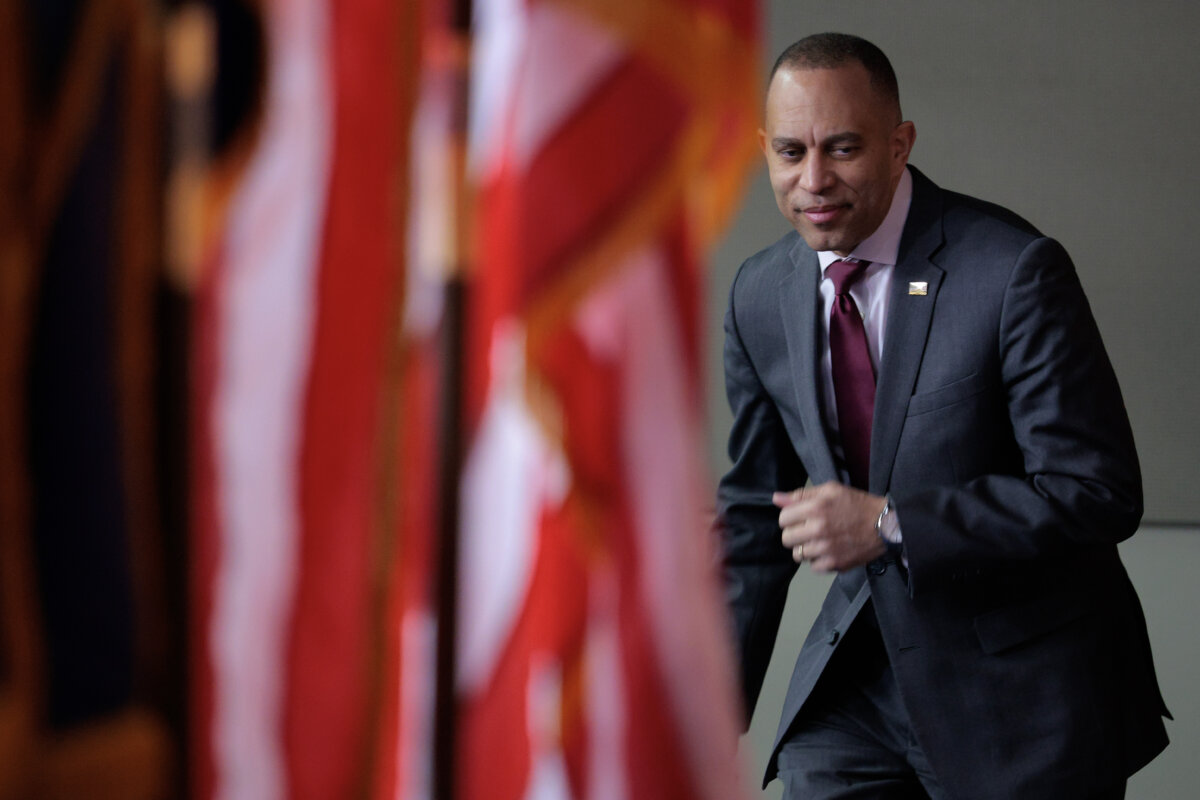
Louisiana is also under court order to redraw its map following the Callais ruling. Alabama has also discussed making changes to its map in favor of the GOP, while on the Democratic side House Minority Leader Hakeem Jeffries (D-N.Y.) began a campaign this week for New York to redraw its map in favor of Democrats.
Three additional Republican pickups through redistricting in any of those states would tie the count at 210 districts favored by each party, with the remaining 15 toss-ups deciding whether Speaker Mike Johnson (R-La.) will keep the gavel, or whether Jeffries will take it. A fourth pickup would put Republicans ahead.
The Democratic Congressional Campaign Committee—the campaign arm of House Democrats—touted the changes Wednesday, describing them as evidence that Democrats will retake the House majority.
“Democrats are expanding the House battlefield,” DCCC spokesperson Justin Chermol said in a statement. “We have better candidates that have raised more resources, and they are delivering an authentic message to voters across the political spectrum.”
The National Republican Congressional Committee—the House GOP campaign arm—for its part said Republicans remain on track to expand their majority, citing candidate recruitment, fundraising, and messaging.
“House Republicans are on offense and well-positioned to defy history thanks to strong candidates, a historic fundraising advantage, and a message that’s connecting with voters in battleground districts across the country,” NRCC spokesman Mike Marinella said in an emailed statement to The Epoch Times.
“While Democrats remain bogged down by messy primaries, a weak national brand, and a shrinking battlefield, Republicans are building the infrastructure and momentum needed to grow the majority in November.”
Jacki Thrapp and The Associated Press contributed to this report.
 Friends Read Free
Copy
Facebook
Tweet
Friends Read Free
Copy
Facebook
Tweet