
Florida has recorded 252 locally acquired dengue infections this year through Sept. 26, surpassing its previous annual high as an outbreak centered in Hillsborough County prompts local emergency declarations.
The Florida Department of Health report released this week also lists 245 cases tied to international travel. Sixty-two of the local cases were new that week.
Most cases are in Hillsborough County (223); the rest are in Pinellas (13), Miami-Dade (8), Orange (3), Pasco (3), Palm Beach, and Polk. Thirteen of the travel-linked cases were also in Hillsborough.
Hillsborough County has one confirmed death from dengue fever, Pinellas County said in its Sept. 24 emergency resolution.
Federal health officials say dengue outbreak data is limited, but state health reports and medical journals suggest Florida’s outbreak has produced the most cases in any state in a calendar year since at least the 1940s.
Puerto Rico regularly records far more cases than any of the 50 states. In the continental U.S., Florida usually leads in locally transmitted infections. Its previous worst year was 2023, with just under 200 cases acquired locally.
Hillsborough County Administrator Bonnie Wise declared a state of local emergency Sept. 24, which can last only seven days unless extended. The declaration “gives the County Administrator and emergency managers the ability to quickly take certain actions to ensure the health, safety, and welfare of the community, and provides a path for federal reimbursement of certain expenses.”
Wise extended it Oct. 1 with that order, stating the arbovirus report showed 134 confirmed county cases as of Sept. 17 and 230 as of Sept. 30.
Pinellas County commissioners declared their own emergency the same day with 143 confirmed cases across the tri-county region at that point: 134 in Hillsborough, seven in Pinellas, and two in Pasco.
Pasco’s health department, warning of a third local case on Sept. 28, told residents to “Drain standing water around homes and businesses at least once a week, including flowerpots, buckets, birdbaths, pet water bowls, gutters, tarps, pool covers, and any containers that collect rainwater.”
The department also advised residents to cover exposed skin by wearing long sleeves and pants and use insect repellent when necessary.
“Our crews are currently going door-to-door near our treatment areas offering to assist residents in finding potential mosquito breeding areas and treat them with the resident’s approval,” a Pinellas news release said that day.
The outbreak was first reported on July 28, with the health department in Hillsborough announcing a confirmed locally acquired case and the start of county mosquito control.
Dengue Symptoms
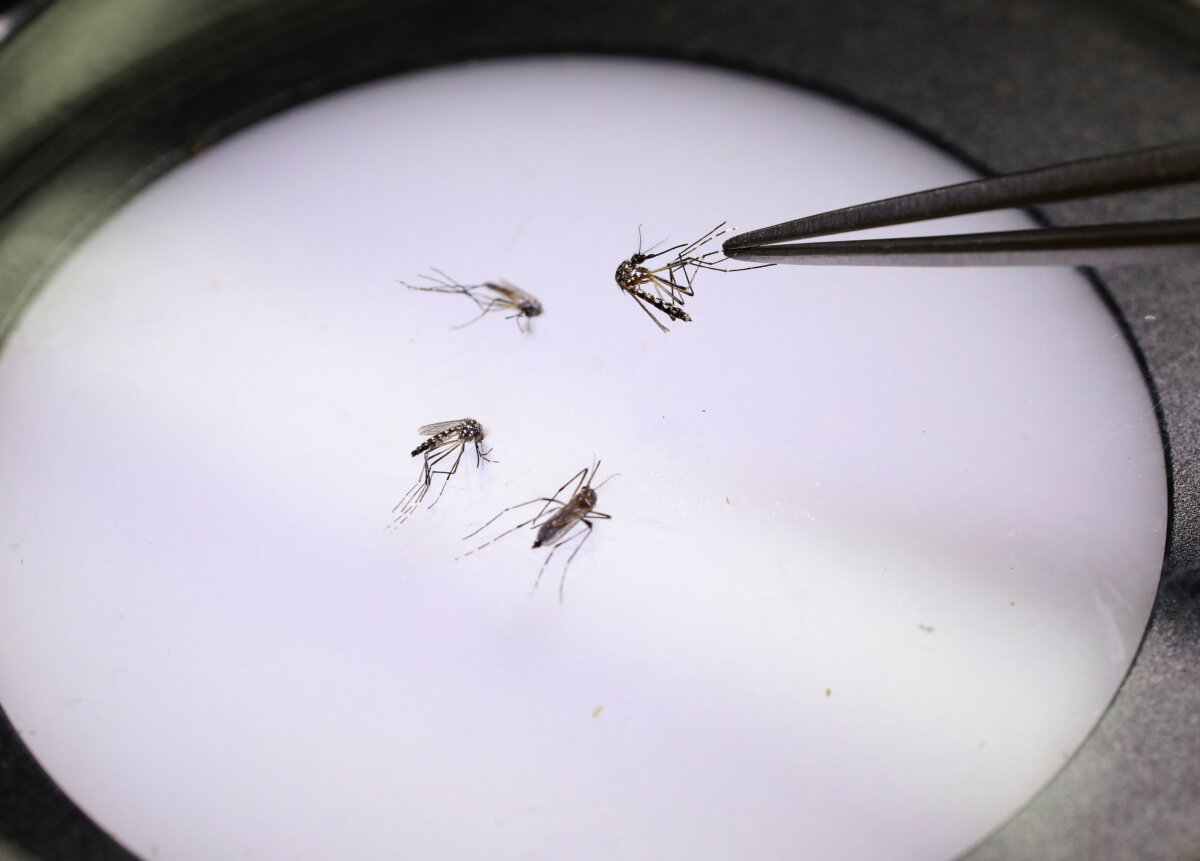
Dengue symptoms include a flu-like illness with severe muscle aches and joint pain, fever, and sometimes a rash, the Florida Department of Health said. It is not contagious and is spread by an infected Aedes aegypti mosquito.
The World Health Organization says that about half the world’s population is at risk of getting the disease and that there are 100 million to 400 million infections every year. No widely available medicine treats dengue infections.
Symptoms usually start between four and 10 days after a bite from a dengue-infected mosquito, according to the Mayo Clinic. In some cases, the symptoms can become life-threatening in what is known as “severe dengue,” dengue hemorrhagic fever, or dengue shock syndrome, the clinic says.
Jack Phillips and The Associated Press contributed to this report.
 Friends Read Free
Copy
Facebook
Tweet
Friends Read Free
Copy
Facebook
Tweet