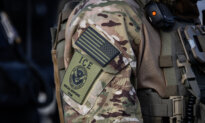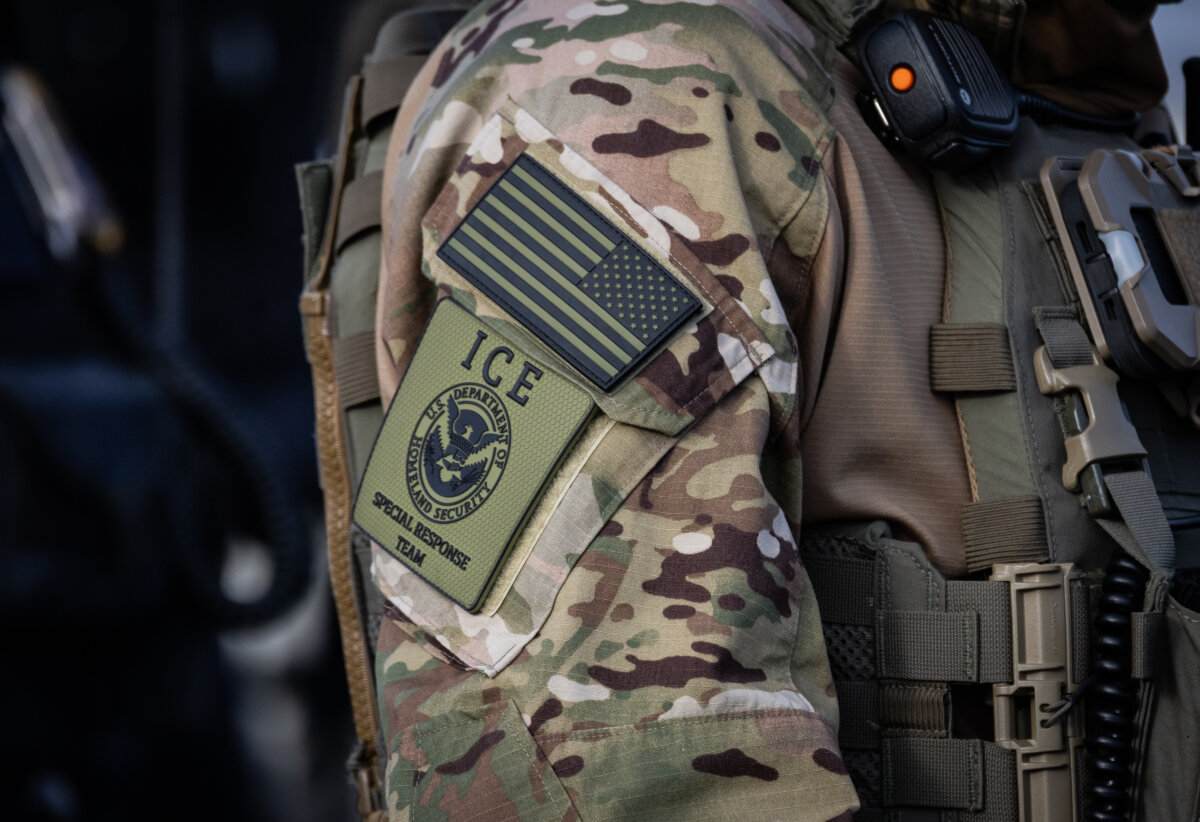

The U.S. Department of Homeland Security (DHS) said on Feb. 25 that immigration enforcement agents will not be stationed at polling locations during this year’s midterm elections, while leaving the door open for targeted operations in response to specific threats.
Heather Honey, deputy assistant secretary for election integrity at DHS, made the assurance during a Feb. 25 virtual briefing with secretaries of state and representatives from multiple federal agencies, according to statements from state officials who participated in the call.
Arizona Secretary of State Adrian Fontes, a Democrat, said Honey stated clearly that ICE agents would not be deployed to polling places in 2026.
“I am pleased to announce that it was clearly stated by Ms. Honey during the call that ICE will not be placed at any polling location in 2026 and any statement otherwise is disinformation by saying, ‘Any suggestion that ICE will be present at any polling location is simply not true,'” Fontes said in a statement released after the briefing.
Kentucky Secretary of State Michael Adams, a Republican, wrote in a post on X, “DHS confirms to Secretaries of State that ICE agents will not be at voting locations this year.”
The virtual meeting included officials from the FBI, the U.S. Election Assistance Commission, the Department of Justice (DOJ), the U.S. Postal Inspection Service, and other federal agencies. According to Fontes’s office, the briefing focused on interagency coordination and preparations for the Nov. 3 midterm elections.
State Officials Raise Concerns Over Federal Role
Although such coordination calls are typically routine, this year’s meeting drew heightened scrutiny amid broader political tensions over election administration and federal authority.
Fontes criticized aspects of the call, saying it was “deeply unsettling” that DOJ and DHS officials declined to affirm that under the U.S. Constitution, states run elections. He also objected to Honey’s participation, describing her as an “election denier,” but emphasized that he welcomed her statement regarding ICE’s absence from polling locations.
Honey’s comments came in response to questions from state officials about whether immigration enforcement operations might occur at or near voting sites, according to statements from participants.
A DHS official later clarified that although ICE agents would not be stationed at polling places, law enforcement could respond if “an active public safety threat endangered” a specific location. In such cases, any arrests would be part of a targeted enforcement action related to the threat, rather than a broader immigration sweep.
The Epoch Times reached out to DHS for additional details on the circumstances under which ICE or other DHS personnel might be present at or near voting locations. No response was received by publication time.
White House Addresses Speculation
The issue has been politically charged in recent weeks. Steve Bannon, an adviser to President Donald Trump for part of his first term, said on his “War Room” podcast earlier this month that ICE agents should “surround the polls come November,” prompting questions about whether the administration was considering such a move.
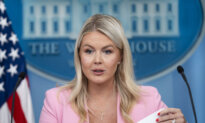
White House press secretary Karoline Leavitt said on Feb. 5 that the president had not discussed any “formal plans” to deploy ICE agents at polling locations.
“That’s not something I’ve ever heard the president consider. No,” Leavitt said when asked about Bannon’s remarks.
Pressed on whether she could guarantee that ICE would not be present near polling sites, she declined to offer a blanket assurance.
“I can’t guarantee that an ICE agent won’t be around a polling location in November. I mean, that’s frankly a very silly hypothetical question,” she said. “But what I can tell you is I haven’t heard the president discuss any formal plans to put ICE outside of polling locations.”
Trump has repeatedly said that noncitizen voting is a problem in U.S. elections. A review by the Brennan Center for Justice described verified cases of noncitizen voting as “vanishingly rare,” but one academic study described noncitizen participation in the 2008 presidential election as “less than fifteen percent, but significantly greater than zero.”
Federal law prohibits the deployment of armed forces at polling places except in limited circumstances, but ICE agents are civilian law enforcement officers and are not subject to the same statutory restrictions as the military. Other federal and state laws, however, bar voter intimidation and interference at polling sites.
Democratic lawmakers and voting rights groups have warned that any visible presence of federal immigration agents near polling locations—particularly in immigrant communities—could deter lawful voters from casting ballots. The American Civil Liberties Union said in November 2025 that deploying federal immigration agents at or around polling places on Election Day would constitute “illegal voter intimidation.”
Trump administration officials have rejected such concerns, saying federal efforts are focused on protecting election integrity rather than suppressing turnout.
National Intelligence Director Tulsi Gabbard recently wrote to Congress, “Interference in U.S. elections is a threat to our republic and a national security threat.”
She said that the administration is committed to ensuring that neither foreign nor domestic actors undermine the electoral process.
Reuters and The Associated Press contributed to this report.
 Friends Read Free
Copy
Facebook
Tweet
Friends Read Free
Copy
Facebook
Tweet