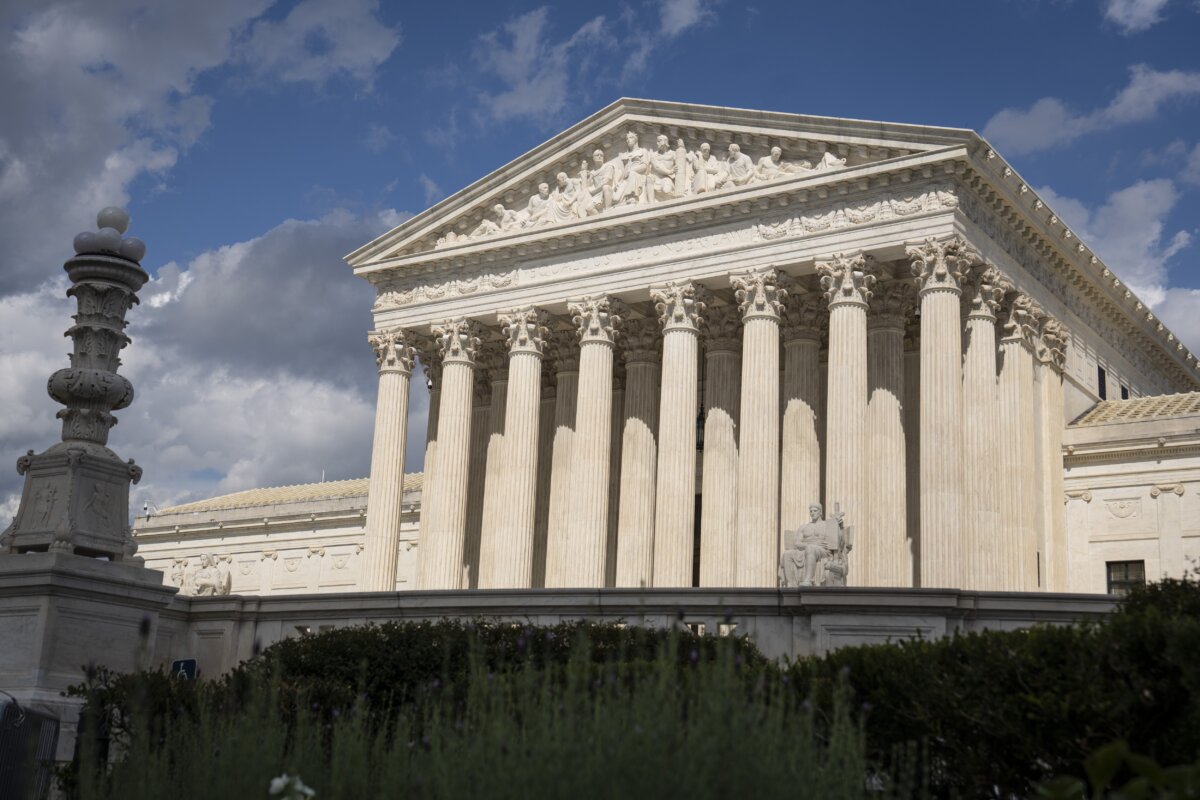

The Department of Justice (DOJ) on Tuesday urged the U.S. Supreme Court to overturn a lower court order that barred a man from suing his city after local officials told him he could not host a prayer gathering in his home.
Daniel Grand, an Orthodox Jew, sued the city of University Heights, Ohio, after officials issued a cease-and-desist order that barred him from hosting others at his home for prayer in January 2021.
The high court agreed to take up the case on June 30.
City officials had said that he needed to acquire a special-use permit before hosting the gathering, forcing him to cancel the meeting and apply for the permit.
Later, he withdrew the application after learning the permit would mandate turning his home into a house of worship.
Grand’s lawyers had alleged that, after he withdrew his application, city officials targeted him by having police patrol his house and city prosecutors investigate him for alleged “housing code violations.”
The city also allegedly withheld his certificate of occupancy and tax abatements, while sanitation workers regularly failed to collect his trash, his lawyers wrote.
“If Grand’s next-door neighbor invited nine friends over for a weekly poker night or a Tupperware party, the city would not require a special permit to operate a ‘casino’ or ‘storefront.’ The city targets only Grand’s religious practice,” his lawyers said.
Several lower courts dismissed his lawsuit and said that the case could not proceed until Grand completed the permitting process.
The ruling was also upheld by the U.S. Court of Appeals for the Sixth Circuit.
In its amicus brief filed on Tuesday, the DOJ said those courts erred when tossing out his case on grounds that his lawsuit was not “ripe,” referring to a longstanding legal doctrine that blocks courts from deciding a case before a definite injury occurred.
The department added that Grand had “suffered concrete, particularized, and actual injuries sufficient to bring a ripe claim for retrospective relief, and his claim for prospective relief is likely ripe too.”
“When the very enactment of the law inflicts the alleged injury, the plaintiff need not go through a zoning process that cannot cure that harm,” the brief said.
“Similarly, plaintiffs need not obtain a final decision when they challenge some other aspect of the zoning process, like a municipality’s choice of procedures.”
Explaining the Justice Department’s rationale in filing the brief, Assistant Attorney General for Civil Rights Harmeet Dhillon wrote that “local governments cannot unlawfully use zoning laws to stop small groups’ prayer in private homes.”
The DOJ Civil Rights Division “will continue to enforce the Religious Land Use and Institutionalized Persons Act to protect Americans’ right to free and peaceful exercise of religion,” she wrote in a post on X on Tuesday.
The city of University Heights did not immediately respond to an Epoch Times request for comment.
Responding to the Supreme Court petition, the city’s lawyers argued that Grand voluntarily withdrew his permit and said he did not want to operate a house of worship under the city’s zoning ordinances.
Lawyers stated that officials did not take any enforcement action against him and that he could use his home as he wished without penalty.
Aldgra Fredly contributed to this report.
 Friends Read Free
Copy
Facebook
Tweet
Friends Read Free
Copy
Facebook
Tweet