
The U.S. Department of Justice (DOJ) is working to enforce nationwide the Supreme Court’s ruling in Louisiana v. Callais, which limited the use of race in redistricting under Section 2 of the Voting Rights Act.
In a 6–3 decision on April 29, the Supreme Court struck down a map that gave Louisiana a second black-majority congressional district, ruling it an “unconstitutional racial gerrymander” even though the map was intended to comply with Section 2 of the 1965 federal Voting Rights Act.
Section 2 prohibits voting practices or procedures that discriminate based on race, color, or membership in a large language-minority group such as American Indian, Asian American, Alaskan Native, or American Hispanic.
Following the ruling, Sen. Eric Schmitt (R-Mo.) issued a statement on X urging the DOJ to apply the Supreme Court decision across all states and “use it to end illegally racially-gerrymandered districts.”
“This is what oversight is for. The Civil Rights Division should enforce the [Voting Rights Act] as an anti-discrimination law—not as a racial districting mandate,” Schmitt said.
“The Constitution prohibits sorting Americans by race. DOJ should act accordingly.”
In a letter to the department, Schmitt asked the DOJ to issue formal guidance implementing the ruling, review pending Section 2 redistricting litigation, and revisit districts drawn under that provision.
The senator said California’s new congressional map warrants review to determine whether litigation or public-record evidence indicates that race was used as a factor in drawing district lines.
“I am asking DOJ to identify all Section 2 redistricting cases, settlements, consent decrees, statements of interest, and remedial-map positions that remain in effect. The old regime cannot be allowed to continue simply because no one has gone back and checked the files,” he wrote on X.
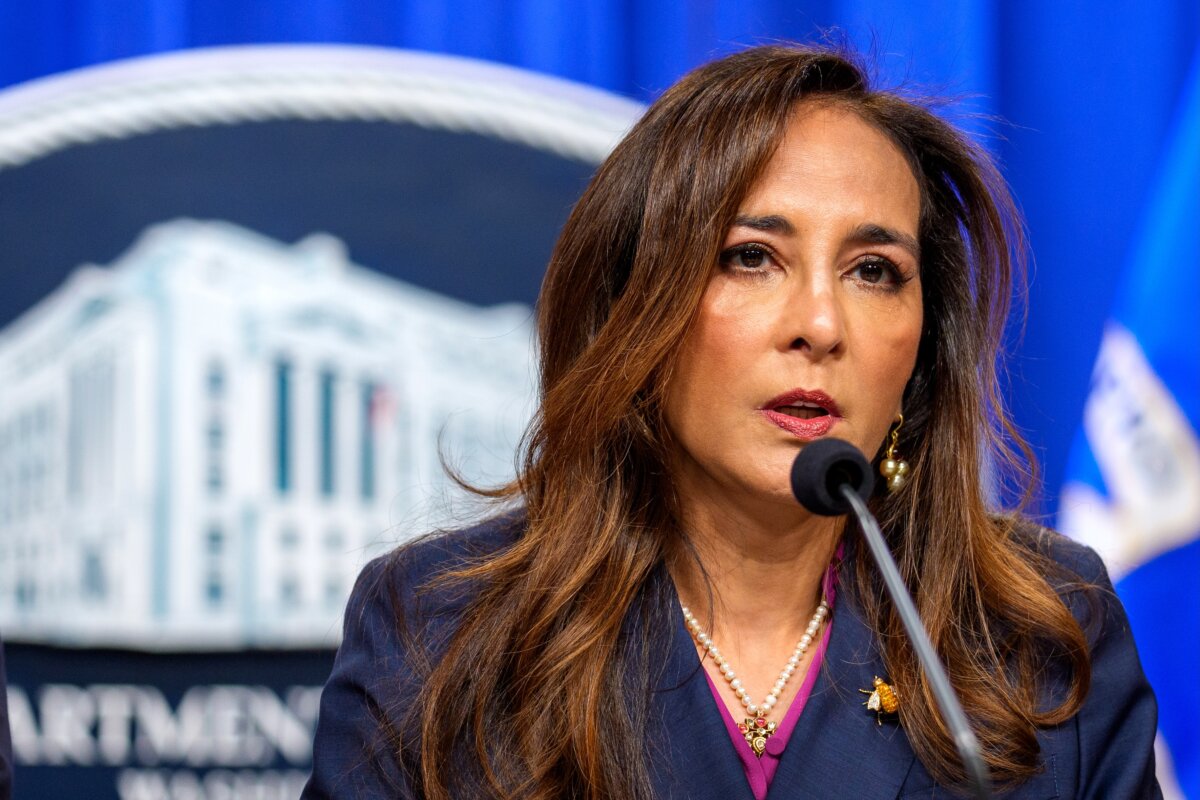
Harmeet Dhillon, the DOJ’s assistant attorney general for civil rights, said in response to Schmitt’s post that the department is already taking action.
“Senator—we are ON IT! This [Justice Department] under [Acting U.S. Attorney General Todd Blanche] continues to prioritize equal protection of the laws for ALL Americans, be it in employment, housing, education—and VOTING,” Dhillon said.
Courts have held that the Voting Rights Act, in certain circumstances, allows states to take race into account when drawing electoral boundaries, but that electoral maps drawn explicitly based on race are unconstitutional.
Writing for the majority on April 29, Justice Samuel Alito said that compliance with Section 2 “could not justify” Louisiana’s use of race-based redistricting.
“In sum, because the Voting Rights Act did not require Louisiana to create an additional majority-minority district, no compelling interest justified the state’s use of race in creating SB8,” Alito wrote. “That map is an unconstitutional gerrymander, and its use would violate the plaintiffs’ constitutional rights.”
Louisiana Gov. Jeff Landry signed an executive order on April 30 delaying the state’s House primaries to allow time for lawmakers to redraw a new congressional map.
Matthew Vadum contributed to this report.
 Friends Read Free
Copy
Facebook
Tweet
Friends Read Free
Copy
Facebook
Tweet