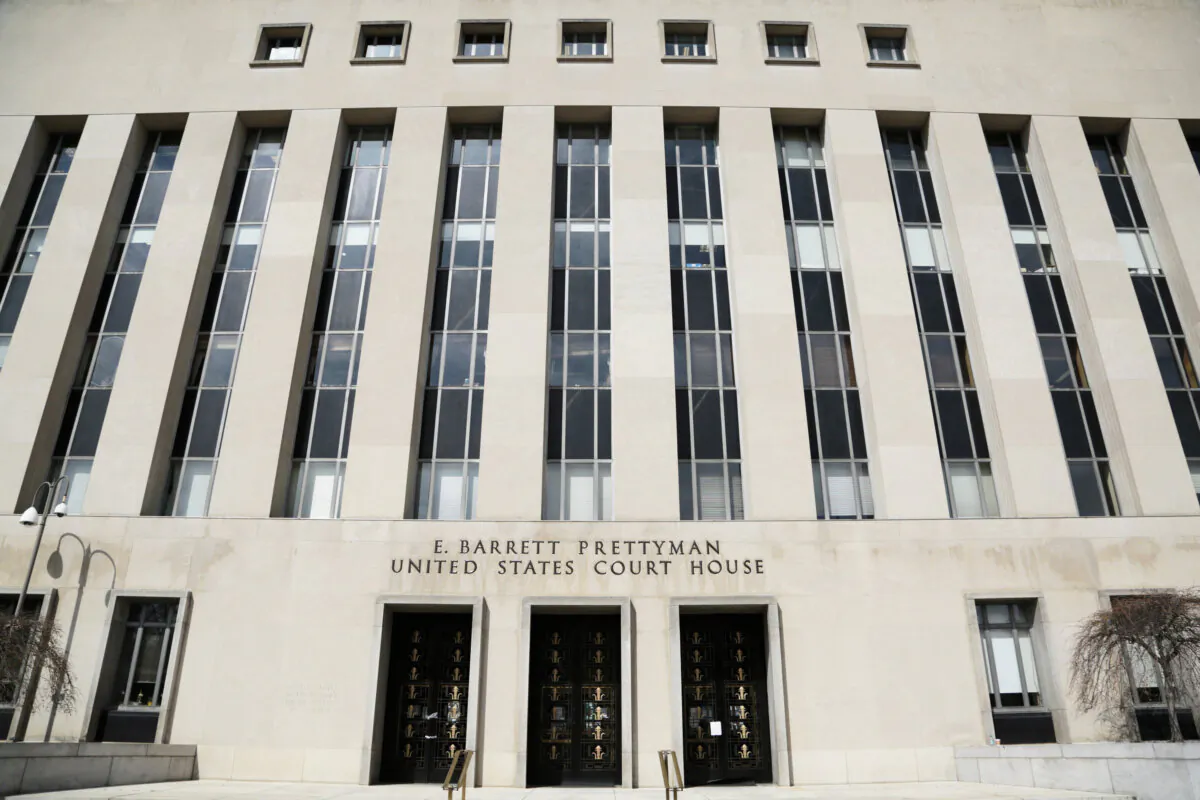
A federal judge on June 27 blocked an executive order signed by President Donald Trump targeting the law firm Susman Godfrey.
U.S. District Judge Loren AliKhan, who was appointed by former President Joe Biden in 2023 for the District of Columbia, stated in her 53-page ruling that President Trump’s order “goes beyond violating the Constitution and the laws of the United States,” and that the order “threatens the independence of the bar—a necessity for the rule of law.”
The executive order directed the government to suspend security clearances for Susman’s lawyers and restrict their access to government officials, buildings, and federal contracting work.
“I have determined that action is necessary to address the significant risks, egregious conduct, and conflicts of interest associated with Susman Godfrey LLP (Susman),” Trump said in the order signed on April 9.
“Susman spearheads efforts to weaponize the American legal system and degrade the quality of American elections. Susman also funds groups that engage in dangerous efforts to undermine the effectiveness of the United States military through the injection of political and radical ideology, and it supports efforts to discriminate on the basis of race.”
The president signed similar orders for other law firms such as Perkins Coie, Jenner & Block and WilmerHale, which also took legal action.
Nine other law firms have reportedly made settlements with the White House, including Paul Weiss, Skadden Arps, Latham & Watkins, and Kirkland & Ellis.
Previous rulings against the administration have come down from both Democrat- and Republican-appointed judges.
AliKahn found that President Trump’s actions against Susman were in unlawful retaliation for it taking cases and making efforts relating to racial diversity, which, she said, constituted “unlawful retaliation against Susman for activities that are protected by the First Amendment, including its representation of certain clients, its donations to certain causes, and its expression of its beliefs regarding diversity.”
White House spokesperson Harrison Fields said in a statement that granting security clearances is “a sensitive judgment call entrusted to the president.”
Reuters contributed to this report.
 Friends Read Free
Copy
Facebook
Tweet
Friends Read Free
Copy
Facebook
Tweet