

A federal judge in Georgia on Friday dismissed a Justice Department lawsuit seeking voter information from the state, ruling the department had filed it in the wrong city.
The U.S. Department of Justice (DOJ) filed the lawsuit against Georgia Secretary of State Brad Raffensperger on Dec. 18 in the U.S. District Court in Macon, Georgia, after he refused to provide the federal government with the state’s full voter registration information.
District Judge Ashley Royal said the DOJ should have sued Raffensperger in Atlanta, where his main office was located, and not Macon.
The lawsuit was dismissed without prejudice, meaning the DOJ can refile it. The DOJ’s Civil Rights Division did not return a request for comment about the decision by publication time.
Raffensperger responded to the ruling on Friday.
“I will always follow the law and follow the Constitution,” Raffensperger told The Epoch Times in a text message. “I won’t violate the oath I took to stand up for the people of this state, regardless of who or what compels me to do otherwise.”
The DOJ has now filed similar lawsuits against 24 states and the District of Columbia over access to voter registration information. A California judge rejected a lawsuit on Jan. 15 on privacy grounds.
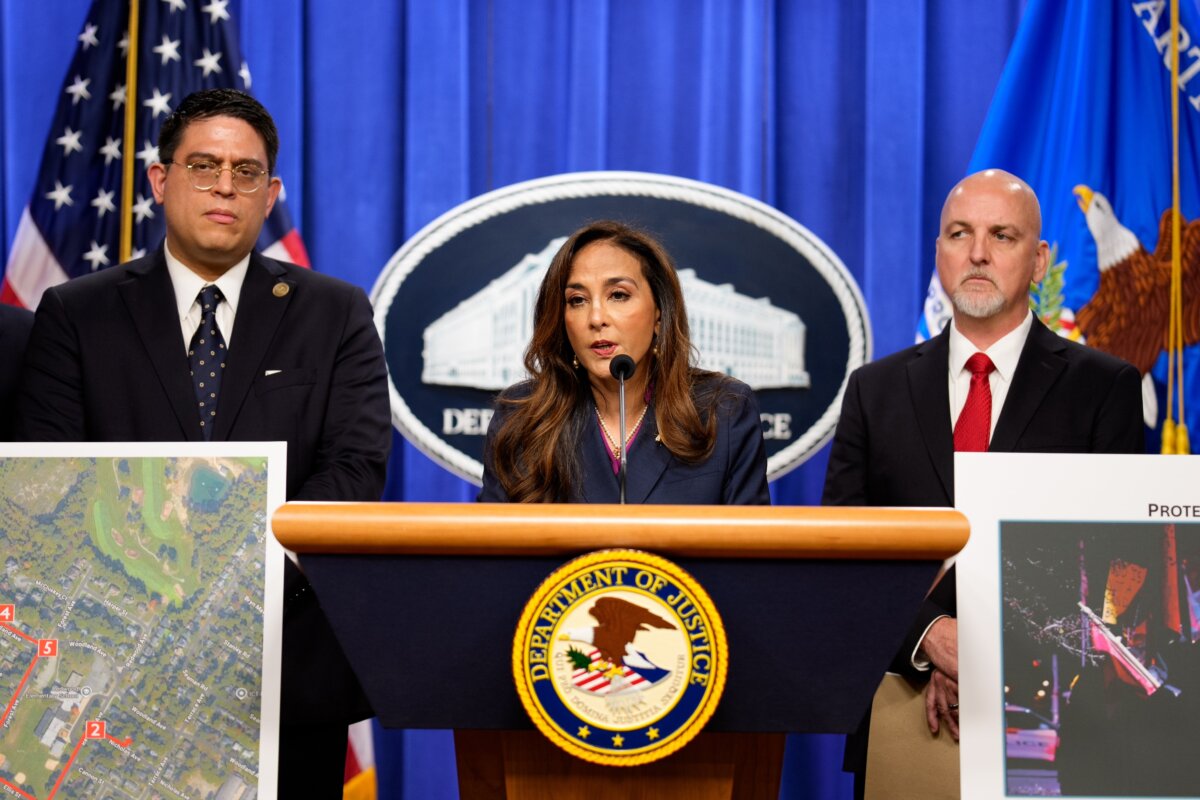
“The law is clear: states need to give us this information, so we can do our duty to protect American citizens from vote dilution,” said Assistant Attorney General Harmeet Dhillon of the Justice Department’s Civil Rights Division.
In its lawsuit against Georgia, the DOJ stated that the U.S. attorney general is charged by Congress to enforce the National Voter Registration Act and the Help America Vote Act, which were designed to ensure states have proper and effective voter registration and list maintenance programs.
The attorney general also has the power under the Civil Rights Act to demand that states produce the voter rolls to inspect and analyze the voter lists, according to the DOJ.
In a court filing Wednesday, Raffensperger argued the Justice Department was overstepping its authority by requesting voter records, and it lacked the jurisdiction to sue because Macon was the wrong venue. He asked the judge to dismiss the lawsuit.
“The DOJ is not entitled to confidential information about every Georgia voter. This Court should dismiss this case,” Raffensperger’s attorneys stated in the court filing.
According to Raffensperger, his office sent some of the voter information, but not all. The DOJ first verbally asked his office to provide a copy of the state’s voter registration list during a video conference on July 9, 2025. The reason was to assist the state with its list maintenance and to run the list through the Homeland Security Department’s database.
Raffensperger said his office then received a written letter in August that requested the voter registration list, and another letter on Aug. 14 specifying that the request for the voter list was for all information in the state database, including information that was confidential under Georgia law, such as driver’s license numbers and Social Security numbers.
 Friends Read Free
Copy
Facebook
Tweet
Friends Read Free
Copy
Facebook
Tweet