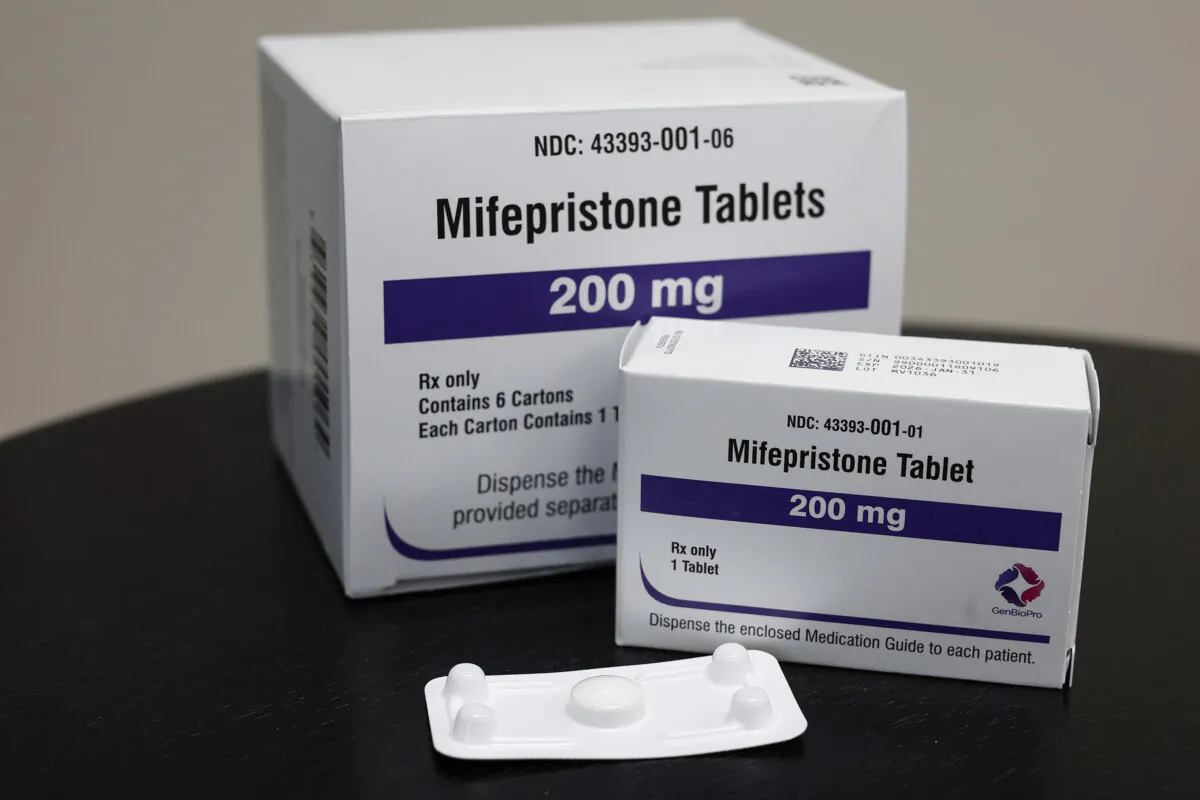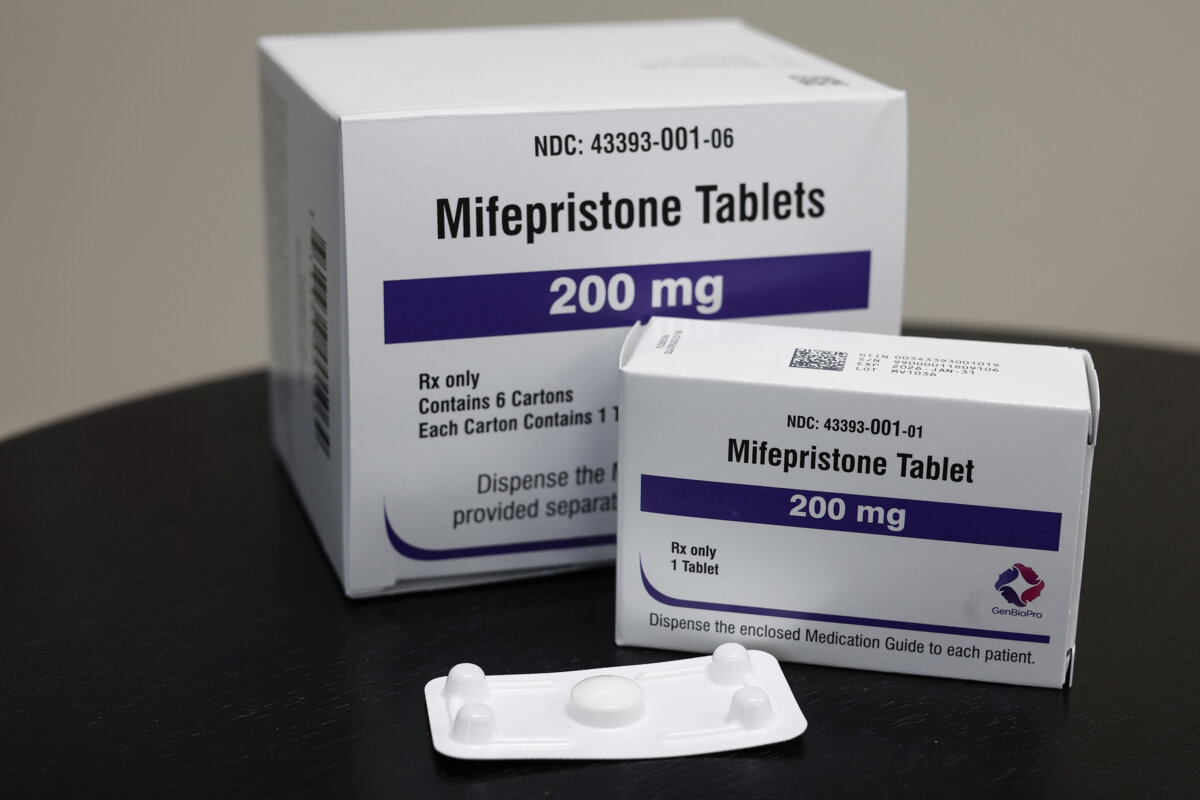

The Food and Drug Administration (FDA) asked a federal court on Jan. 27 to pause a lawsuit that Louisiana brought to reverse the Biden administration’s deregulation of the abortion pill mifepristone.
The agency asked a federal court to “stay all proceedings in the matter” while it studies its policy permitting mifepristone to be mailed to patients without an in-person visit to a doctor.
In an accompanying brief, the FDA said that the process “often takes approximately a year or more to conduct,” although it intends to “complete the study ‘sooner than that timeframe.’”
“Given this widespread debate over the safety of mifepristone, FDA has concluded that the best path forward is for the agency to reconsider the restrictions on mifepristone based on all the evidence before the agency,” the FDA wrote in its brief.
“[Louisiana] now threaten[s] to short-circuit the agency’s orderly review and study of the safety risks of mifepristone by asking this court for an immediate stay [of the policy],” it stated.
The FDA’s brief also said that because Louisiana is not suffering any ongoing harm from the policy, the state lacked standing.
In 2024, Louisiana designated mifepristone, a generic version of the abortion pill, as a “controlled substance,” effectively banning its sale and possession in the state.
However, pills have been mailed into Louisiana despite the ban.
“[The policy does not] require [Louisiana] to do anything or to refrain from doing anything,” the FDA’s brief reads.
“Even if the availability of retail and mail-order dispensing does make mifepristone more difficult to police, that logistical burden on law enforcement does not constitute a cognizable Article III injury.”
Article III is the constitutional provision that requires parties to have a real injury to gain standing for a suit.
Louisiana has argued that the policy hurt its efforts to ban abortion across the state and allegedly allowed abuse.
“President Biden had ordered his administration to ‘identify all ways’ to make abortion available in those states that, after Dobbs, opted to protect the life of the unborn,” Louisiana wrote in its initial complaint.
“Since FDA effectively allowed ‘blind’ dispensing without the in-person care of a doctor, bad actors have been able to obtain FDA-approved abortion drugs from prescribers in other states and then secretly spike women’s drinks without their knowledge or force women into taking these drugs against their will.”
Susan B. Anthony Pro-Life America has criticized the Trump administration for defending the availability of the drug.
“The Trump-Vance administration refuses to reimplement basic guardrails on deadly mail-order abortion drugs,” President Marjorie Dannenfelser said in a statement on Jan. 27.
Some doctors have argued that the pill is unsafe for women.
“[The mifepristone] drug combination is inaccurately touted as being as ‘safe as Tylenol,’ a false narrative that has been used to justify removing important safeguards on chemical abortion, placing the health and safety of women and girls at risk,” the American Association of Pro-Life Obstetricians and Gynecologists said on its website.
In 2021, the FDA dismissed these concerns.
“Studies do not appear to show increases in serious safety concerns,” acting Commissioner of Food and Drugs Janet Woodcock wrote in a letter to medical professionals at the time.
Louisiana is the only state in the country where possessing mifepristone without a prescription is banned with criminal penalties. The state also has a near-total ban on abortion procedures.
The American Civil Liberties Union (ACLU) has condemned Louisiana for its efforts to ban the drug.
“[Louisiana’s] attack is about one thing only: making it as hard as possible for people everywhere in the country to get an abortion,” Julia Kaye, an attorney for the ACLU, wrote in a statement.
 Friends Read Free
Copy
Facebook
Tweet
Friends Read Free
Copy
Facebook
Tweet