
The Brady Center to Prevent Gun Violence filed a lawsuit against the Bureau of Alcohol, Tobacco, Firearms, and Explosives (ATF) and the Department of Justice (DOJ) on June 4 over the ATF’s withholding of trace data in response to a Freedom of Information Act request.
The information is part of the ATF’s Demand Letter 2 (DL2) program. Under this program, guns that are connected to a crime within three years of their initial sale are considered to have a short “time-to-crime.”
If 25 or more such guns are connected to a single Federal Firearms Licensed (FFL) gun dealer within a year, they will receive a DL2 letter requesting additional information on such sales quarterly after receipt of the letter.
The Brady Center did not respond to The Epoch Times’ request for comment by publication time. The lawsuit claims that there is an overriding public interest in making the information public.
According to the lawsuit, Brady sent a FOIA request for the DL2 information on Feb. 6, 2026. That request was denied even though the DL2 letters contain no proprietary business information, the lawsuit states.
On the other hand, the lawsuit states that making the information public allows taxpayers to gauge the effectiveness of the ATF’s oversight of gun dealers and enables the public to know which gun dealers may be involved in criminal activity, among other benefits.
“The requested records would shed important light on ATF’s administration of the DL2 program, including whether and to what extent the agency was effectively operating an important program for conducting oversight of FFLs and reducing gun crime,” the lawsuit reads.
According to the lawsuit, the information was released during prior administrations, although it does not name them.
“On multiple prior occasions, Brady requested under FOIA the DL2s sent to FFLs from ATF, and ATF had previously responded by producing those letters with almost no information redacted nor pages withheld,” the lawsuit reads.
Lawrence Keane, senior vice president and general counsel for the National Shooting Sports Foundation (NSSF), said that Brady and certain media outlets used the information in a “name and shame smear campaign” to intimidate and harass lawful gun dealers.
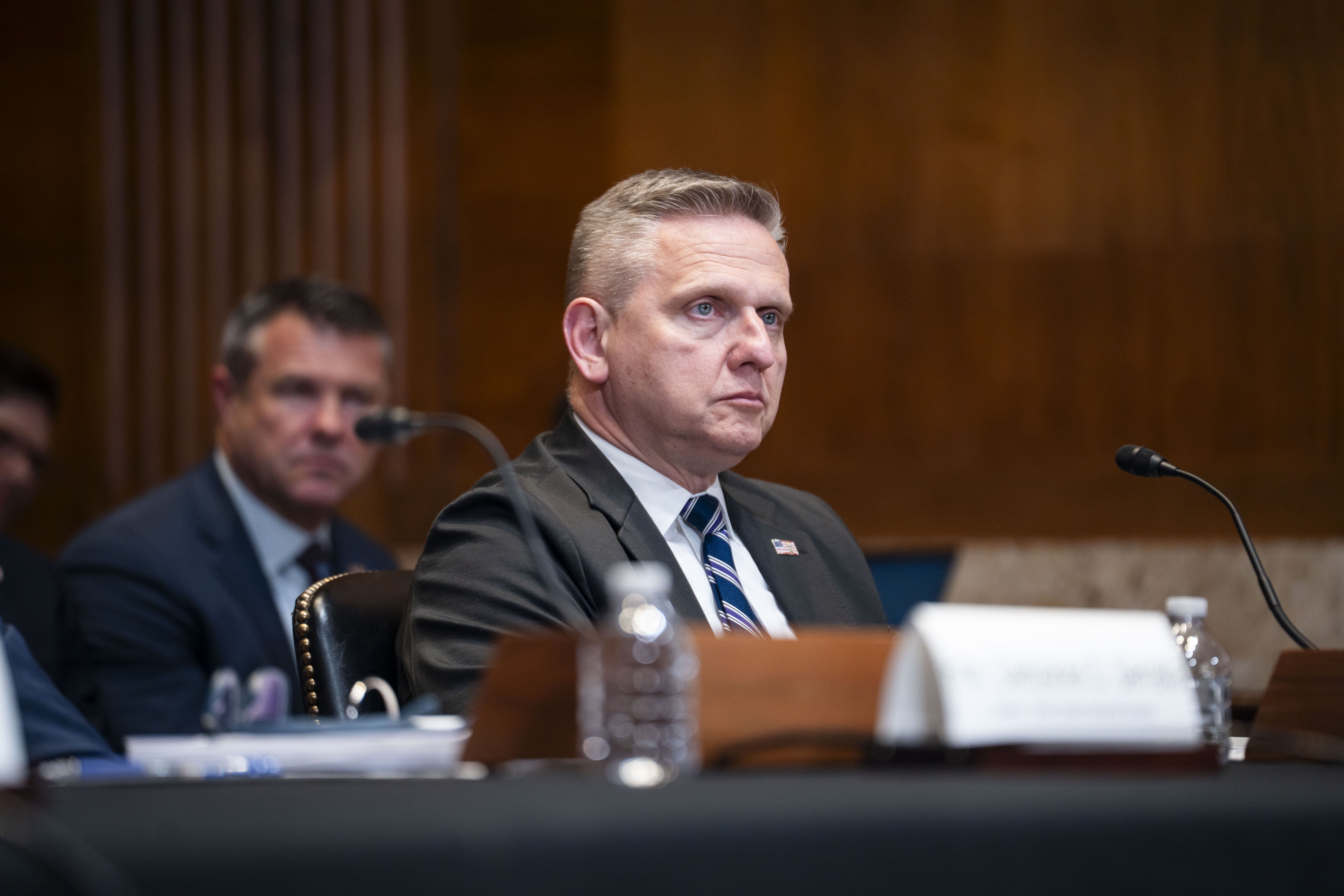
He noted that Robert Cekada, the new ATF director, told the U.S. Senate Subcommittee on Law Enforcement on May 14 that DL2 letters alone are not enough to show criminal activity on the part of a gun dealer.
“None of that means that the Federal Firearms Licencee or their business were in some part of a conspiracy with a straw purchaser or a trafficker,” Cekada said.
He said the information is protected from public disclosure by the Tiahrt Amendment to protect lawful gun sellers’ privacy and to preserve the integrity of criminal investigations.
This amendment was introduced as part of the 2003 appropriations bill. It limits the ATF to sharing firearms trace data with prosecutors or law enforcement agencies in connection with a criminal investigation only.
Cekada acknowledged that information had been released in the past. He told the subcommittee that an ATF employee involved in releasing information in 2023 was fired for illegally releasing the information.
“We are not playing around with anyone that would follow a path on their own,” Cekada said.
He added that others who released information under former Director Steven Dettelbach had already left the agency.
Keane said the NSSF will not simply stand by and watch the lawsuit.
“NSSF will file an amicus brief in this case,” he told The Epoch Times.
Brady alleges the information is not exempt from disclosure and that ATF is violating the law.
“By failing to respond to Plaintiff’s administrative appeal … and by withholding and failing to produce non-exempt records, Defendants have violated their duties … to conduct a reasonable search for responsive records, to take reasonable steps to release all non-exempt information, and to not withhold responsive records,” the lawsuit reads.
 Friends Read Free
Copy
Facebook
Tweet
Friends Read Free
Copy
Facebook
Tweet