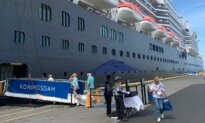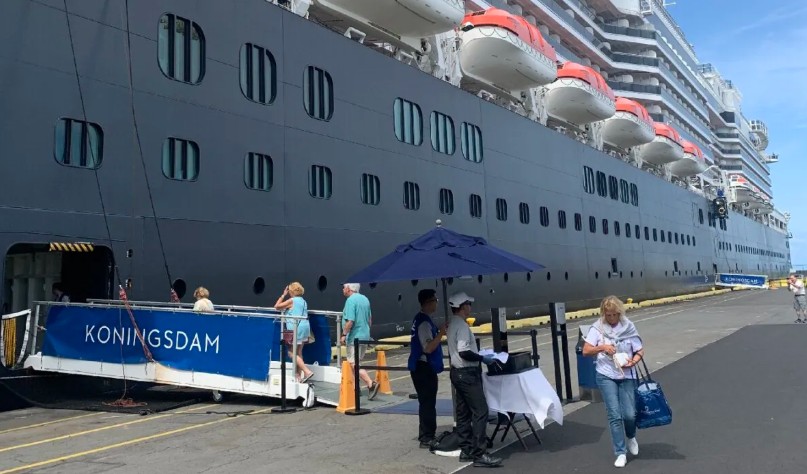

As part of Hawaii’s new tourist tax, the state can now move forward with a levy on cruise-ship cabins, a federal judge ruled Tuesday.
The legislation, dubbed the “Green Fee” by Democratic Gov. Josh Green, “requires, in-part, cruise operators to pay their fair share of transient accommodation tax to address the threats of climate change to our state,” the governor’s office said in a Dec. 23 statement.
It is set to take effect with the start of 2026, becoming a first-of-its-kind law meant to deal with climate concerns. It also increases rates on hotel rooms and vacation rentals.
“We must protect and preserve Hawaii’s natural resources and safeguard the health of our residents. Visitors who benefit from our island’s resources have a shared responsibility to help preserve them. The Green Fee ensures that the resources needed to protect Hawaii are available for future generations,” said the Hawaii governor in the statement.
U.S. District Judge Jill A. Otake denied a request from Cruise Lines International Association looking to stop enforcement of the new law. Multiple Honolulu cruise-ship-supply companies had joined Cruise Lines International Association in challenging the tax with a lawsuit in late August.
Their lawsuit argued the new tax would hurt tourism by making cruises more expensive.
The new tax would place an 11 percent surcharge on the gross fares paid by a cruise ship’s passengers, adjusted for the portion of its voyage spent docked in Hawaii’s ports. It also allows Hawaii counties to collect additional three percent surcharges, bringing the total imposition to 14 percent of the prorated fares.
The attorney general of Hawaii also released a statement in support of the judge’s decision Tuesday.
“The vast majority of the cruise industry’s claims were dismissed,” Attorney General Anne Lopez said. “While the litigation is not over, we are confident in the legality of this law and will continue to vigorously defend it on behalf of the people of Hawaii.”
Court records show attorneys for Cruise Lines International Association, Honolulu Ship Supply Co., Kauai Kilohana Partners, and Aloha Anuenue Tours LLC plan to appeal.
The plaintiffs are asking for the judge to make a decision, pending the appeal, by this Saturday. The new tax is set to take effect Jan. 1.
The U.S. government in November filed a memorandum in support of the plaintiffs.
“This scheme to extort American citizens and businesses solely to benefit Hawaii flies in the face of federal law twice over,” the U.S. said in its filing.
In late 2021, members of Cruise Lines International Association collectively pledged to pursue net-zero emissions by 2050. Steps being taken, according to the association’s website, include investing in new ships and testing sustainable fuels and technologies.
 Friends Read Free
Copy
Facebook
Tweet
Friends Read Free
Copy
Facebook
Tweet