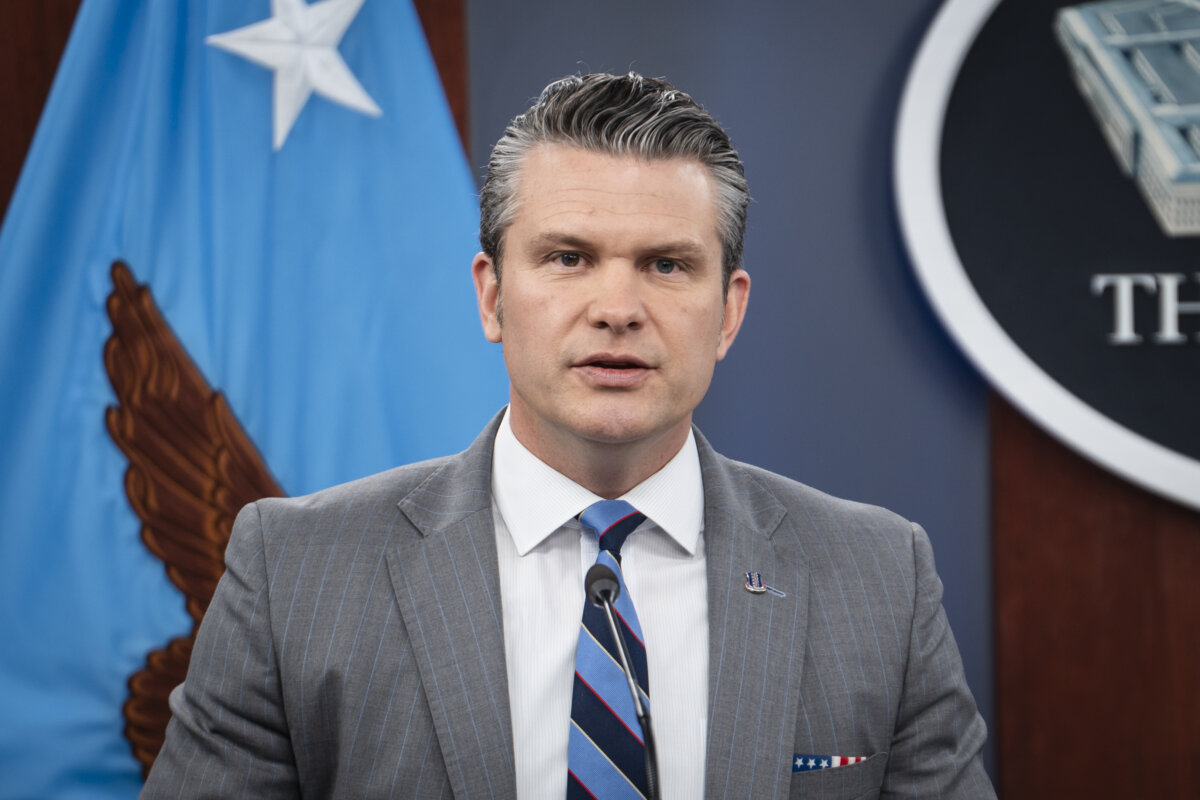

Department of War Secretary Pete Hegseth on Wednesday announced a measure to screen U.S. armed forces members’ testosterone levels and offer therapy as a way to optimize the military’s performance.
“While we invest heavily in our weapon systems, platforms, and gear, our most decisive tactical advantage will always be the individual warfighter,” Hegseth said in a video, titled, “The High-T Department of War,” released on X.
“We have a sacred duty to maintain that advantage, which is why we must constantly look for new ways to optimize your performance, your resilience, and your long-term health.”
The hormone tests will be initiated for troops aged 30 and older, although soldiers under that age threshold can voluntarily get tested, the Pentagon chief said.
Hegseth explained that the new screening program will make sure that troops “have the right testosterone levels to operate at [their] absolute best because it’s well-established science that as we age, testosterone levels often naturally drop.”
“This initiative, it’s not about artificial enhancement. It’s about restoring and optimizing your natural capabilities, protecting your longevity, and ensuring you have the biological foundation required to sustain the fight,” he continued. “We owe our warriors the absolute best medical care in the world. And this program delivers on that obligation.”
The screenings, he added, will be mandatory for service members who are eligible, but that treatment would be voluntary. “If treatment is recommended, it’s entirely your choice to receive testosterone replacement therapy,” Hegseth said.
The Department of War has not yet issued more details on when the screening requirement would be implemented or when more medical guidance will be released.
Hegseth, a former member of the National Guard and Fox News host, has initiated stricter fitness standards for the U.S. military, also working out with service members in videos posted on social media. In addition, he imposed a ban on most service members from having beards.
“By addressing these health markers early, we’re keeping you on the leading edge of lethality and giving you the same level of support that you give this nation—the absolute best,” Hegseth said Wednesday.
Testosterone levels in men decline naturally with age and have been linked to issues such as mood changes, weight gain, and a loss of muscle mass or hair. But health experts have debated for years how to diagnose the problems and whether they should be treated with replacement therapy.
Hegseth’s announcement comes as Health Secretary Robert F. Kennedy Jr. and other Trump administration officials are moving to make it easier for doctors to prescribe testosterone. Last month, the Food and Drug Administration (FDA) proposed easing prescribing limits on testosterone gels, pills, patches, and injections.
Some studies have shown overall declines in young and adolescent males’ testosterone levels since the 1990s. An Israeli global study released earlier this month found that male testosterone levels have halved in the past 50 years, a researcher involved in the study told The Guardian in an article published July 7.
Another study published in 2020 by The Journal of Urology found that testosterone deficiency has a prevalence of 10 percent to 40 percent among adult males, and 20 percent among males aged 15 to 39 years old.
A Yale researcher involved in the study, Soum Lokeshwar, said that the overall decline in testosterone could be attributed to several factors including “an aging population with older males exhibiting lower testosterone levels” as well as an “increase in comorbidities, including diabetes, which may have cause this testosterone decrease nationally.”
Previously, the FDA had issued caution about using certain testosterone products, saying in early 2025 it was “adding a warning about the risk of increased blood pressure to the prescribing information of testosterone products that currently do not include this information based on the results of separate blood pressure monitoring studies.” However, the agency said it removed a previous warning about a possible risk of heart attack or stroke when comparing such treatments with a placebo.
 Friends Read Free
Copy
Facebook
Tweet
Friends Read Free
Copy
Facebook
Tweet