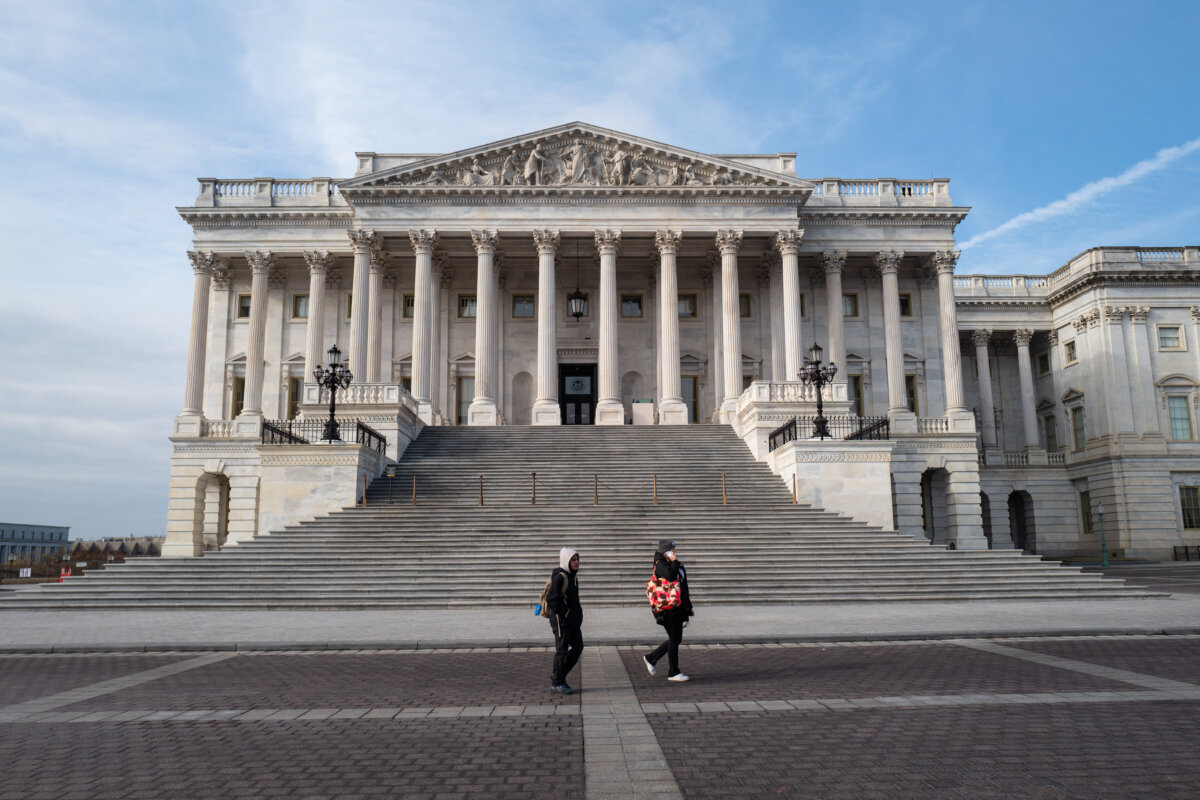

The House of Representatives overwhelmingly passed a package of three bills on Jan. 8, funding multiple departments.
Passed in a 397–28 vote, the bills provide billions of dollars in funding for the departments of Commerce, Justice, Energy, and Interior. More than $10 billion has also been designated for the Environmental Protection Agency (EPA) and NASA. The bill is headed to the Senate, where it is expected to pass.
One bill sets aside $1.7 billion for the Department of the Interior and Bureau of Reclamation, $360 million more than the administration’s 2026 fiscal year request.
It also provides $50.8 billion for the Department of Energy, an increase of $644 million above the fiscal year 2025 enacted level and $4.1 billion more than the fiscal year 2026 request.
Another bill allocates $42.56 billion to the Department of the Interior, the EPA, and related agencies. It specifically includes $8.82 billion for the EPA.
The package, which a bipartisan group of lawmakers released on Jan. 5, was a result of negotiations between top appropriators in the House and the Senate on both sides of the aisle.
“Developed through committee-led negotiations and thoughtful deliberation, this package demonstrates how an accountable process produces strong policy,” Rep. Tom Cole (R-Okla.) said in a Jan. 5 statement posted on X. “I commend our Cardinals for their leadership in producing a measure that turns priorities into action and puts America first.”
House Speaker Mike Johnson (R-La.) praised the set of bills.
“This bipartisan, bicameral package reflects steady progress toward completing FY26 funding responsibly,” he said in a Jan. 5 statement.
“It invests in priorities crucial to the American people: making our communities safer, supporting affordable and reliable energy, and responsibly managing vital resources. It also delivers critical community projects nationwide, along with investments in water infrastructure, ports, and flood control that protect localities and keep commerce moving.”
Sen. Patty Murray (D-Wash.), the top Democrat appropriator in the Senate, said the package prevents cuts by the Trump administration “by once again providing hundreds of detailed spending directives and reasserting congressional control over these incredibly important spending decisions.”
“It is so important we pass full-year funding bills again and refuse to cede power to this administration, and I hope that Republicans will work with us to do that as we pass the remainder of our funding bills,” she said in a Jan. 5 statement.
Rep. Rosa DeLauro (D-Conn.), the ranking member of the House Appropriations Committee, said the bill cuts out certain GOP provisions—such as on guns and oil and gas leasing on federal lands—and reasserts Congress’s power of the purse. The Trump administration has made cuts throughout the federal government, such as shuttering the U.S. Agency for International Development.
“Rather than another short-sighted stop-gap measure that affords the Trump Administration broader discretion, this full-year funding package restrains the White House through precise, legally binding spending requirements,” she said in a Jan. 5 statement.
On the other side, Rep. Greg Steube (R-Fla.) voted against the package.
“We are more than $38 trillion in debt. The American people elected Republicans to cut spending and eliminate left-wing waste in the budget. H.R. 6938 does none of this, which is why I voted NO today,” he posted on X.
“Not only does this ‘minibus’ fail to reduce spending, but it is also packed with Democrat earmarks and socialist pet projects that federal tax dollars have no business financing.”
Rep. Mike Kennedy (R-Utah) posted on X that he voted against the bill “because it includes liberal priorities that waste taxpayer dollars on [diversity, equity, and inclusion] programs at universities, alarmist climate change research, and funding for non-governmental organizations that are actively lobbying for woke priorities.”
 Friends Read Free
Copy
Facebook
Tweet
Friends Read Free
Copy
Facebook
Tweet