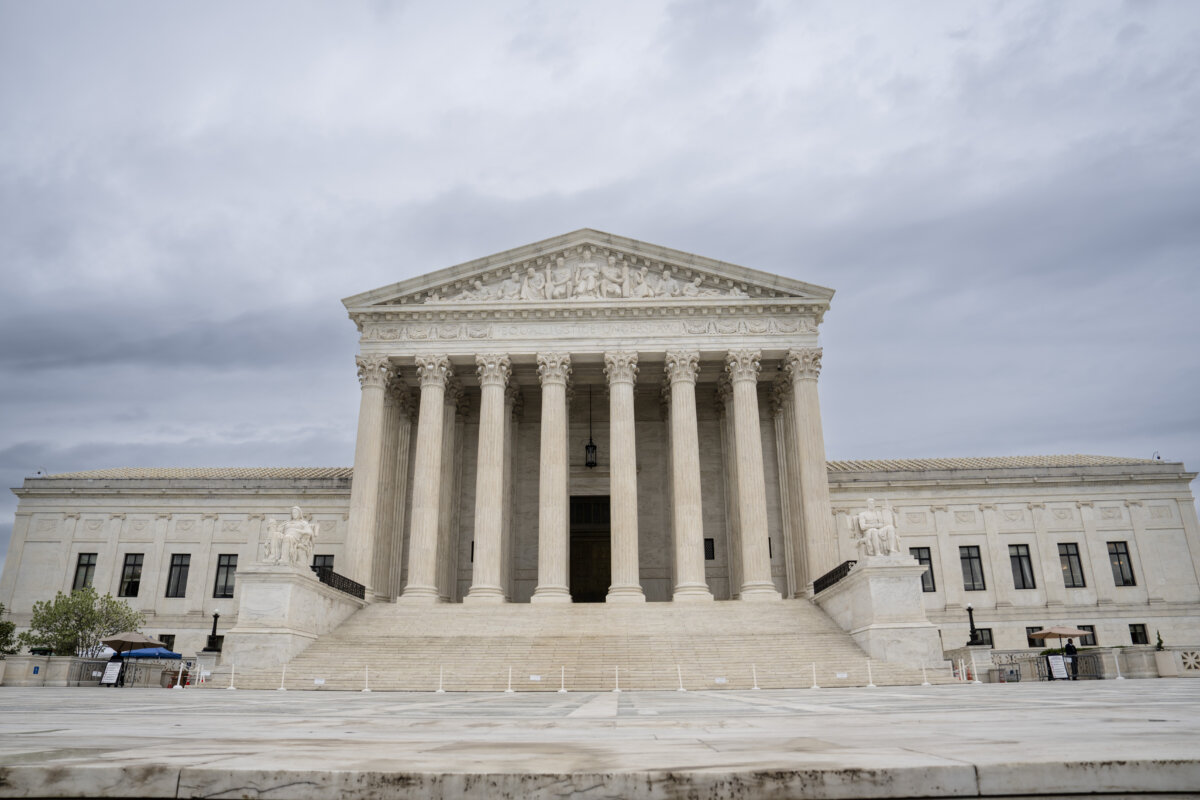

The U.S. Supreme Court’s landmark ruling limiting the use of race in redistricting efforts may benefit Republicans in 2026 and 2028, elections experts have told The Epoch Times.
In Louisiana v. Callais, a majority of the court said that race may not be the predominant, overriding reason for how congressional district lines are drawn. The case focused on Louisiana’s decision to add a majority-black district after a lower court said omitting the district would violate the Voting Rights Act.
That law generally prohibits race-based discrimination in voting practices. The Supreme Court ruled on April 29 that lower courts had been misapplying the nondiscrimination provisions of the federal Voting Rights Act by requiring states “to engage in the very race-based discrimination that the Constitution forbids.”
Since the ruling, Louisiana has postponed its House primary election and is working on a new map that does not include the extra black district. Other states have taken similar actions, signaling broader implications for redistricting across the country.
Sources interviewed by The Epoch Times disagreed on how much of an advantage GOP-controlled state legislatures are likely to secure for national Republicans in time for the midterm elections this November.
Before the Callais verdict, Steven J. Allen, a senior fellow at the National Legal and Policy Center, predicted that Republicans could gain two to four seats through redistricting.
Post-Callais, Republicans may gain an additional three to five seats, but that does not guarantee that the GOP can hold the House, given Democratic voters’ high levels of enthusiasm, he told The Epoch Times.
“Democrats are outperforming [then-presidential candidate] Kamala Harris in 2024 in special elections by an average of 13 points, based on their being 20 percent more likely to show up to vote than Republicans,” Allen said.
However, the Trump administration is optimistic. After the Supreme Court’s decision, President Donald Trump predicted that new maps would yield “more than 20 House seats” for Republicans in November. He also encouraged state legislatures to interrupt ongoing elections in order to draw new maps.
“If they have to vote twice, so be it,” the president said.
Trump White House deputy chief of staff Stephen Miller wrote on X that over the years, “Democrats have enjoyed a cushion of at least 40 extra improper House seats” because of racial redistricting, among other factors.
States Act Quickly After Callais
The ruling escalated a nationwide battle, underway since last year, when Trump urged Republican-controlled state legislatures to protect his party’s narrow majority in the U.S. House of Representatives by moving up the redistricting process. Normally, redistricting only takes place after the U.S. census every 10 years, but Trump sought changes mid-decade.
Texas and Florida heeded Trump’s call, while Democrats in California and Virginia responded with redistricting efforts of their own. After the Supreme Court’s decision last month, state lawmakers scrambled to implement new maps benefiting their respective parties ahead of the midterms.
The Supreme Court also quickly issued its formal judgment for Louisiana’s case, jumping past the 32-day delay it usually has after publicly releasing its opinion.
The Tennessee General Assembly voted on May 7 to eliminate the state’s single black-majority district. The Mississippi Legislature is expected to begin considering a new congressional map on about May 20. It is unclear whether the South Carolina Legislature will hold a special session to consider a new map. A measure to redraw the map passed the state House, but its passage by the state Senate is uncertain.
Rep. Andy Ogles (R-Tenn.) predicted that House Republicans will prevail this November. The party could “pick up anywhere from eight to 12 seats through the redistricting process,” he told The Epoch Times.
After Callais, Georgia Gov. Brian Kemp, a Republican, said he would not call a special session to redistrict because voting was already underway for the May 19 primaries.
Primaries in Alabama, which also had been ordered to create a black-majority district, are scheduled for May 19. Alabama Gov. Kay Ivey, a Republican, signed legislation on May 8 to clear the way for the state to redraw its congressional election map to comply with Callais.
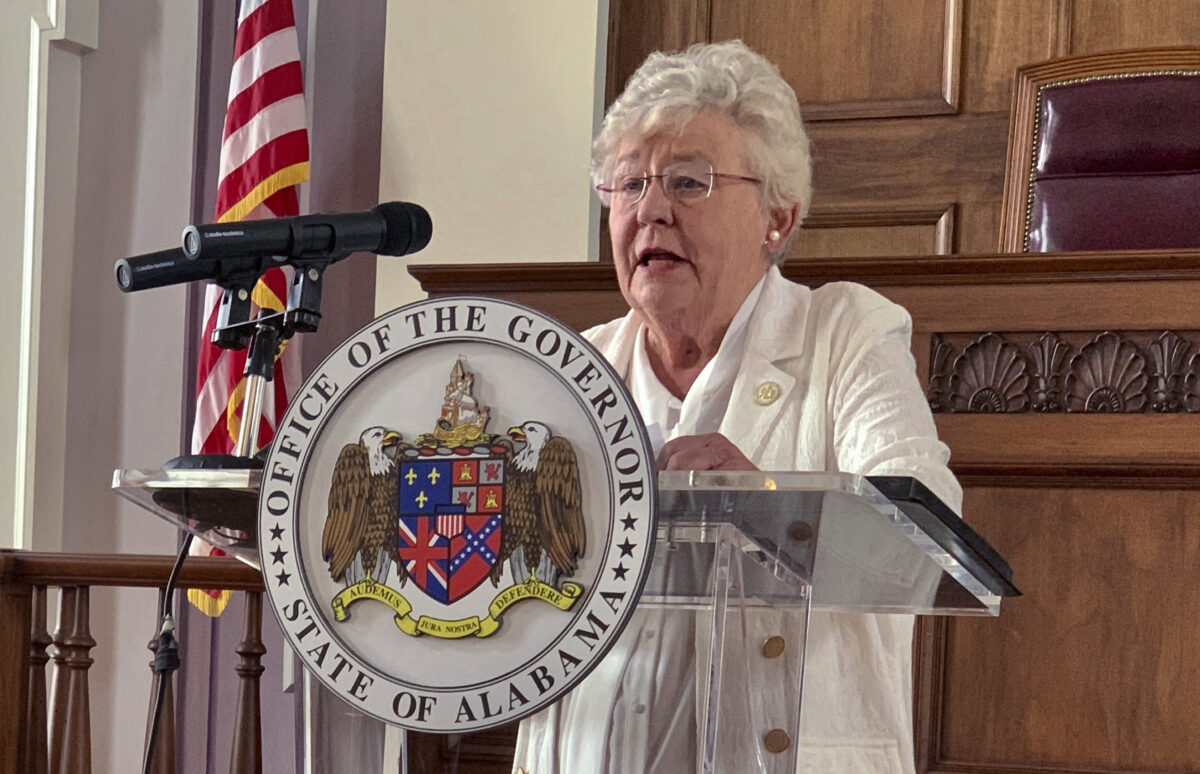
On May 11, the Supreme Court issued a ruling green-lighting Alabama’s redistricting effort.
Impact on Midterms
Experts told The Epoch Times that they expect any potential Republican gains in the elections six months from now to be modest because of tight timelines and legal challenges.
Both Henry Olsen, senior fellow at the Ethics and Public Policy Center, and Hans von Spakovsky, senior legal fellow at Advancing American Freedom, said the Callais decision came too late in 2026 for many Republican-led states to take advantage of it before November.
Olsen, who drew congressional maps in California in the 1980s, told The Epoch Times that the political impact for 2026 would be “minimal.”
Von Spakovsky told The Epoch Times that the effect of any new maps may be blunted because “every single redistricting plan will be attacked in the courts.”
Those challenging the new map, even if they are aware that they may eventually lose their cases, want to strategically delay the plans through litigation “so that it’s too late to put in the new districts for the midterm elections,” he said.
Louisiana already encountered a lawsuit from a group of voters challenging the state’s decision to delay its primaries.
Jackie Doyer, legal policy director for Honest Elections Project, said Louisiana and Tennessee may be able to get redistricting done in time for November. As a caveat, she said those efforts were likely to be challenged under the Purcell principle.
That legal doctrine, which the Supreme Court established in a 2006 case, holds that federal courts should avoid disrupting elections with rulings that enjoin state laws close to an Election Day.
Logistical issues surrounding absentee ballots could also complicate the voting process.
Annie Talley, former deputy counsel to the president, said Republican states may benefit in November but could face challenges.
Redistricting in time requires “a very fast turnaround, and they’ll have to deal with the logistics issues and the issues with overseas ballots … so it’s going to be a pretty big lift,” she said.
“But if there’s a will, usually there’s a way,” Talley told The Epoch Times.
“[The Callais decision] makes it a lot easier for states like Florida, for example, to defend their new map that they just passed. And it’s helpful in states like California where there’s ongoing litigation, and they’ve specifically used race as a criteria.”
J. Christian Adams, president and general counsel of the Public Interest Legal Foundation, was optimistic that the Callais decision would help the group’s ongoing court challenge to the redrawn California map.

“It’s totally going to affect the California case because the court said you can’t draw district lines with a racial intent like they did in Louisiana,” Adams told The Epoch Times.
He said his group’s legal complaint alleges that “the whole state map was based on race.”
Adams’s organization also filed a federal lawsuit on May 8, alleging that a 2011 Illinois voting rights law violates the Voting Rights Act and the Constitution by requiring that districts be drawn on the basis of race. The lawsuit asks the court to prevent Illinois from enforcing the state statute.
2028 and Beyond
Both the majority opinion’s author, Justice Samuel Alito, and Justice Elena Kagan, who penned the dissent, acknowledged that the decision in Callais represented a major shift from how courts had been ruling on race and redistricting.
By changing how states can redistrict, the Supreme Court’s decision will likely affect elections well beyond 2026. How it will do that remains to be seen.
Olsen described the likely impact of Callais in 2028 as “moderate,” saying that after the next census, “it can cut both ways for the parties.”
The Georgia General Assembly could reconsider the state’s five black Democratic seats in 2028, Olsen said.
Overall, Olsen speculated that Republicans could gain seven seats in the South for 2028.
Allen suggested that Callais may take years to have a significant impact. That impact would be felt mostly after the next census in 2030.
In 2032, in the first election after the census, several seats may shift to Republican states, “especially if an unpopular Democrat or a popular Republican is running for reelection for president,” he said.
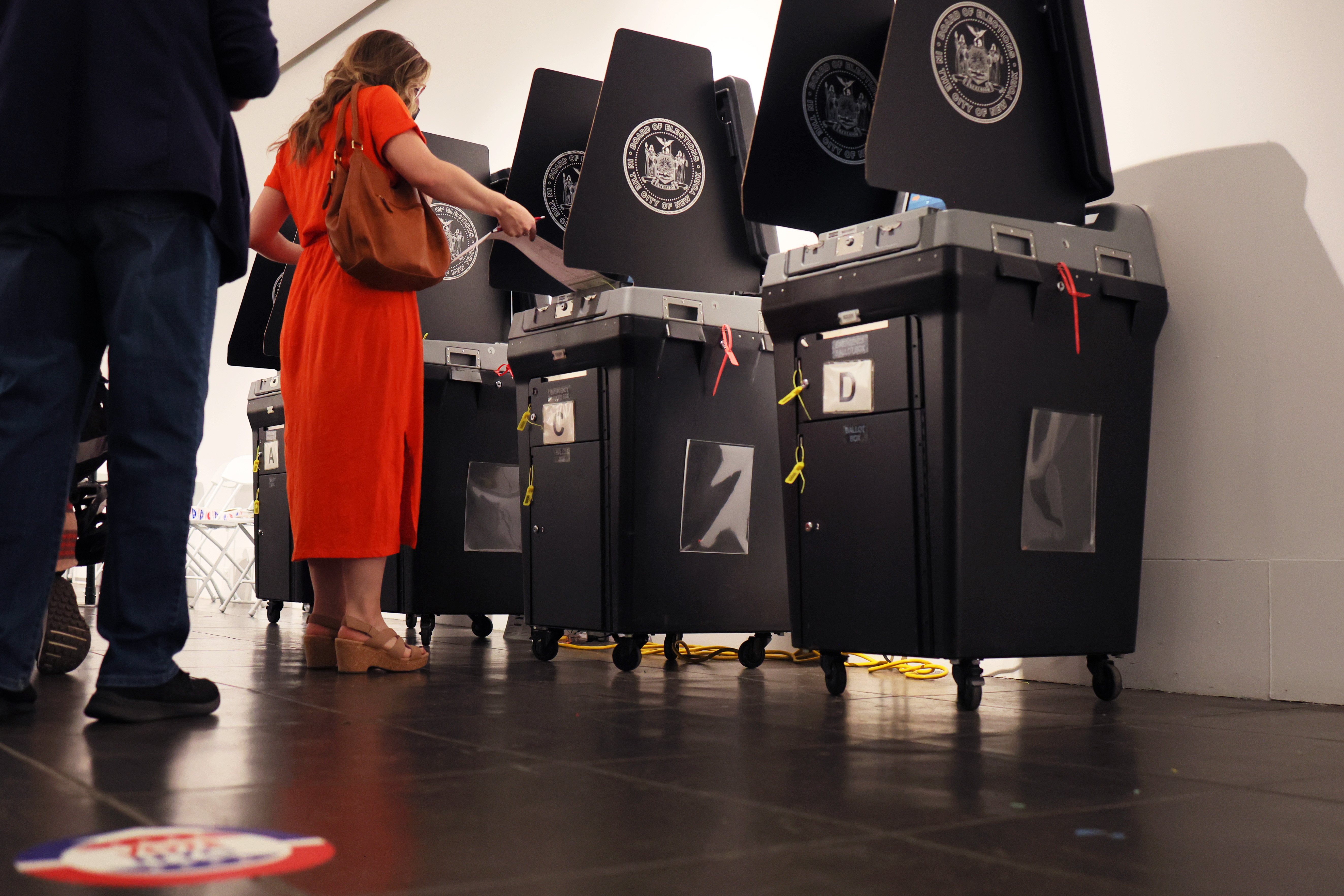
The Brennan Center for Justice estimates that population declines reflected in the census could cause Democrat-dominated California to lose four of its 52 seats, and Democrat-controlled New York to lose two of its 26 seats. At the same time, each of the GOP strongholds of Florida and Texas that have seen population increases would see the addition of four seats, bringing their respective totals to 32 and 42.
Ogles predicts that Republicans could pick up another eight to 12 seats after the 2030 census.
Callais has leveled the playing field, the congressman said.
Sam Dorman and Nathan Worcester contributed to this report.
 Friends Read Free
Copy
Facebook
Tweet
Friends Read Free
Copy
Facebook
Tweet