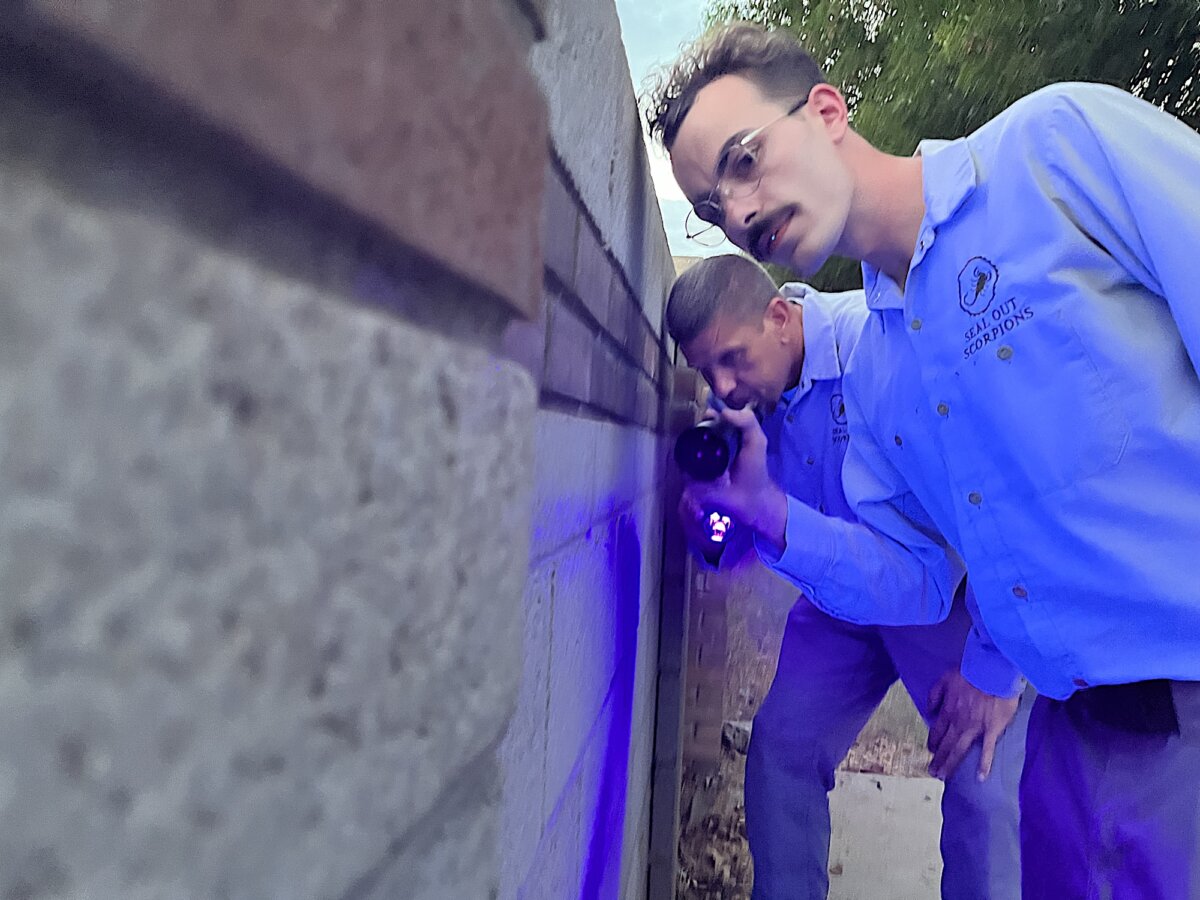

TEMPE, Ariz.—Mike Golleher and Jeremiah Sourp came prepared for the hunt, dressed for protection with boots tightened, sleeves down, and cargo pants secured.
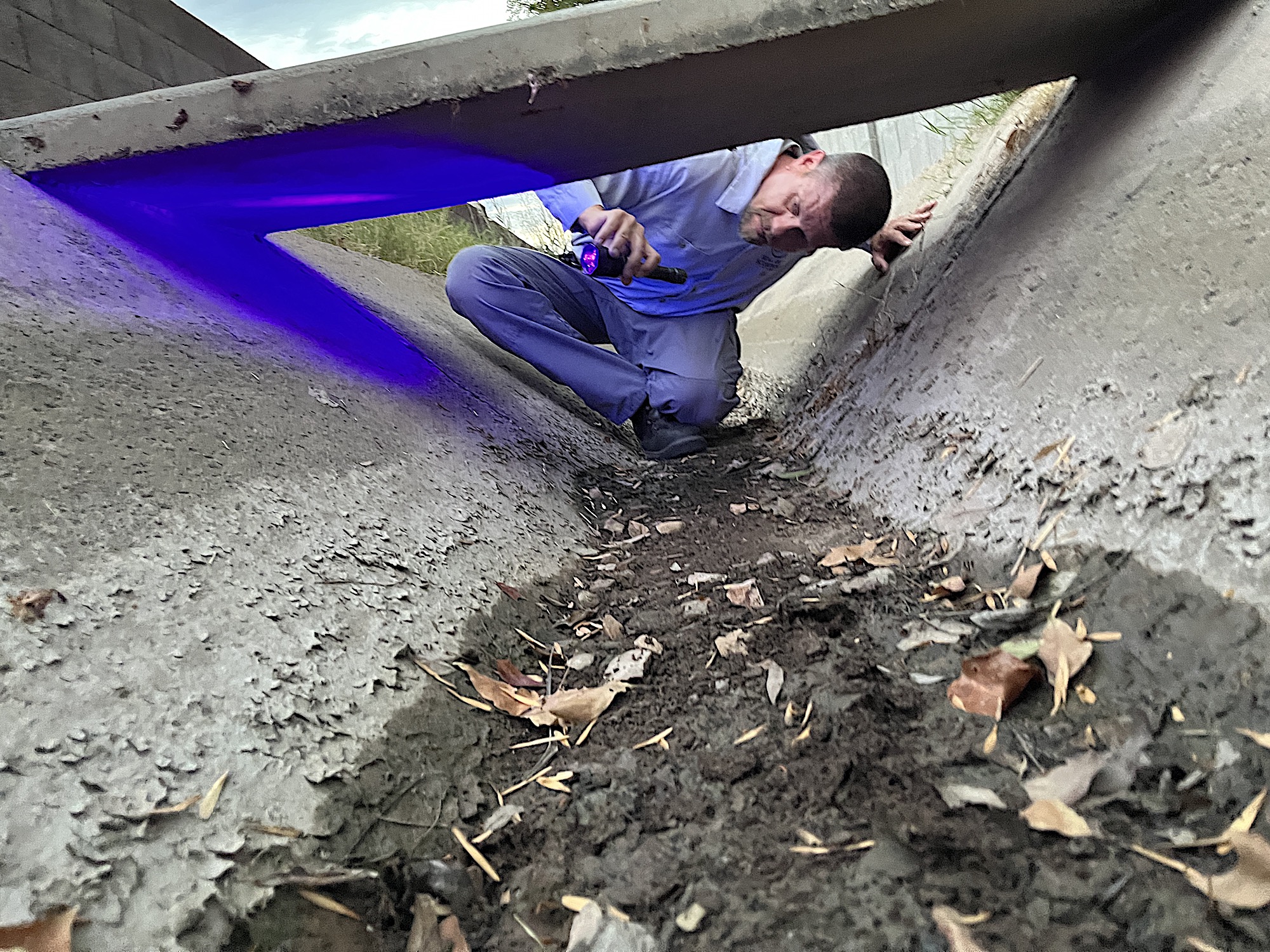
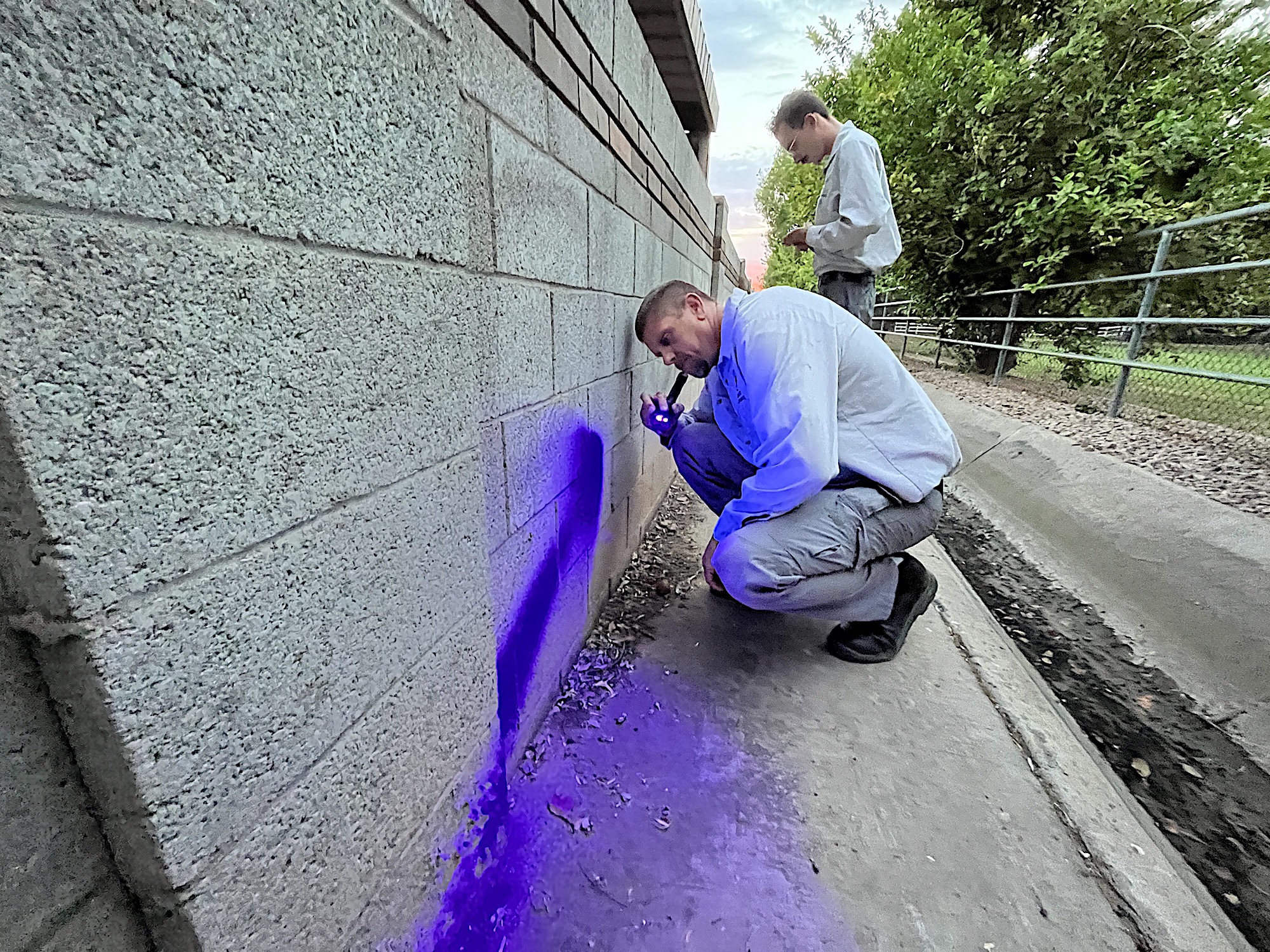
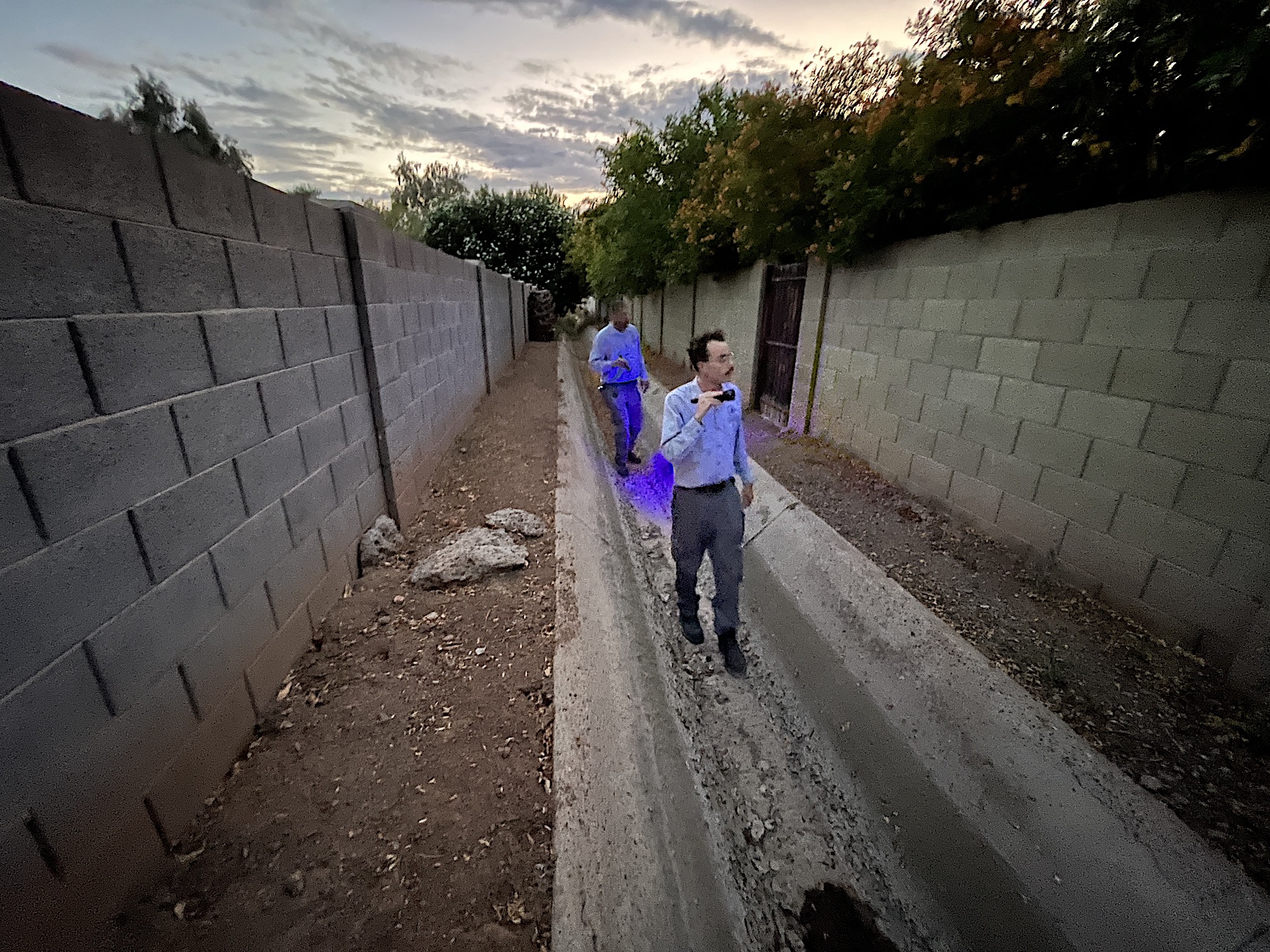
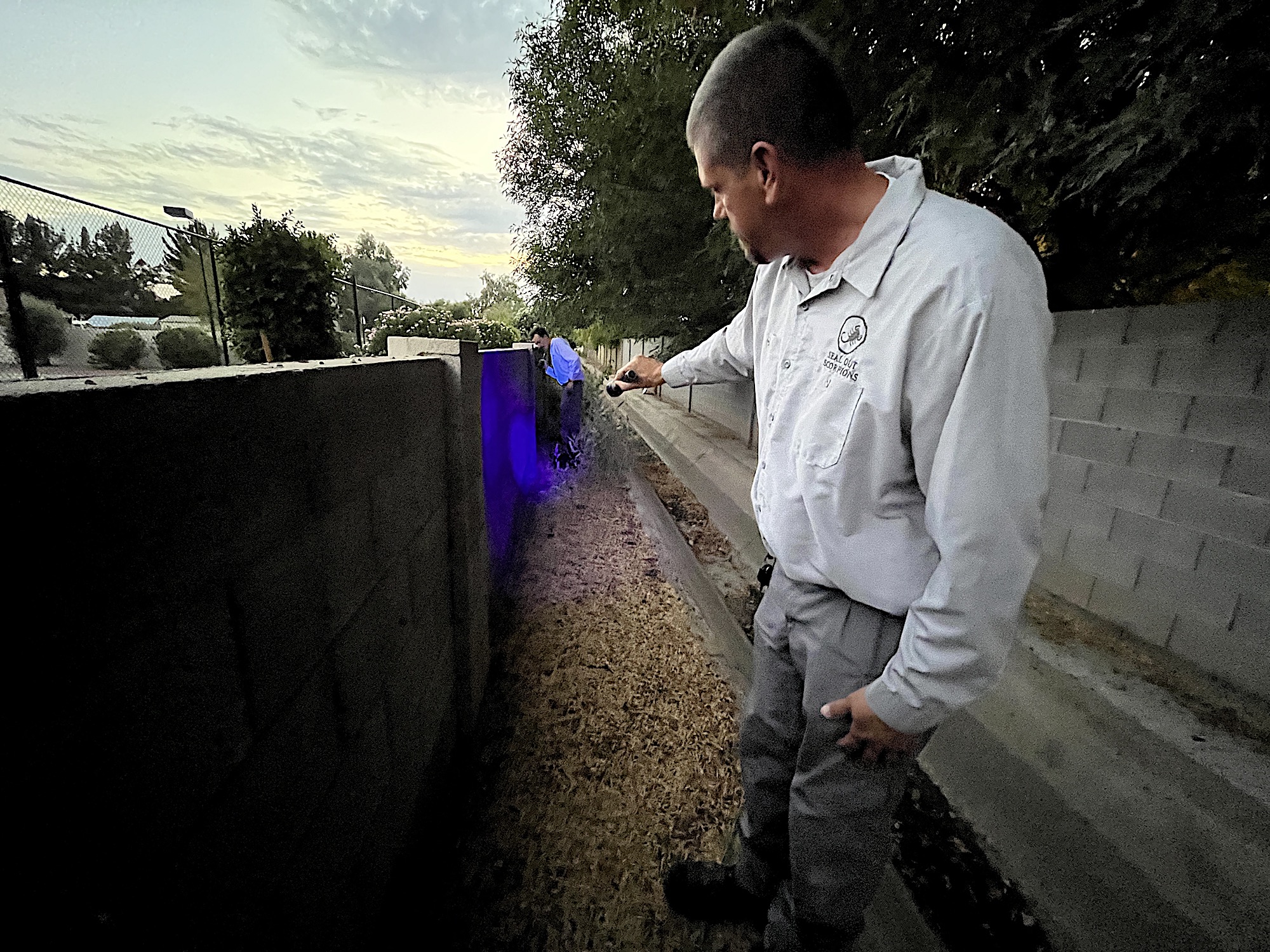
Ultraviolet flashlights clicked on as they took positions along the concrete walls of a drainage canal behind an upscale Tempe neighborhood in the fading twilight.
Golleher entered first, sweeping his beam in slow, horizontal passes across the slab.
“When you see them, they really pop,” said Golleher, 46, senior scorpion specialist at Seal Out Scorpions in Tempe.
Sourp, 22, the company’s pest management operations manager, worked the base of the walls where concrete met dirt and weeds, checking seams, joints, and fractures opened by desert heat.
He stopped at a narrow crack and held the light steady.
“Oh, I think I got one!” he called.
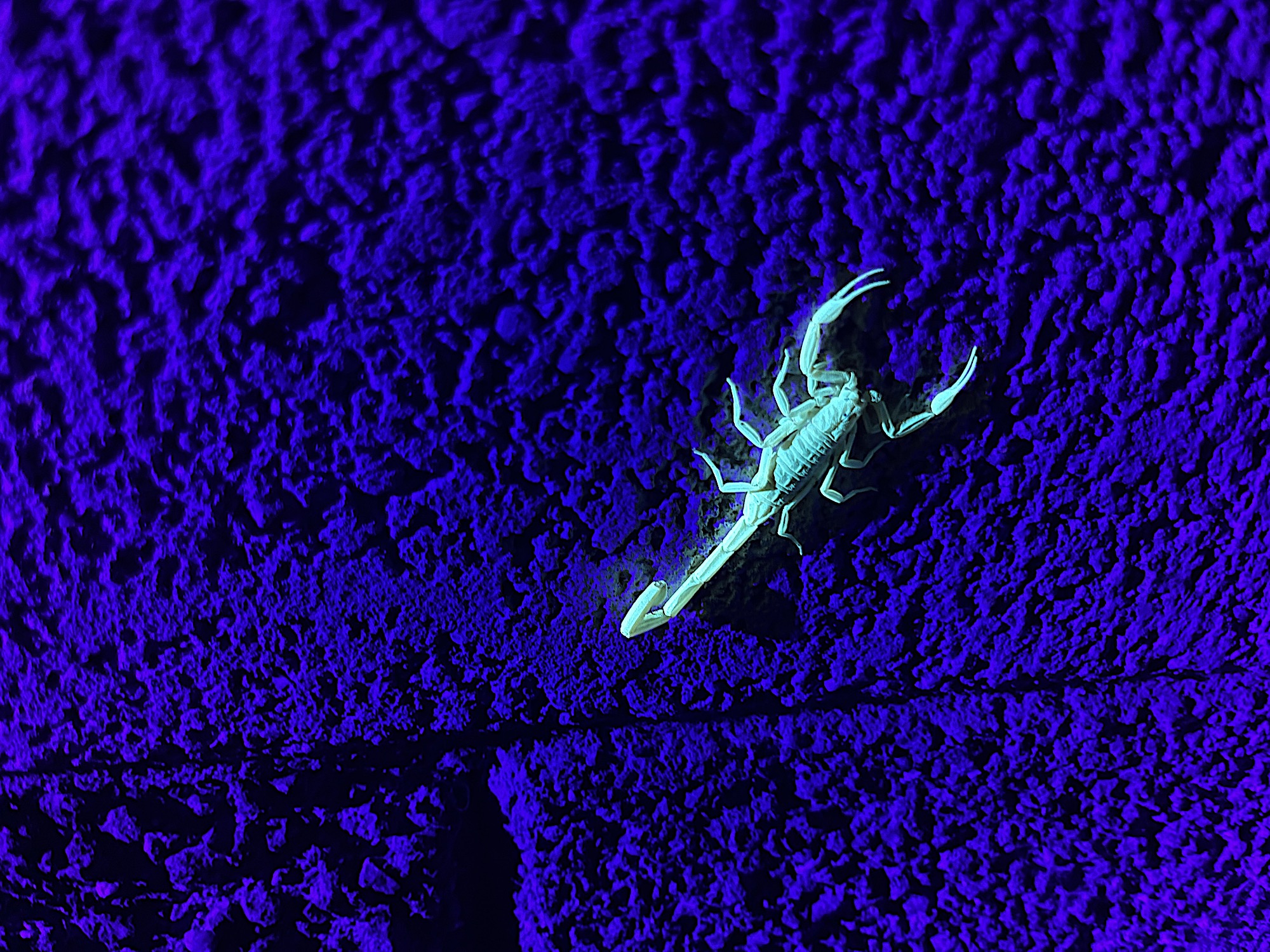
An Arizona bark scorpion glowed bright blue-green under ultraviolet light. Then a second appeared, then others wedged into adjacent seams.
Within moments, the walls were dotted with scattered points of light—small, living markers in the dark.
 By day, bark scorpions lie hidden beneath rocks, bark, and structural voids. At night, they emerge to hunt and can slip into homes through openings so small they often go unnoticed.
Once inside, they may turn up without warning in sinks, in shoes, in bedding, or along floor tiles.
Fear Factor
For some residents, the risk of a sting becomes less abstract fear and more fixation—dread that follows them through every room of the house.
That experience—and four painful stings of her own—led Georgia Clubb to found Seal Out Scorpions in 1999 with her husband and with her younger brother, Golleher.
“I am the absolute least likely person to do this,” Clubb said. “I didn’t start actually offering advanced pest management until 2017.”
She said scorpions do not damage homes structurally but can create what she calls “absolute mental havoc.”
“They’re terrifying in your house, in your bed, in your shoe,” she said.
There have been accounts of scorpions arriving as stowaways in luggage, Clubb said, including one case traced to Chicago after a traveler unknowingly transported a concealed scorpion.
Clubb, 63, said she sees scorpions as survivors adapting to human-built environments rather than invasive creatures with stingers and pincers.
 “They follow moisture gradients—pools, pool equipment, landscaped areas—and airflow,” she said. “The bark scorpion is the one we deal with.”
The Arizona bark scorpion (Centruroides sculpturatus) is a nocturnal arachnid that grows up to about 2 1/2 inches long and that can live up to seven years, according to the National Park Service.
It is widespread across Arizona, including the Grand Canyon region and surrounding desert corridors.
Of the state’s 30-plus scorpion species, only the bark scorpion is considered highly venomous and potentially life-threatening, according to the Arizona-Sonora Desert Museum.
Painful Lessons
Its sting is intensely painful and, in rare cases, fatal.
National Poison Data System figures cited by Seal Out Scorpions report seven deaths linked to scorpion stings between 1999 and 2024, with 7,866 cases reported in 2024 alone.
“They’re an arboreal species, meaning tree-dwelling, and our stucco homes have become man-made trees and caverns,” Clubb said.
She said Arizona construction often focuses on broad weatherproofing while missing small structural gaps, which require filling through “micro-weatherization.”
“They get into the walls,” Clubb said. “They’re survivors.”
 Most homes, she said, do not have true infestations so much as what the company describes as “high scorpion pressure.”
Modern pesticides, she said, are less persistent than in past decades and can sometimes drive scorpions deeper into structures rather than eliminating them.
“When I was growing up in the ’60s and ’70s, those insecticides were strong,” Clubb said. “You’d spray, and they’d stay in the environment longer.”
She also pointed to rising heat, wavering moisture patterns, airflow changes, and ongoing development as factors increasing scorpion activity near housing.
“We are really in the business of scorpion risk management,” she said. “There isn’t a formal category for what we do.”
Her approach focuses on sealing entry points and changing conditions that allow access, rather than relying solely on chemicals.
“Like healthcare, we focus on root causes rather than symptoms,” she said.
Although there is no strict definition of infestation, Clubb said repeated encounters—roughly 15 to 20 or more per year—can indicate a serious problem.
 She said homes can contain hundreds of potential entry points through gaps in drywall, fixture penetrations, ductwork, expansion joints, and slab separations.
“They follow airflow,” Clubb said. “They follow structure. And they adapt.”
Many homeowners, she added, rely on spraying alone.
“Yes, it will kill some, but others just retreat deeper,” she said.
Those that enter homes, she said, are often stressed or disoriented and may linger before dying.
“Those are the ones that sting,” Clubb said.
Scorpions Everywhere
She recalled one case involving hundreds of scorpions intercepted over two days, and another so severe the crew nearly walked away from the property.
Clubb said her own fear began with her first sting—inside her home, while she was in bed.
“I found it on my night shirt 10 minutes later,” she said. “It traumatized me.”
Afterward, she lived in constant vigilance, scanning rooms and anticipating nighttime encounters.
“I told my husband I would not live in that house again,” she said.
Today, the company serves thousands of residential and commercial clients dealing not only with pests, but also with anxiety, sleep disruption, and ongoing stress.
 “We’ve had people talk about divorce,” Clubb said. “They’re arguing over it. I’ve had clients grab me by the shoulders, saying, ‘We need to get rid of these scorpions.’”
Some arrive at the door in tears.
Even experienced workers are not immune.
“One of our employees is fearless with scorpions, but terrified of spiders,” she said.
Fateful Encounter
Golleher said his entry into the field came after finding a scorpion in his home near his infant daughter.
Even as a child, he said, he sensed that his life would somehow circle back to scorpions.
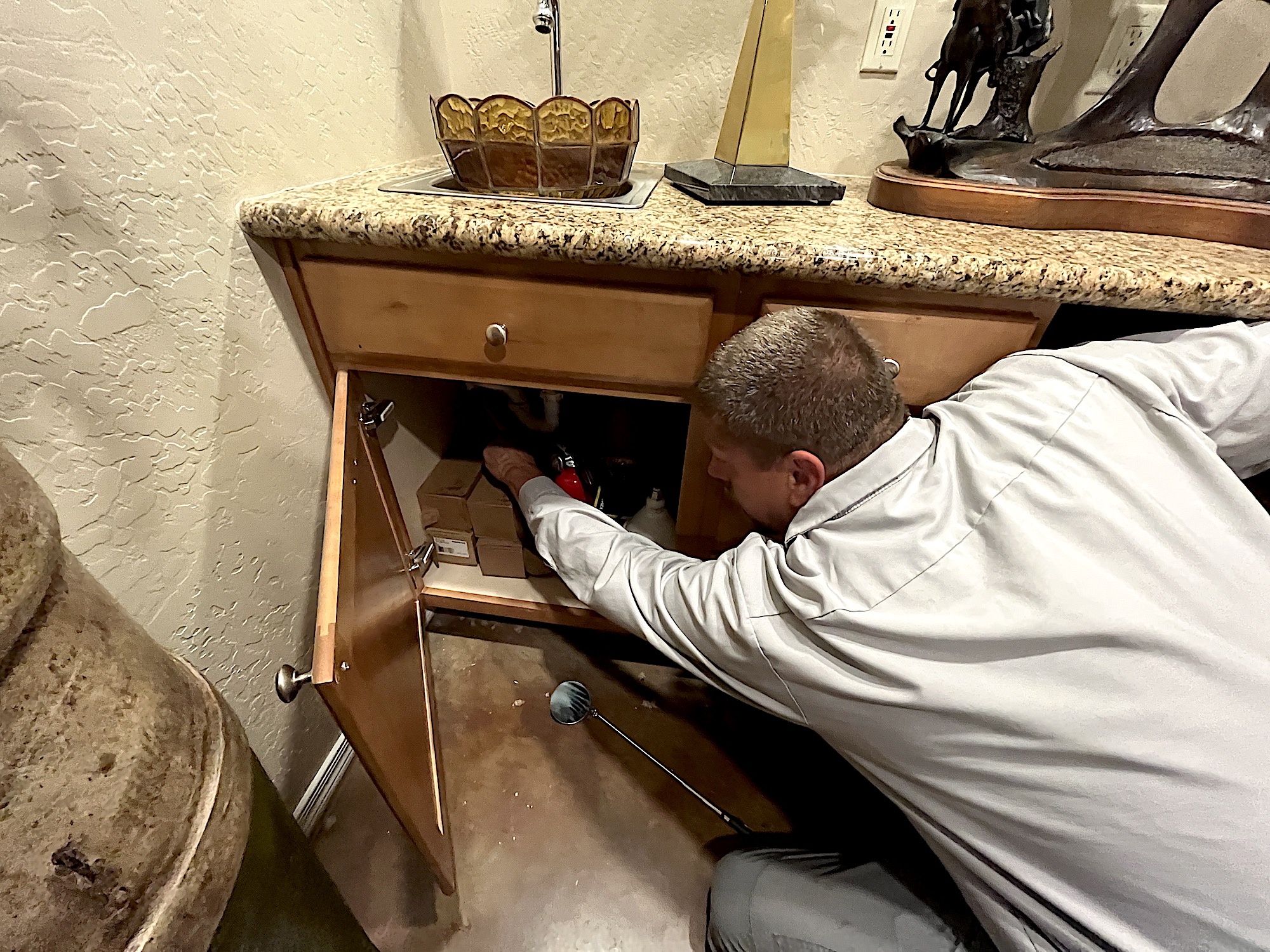
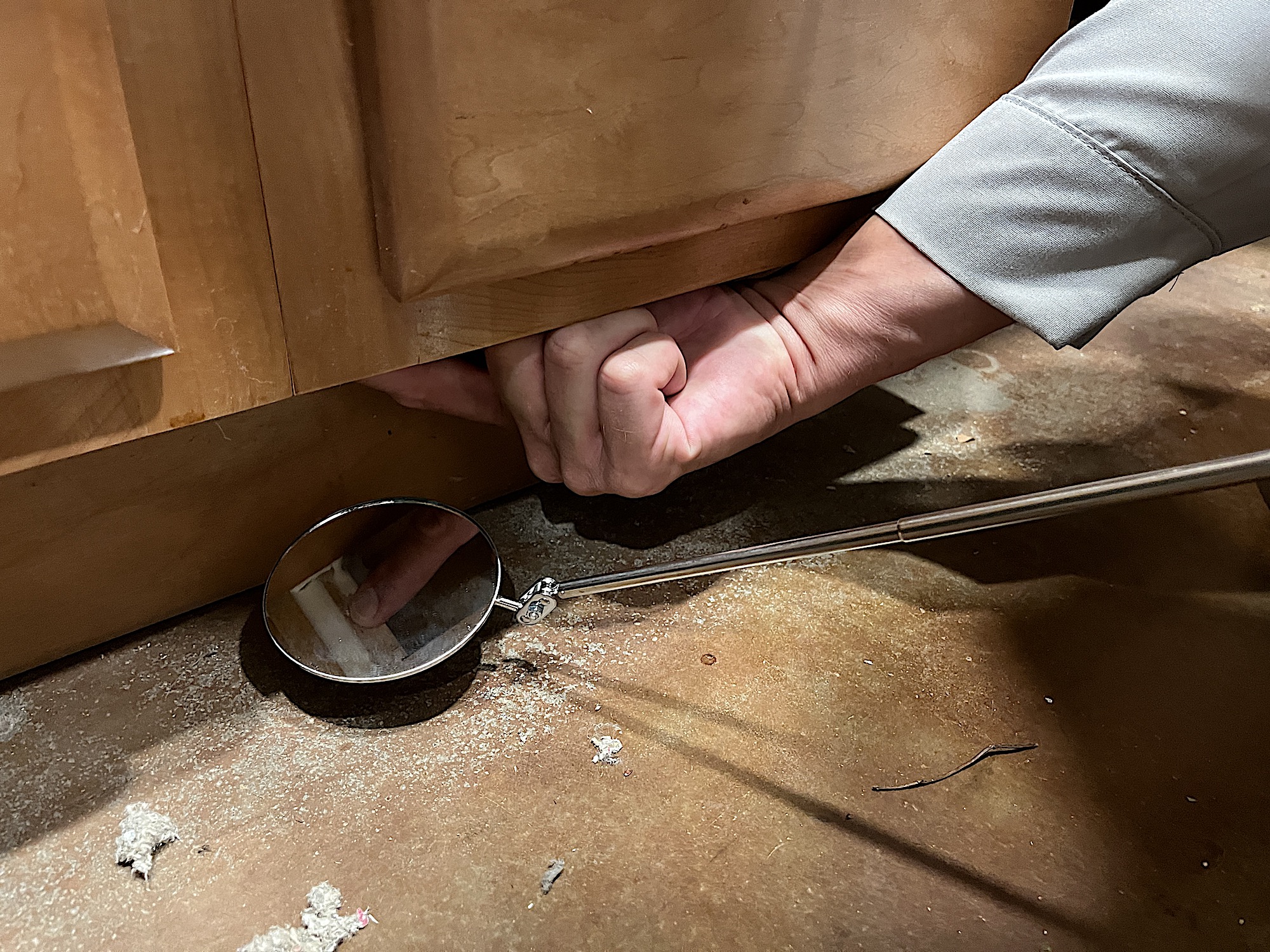
In the field, he inspects under sinks, outlets, and structural seams, sealing entry points with practiced precision.
 The work, he said, is less about extermination than restoring a sense of control inside the home.
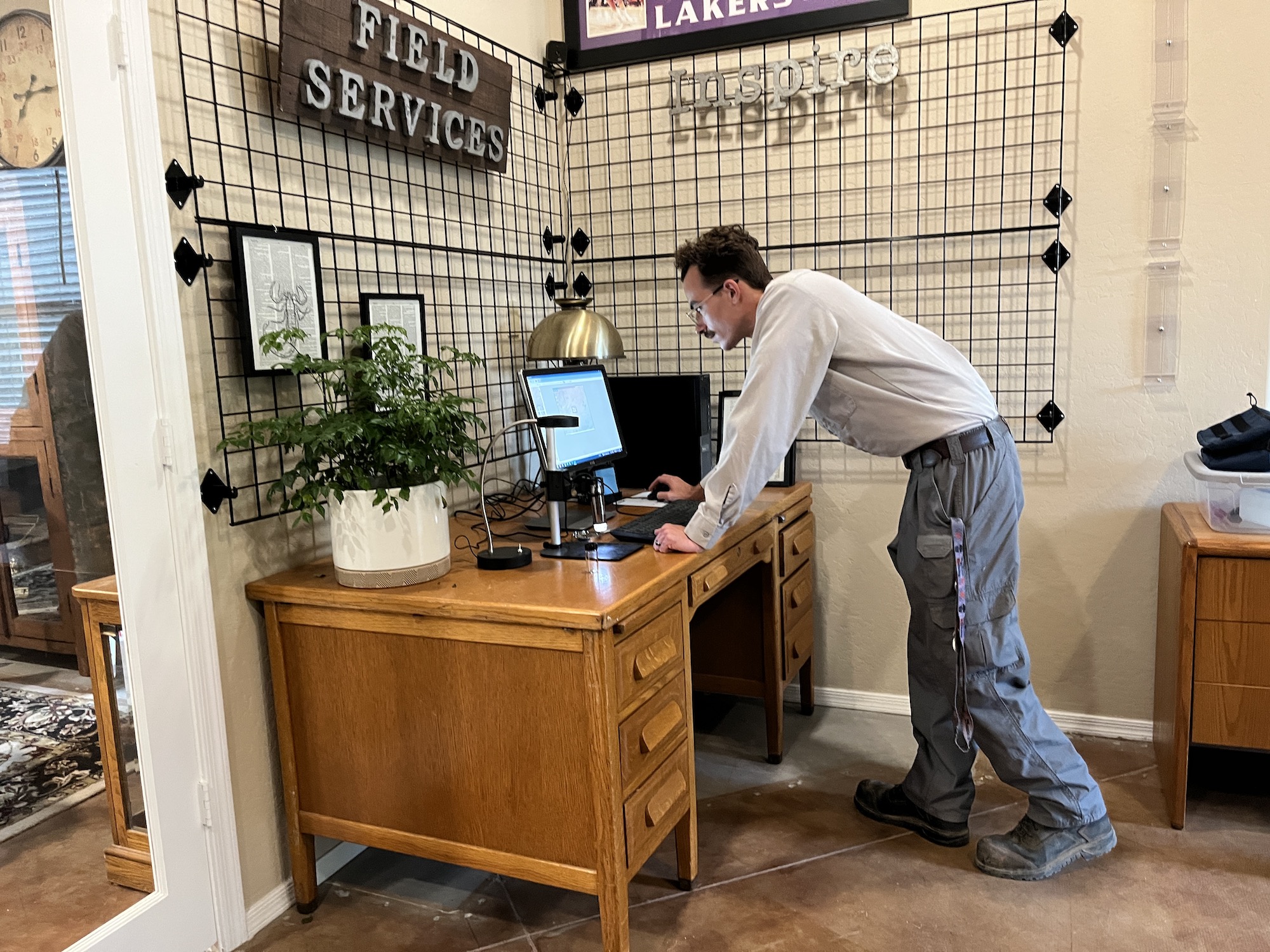
Sourp said traditional pest control often falls short in desert environments, where small gaps can make a decisive difference.
“We start with a barrier integrity audit before any treatment plan,” he said. “It’s a different approach.”
Clubb said one of the biggest misconceptions is that general spraying solves the problem. It does not. It can actually increase risk by driving them inside.
Scorpions, she said, are capable climbers that move through walls, furniture voids, and ceiling spaces with ease.
In one case, she said, a scorpion fell from a ceiling fan and stung a man while he was sitting on a toilet.
“He still doesn’t use that bathroom,” she said.
From Fear to Understanding
Despite the alarm scorpions generate, Clubb said she has come to see them differently over time.
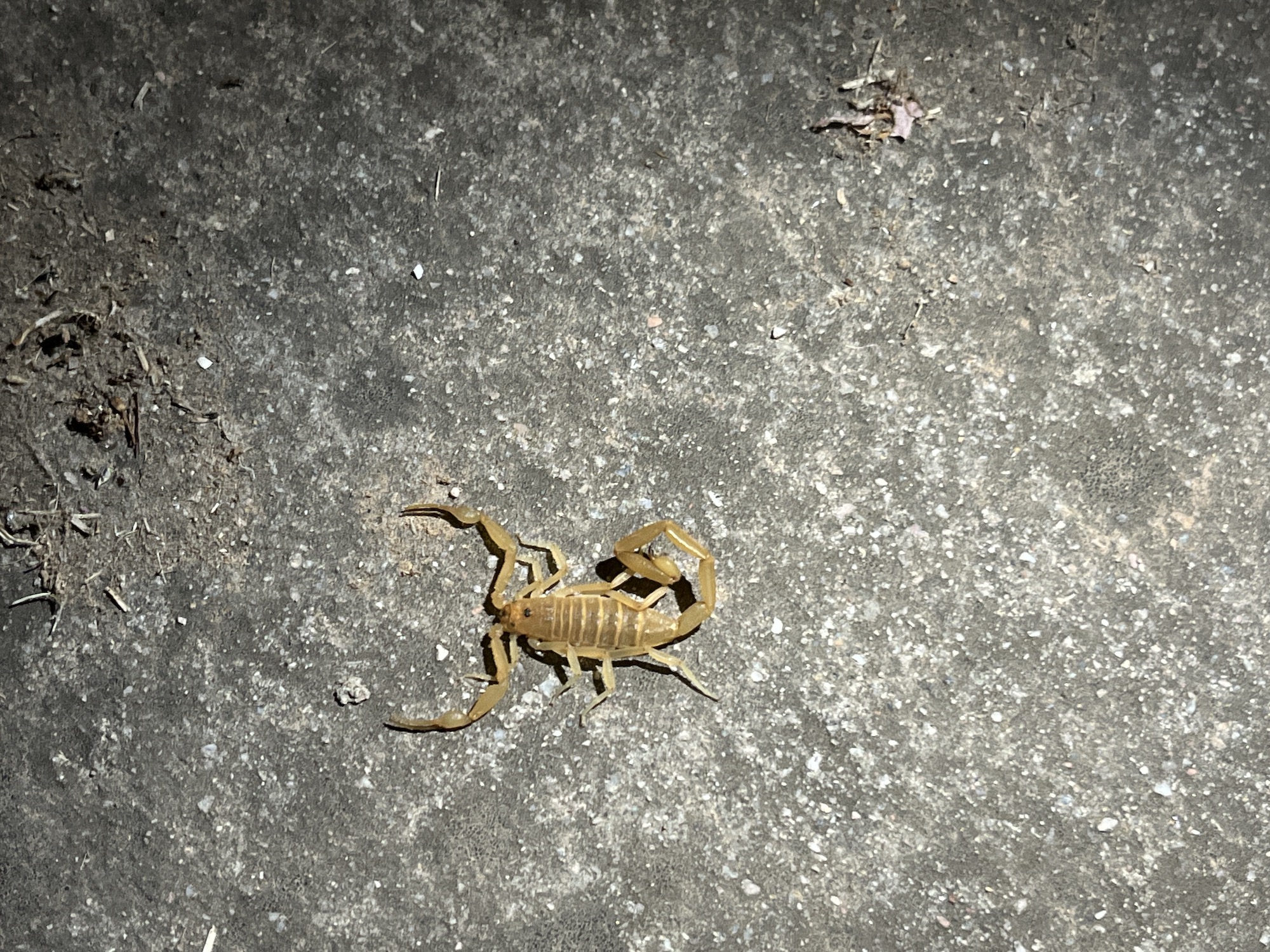 One night in her garage, she said, she turned on a light and found a large scorpion circling with its tail raised in a defensive posture.
“It froze—and then ran,” she said. “And I thought, that’s exactly what I would do.”
Development, she added, has reduced habitat and increased contact with people.
“At one point I thought they shouldn’t exist,” Clubb said. “Now I understand they’re part of the ecology.”
 Friends Read Free
Copy
Facebook
Tweet
Friends Read Free
Copy
Facebook
Tweet