FORT BENNING, Ga.—It was about two hours before sunrise on the morning of April 10 when 122 soldiers in 61 two-man teams from across the Army stepped up to the starting line of one of the world’s toughest military competitions: a three-day test of strength, teamwork, technical proficiency, and determination.
Many competitors had trained for nearly a year and had already beaten some of the best soldiers from their respective units just to get to the starting line of the Best Ranger Competition, which is considered the Olympics of Army infantry skills.
Mere seconds after the starting gun rang out and the 122 competitors charged off the starting line, several stumbled and crashed to the ground. But their teammates were there to pick them up for the challenges ahead.
The cooperation exhibited by the two-man teams proved the deciding factor separating the best from the rest.
“We each had our high and low moments during the competition. Any time I was really sucking, he was there to pick me up,” Sgt. Drew Schorsch said of his teammate, Spc. Caleb Godbold.
Schorsch and Godbold were one of three teams representing the 75th Ranger Regiment at the competition. Together, the pair won the competition and earned the title of “Best Ranger.”
“I would say that Drew definitely carried me more than I carried him,” Godbold said. “There was one point during the Ranger Reckoning, the initial day, he carried my plates for me because I was cramping for five miles.”
Day 1: Buying In and Reckoning
After the starting gun, the 61 teams completed a run-swim-run event before entering the first event that would decide whether they would move forward in the competition.
The deciding “buy-in” task was for each teammate to carry a 40-pound water can in each hand about three-quarters of a mile out and back. Every time a team had to set down their cans to recover their grip strength, they’d have to go to the starting line before returning to their cans to continue the task. What was designed to be a 1.5-mile carry in the absolute best of circumstances became a grueling test during which some teams ultimately moved about seven miles to get their water cans through.
Schorsch told The Epoch Times he had allowed himself little water and supplemental nutrition as he entered the water can carry event, a mistake that could have dangerously fatigued him and knocked his teammate out of the competition early on.
Only the top 40 teams to cross the finish line in the water can event were allowed through to the next phase of competition.
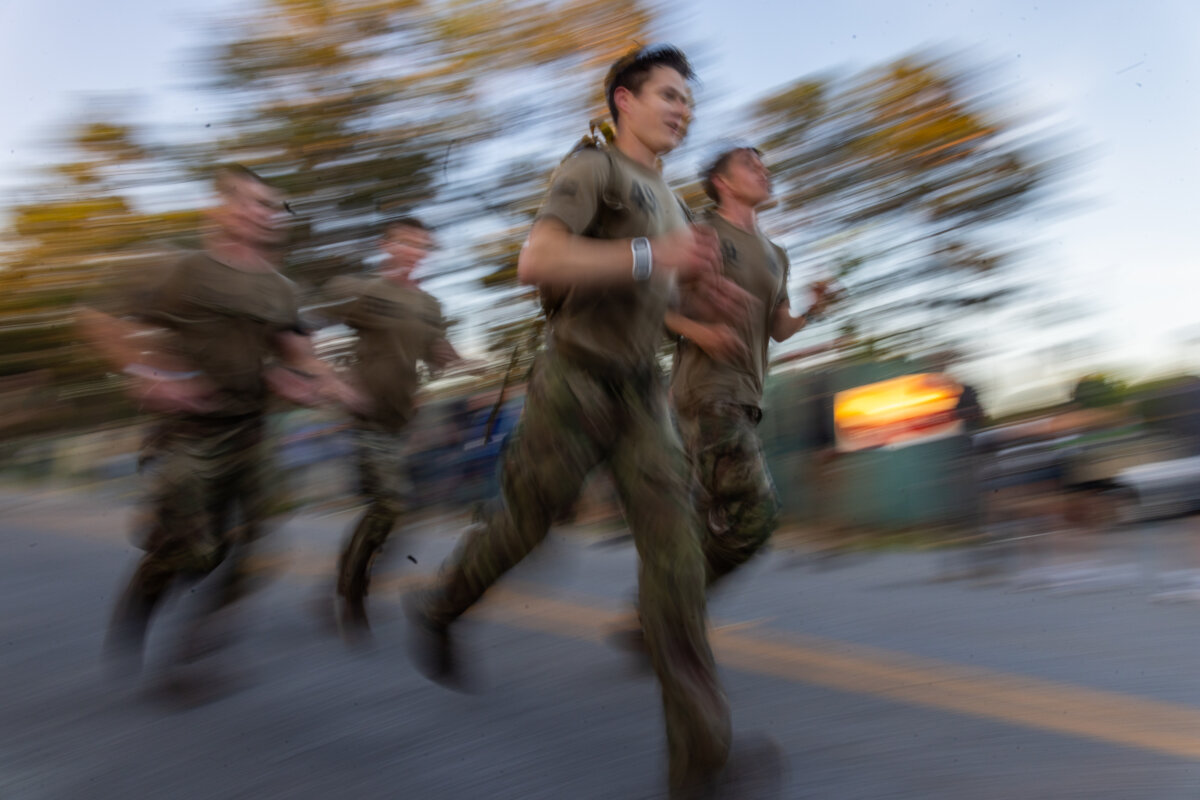
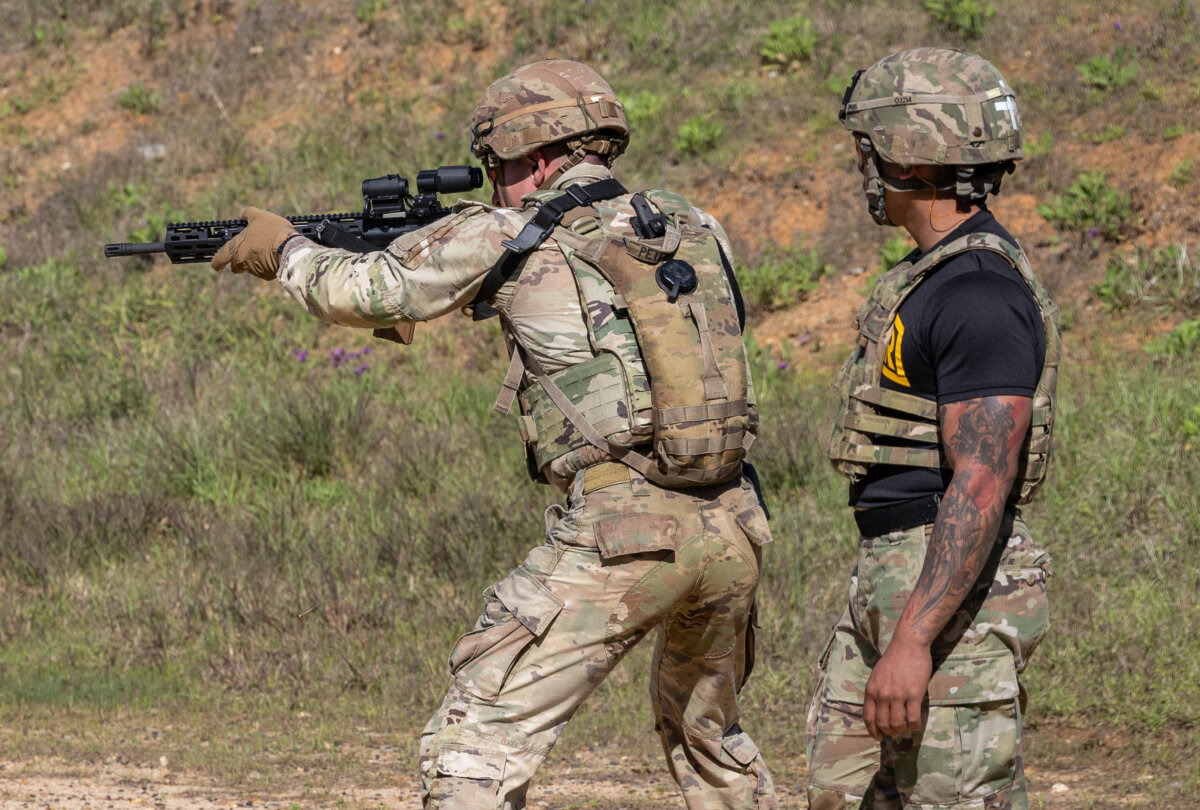
Following the buy-in event, teams set off running from one range to the next across Fort Benning, completing 13 challenge events, collectively known as “Ranger Reckoning.” Those tasks included shooting ranges, climbing, obstacle courses, knocking out a flying drone target, and various mystery events.
Over the course of the challenges, competitors struggled to consume enough calories to stay in the game.
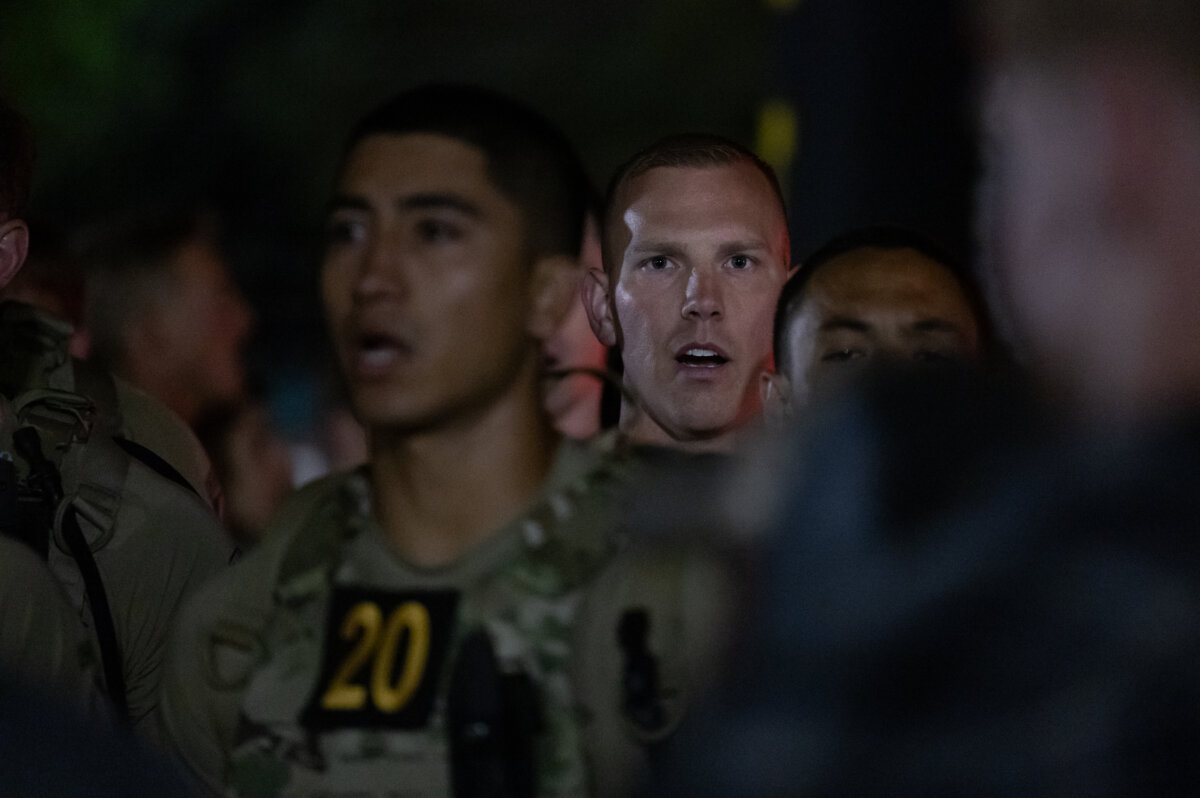
As “Ranger Reckoning” stretched into the night, the field was cut down to the final 32 teams. As the reckoning ended, the team entered into an unknown-distance march.
Administering the dozens of challenges was a cadre of soldiers from across the Army. As they oversaw the challenges throughout the three-day event, several among the cadre looked on at the competitors with a certain degree of envy.
Before joining the cadre, Sgt. First Class Dylan Why had competed with his fellow soldiers from the Fourth Infantry Division for a slot at the Best Ranger Competition. Why and his teammate were also monitoring other top competitors, tracking their mileage on running apps, and trying to match those efforts along the way.
“We were hungry for it,” he told The Epoch Times.
“We were clearing probably 30 to 40 miles a week on the front end, and then we were getting up to 190 miles a month,” he said.
Why placed third within his unit’s internal contest for a slot at the Best Ranger Competition, but he had to back out because of an injury.
Day 2: Rising Stakes
Teams entered the second day of competition by fast-roping down from Black Hawk helicopters onto Fort Benning’s York Field area.
Following their helicopter insertion, the teams proceeded through yet more challenges, known as the “day stakes” events. Challenges included an obstacle course, weight lifting events, breaching through hardened structures with plasma torches and saws, ascending a rock wall, and repairing a downed Humvee.
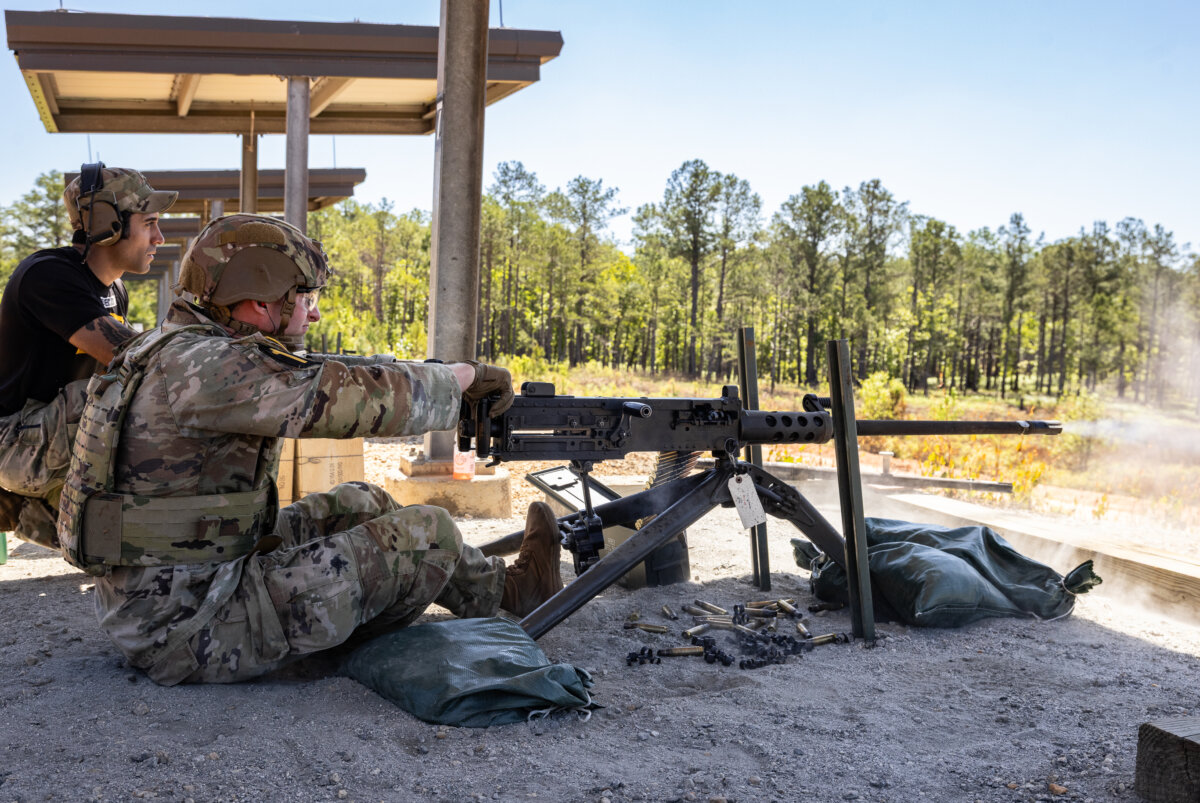
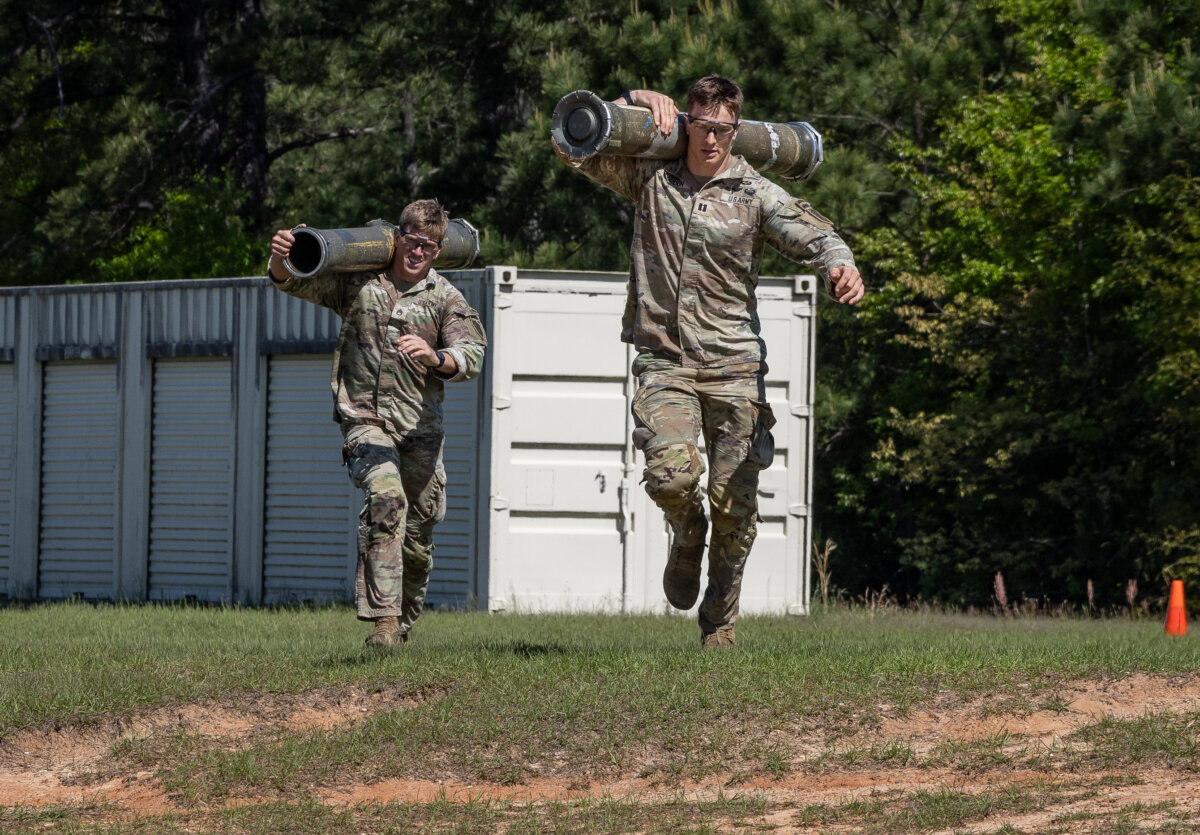
During another of the daytime events, competitors navigated a Throwbot ground drone through a series of rooms to search for firearms and other hidden hazards.
“We like to try to incorporate what we’re seeing on the modern-day battlefield into the competition as well,” Maj. Jonathan Davis, of the Airborne and Ranger Training Brigade, told The Epoch Times. “So some of those lessons learned that we’re getting from, you know, certain conflicts … we’re trying to incorporate into the competition.”
After completing the challenge course at York Field, competitors continued into a series of “night stakes” events, leading into a nighttime land navigation event. During the second night of events, the field of competitors was whittled down to the final 16 teams.
Day 3: The Final Push
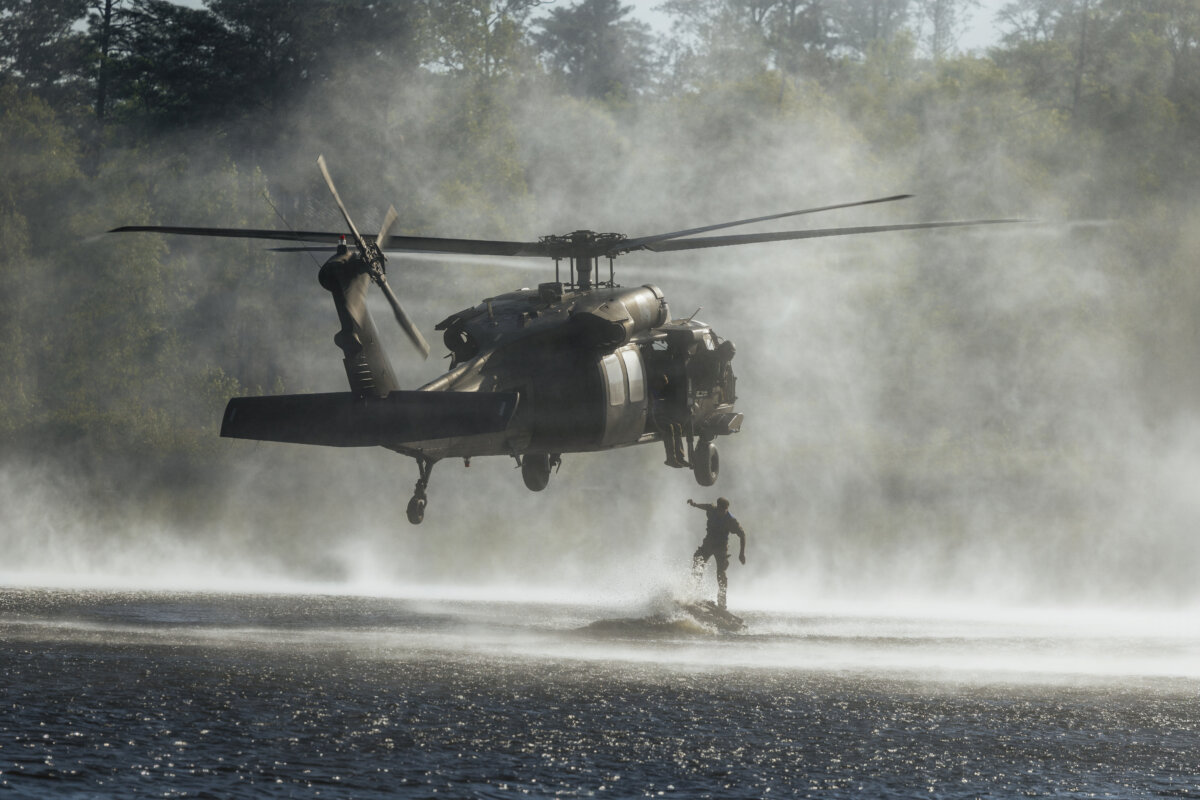
Competitors entered the third day of competition by helicopter again, this time dropping into Fort Benning’s Victory Pond with an improvised flotation device before swimming to shore to complete the last series of challenge events.
Final challenges included rope climbs and rappels, an archery range, and a timed escape room. Each of those events was about gathering up points going into the final push: a two-mile buddy run to the finish line.
“Once you get to day three, you don’t quite know the point spread, but you know who’s immediately in front of you or behind you, and you’re just fighting for the best possible position,” Cpt. Paul Rose, a 2025 Best Ranger Competition finisher from the 101st Airborne Division, told The Epoch Times.
Finishing first in the buddy run alone would not determine the winners of the Best Ranger Competition, but a better placement in the foot race would come with higher point totals for each team.
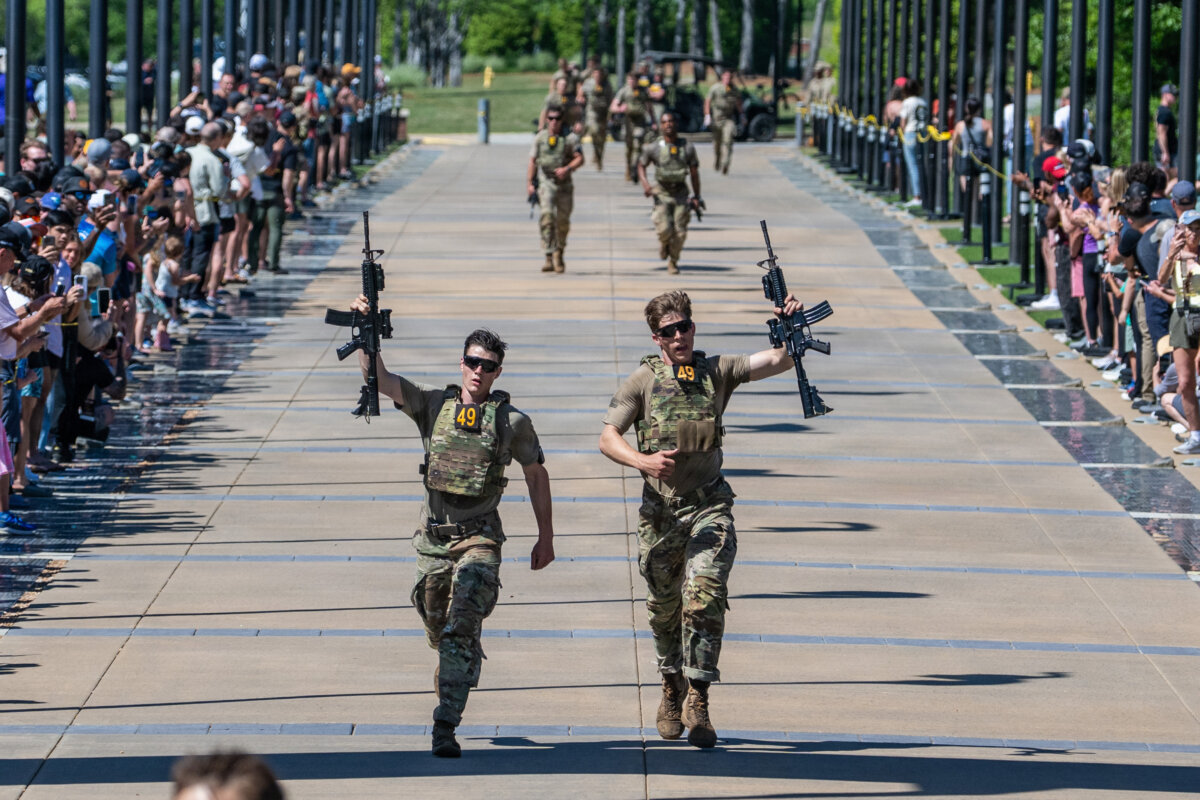
Godbold described the final buddy run as “one last time to shell out and put everything on the line.”
Schorsch and Godbold finished fourth in the final buddy run but remained in the lead in the final point total.
Teams from the 75th Ranger Regiment also placed in second and third, and soldiers from the Third U.S. Infantry Regiment and the 11th Airborne Division took fourth and fifth place, respectively.
This year was the sixth consecutive year that a team from the 75th Ranger Regiment won the competition.
In all, the competition lasted about 59 hours. In that time, many of the teams traveled in excess of 70 miles on their own strength, much of that time under weight, and with little to no sleep.
Rangers Lead the Way
Godbold was limping as he stepped in front of the National Ranger Memorial at Fort Benning on April 13, less than a full day after completing the Best Ranger Competition. Schorsch said he and many of the competitors had torn up their hands over days of climbing and traversing monkey bars.
Despite their aches and fatigue, both soldiers could hardly refrain from smiling.
“I was totally smoked, but I enjoyed a lot of stuff,” Schorsch told The Epoch Times.
Standing beside a trophy of past Best Ranger Competition winners, Schorsch took it as a point of personal pride to be able to add his name to the list.
“If you just look at all the names on the plaque behind us, it’s some serious Ranger legends on there,” he said.
From the trophy, Schorsch picked out the name of Sgt. Maj. Thomas “Pat” Payne. Payne and his teammate won the Best Ranger Competition in 2012.
Payne served in the 75th Ranger Regiment before joining Delta Force. He received the Medal of Honor in 2020 for his actions during a 2015 mission in Syria, in which he fought through a burning building to help free dozens of hostages inside.
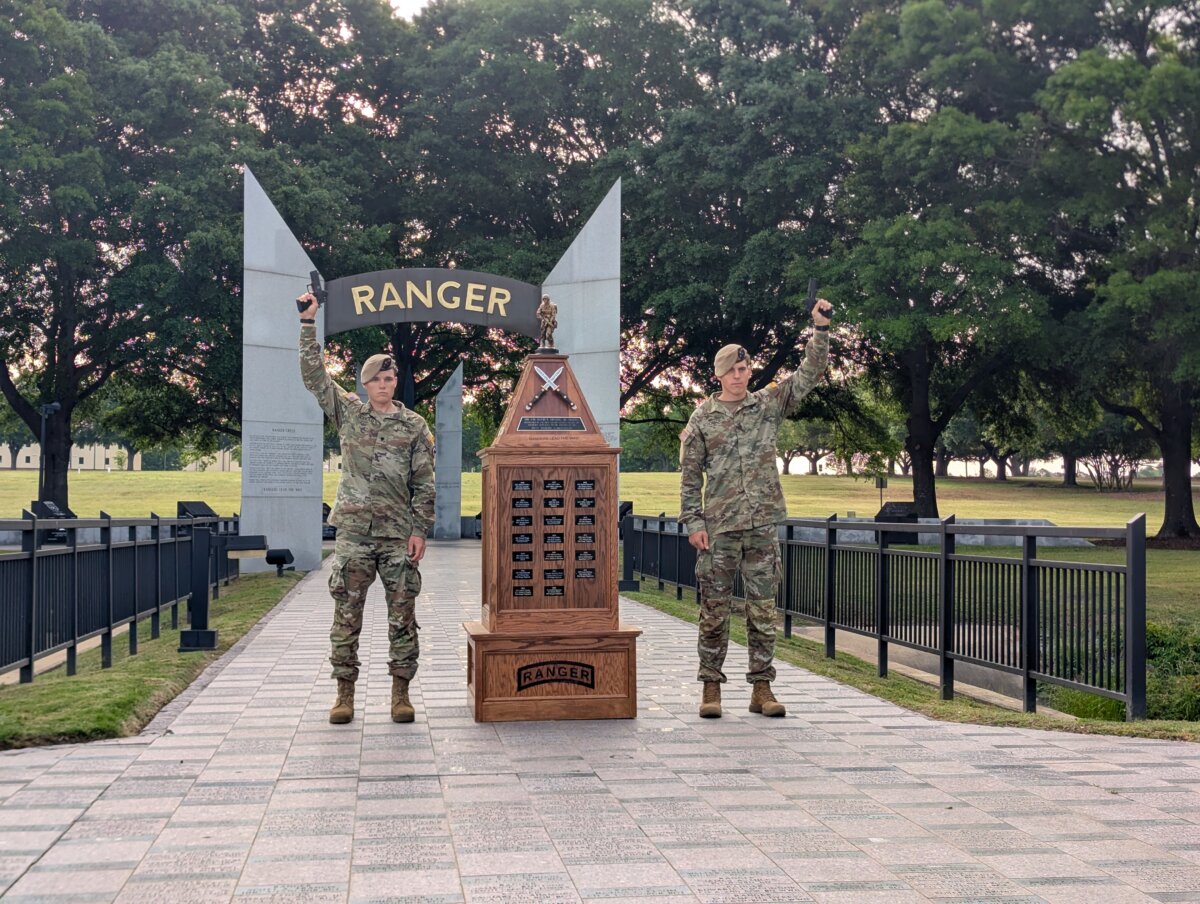
“It’s a great honor to get that title, but it’s definitely still not time to rest on our laurels,” Schorsch said.
The 32 soldiers who completed the entire Best Ranger Competition received Army Commendation Medals. Schorsch and Godbold also each received the Order of Saint Maurice–Legionnaire award from the National Infantry Association and custom-built Staccato 9mm pistols.
Payne was the keynote speaker at the award ceremony and helped administer the awards. In his keynote remarks, the Medal of Honor recipient said the soldiers would continue to be tested and challenged to push themselves further.
“You have proven what it means to be the best of the best. Now, it is up to you and the rest of us to push our army to new limits,” Payne said.
“Keep your aim true, and your tomahawks scoured. Rangers lead the way.”
 Friends Read Free
Copy
Facebook
Tweet
Friends Read Free
Copy
Facebook
Tweet