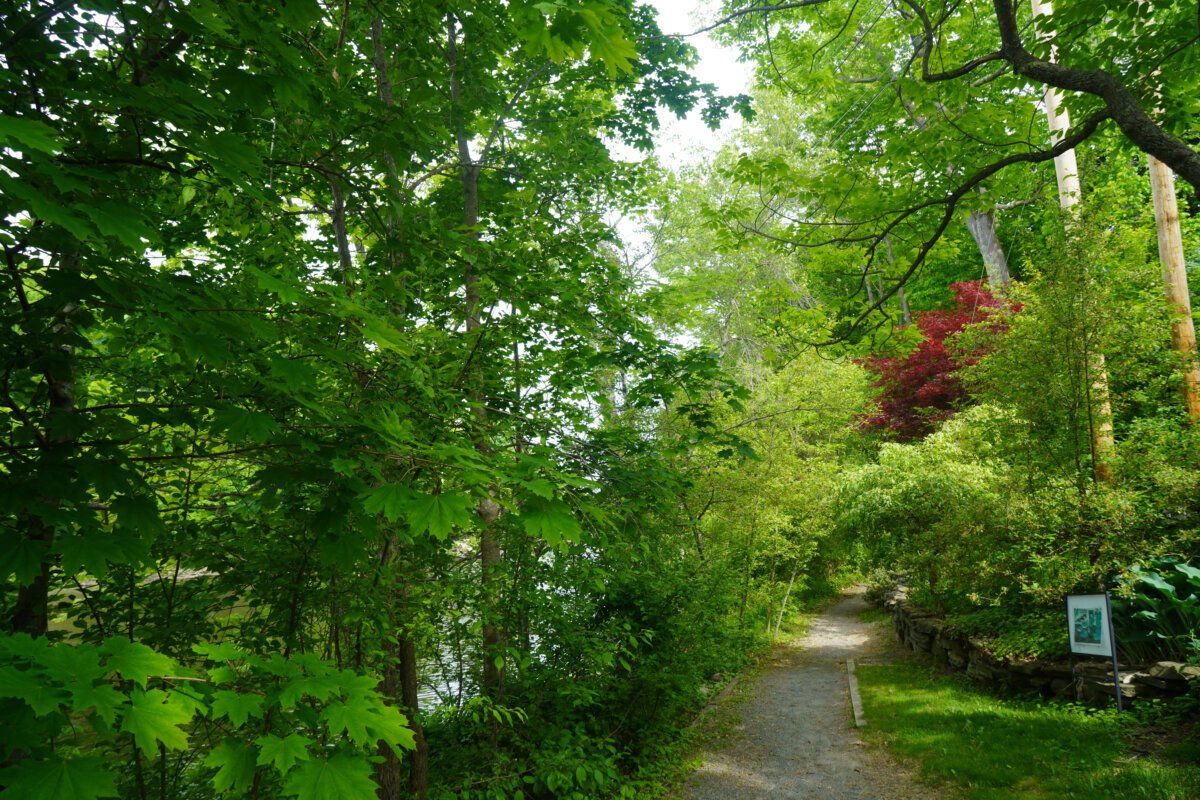

The Department of the Interior (DOI) is planning to disburse $461 million to all 50 U.S. states, territories, and the District of Columbia for projects related to playgrounds, parks, trails, and open spaces.
“The funding, administered through the National Park Service, will support the development and rehabilitation of parks, conservation areas and outdoor recreation facilities in communities large and small,” the DOI said in a June 8 statement. “These investments will help expand access to outdoor recreation, improve visitor amenities and support projects that enhance quality of life for local residents.”
The $461 million funding will be distributed via two separate grants worth $327 million and $134 million. The funding comes from the Land and Water Conservation Fund.
The Fund was initially created by Congress in 1964, aimed at protecting natural areas, water resources, cultural heritage, and recreation spots. In August 2020, President Donald Trump signed the Great American Outdoors Act into law, making funding for the program permanent.
Since then, around $900 million in royalties from companies engaged in oil and gas drilling on the Outer Continental Shelf has been put into the Land and Water Conservation Fund every year.
The program has funded more than 47,000 projects in almost every county nationwide since 1965, the DOI said in its recent statement, adding that such funding also creates jobs and attracts tourism for local economies.
The current $461 million grant will be matched at least 1:1 by the recipients, bringing the total outdoor recreation investment to over $900 million.
“The Land and Water Conservation Fund has helped connect generations of Americans to the outdoors,” said Secretary of the Interior Doug Burgum.
Moreover, the DOI announced new funding opportunities of $134 million for redeveloping or creating new outdoor recreation spaces and local parks.
Out of this, $124 million will come from the Outdoor Recreation Legacy Partnership program that has been investing in various projects nationwide since 2014.
The remaining $9 million will be granted by the Readiness and Recreation Initiative, a program established in 2023 providing financial grants to improve recreational opportunities near military installations.
Both programs receive funding from the Land and Water Conservation Fund.
Trump’s Order on Public Lands
On May 29, Trump signed an executive order—Removing Unnecessary and Counterproductive Restrictions on Access to Federal Lands—that has come under criticism. It rescinded an order signed by President Richard Nixon in 1972 and another order signed by President Jimmy Carter in 1977.
The prior orders governed the use of off-road vehicles on federal public lands, requiring agencies to manage such use under a set of strict rules, including preventing adverse effects on natural, scenic, or recreational values.
The White House said in a May 29 fact sheet that the standards imposed by Executive Order 11644 and Executive Order 11989 were vague and subjective, creating unnecessary barriers to recreation, accessing remote areas, timber and energy production, and infrastructure maintenance.
These orders adversely impacted permitting, tourism, manufacturing, organized motorsports, rural economies, and public confidence in federal land management, according to the White House.
“Federal environmental and land management laws now provide agencies with the appropriate tools to manage Federal lands while maintaining sufficient environmental protections without the need for these criteria,” the White House said.
“The recission will restore balanced land management by eliminating ill-defined and arbitrary environmental and social standards, thereby ensuring that all public land users will be granted access on equal terms.”
However, critics argue that the order could negatively affect the conservation of certain public lands used for recreation purposes.
In a June 1 statement, environmental group Sierra Club accused Trump’s order of stripping away “decades of public lands protections.”
Athan Manuel, director of Sierra Club’s Lands Protection Program, said the order will place the country’s wild places at risk through the prioritization of motorized vehicle access over protecting public lands, clean water, and wildlife.
“Eliminating responsible motorized management threatens fragile habitats, increases damage to sensitive landscapes, and undermines the experiences of people seeking quiet recreation in nature,” Manuel said.
“America’s public lands belong to all of us, and future generations deserve the chance to experience wild and thriving places. Instead of weakening protections, we should be strengthening our commitment to conserving the natural heritage that makes these lands so special.”
 Friends Read Free
Copy
Facebook
Tweet
Friends Read Free
Copy
Facebook
Tweet