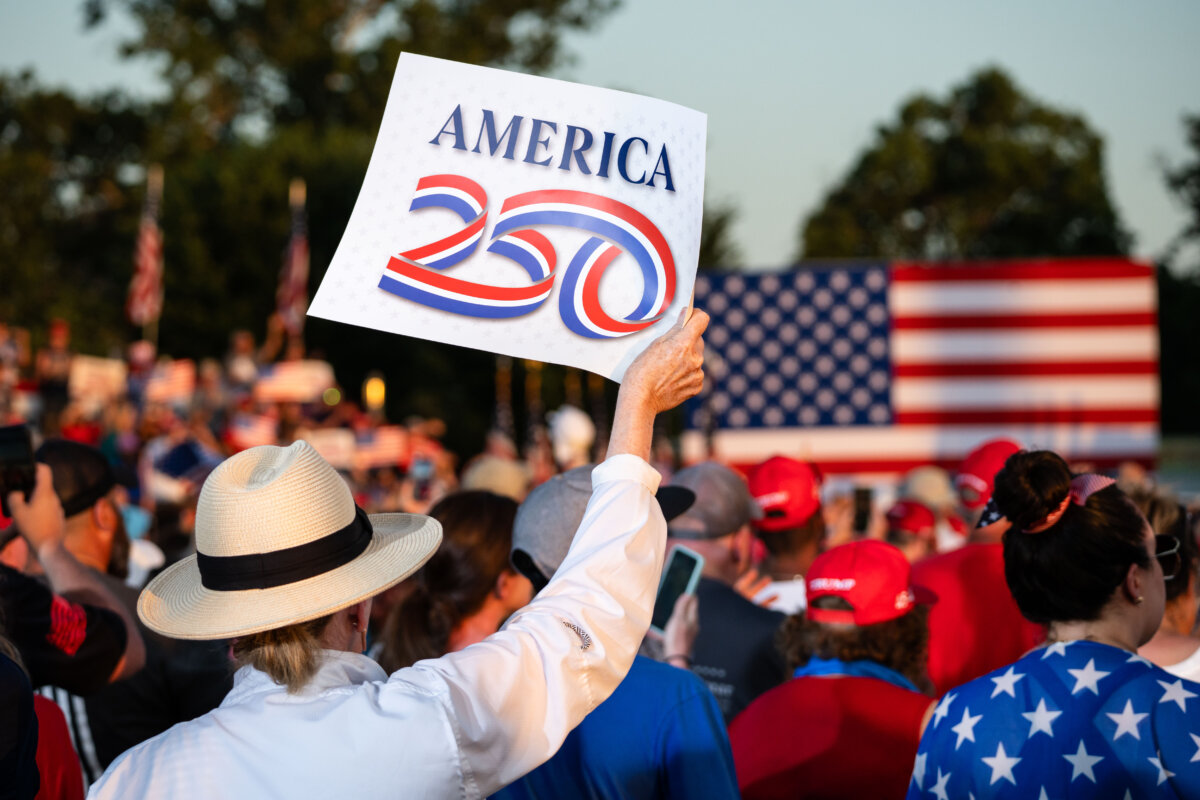
In just a few short weeks, America will celebrate its 250th birthday. Coming down the pike are block parties, massive fireworks displays, small-town parades, reenactments on Revolutionary War battlefields, tributes to our military, concerts, and initiatives to increase volunteer service and donations to charities.
Established by Congress to lead these celebrations, America 250 has served as the chief party planner for these events, gathering together individuals, organizations, and state and federal agencies to bring off this big bash. It intends to light up the candles on the Fourth of July cake by looking not only at 1776, but also at our history and the place of our country and its revolutionary Declaration of Independence in the world today.
And these festivities have already commenced. As the America 250 website declares: “On July 4, 2026, our nation will commemorate and celebrate the 250th anniversary of the signing of the Declaration of Independence. The journey toward this historic milestone is an opportunity to pause and reflect on our nation’s past, honor the contributions of all Americans, and look ahead toward the future we want to create for the next generation and beyond.”
This journey also affords the opportunity to enjoy a backward look at commemorations designed by earlier generations to honor the Declaration’s message of liberty.
Tall Ships, Church Bells, and Cannon Fire
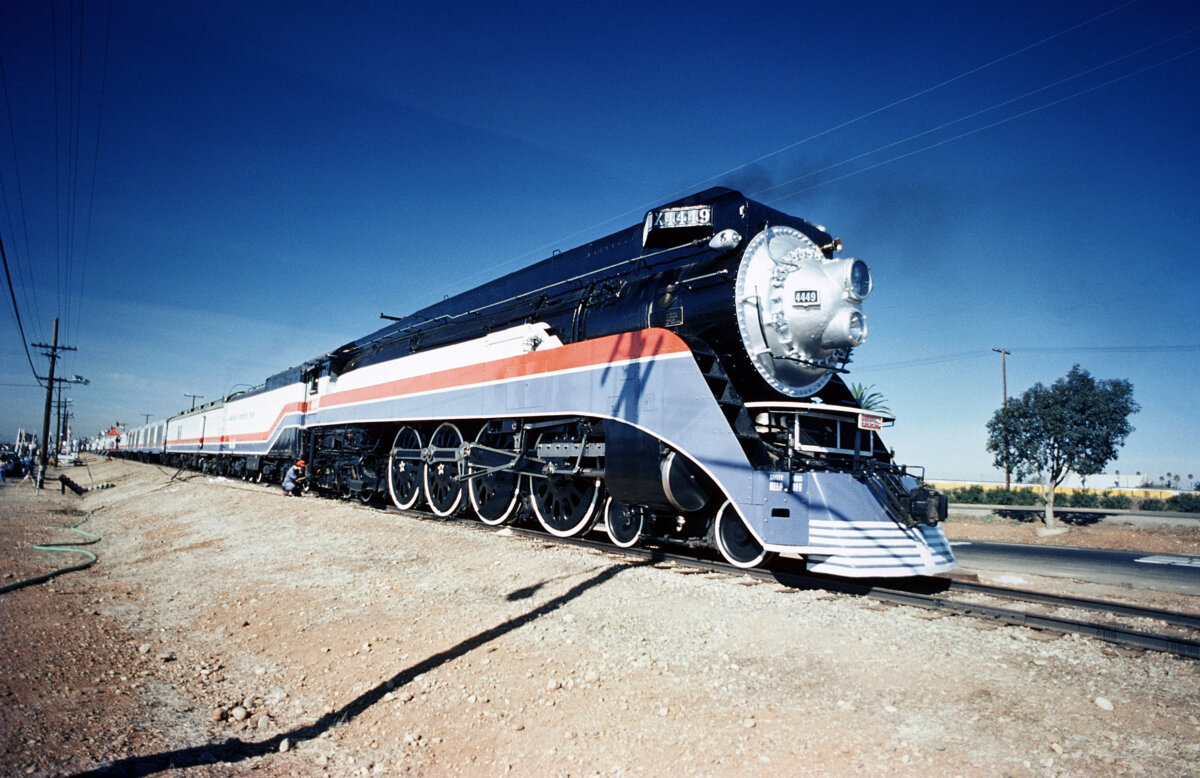
It was easy to believe that the Bicentennial Celebration of 1976 would be a bust. The nation was still struggling with Watergate and our defeat in Vietnam, and inflation and job stagnation had the country in a sour mood.
Those pessimistic beliefs were wrong.
In her article, “Operation Sail 1976,” researcher and writer Angelina Lambros describes a centerpiece of the nation’s Independence Day festivities—the tall ships—and how they brought New Yorkers together. Five years in the planning, Operation Sail organized a fleet of sailing ships from around the world. On the Fourth of July, this international flotilla paraded up the Hudson River, a procession 18 miles long with 228 sailing ships and some 800 other craft. More than six million spectators watched from the shore, making up the largest crowd in the city’s history. Present at the event, President Gerald Ford described Operation Sail as “the greatest 4th of July any of us will ever see.”
On this same date, 400,000 people in Boston set another record, becoming the largest audience ever to attend a classical music concert. They flooded the banks of the Charles River and listened as Arthur Fiedler and the Boston Pops saluted America with Tchaikovsky’s “1812 Overture,” replete with the church bells and cannon fire the composer had originally called for. The Charles was a mass of small craft, the crowds on the shore were in a festive mood, and the fireworks that ended the night created such a thick cloud of smoke that the “bombs bursting in air” were hidden, more sound than sight.
Tall ships will once again sail into the New York harbor during our 2026 gala, and the Boston Pops will continue its tradition of honoring the Fourth with a concert on the banks of the Charles.
Celebrating With the World
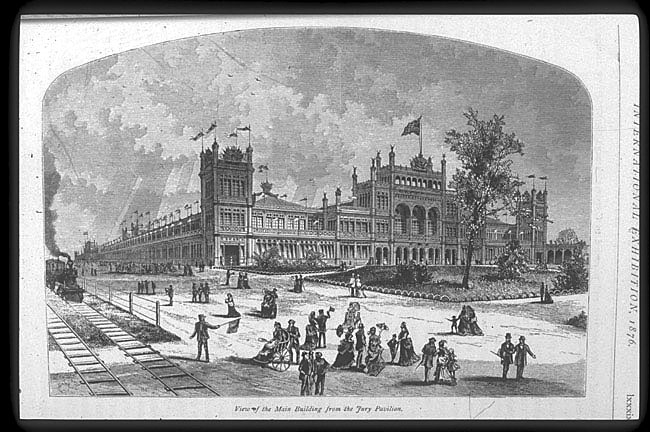
In March 1871, Congress prepared for America’s 100th birthday party by creating the United States Centennial Commission and by passing an act “to provide for celebrating the one hundredth anniversary of American independence by holding an industrial exhibition of arts, manufactures, and products of the soil and mine, in the city of Philadelphia, and State of Pennsylvania, in the year 1876.”
The result was not only a grand fete honoring the Declaration and the Founders, but also the occasion for America’s first world’s fair.
Running from May 10 to Nov. 10, 1876, this exhibition was first and foremost a glittering storefront featuring American technology and accomplishments. Booths and exhibits from around the globe were on display.
In his description of this stunning exhibition, historian and educator John Maass notes in the American Heritage website: “The foreigners provided a colorful spectacle. Americans could gape at kilted Scots and wooden-shod Hollanders, turbaned Turks and pigtailed Chinese. They could lunch in a French restaurant, drink in the Hungarian wine pavilion or smoke a water pipe in the Turkish bazaar, see a Laplander in his reindeer sledge or watch a sensuous Algerian dancing girl.”
In the article “1876: The Eagle Screams,” historian and writer Lynne Cheney puts together a fine portrait of Philadelphia’s Centennial Celebration. She notes that “The Centennial celebration was full of incongruities that to a twentieth century eye have an adolescent quality, a certain painful awkwardness that we have little desire to repeat.” There was, for example, a liberty bell made of tobacco plugs. Yet we can only applaud the enthusiasm that the creators of this vast fair offered to the public, a youthful exuberance and pride that featured the accomplishments of both the past and the present.
A Jubilee of Mystery
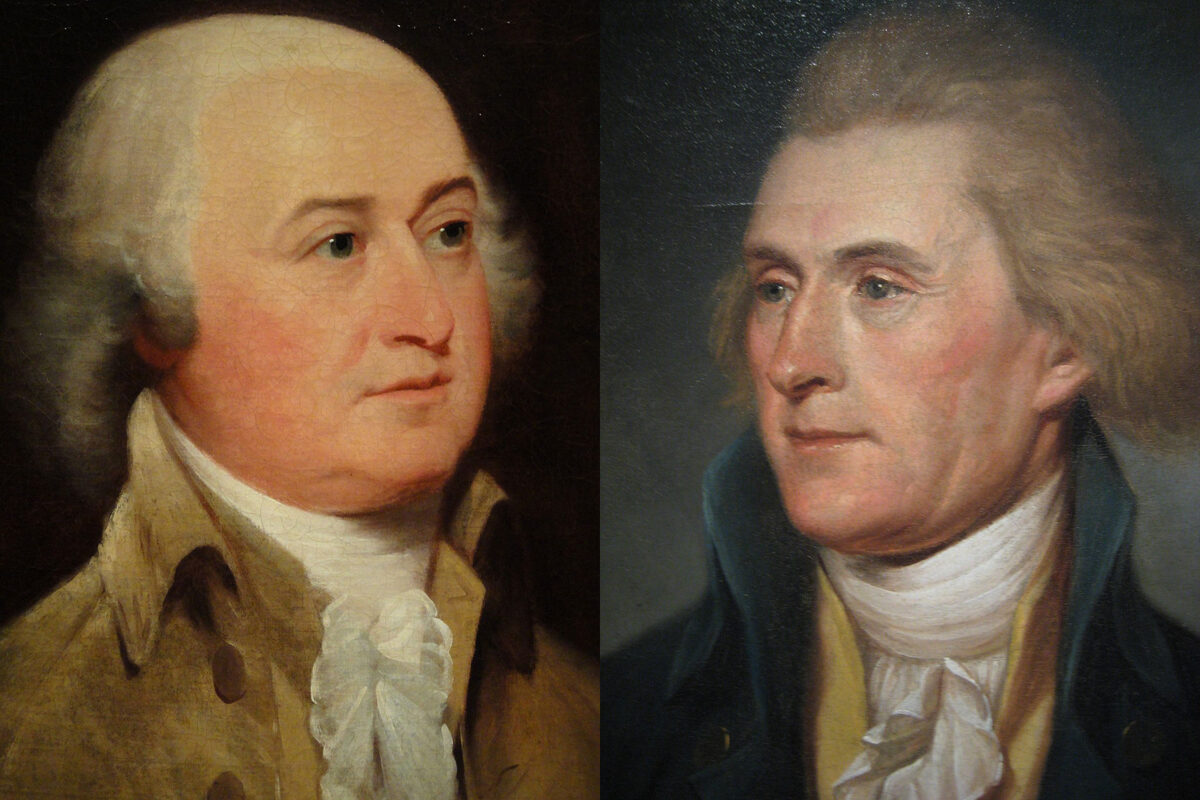
For America’s Golden Anniversary on July 4, 1826, the three living signers of the Declaration—Charles Carroll of Maryland, John Adams of Massachusetts, and Thomas Jefferson of Virginia—were invited to Washington to take part in the celebration scheduled there. The four living presidents were included in these invitations—Adams and Jefferson, along with James Madison and James Monroe. All these men declined, mostly due to health reasons.
Nevertheless, the revelries and commemorations took place there and in other locales, with speeches, including one by John Quincy Adams in Washington, parades of aged Revolutionary War soldiers, cannons and rifles fired, and picnics.
But it was not these events that made this Fourth of July the strangest and perhaps even the most significant of all our country’s Independence Day celebrations. On this day, the two men who, along with others, had forged a document that remains as fresh a call for liberty as the day it was finalized died within five hours of each other.
According to newspapers of the time, the last words of John Adams on that 50th anniversary of the Declaration revealed his ongoing concern for his old friend and his memories of Philadelphia and 1776: “Jefferson still lives.” He was wrong. Jefferson had passed five hours earlier, with his final words being “Is it the Fourth?”
Were their deaths on this key American date coincidence, fate, or some signal from a heavenly sphere? We needn’t answer those questions; we cannot answer them, but we can surely note the remarkable circumstance. More than all the fireworks, speeches, and parades, the date of their shared deaths instills a sense of wonder.
And Jefferson, like Adams, does still live. Their voices speak to us in the Declaration of Independence.
On July 5, 1926, Calvin Coolidge delivered a speech in Philadelphia paying homage to the Declaration’s 150th anniversary. At the end of that address, he summed up the core meaning of all these special celebrations:
“If we are to maintain the great heritage which has been bequeathed to us, we must be like-minded as the fathers who created it. We must not sink into a pagan materialism. We must cultivate the reverence which they had for the things that are holy. We must follow the spiritual and moral leadership which they showed. We must keep replenished, that they may glow with a more compelling flame, the altar fires before which they worshipped.”
This Fourth of July, while we enjoy time off from work, special events, or backyard barbeques with family and friends, let’s take a moment and pledge to do our part to keep those altar fires burning.
What arts and culture topics would you like us to cover? Please email ideas or feedback to features@epochtimes.nyc.