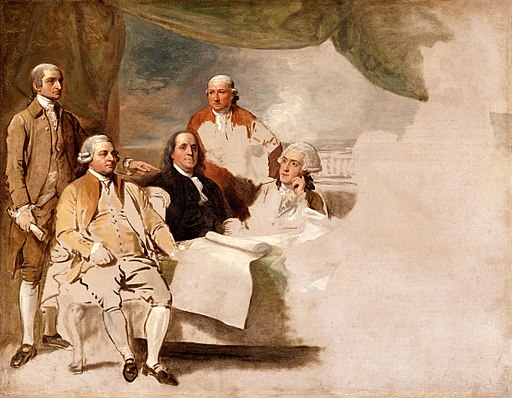
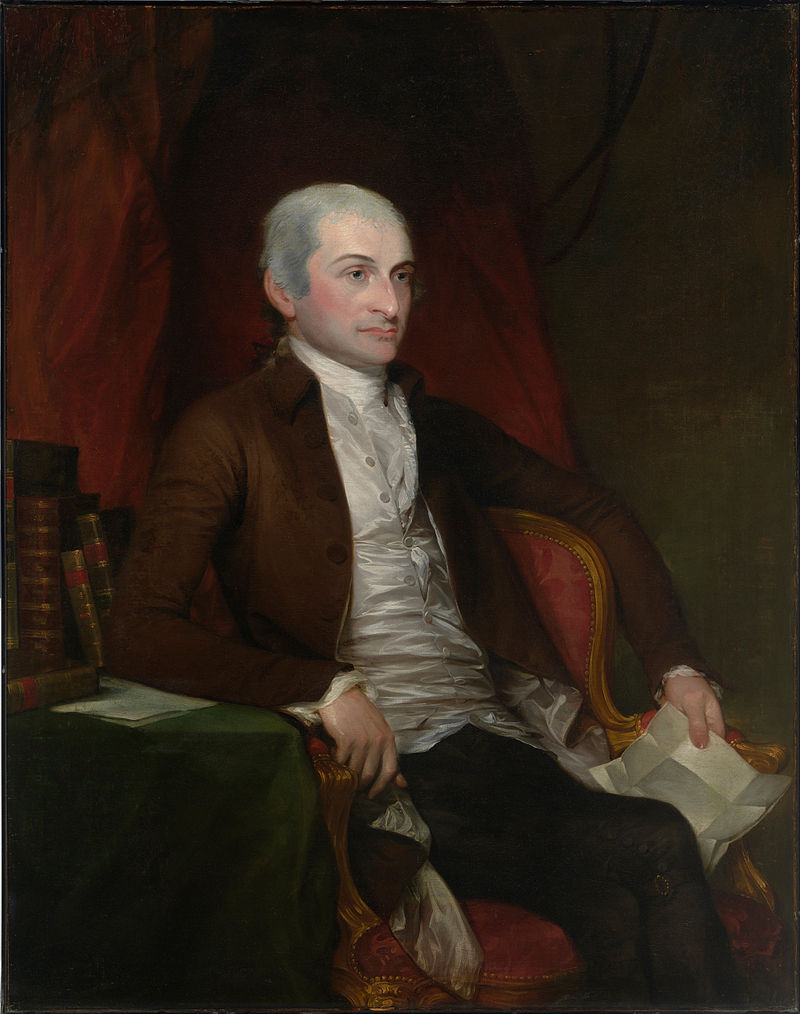
John Jay was a multitalented Founding Father who served for decades in different roles during America’s infancy. In baseball parlance, he was a utility infielder, working a variety of vital positions as needed.
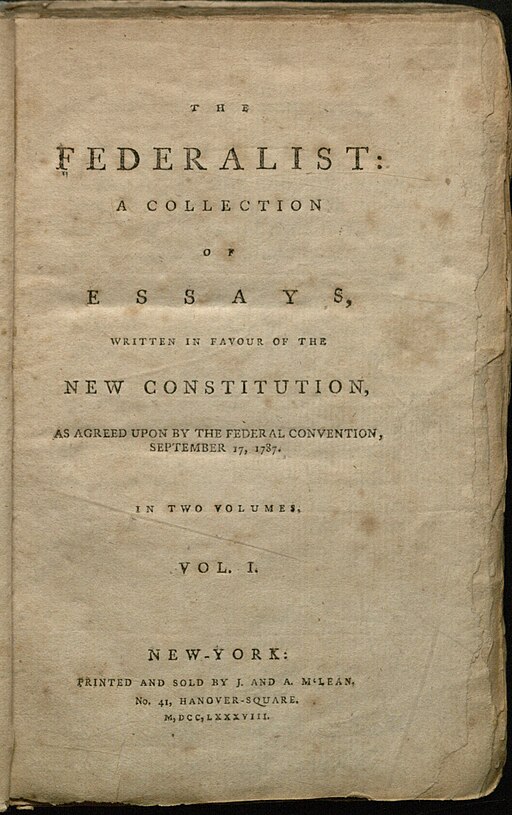
A native New Yorker, Jay co-authored the Federalist Papers with James Madison and Alexander Hamilton; served as U.S. minister to Spain during the Revolutionary War; held the title of secretary of foreign affairs for five years; was the first chief justice of the Supreme Court; and successfully negotiated the Jay Treaty with Great Britain, helping avert war and facilitating a decade of peaceful trade.
He also served six years as New York governor and was the primary author of the New York state Constitution that provided the framework for the U.S. Constitution. Before that, he was a New York delegate to both the First and Second Continental Congresses and was named president of the United States in Congress Assembled on Dec. 10, 1778. It was during his 10-month term in that role that he came to understand what America needed to transition from a tenuous confederation government to the constitutional republic we have today.
The Right Man at the Right Time
Jay was named to the presidency almost immediately after his election to the Continental Congress in 1778, as his peers saw him as a principled man whom they could trust. His probity, geniality, and cogency earned him respect and deference when controversial issues were debated.
When Jay assumed his duties as president of Congress, he had his hands full with a quarrelsome legislative body. That is, when delegates bothered to attend. During his tenure, Congress had high turnover among its delegates, and even when there were enough in attendance for a quorum, the delegates were ill-tempered and contentious. According to John Jay biographer Walter Stahr, Jay’s greatest contribution as president of Congress may have been preventing Congress from devolving into chaos.
Joseph Ellis, in his book “The Quartet,” quotes Jay as saying to the Marquis de Lafayette, “There is as much intrigue in this State House as in the Vatican, but as little secrecy as in a boarding school.”
Despite that chaos, Jay investigated a scandal involving Thomas Paine’s unauthorized disclosure of details about French financial aid, resulting in Paine’s expulsion from the Foreign Affairs committee. He also composed over 500 letters on behalf of Congress and met with foreign representatives. Most importantly, as president of Congress, Jay gained insights that helped him anticipate the future course of American history.
A Self-Governance Epiphany
Based on his previous experience in Congress, Jay realized that the proposed Articles of Confederation were inadequate to the Founders’ goals of self-government. Like his fellow Federalists Alexander Hamilton and George Washington, Jay believed a strong centralized government was the only path for America to succeed and survive.
Under the confederation government, the United States lacked jurisdiction to effectively arbitrate conflicts between the states, manage interstate commerce, protect property rights, and generate revenue to support effective governance and pay its debts. A strong central government was necessary to maintain unity among citizens and state governments, and Jay believed it was essential to the vitality of the new nation.
Another insight Jay had while serving as Congress’s president was that America’s future success depended on purchasing the land between the Alleghenies and the Mississippi River. George Washington and others shared the belief about the importance of the West. Consequently, in his later roles as minister to Spain and as the primary negotiator of the Treaty of Paris, Jay held his ground against land claims by Britain, France, and Spain, and considered America’s right to that territory nonnegotiable.
Liberty, the Divine Gift
Jay was at the nexus of early American politics, foreign affairs, and jurisprudence. A fervent Christian and anti-slavery advocate, he believed the new nation was divinely blessed in creating the Declaration of Independence, winning the war against Britain despite insurmountable odds, and drafting and ratifying the Constitution.
In Jay’s opinion, Americans should thank Providence for the blessings of independence and self-governance by maintaining the moral and religious principles of the Bible. He believed those principles were fundamental to the country’s cohesiveness, security, and prosperity.
“This country and this people seem to have been made for each other, and it appears as if it was the design of Providence, that an inheritance so proper and convenient for a band of brethren, united to each other by the strongest ties, should never be split into a number of unsocial, jealous, and alien sovereignties,” he wrote in Federalist No. 2.
What arts and culture topics would you like us to cover? Please email ideas or feedback to features@epochtimes.nyc