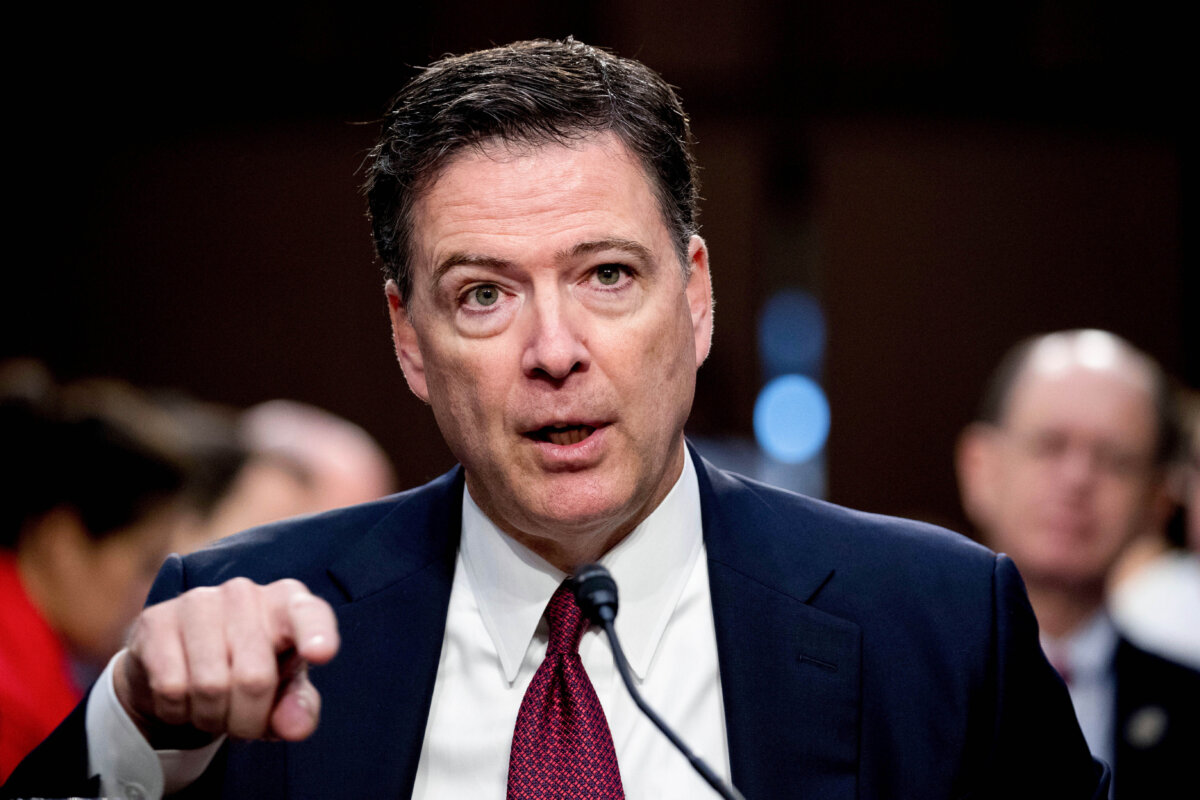

A federal judge on Monday ordered the Department of Justice to release grand jury materials to attorneys acting on behalf of former FBI Director James Comey as they attempt to scrap a criminal case against him.
U.S. Magistrate Judge William Fitzpatrick wrote in an order that possible errors and “government misconduct” by the team of interim U.S. Attorney for the Eastern District of Virginia Lindsey Halligan may have imperiled the case against Comey.
“The Court recognizes this is an extraordinary remedy, but given the factually based challenges the defense has raised to the government’s conduct and the prospect that government misconduct may have tainted the grand jury proceedings, disclosure of grand jury materials under these unique circumstances is necessary,” Fitzpatrick said in his 24-page opinion, which ordered all material related to the grand jury that indicted the former FBI director in September.
The judge said that prosecutors may have violated court orders as well as Comey’s Fourth Amendment rights, which he stated can “establish a reasonable basis to question whether the government’s conduct was willful or in reckless disregard of the law.”
“The facts set forth herein and the particularized findings of the Court establish that ‘ground[s] may exist to dismiss the indictment because of a matter that occurred before the grand jury,'” Fitzpatrick added.
In response, the Justice Department (DOJ) on Monday filed an emergency motion in the U.S. District Court for the Eastern District of Virginia to stay Fitzpatrick’s order.
Attorneys for the government argued in a seven-page filing that the order is “contrary to law” and that the DOJ “should be allowed to object to the order.”
Last month, the judge ordered prosecutors to produce for defense lawyers a trove of materials from the probe targeting Comey. The order followed arguments in which Comey’s attorneys said they were at a disadvantage because they hadn’t been able to review information that was collected years ago as part of an investigation into FBI media leaks.
Comey was charged with lying to Congress in 2020, to which he has pleaded not guilty. His lawyers have argued that it’s a vindictive prosecution brought at the direction of President Donald Trump and must be dismissed.
Fitzpatrick raised his own concerns, telling lawyers in a hearing on Nov. 5, “The procedural posture of this case is highly unusual.” He said it appeared to him that the Justice Department had decided to “indict first” and investigate later.
Comey’s indictment was issued days after Trump called on Attorney General Pam Bondi in a social media post to take action against Comey and several other individuals. The indictment was brought by Halligan, a former White House aide and Trump lawyer who was named as U.S. attorney in Virginia.
The Justice Department in court papers earlier this month defended the president’s social media post, contending that it reflects “legitimate prosecutorial motive” and is no basis to dismiss the indictment.
They urged a judge to reject Comey’s attorneys’ claims that his case is tantamount to political retribution on behalf of Trump, noting that the president did not say that Comey should be indicted for exercising his rights.
“The Court should still hold that the defendant is not being vindictively prosecuted because the record establishes that the prosecution was not brought solely to punish the defendant’s exercise of First Amendment rights,” the department’s attorneys also wrote.
The Associated Press contributed to this report.
 Friends Read Free
Copy
Facebook
Tweet
Friends Read Free
Copy
Facebook
Tweet