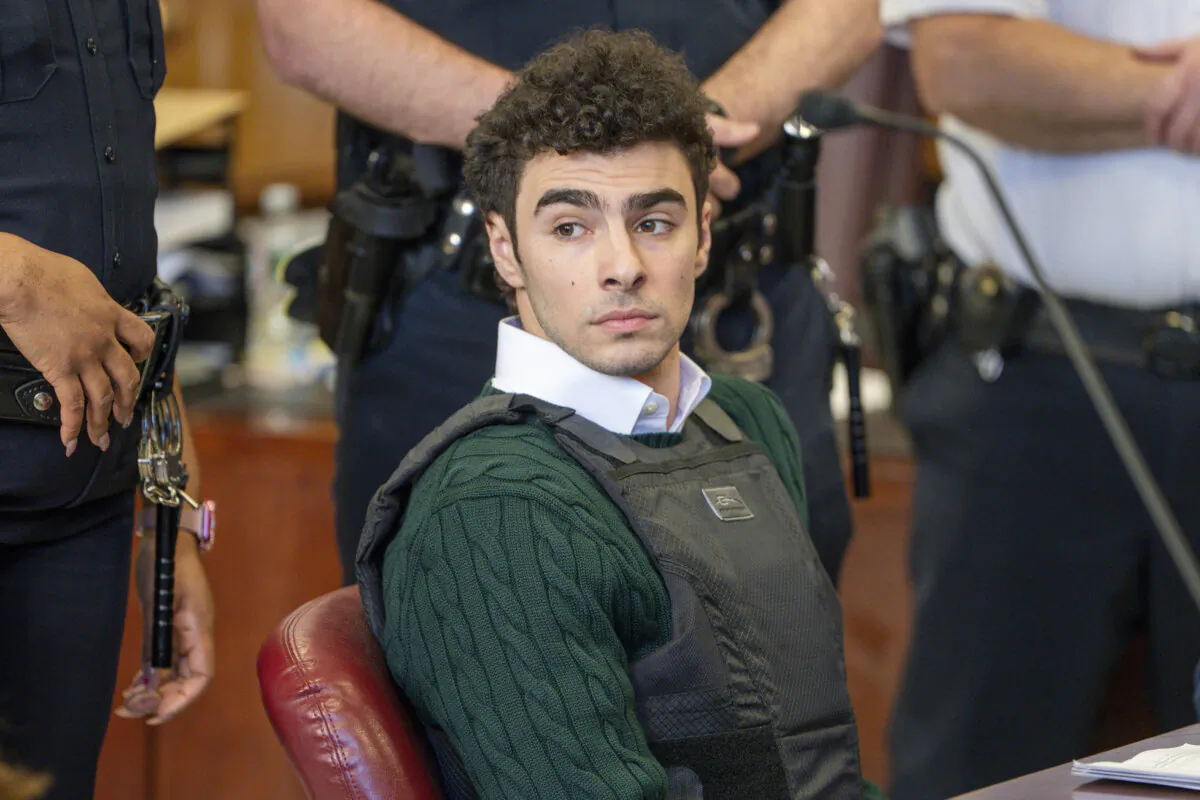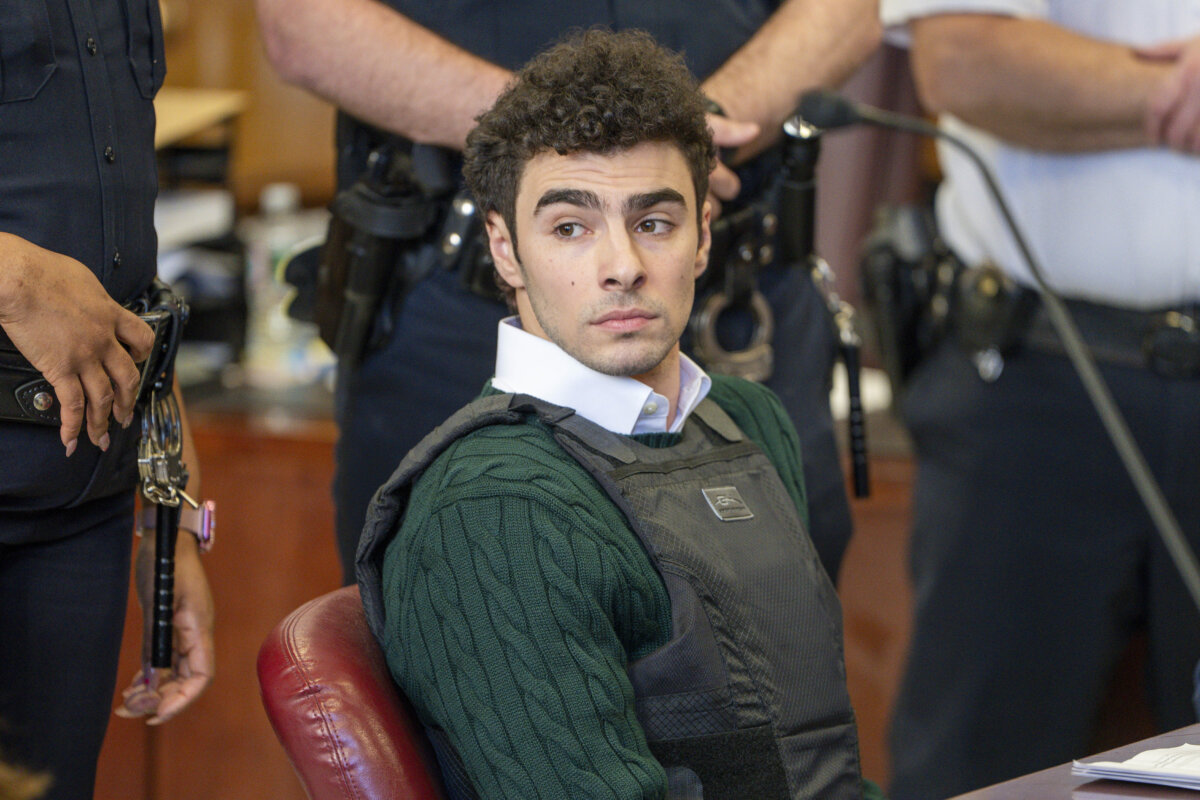

A federal judge has ruled that prosecutors may not seek the death penalty against Luigi Mangione, who is accused of killing UnitedHealthcare CEO Brian Thompson.
On Jan. 30, U.S. District Judge Margaret Garnett of the Southern District of New York dismissed two of the four federal counts against Mangione, including one of murder through use of a firearm in relation to stalking and a separate count of using a firearm during stalking.
The former charge carried a potential death sentence, and the Department of Justice (DOJ) had filed a notice of intent to seek the maximum penalty.
Instead, Mangione will face two remaining “fatal stalking” charges at trial: crossing state lines to stalk Thompson and cause his death, and using the internet to plan and carry out the killing. Each offense carries a maximum possible sentence of life in prison without parole.
Mangione, 27, was arrested days after he allegedly traveled across several states to gun down Thompson as the 50-year-old executive was walking into a conference on a busy Manhattan street on Dec. 4, 2024. He has pleaded not guilty to all four counts.
“No one could seriously question that this is violent criminal conduct,” Garnett wrote in her opinion. However, she said her analysis had to be “totally divorced from the conduct at issue” and instead focus on the legal standards.
Both now-dismissed charges required the government to show that the underlying federal stalking offense qualifies as a “crime of violence,” wrote Garnett, who concluded that prosecutors had not met that threshold.
For months leading up to the shooting, she noted, Mangione allegedly plotted Thompson’s killing, but Thompson himself was never placed “in reasonable fear of death or serious bodily harm” or in “emotional distress,” as the statute requires.
According to the government’s own account, Thompson was unaware of Mangione’s alleged actions until the fatal attack.
“The analysis contained in the balance of this opinion may strike the average person—and indeed many lawyers and judges—as tortured and strange, and the result may seem contrary to our intuitions about the criminal law,” Garnett wrote.
“But it represents the Court’s committed effort to faithfully apply the dictates of the Supreme Court to the charges in this case.”
In a separate opinion issued the same day, Garnett allowed prosecutors to introduce at trial evidence seized from the backpack that Mangione was carrying when he was arrested at a McDonald’s in Altoona, Pennsylvania.
Authorities have said the backpack contained a 3D-printed gun, fake identification documents, a notebook, and other writings detailing Mangione’s grievances against the private health care system in the United States.
Defense attorneys had asked the court to suppress that evidence, arguing, among other things, that the arresting officers conducted an unlawful search. Garnett disagreed.
“The search was reasonable under the facts of this case,” she wrote.
With capital punishment now off the table, the judge said jury selection will begin on Sept. 8, with opening statements in Mangione’s federal trial scheduled for Oct. 13.
The government’s bid to execute Mangione marks the first time the DOJ sought the death penalty during President Donald Trump’s second term. Attorney General Pam Bondi announced in April 2025 that she had directed federal prosecutors to pursue a capital sentence, calling the killing a “premeditated, cold-blooded assassination.”
“After careful consideration, I have directed federal prosecutors to seek the death penalty in this case as we carry out President Trump’s agenda to stop violent crime and Make America Safe Again,” Bondi said at the time.
The Epoch Times has reached out to the DOJ and Mangione’s lawyers for comment.
 Friends Read Free
Copy
Facebook
Tweet
Friends Read Free
Copy
Facebook
Tweet