
A new Kansas law took effect Thursday requiring corrections to birth certificates and driver’s licenses that contradict biological definitions, affecting more than 1,000 people who changed that information on those documents.
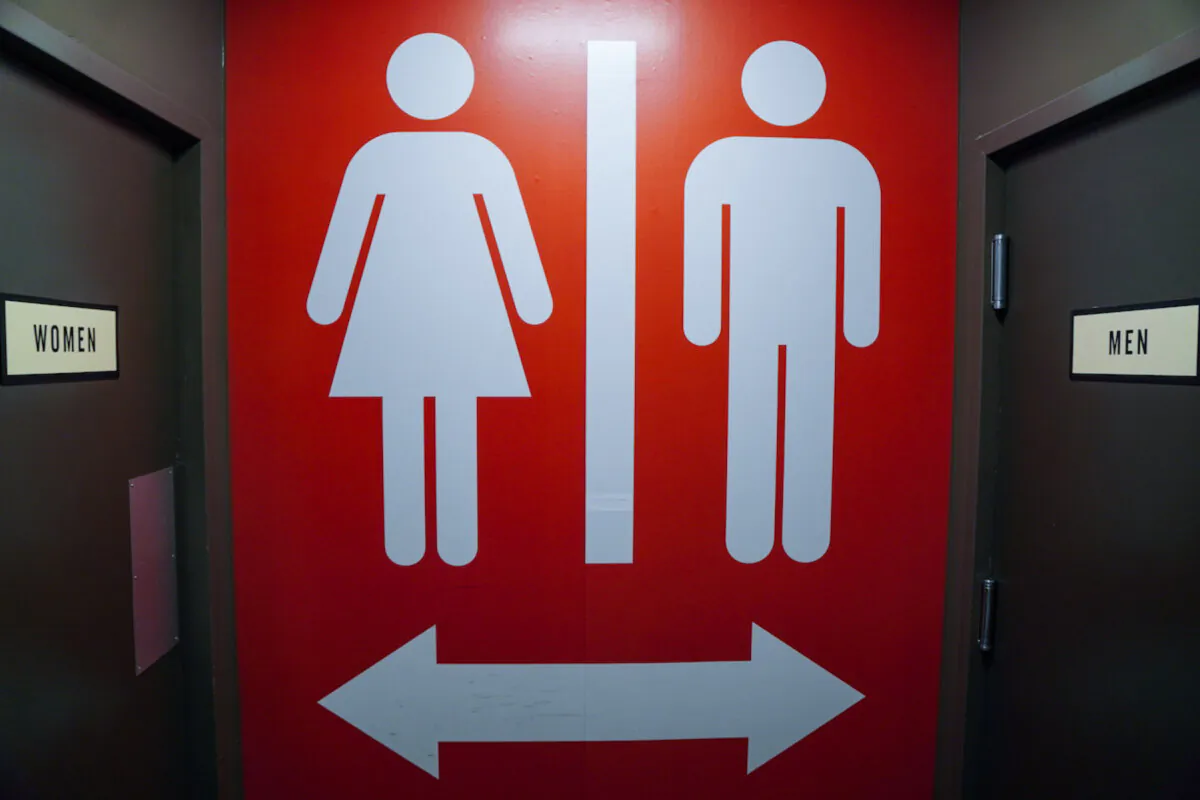
The measure also requires governing bodies of public buildings owned or leased by governmental entities to designate facilities like restrooms, locker rooms, changing rooms, and shower rooms for use by only one sex, defined as biological sex at birth.
“Separate accommodations are not inherently unequal,” the bill states.
House Substitute for Senate Bill No. 244 became law without the governor’s signature. Gov. Laura Kelly vetoed the bill on Feb. 16, but was overwhelmingly overridden by the Senate on Feb. 17 and then the House on Feb. 18.
Governmental entities face civil penalties of $25,000 for the first offense and $125,000 for subsequent ones, with each day counted separately.
Individuals face a warning after the first violation, a $1,000 fine for the second, and class B misdemeanor charges for further infractions.
The legislation references Kansas statute 77-207, defining “female” as an individual whose biological reproductive system is developed to produce ova and “male” as one whose system is developed to fertilize ova.
The attorney general oversees state-level complaints. Local prosecutors manage municipal cases, with penalties funding crime victims’ compensation.
The law amends the Women’s Bill of Rights by redefining terms based on biological sex and removes “gender” from the Help Not Harm Act, which restricts transgender procedures for minors.
The law invalidates pre-July 1, 2026, birth certificates and driver’s licenses identifying sex or gender in contradiction with biological definitions, directing the state registrar and division of vehicles to issue corrected documents.
Kansas Department of Revenue spokesperson Zach Denney told The Topeka Capital-Journal that the letters were mailed to approximately 1,500 transgender people in the state informing them of the new laws invalidating gender marker changes on the documents.
“The Department is working as quickly as possible to notify individuals whose credentials will be affected under SB 244, ensuring they have sufficient time to update their credentials and avoid any disruption,” Denney told Topeka Capital-Journal on Wednesday. “Letters are being sent to those impacted, and they should begin receiving them soon.”
ACLU Kansas has opposed the bill.
“In Kansas, we have a major water crisis, we still haven’t passed Medicaid Expansion or Medical Marijuana, and the Legislature is obsessed with buckling down and pursuing the persecution and erasure of the Transgender/Queer Community,” Thomas A. Alonzo, chair and executive director at LGBT advocacy organization Equality Kansas, said in a statement.
In 2025, lawmakers overrode the governor’s veto of Senate Bill 63—the Help Not Harm Act—banning puberty blockers, hormone therapy, and transgender surgeries for minors with gender dysphoria, making Kansas the 27th state to restrict such procedures. The law, which became effective later that month, included exceptions for genetic disorders but drew criticism for limiting medical options.
In 2023, Kansas became the first state to define gender as biological sex at birth via Senate Bill 180, blocking men from women’s spaces.
Other states have grappled with the transgender issue, including Montana, which also adopted strict definitions of male and female.
“In human beings, there are exactly two sexes, male and female, with two corresponding types of gametes,” states Montana’s version of the law.
 Friends Read Free
Copy
Facebook
Tweet
Friends Read Free
Copy
Facebook
Tweet