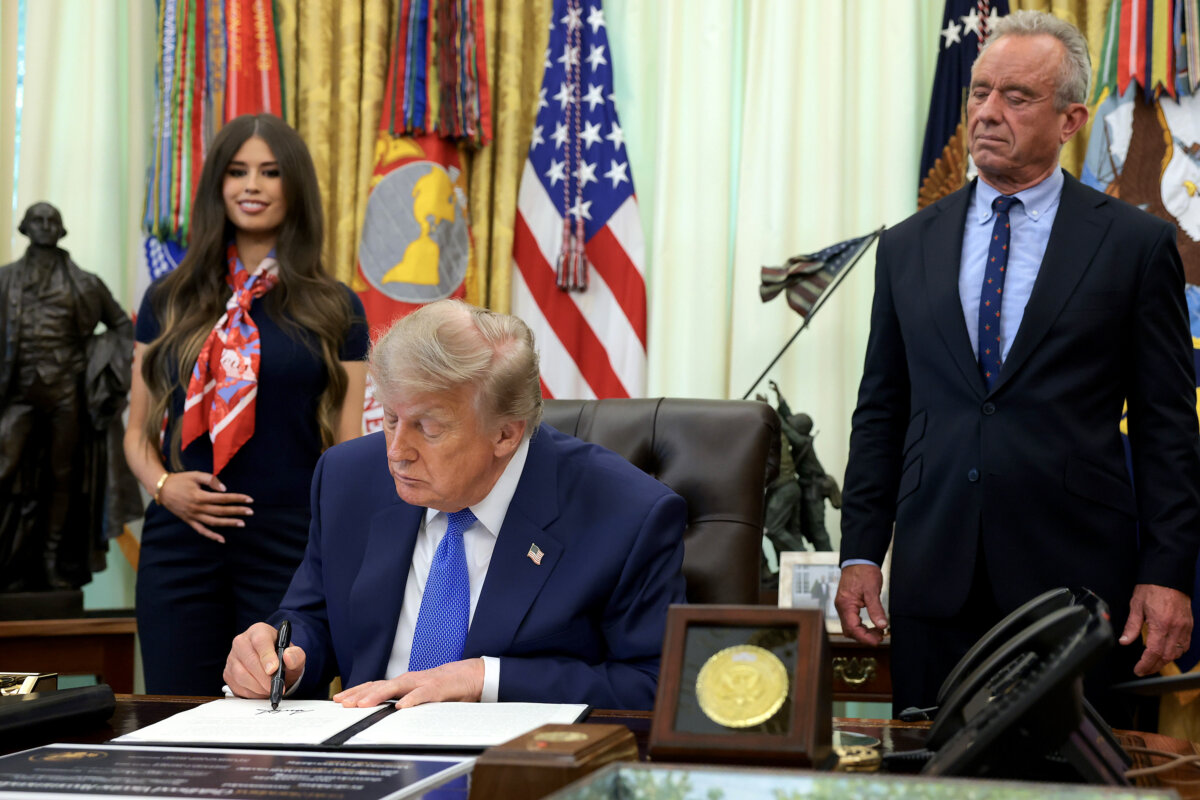
Department of Health and Human Services (HHS) Secretary Robert Kennedy Jr. announced appointments for four top leaders overseeing vaccine approvals, new drug approvals, artificial intelligence (AI) innovations, and tobacco policy at the U.S. Food and Drug Administration (FDA) on Sept. 8 as the agency advances its health and wellness reforms.
“We are building an FDA that moves faster, demands excellence, and delivers results for the American people,” Kennedy said in a statement. “These leaders will drive reforms needed to confront our nation’s most serious health challenges and strengthen American leadership in medical innovation.”
International biopharmaceutical executive Karim Mikhail will lead the FDA’s vaccine and other biological products development after stepping into the position at the Center for Biologics Evaluation and Research as acting director in May.
Former director Vinay Prasad left the post at the end of April after clashing with pharmaceutical giants and lawmakers over Moderna’s new mRNA flu vaccine.
Mikhail spent more than 20 years working for Merck & Co., Inc., and held executive positions at other pharmaceutical firms internationally. He earned a business degree in Paris and a degree in pharmaceutical sciences from Cairo University and is trilingual, with a a “deep understanding of the drug development lifecycle from bench to bedside to market,” according to the HHS.
Mikhail will oversee the agency’s evaluation and research center for biological products, including vaccines, blood and blood products, and cellular and gene therapies.
He is expected to focus on modernizing regulatory frameworks to speed drug development, including for rare diseases, without compromising rigor, and work to strengthen vaccine safety surveillance while remaining committed to transparency and scientific precision, the HHS stated.
In another top appointment, Dr. Michael Davis was selected to serve as director for the FDA’s Center for Drug Evaluation and Research, where he will lead the center responsible for helping ensure that safe, effective, and high-quality drugs are available to the American public, according to the HHS.
Davis has scientific, clinical, regulatory, and management experience and led multidisciplinary teams at the FDA responsible for reviewing drugs and developing regulatory science and policy.
As director, he will focus on increasing patient access to safe and affordable critical medicines, advancing the science of drug development and evaluation, and strengthening the domestic and global drug supply chain, according to the HHS.
Bret Koplow was appointed as director for the Center for Tobacco Products after serving as the center’s acting director. He has a background of legal, policy, and regulatory experience with more than a decade working at the FDA. The new appointee is expected to promote innovation and access to less harmful alternatives for adult smokers, and take action to protect American minors from tobacco and nicotine dangers, the HHS said.
Jared Seehafer was appointed the FDA’s first deputy commissioner for technology and AI. Seehafer will serve as the agency’s senior leader for technology, software, and AI, and lead the agency’s strategy and priorities in those areas.
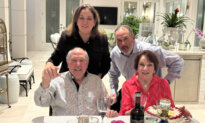
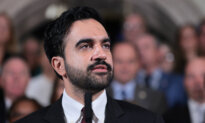
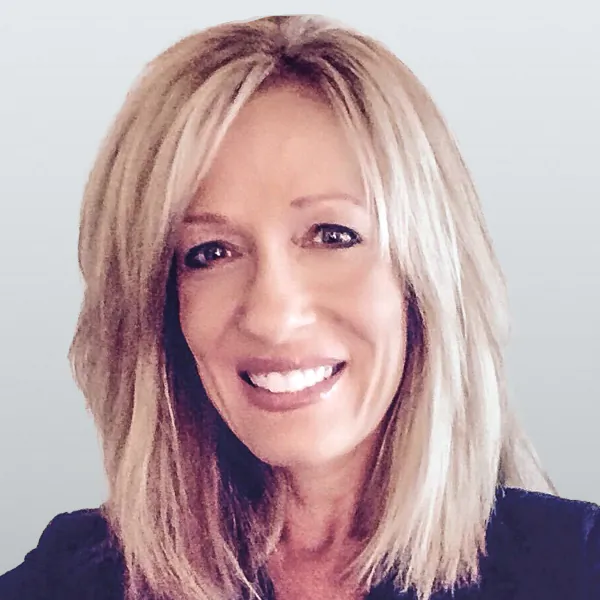
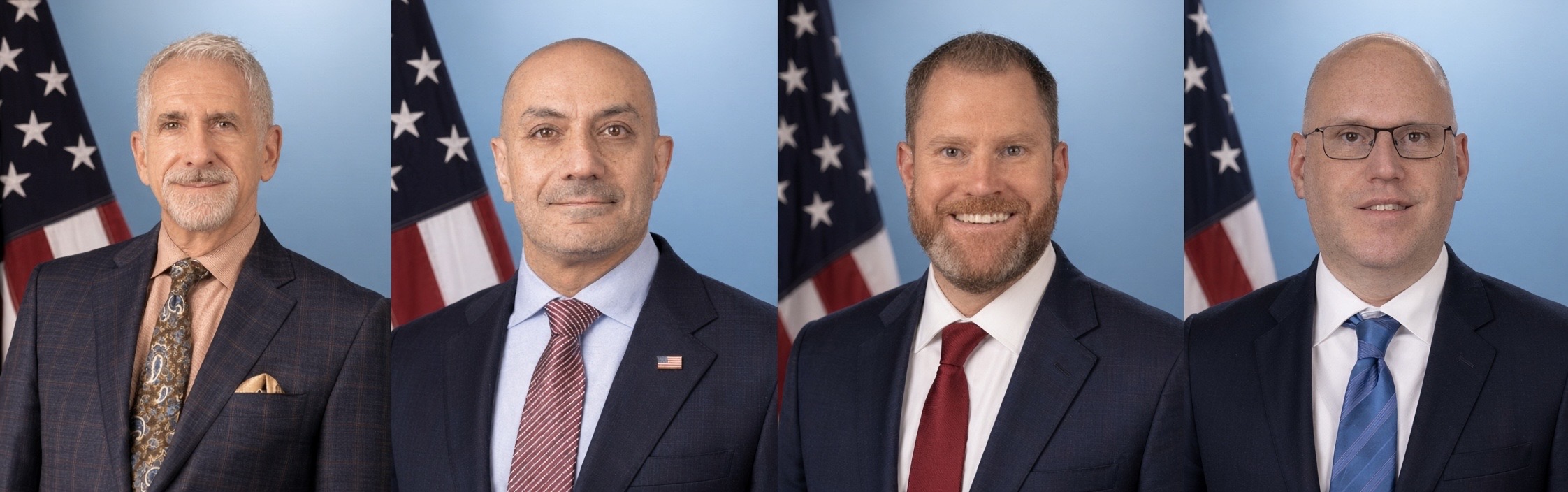 U.S. Health Secretary Robert Kennedy Jr. announced appointments for four of the FDA’s top positions Set. 8, 2026. From left: Bret Koplow, was selected as director of the Center for Tobacco Products; Karim Mikhail will run the FDA’s vaccine research center as director of the Center for Biologics Evaluation and Research; Jared Seehafer was chosen to serve as the agency’s first deputy commissioner for Technology and Artificial Intelligence; and Michael Davis was appointed director of the Center for Drug Evaluation and Research.
Seehafer’s background includes a lengthy career in medical devices and diagnostics, combination products, software, and AI, as well as experience in digital health and regulatory strategy.
Before his appointment, he served as a senior adviser to the FDA commissioner’s office. Seehafer also worked at St. Jude Medical and later as CEO of Enzyme Corporation, a medical device, pharmaceutical, and biotech quality assurance and regulatory affairs compliance software and services company that he founded and led for eight years.
Seehafer received applause from Sebastian Caliri, vice president on the investment team at 8VC, a venture capital firm founded by Palantir co-founder Joe Lonsdale.
“Congratulations to [Seehafer], our new FDA Deputy Commissioner for Technology and Artificial Intelligence! Figuring out how to evaluate and introduce clinical AI into our healthcare system is the crucial questions in American healthcare, and I can think of few people who have thought more carefully about this problem than Jared,” Caliri posted on X.
The new leaders were hired to help the FDA attract and retain “best-in-class talent” while building the workforce and infrastructure needed to accelerate innovation across the agency, Acting Commissioner Kyle Diamantas said in a statement.
“These selections are not just about filling leadership roles—they signal the direction we are heading,” Diamantas said.
 Friends Read Free
Copy
Facebook
Tweet
Friends Read Free
Copy
Facebook
Tweet