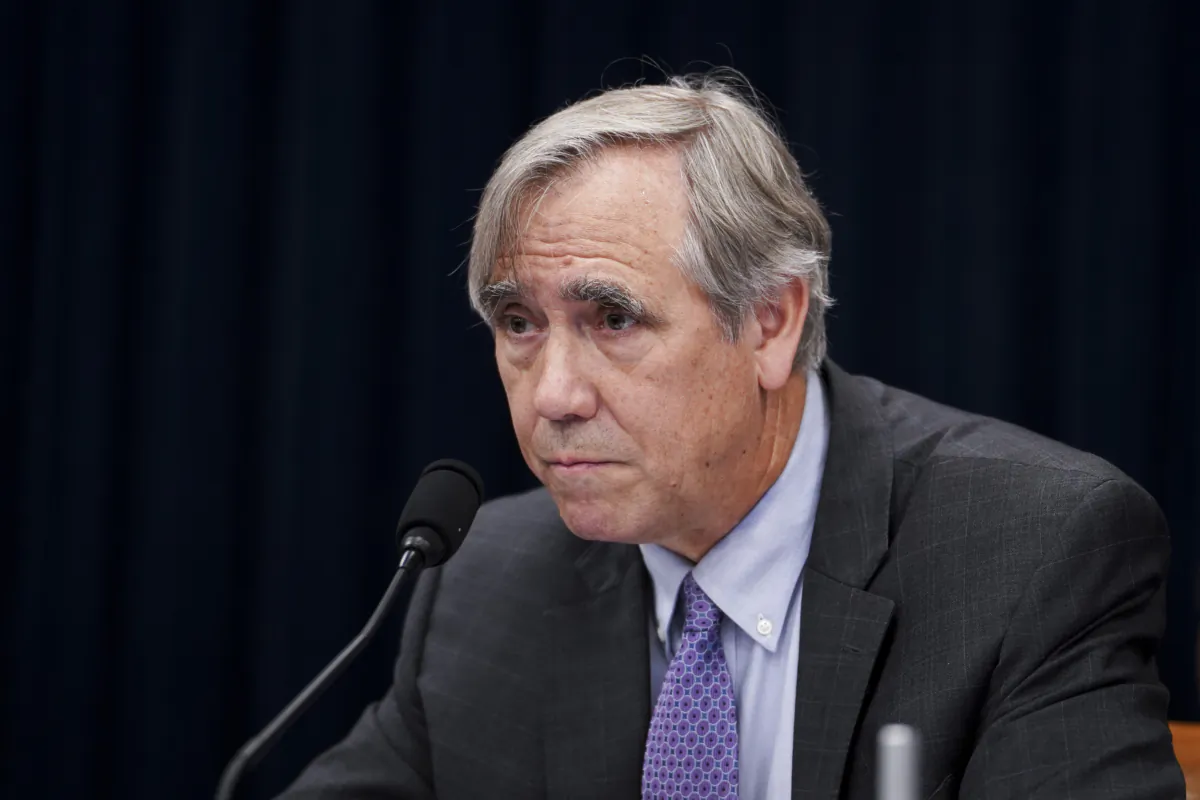

Democrat members of Congress are seeking to end legacy admissions in higher education with a bill that would amend the Higher Education Act of 1965 to stop schools that give preference to children of alumni from receiving federal financial aid.
Since the Supreme Court’s much-anticipated June 29 ruling on the use of race-based college admissions procedures, advocates and public figures have called for an end to legacy admissions next, some claiming these preferences adversely impact students more than affirmative action.
Senators Jeff Merkley (D-Ore.) and Rep. Jamaal Bowman (D-N.Y.) first introduced the Fair College Admissions for Students Act last year and were joined by Chris Van Hollen (D-Md.) on Wednesday to revive the initiative.
“Though the Supreme Court gutted race-conscious college admissions, make no mistake, affirmative action is still alive and well for children of alumni and major donors, and taxpayers shouldn’t be funding it,” stated Mr. Merkley.
“As the first in my family to go to college, I know the struggles facing students whose parents have never been through the process before or don’t have the money for expensive test prep or advisors to help them craft the perfect essay.”
“Children of donors and alumni may be excellent students and well-qualified, but they are the last people who should get an additional leg up in the complicated and competitive college admissions process,” he said.
Mr. Bowman said legacy admissions were race-conscious decisions in their own ways.
“They create another systemic barrier to accessing higher education for low-income students, students of color, and first-generation college students,” he stated.
The Fair College Admissions for Students Act also grants the education secretary the authority to determine if the use of legacy preferences is acceptable and in the best interest of the students of historically black or minority-serving institutions.
“I’m proud that our legislation will help to ensure that every student, regardless of who they are or where they come from, has a fair shot,” Mr. Bowman stated.
Mr. Van Hollen and Sen. Alex Padilla (D-Calif.) in the Senate, and 39 representatives from 18 states and the District of Columbia in the House cosponsored the bill, which received endorsement from many advocacy groups.
‘Privilege’
According to The Century Foundation, legacy admissions can account for 10 to 25 percent of the accepted applicants at top universities.
“Providing a birthright advantage to applicants lucky enough to be born into wealth and privilege is not just profoundly unfair; it runs contrary to higher education’s mission to serve as an engine for social mobility by providing an advantage to those who least need one over first-generation students, students of color, and students from low-income households,” stated James Murphy, deputy director of higher education policy at Education Reform Now.
“Everyone deserves an equitable opportunity to pursue postsecondary education, regardless of their background or socioeconomic status,” stated India Heckstall, senior policy analyst at the Center for Law and Social Policy.
Several well-known colleges have already abandoned legacy admissions in recent years, and the issue is becoming increasingly tied to race.
Last week, Wesleyan University announced an end to preferential legacy admission, calling it “the easy part” in its pursuit of diversity. The Tribune Review recently reported that Carnegie Mellon University had updated its admissions decisions process, now designating legacy status as “not considered,” whereas, in previous years, the university viewed it as “important” or “considered” as marked on Common Data Set.
Other schools that have announced an end to the decision in recent years include Amherst, MIT, and Johns Hopkins University. The University of North Carolina, one of the schools named in the Supreme Court lawsuits, announced it would offer free tuition to in-state students whose families make less than $80,000 annually. Harvard was quiet on the issue.
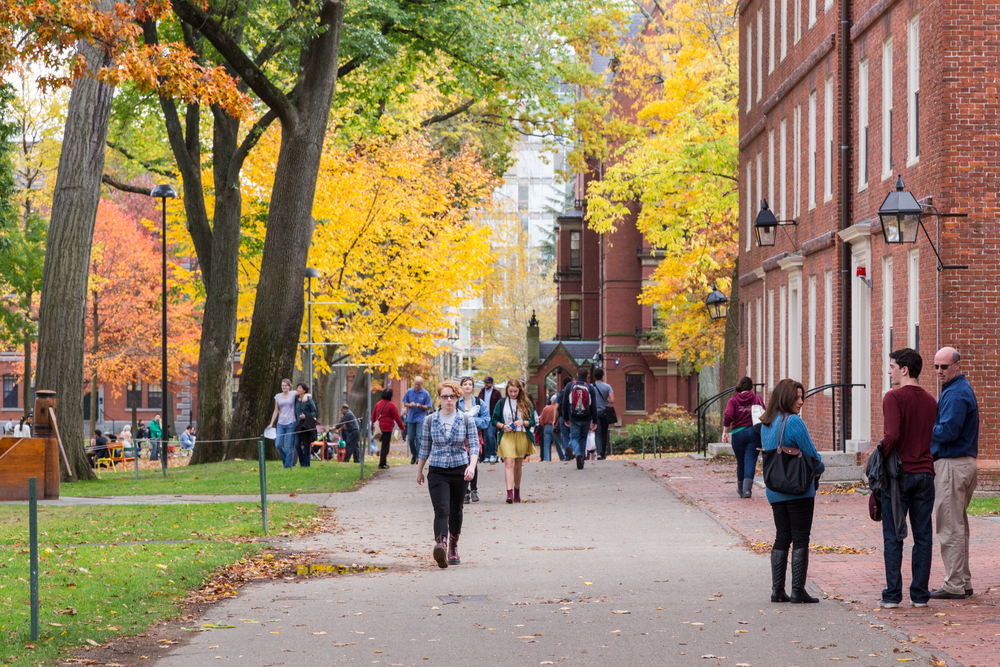 Harvard Yard, old heart of Harvard University campus, in Cambridge, Mass., in 2013. (Jannis Tobias Werner/Shutterstock)
Days after the Supreme Court’s ruling, advocacy groups filed a suit against Harvard alleging it granted “special privileges” to applicants related to wealthy donors and alumni, including in the list of grievances that the students were “overwhelmingly white” and the practice “disproportionately advantage” white applicants and thus “systematically disadvantage” students of color, including black, Hispanic, and Asian Americans. They argued legacy students had seven times the chance to be accepted than a student without such ties.
This week, the Department of Education launched an investigation into Harvard’s legacy admissions, spurred on by the activists’ lawsuit. It stated it was looking into the claim that the university “discriminates on the basis of race by using donor and legacy preferences in its undergraduate admissions process.”
In a White House press briefing, press secretary Karine Jean-Pierre said President Joe Biden has “made clear that legacy admissions hold back our ability to build diverse student bodies.”
 Friends Read Free
Copy
Facebook
Tweet
Friends Read Free
Copy
Facebook
Tweet