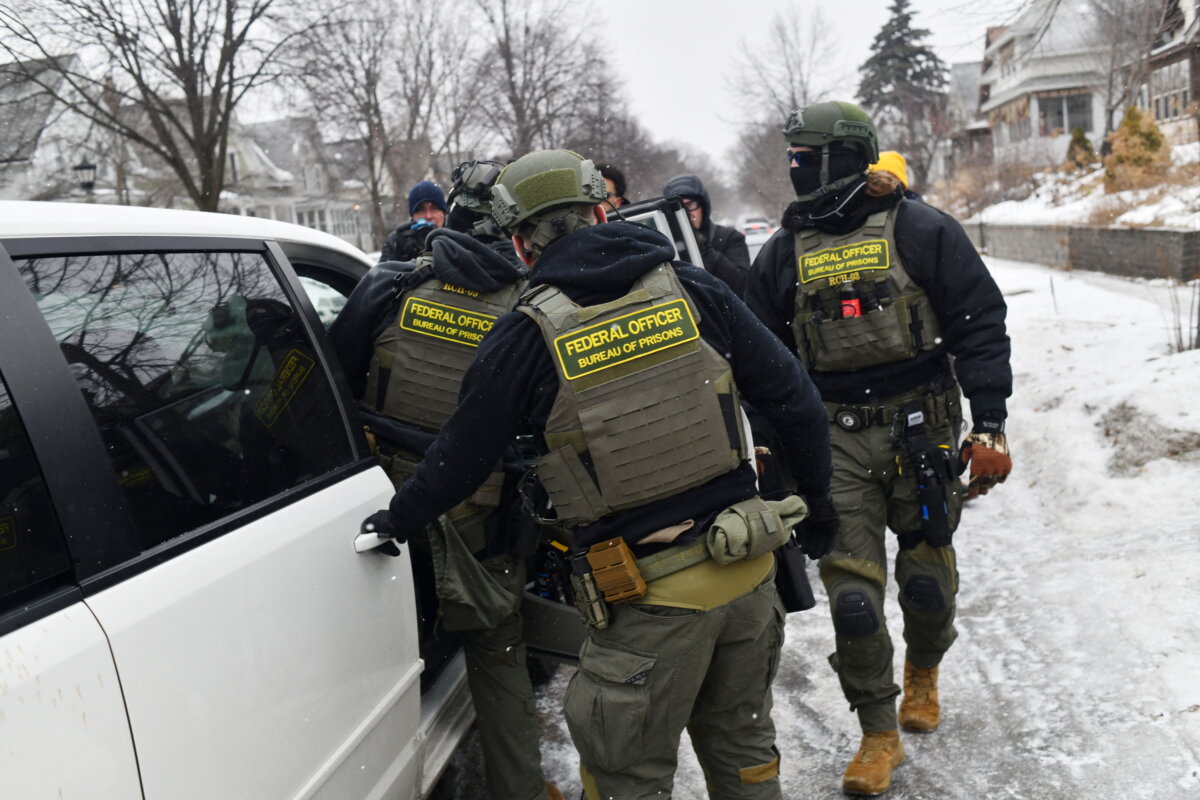

The sheriff and top prosecutor in Ramsey County, Minnesota, announced on April 13 that they are investigating whether federal agents committed crimes during recent immigration enforcement operations.
Ramsey County Attorney John Choi and Sheriff Bob Fletcher said the Department of Homeland Security has been uncooperative with their investigators.
As a result, the county leaders said they may sue the federal agency to pry loose documents they are seeking, or a grand jury could be convened to subpoena the records, Choi said, citing “other avenues” his office could pursue.
A demand letter from Ramsey County, seeking specific information, gives federal authorities until April 30 to respond. Choi, who has held office since 2011, said this is the first time he has issued such a letter to a federal agency.
“I would say there’s interference happening,” he said during a press conference in St. Paul, Minnesota, which is the state capital and county seat.
In response to Operation Metro Surge, the federal crackdown on illegal immigration that began in Minnesota late last year, all nine Ramsey County law-enforcement agencies have been probing possible “felonious conduct” of federal law enforcement agents, Choi said.
Two active investigations and three preliminary investigations have resulted; Choi gave details about only one of the active cases. It centers around a Hmong man who is a naturalized U.S. citizen, ChongLy “Scott” Thao. On Jan. 18, Thao was “forcibly removed” from his St. Paul home “in freezing weather in his Crocs [shoes] and a pair of shorts,” Choi said.
“At this time, there is no indication that the agents had a warrant for entry or arrest,” a statement reads.
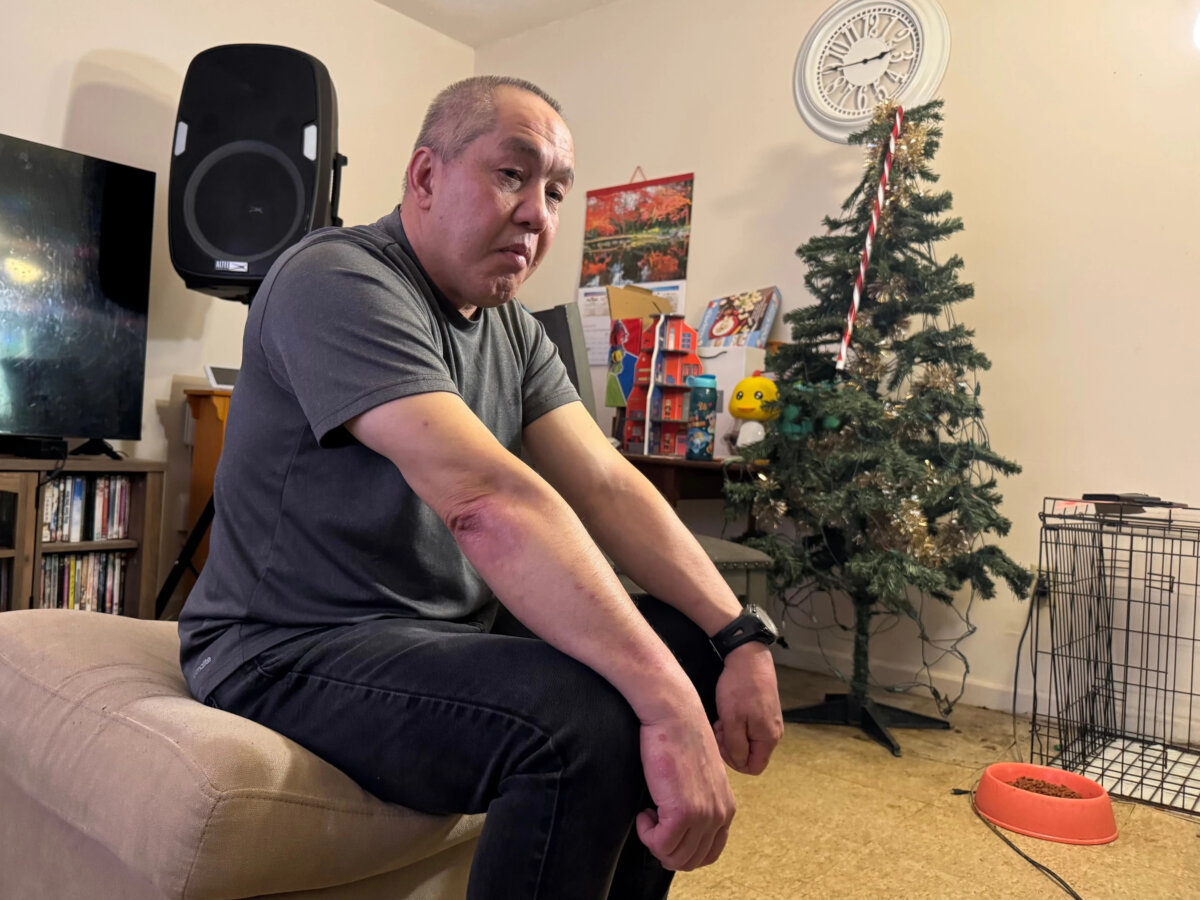
The agents’ actions may have violated the U.S. Constitution and Minnesota law, possibly constituting kidnapping, illegal detainment, or false imprisonment, Choi told reporters.
“We have diligently been working on trying to get to the truth,” Choi said. “This is not about any type of pre-determined agenda.”
Homeland Security, in an email to The Epoch Times, responded to the accusations against U.S. Immigration and Customs Enforcement (ICE) by saying, “ICE does not kidnap people.”
The federal agency dismissed the Ramsey County announcement as “a political stunt to demonize ICE law enforcement who are facing a 1,300 percent increase in assaults against them as they arrest for the worst of the worst.”
Further, Homeland Security commented that its agents, under authority of a warrant, were searching for “sexual predator” suspects who had “ties to the property.” Upon serving that warrant, the U.S. citizen “refused to be fingerprinted or facially ID’d.” Thus, he was taken into custody under “standard protocol” calling for officers to “hold all individuals in a house of an operation for the safety of the public and law enforcement.”
Homeland Security’s latest comments on the Thao incident mirror those made on Jan. 19 by then-spokeswoman Tricia McLaughlin on X, a day after the controversial detainment.

But Fletcher said that, in his 47 years as a law-enforcement officer, he had never seen such tactics employed.
“[While] there are many facts that we don’t know yet,” he asked, “is that good law enforcement, to take an American citizen out of their home, and drive them around aimlessly, trying to determine what they can tell them?”
Fletcher alleged that protocol breaches were “expected,” given his understanding that some ICE agents received inadequate training as the agency “rushed” to ramp up its enforcement operations.
“There are limits on ICE authority, just like there are limits on ours,” he said. “When someone breaches those limits of authority, there are consequences.”
Fletcher disputed characterizations that federal agents might have immunity from prosecution for their actions. He also said the agents who detained Thao have not been identified. Further, attempts to locate the vehicles involved were unsuccessful because license plates were apparently switched to other cars, he said.
“There is qualified immunity for all law enforcement in a lot of different capacities,” the sheriff said. “But seizing a person out of their home who is an American citizen, they’re not immune from that.”
 Friends Read Free
Copy
Facebook
Tweet
Friends Read Free
Copy
Facebook
Tweet