Mexico is extending “unprecedented” cooperation with the Trump administration in combating drug smuggling and illegal immigration along its 2,000-mile border with the United States, but House Republicans say it must do more.
If not, several said during a two-hour Dec. 17 hearing, President Donald Trump might militarily target Mexico-embedded narcotics cartels under his newly unveiled Trump Corollary to the Monroe Doctrine.
“Mexico can do a lot more,” said Rep. María Elvira Salazar (R-Fla.), House Foreign Affairs Committee Western Hemisphere Subcommittee chair, questioning the nation’s largest trading partner’s commitment to stemming cross-border drug smuggling and human trafficking.
“I understand it is very difficult for Mexicans to allow Americans to step on their soil,” she said, but she then asked what else the United States can do to keep fentanyl-laced narcotics from crossing the border.
The administration maintains that these drugs kill 80,000 Americans per year.
Katherine Dueholm, U.S. State Department deputy assistant secretary for the Bureau of Western Hemisphere Affairs, said that under Mexican President Claudia Sheinbaum, “Mexico has increased cooperation with the United States to intensify efforts to dismantle transnational drug and arms trafficking, and take concrete steps to secure the border.”
In the past year, Dueholm testified, Mexico has deployed 10,000 National Guard soldiers to the border and is cooperating with the administration “to safeguard financial institutions and disrupt criminal organizations’ illicit financial activity” by sanctioning 27 individuals and entities for cartel-related money laundering.
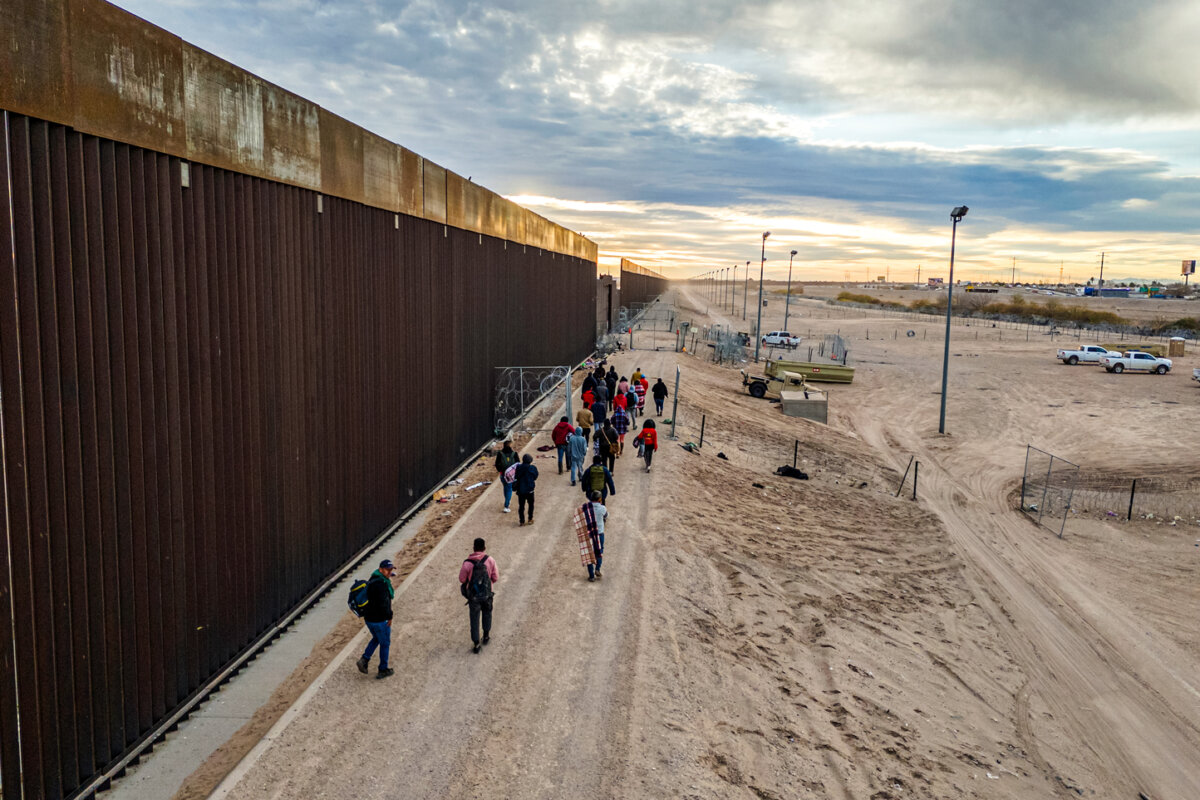
“Encounters at our southwest border are at a historic low, down almost 90 percent since the start of the Trump administration,” Dueholm said, noting that Mexico “accepts more third-country nationals deported from the United States than any other country.”
State Department Deputy Assistant Secretary Christopher Landberg, who oversees the department’s Bureau of International Narcotics and Law Enforcement Affairs, said in his testimony that Mexico has extradited or transferred 133 major cartel figures wanted by U.S. authorities to the United States this year “to stand trial for their crimes.”
Among them is Rafael Caro Quintero, “who tortured and murdered” Drug Enforcement Administration agent Enrique “Kiki” Camarena in 1985, he said.
Working with U.S. Immigration and Customs Enforcement, Homeland Security Department investigators, the FBI, and Landberg’s office, “vetted” Mexican forces in 2025 dismantled 29 synthetic drug labs and created Mexico’s first state-level border patrol unit, Landberg said, “which is already disrupting cartel lookout sites and trafficking routes along the Arizona border.”
In September, U.S. and Mexican agents seized $569 million in methamphetamine precursors, preventing “the Sinaloa Cartel from flooding American communities with deadly drugs, and dealt them a significant financial blow,” he said.
Mexican agents conducted fentanyl purchases leading to the first U.S. indictment of a Jalisco New Generation Cartel trafficker and “150,000 fentanyl pills seized,” Landberg said, noting that in November Mexican officers seized assets from Iván Archivaldo Guzmán Salazar, a son of the infamous drug kingpin Joaquín Guzmán, commonly known as “El Chapo.”
“[U.S.–Mexico] cooperation is at a level we have not seen,” he said. “[As a result], we have had success on a level we have not seen in a long time with Mexico.”
“[But] cartels remain a powerful and lethal force in Mexico, and fentanyl and other synthetic drugs continue to flow across our border,” Landberg said. “While we are providing security support, we are also insisting on greater burden-sharing. Our assistance is catalytic, not perpetual.”
Supporting ‘Castro Tyranny’
Dueholm and Landberg told the panel that the Trump administration is leveraging the president’s “good working relationship” with Sheinbaum as a stepping stone to more aggressive actions in curtailing drug smuggling and human trafficking.
Landberg said Mexico needs more than 10,000 National Guard troops to man the 2,000-mile border and must use more drones, which the United States is providing, in surveillance of cartel activities.
He said Mexico must work on securing its southern border with Guatemala and Belize and needs “to talk to China” in the wake of Trump’s agreement with Chinese leader Xi Jinping “on controlling precursor chemical exports to the north.”
“[Mexico has not been] as forceful as we have been on the [fentanyl] precursor issue,” Landberg said. “The Chinese government issued an advisory about controlling the trade, similar to how they’ve issued advisories related to methamphetamine precursors. We’d like to see the Mexicans step up their game in that way.”
He said Mexico can better crack down on “going north with drugs, in illegal immigrants, and going south with trafficking of arms, which are then feeding violent criminal organizations, by working with the Central Americans, specifically Guatemalans and Belize, to close those borders.”
The United States is in no position to chastise Mexico about “going south with trafficking of arms,” Rep. Joaquin Castro (D-Texas) said, since up to 90 percent “of the guns used by [the] cartels to rain violence across Mexico come from the United States.”
His proposed Americas Regional Monitoring of Arms Sales Act incorporates a U.S.–Mexico Security Implementation Group commitment to use the U.S. Bureau of Alcohol, Tobacco, and Firearms eTrace system to “track where weapons came from and prosecute the criminals who buy them from U.S. gun stores and sell them to cartels,” he said.
“This has been a priority for all of us,” Landberg said. “We see [firearms trafficking into Mexico] as a direct U.S. national security issue. These guns are going right to the cartels and increasing their lethality and threatening not just Mexican security forces, but U.S. citizens in Mexico.”
Salazar, the daughter of immigrants who fled Cuba’s communist regime, said that while Mexico has a “non-intervention foreign policy,” it supports “the Castro tyranny.”
In the past four months, she said, Mexico has sent 55 oil tankers “worth more than $3 billion for free” and “accepted more than 3,000 Cuban doctors in exchange for over $100 million paid directly to the Cuban regime, not to the doctors themselves.”
When the U.S.–Mexico–Canada trade pact is renegotiated in 2026, Salazar said, Mexico is going to be reminded that it specifically prohibits “forced labor.”
“That’s not a behavior that’s acceptable if you are going to be trading with the United States,” she said.
That will be on the table, Dueholm said, as will “encouraging Mexico to stop predatory Chinese trade practices, such as the transshipment of Chinese goods to bypass tariffs on China.”
This will require coordination between the nations to “reduce economic dependence on China by rebuilding Mexico’s industrial capacity,” she said.
Correction: A previous version of this article incorrectly stated that Joaquín “El Chapo” Guzmán had died. The Epoch Times regrets the error.
 Friends Read Free
Copy
Facebook
Tweet
Friends Read Free
Copy
Facebook
Tweet