More than 100,000 Ukrainians and 1,800 Sudanese can continue to stay and work in the United States without being deported after the Trump administration temporarily extended the temporary protected status (TPS) for citizens of both countries on Monday.
No details about the extension were released, and U.S. Citizenship and Immigration Services (USCIS) didn’t say when the extension would end.
An alert was posted instead on the agency’s web page for each country, indicating an announcement about the extension would be made “at the appropriate time.”
“Until such announcement is made, [Ukrainian and Sudanese] individuals present in the U.S. under TPS retain protection including work authorization,” the alert stated.
The protected statuses for Ukrainians and Sudanese were set to expire Monday.
TPS is a humanitarian program for foreigners that gives them temporary legal status and protects them from deportation, allowing them to work. The status holders remain foreign nationals but are allowed to stay in the U.S. legally because they can’t safely return to their crisis-stricken homelands.
The Department of Homeland Security, which has the authority to decide the status of countries in the program, didn’t respond to an after-hours request for information about the extensions on Monday.
The administration has removed 13 of 17 countries from the program since President Donald Trump started his second term less than two years ago.
More than 1 million people—more than 50,000 Hondurans, 330,000 Haitians, and 600,000 Venezuelans—have been removed from the program since March 31, 2025, the American Immigration Council estimates.
The countries still in the program are El Salvador, Lebanon, Sudan, and Ukraine.
The Homeland Security secretary must decide whether to extend or terminate a designation based on whether conditions in the foreign country have improved, according to the council.
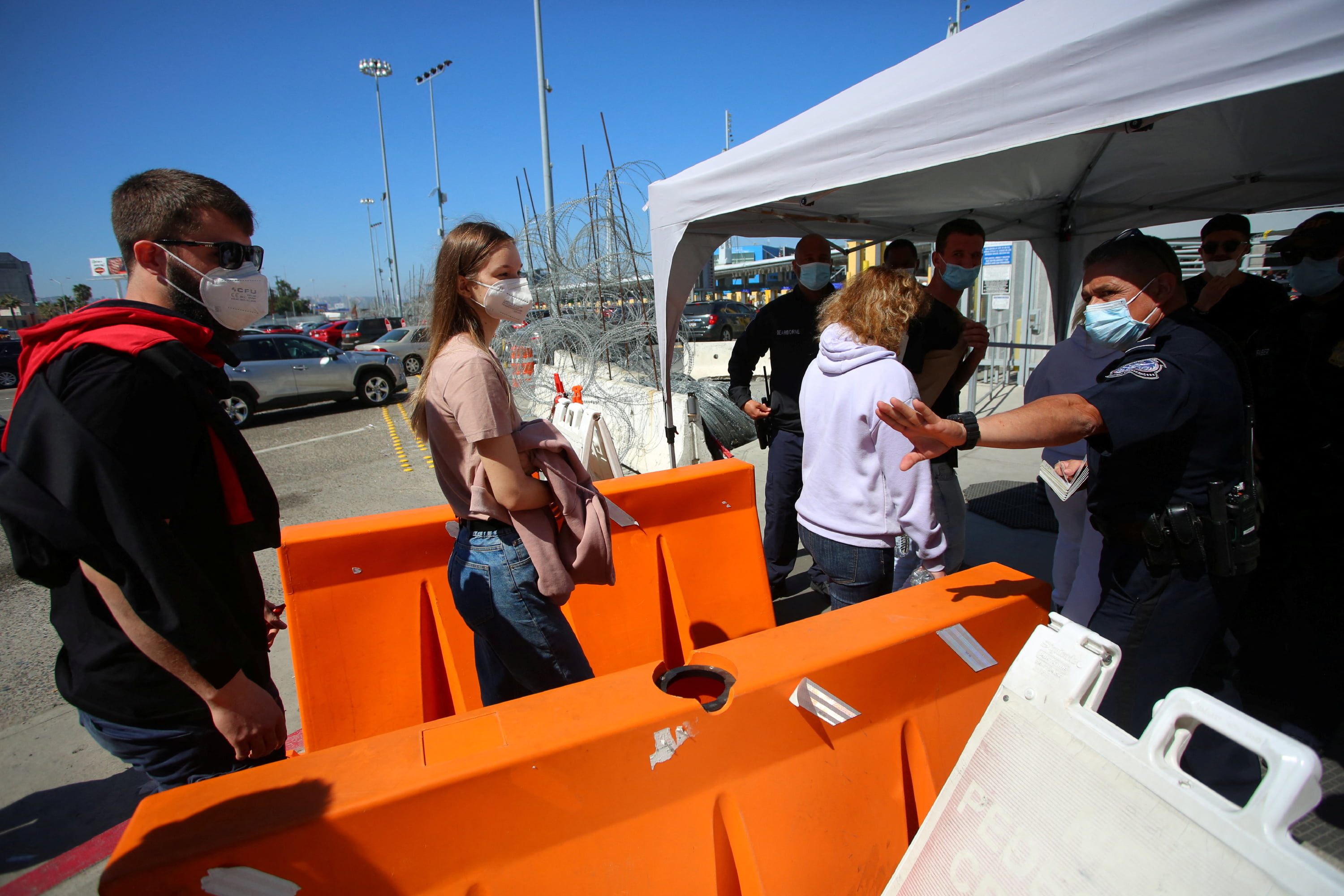 A U.S. Customs and Border Protection agent gestures toward a Ukrainian family at the San Ysidro Port of Entry at the U.S.–Mexico border in Tijuana, Mexico, on March 15, 2022. (Jorge Duenes/Reuters)
The decision to extend deportation protections for Ukrainian and Sudanese nationals suggests a possible shift for the Trump administration to a softer approach in policy.
Trump and Homeland Security have fought in court to phase out humanitarian protections for immigrants.
In June, the Supreme Court cleared the way for the federal government to remove protections for citizens of Haiti and Syria. Justices ruled that the federal law creating the TPS program barred courts from reviewing decisions made by the Homeland Security secretary to end the designations for the countries.
The court also ruled that Haitian TPS holders were likely to lose a case that asserted that former Homeland Security Secretary Kristi Noem ended their status because they were mostly black, which violated the Constitution’s equal treatment guarantee.
 Friends Read Free
Copy
Facebook
Tweet