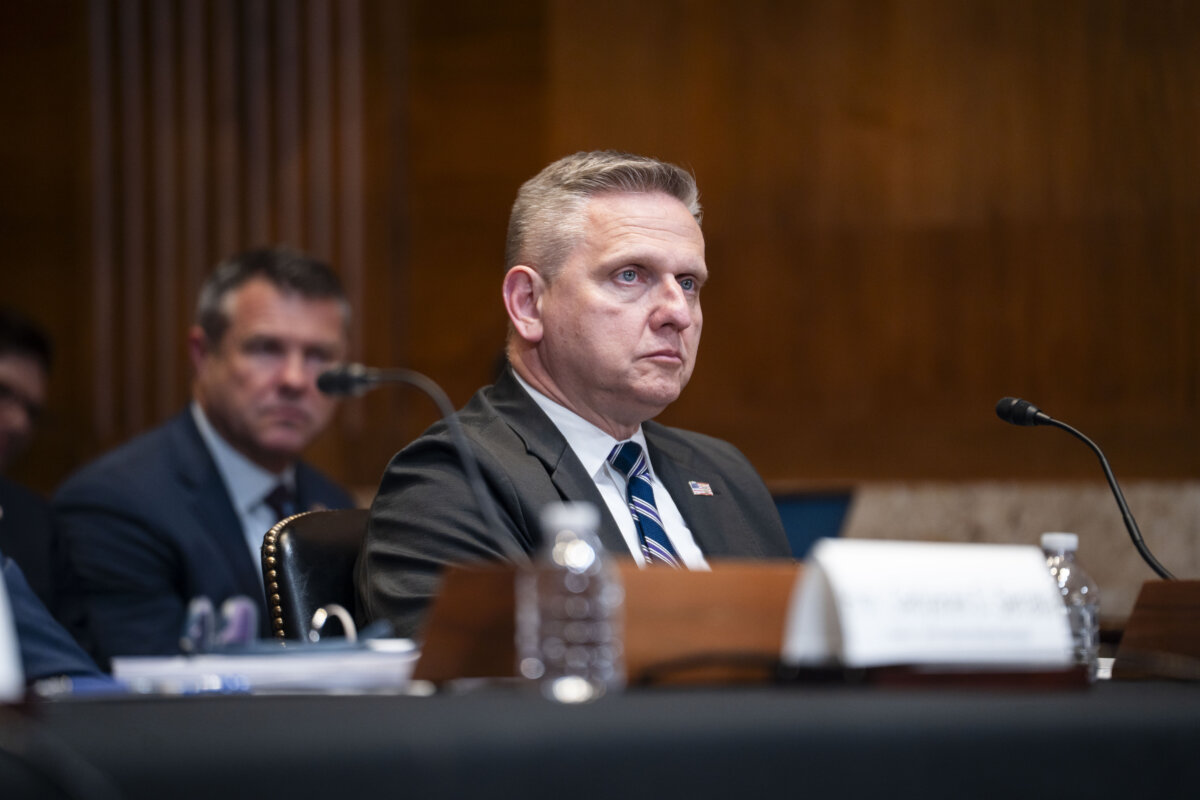

Robert Cekada, the newly confirmed director of the Bureau of Alcohol, Tobacco, Firearms and Explosives (ATF), wants to refocus the agency’s efforts on fighting violent crime rather than regulating legal gun ownership.
“We should be focusing on the criminals, not each other,” Cekada told the Subcommittee on Federal Law Enforcement of the House Committee on Oversight and Government Reform on Thursday.
Cekada was called to testify before the subcommittee on how the agency would handle sensitive data related to gun owners, why the agency has proposed 34 new rules, and whether it has an illegal firearms registry.
Democrats on the subcommittee criticized Cekada’s appointment, saying it indicated that President Donald Trump’s administration has been “captured” by the firearms industry.
The hearing’s stated purpose was to learn how the agency would comply with the “Tiahrt Amendment.”
Introduced in 2003 by Rep. Todd Tiahrt (R-Kan.), it restricts firearms trace data, and data from the National Instant Criminal Background Check System (NICS), to prosecutors and law enforcement. Sensitive personal information in the data is exempt from the Freedom of Information Act (FOIA), Cekada told the committee.
The amendment was part of the 2003 Commerce, Justice, Science, and Related Agencies Appropriations bill. It’s been amended and reintroduced since then.
Rep. Summer Lee (D-Penn.) said it’s telling that Cekada’s confirmation was announced on the same day the new rules were rolled out as representatives of gun rights groups and the firearms industry stood by.

“These [Tiahrt Amendment] riders don’t protect gun owners, they really only protect the gun industry,” Lee said.
The slate of proposed regulations repeals the ban on pistol stabilizing braces and bump stocks and a rule redefining what it means to be “engaged in the business” of selling firearms.
If made permanent, the rules would streamline the background check system, modernize how gun dealers keep records, and set a time limit on how long the records of gun dealers who are out of business must be kept.
Cekada denied that either side of the gun debate influenced the proposed rules.
“I can tell you, ATF isn’t captured by anyone,” Cekada said.
The director said the protection of law-abiding gun owners is paramount for the ATF. This includes sensitive personal data.
Cekada said that in 2024 data from the ATF’s Demand Letter 2 Program (DL2) was provided to gun control/gun safety groups and was used for a “name-and-shame” campaign. Cekada said DL2 letters are sent to gun dealers if a large number of guns from their stores show up at crime scenes.

He said DL2 helps dealers spot patterns that may indicate problems, such as straw purchases. A straw purchase is when a person buys a gun for someone who cannot legally own a firearm.
Cekada said the DL2 data was improperly given to the gun control groups, who used it to imply that some gun dealers were selling guns to criminals.
In another incident, the ATF under President Joe Biden inadvertently sent Tiarht Amendment-protected data to the gun rights group, Gun Owners of America (GOA), in response to a Freedom of Information Act (FOIA) request.
When the ATF realized the error, it asked the court to place a gag order on GOA.
Later, President Donald Trump’s Justice Department under then Attorney General Pam Bondi released the unredacted information to GOA in what GOA described as an attempt to render GOA’s lawsuit to remove the gag order moot.
On its website, GOA states that the confusion could dilute the Tiahrt Amendment, exposing legal gun makers, dealers, and owners to harassment by gun control groups.
The gun control groups counter that the amendment makes it difficult to hold the gun industry accountable for violent crimes involving guns.
Cekada said DL2 data does not prove illegal activity, which is why it must remain privileged.
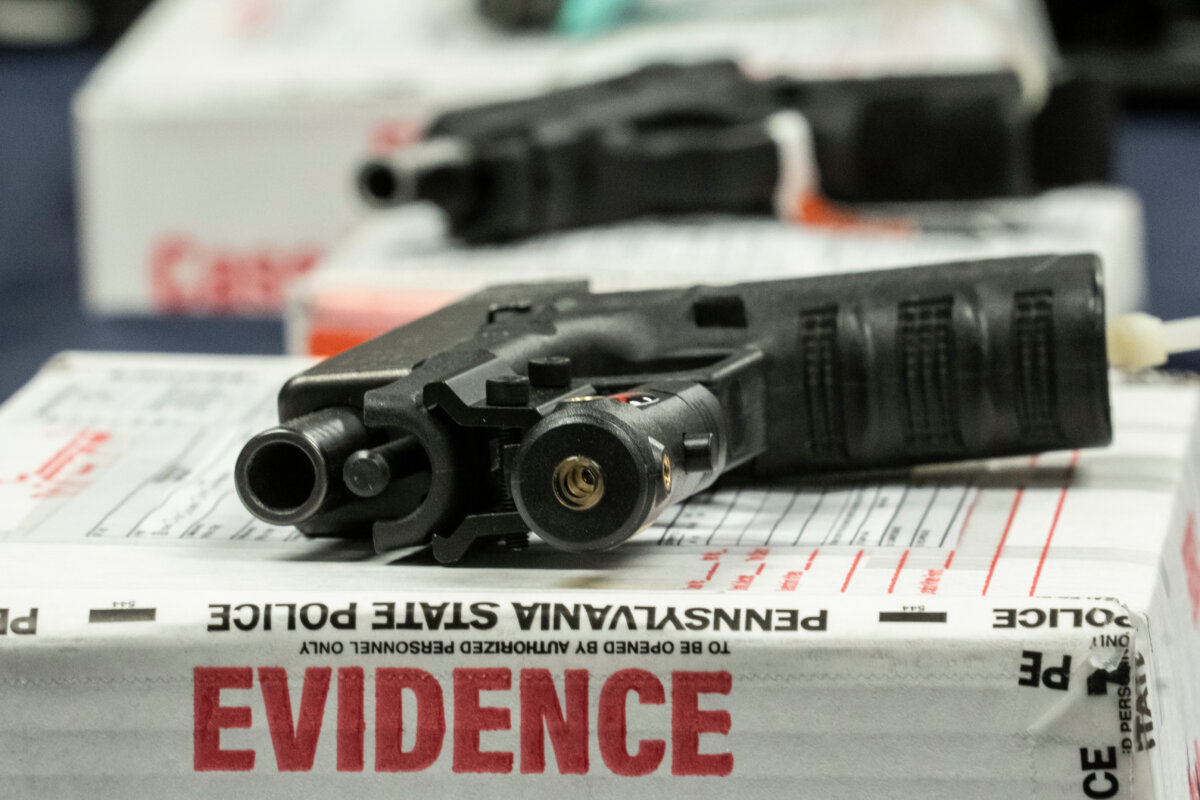
“It is equally critical that we maintain the integrity of the data and keep it [only] for law enforcement purposes,” Cekada said, adding that it is wrong for data to be used to allege criminal activity.
A GOA official stated that ATF is heading in the right direction. Still, he said there is more that can be done.
“As Director Cekada makes his first appearance before Congress as head of the agency, protecting Americans from the collection and release of gun owners’ personal information must remain paramount to safeguarding both the Second and Fourth Amendments,” Ben Sanderson, GOA Deputy Director of Federal Affairs, wrote in a message to The Epoch Times.
Cekada also rejected the claim that the ATF is building an illegal gun registry.
He acknowledged that the agency is scanning millions of records from closed gun dealers, but he said the only information the scanned documents contain is firearm serial numbers. Cekada said that ATF agents can use that number to physically search paper documents if they need more information.
He noted that proposed rule 1140-AA95 would change the time for dealers to keep records from forever to 20 or 30 years. GOA and other groups have been pushing to have all the records destroyed.
The gun rights activists said that as long as the ATF has the records, it can build a registry at any time.
“ATF should use this rulemaking to dismantle—not preserve—the infrastructure of a national gun owner registry,” GOA states on its website.
 Friends Read Free
Copy
Facebook
Tweet
Friends Read Free
Copy
Facebook
Tweet