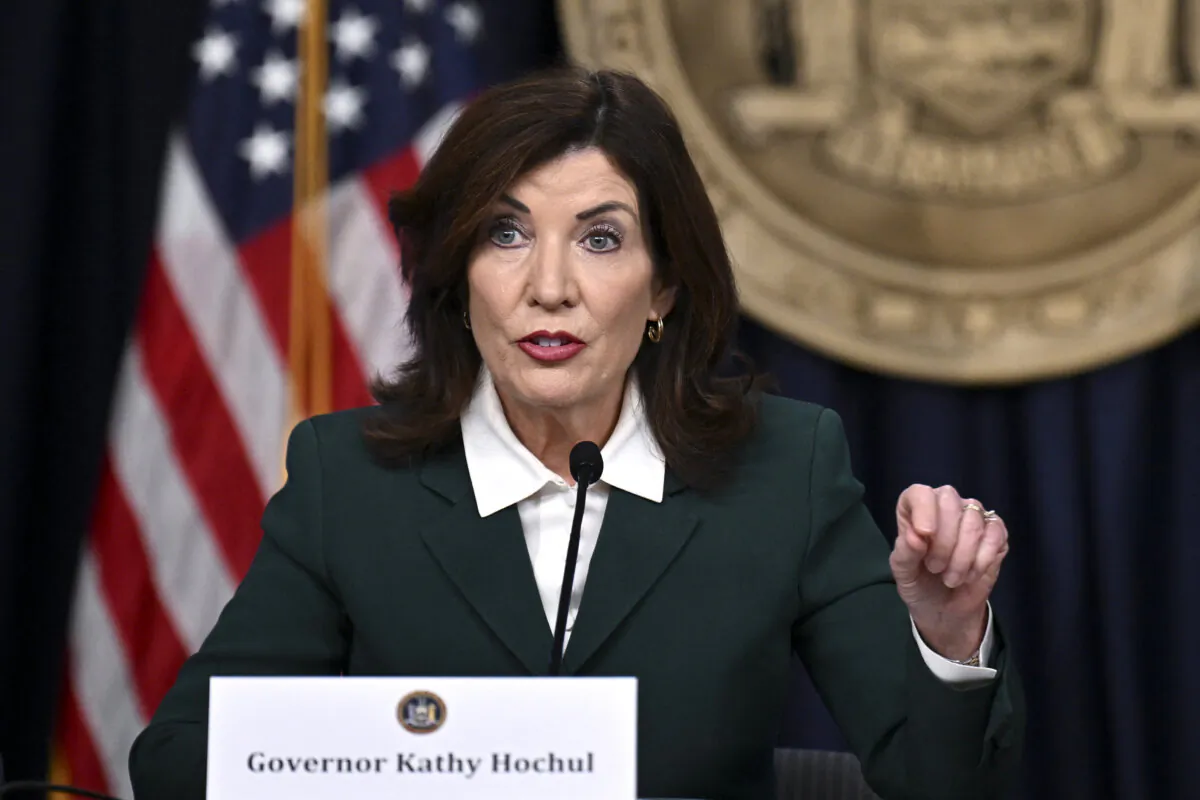
Gov. Kathy Hochul has directed New York’s power authority to “immediately begin evaluation of technologies, business models, and locations” to develop the state’s first nuclear power plant in 50 years and the country’s first in more than 15 years, kicking off an anticipated slate of similar nuclear energy initiatives nationwide.
“We must embrace an energy policy of abundance that centers on energy independence and supply chain security to ensure New York controls its energy future,” Hochul said in a June 23 announcement delivered at the Niagara Power Project near Lewiston, New York.
The governor ordered the New York Power Authority “to develop and construct a zero-emission advanced nuclear power plant in Upstate New York” to boost the state’s stressed electric grid with the renewable, zero-carbon power generation she called for in her 2025 State of the State address.
In that address, Hochul called on the New York State Energy Research and Development Authority to develop a Master Plan for Responsible Advanced Nuclear Development with an emphasis on emerging technologies, including small modular reactors.
The directive calls on the authority and the state’s Department of Public Service “to develop at least one new nuclear energy facility with a combined capacity of no less than 1 gigawatt of electricity, either alone or in partnership with private entities, to support the state’s electric grid and the people and businesses that rely on it.”
One gigawatt of electricity can power roughly 750,000 homes.
There are three operating nuclear power plants in New York, all in the western reaches of the state, near or on Lake Ontario. Two—James A. FitzPatrick and Nine Mile Point—are in Oswego County, and the R.E. Ginna Nuclear Power Plant is in Wayne County.
The Oswego County reactors, including the two at Nine Mile Point, were the last to be built in New York, going online in 1975.
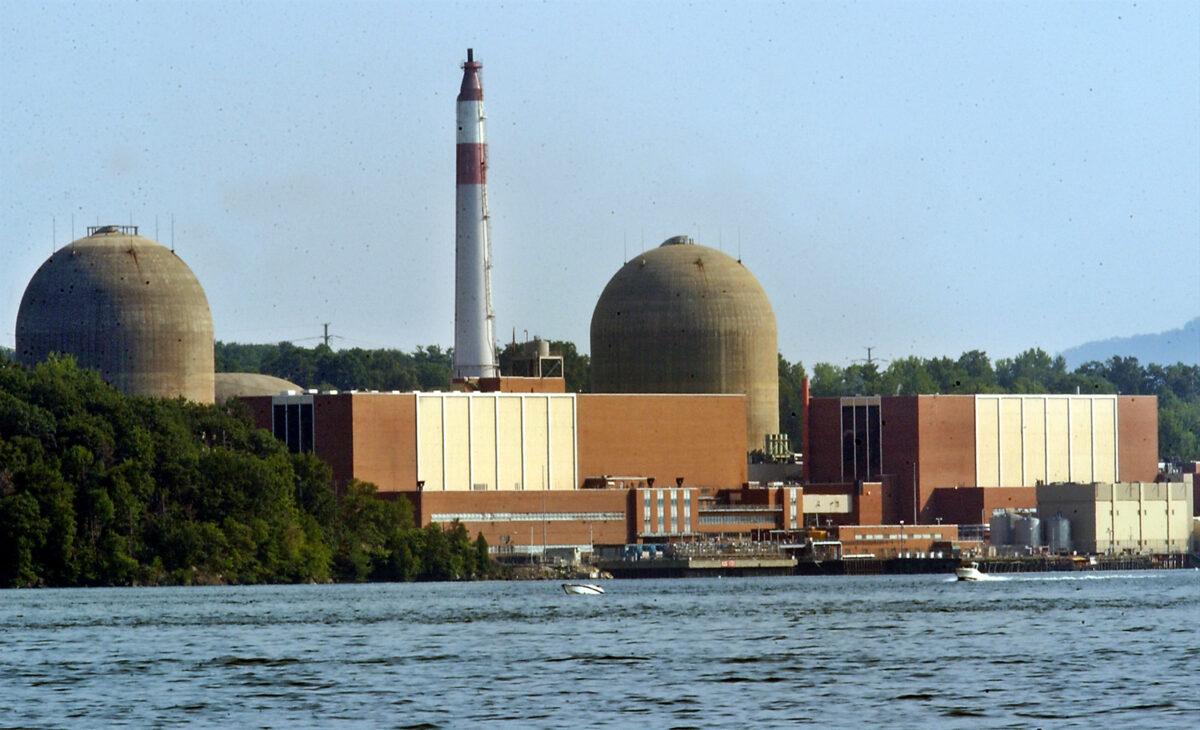
The Indian Point nuclear power plant on the Lower Hudson’s Tappan Zee in Buchanan was shut down in April 2021 and is undergoing decommissioning.
They are owned by Baltimore-based Constellation Energy, the largest owner and operator of nuclear energy plants in the United States, with 21 reactors in Illinois, Maryland, New York, and Pennsylvania.
Constellation has been working with the New York State Energy Research and Development Authority on a federal grant to seek approval for new, smaller reactors.
“This initiative also builds on the state’s ongoing financial support to Constellation to pursue an early site permitting process for a new project at its Nine Mile Point Clean Energy Center and will allow for future collaboration with other states and Ontario,” Hochul said, “building on regional momentum to strengthen nuclear supply chains, share best practices, and support the responsible deployment of advanced nuclear technologies.”
Hochul said the directive marks “the second time during my administration” she has called on the state’s power authority to lead a critical energy initiative … with the expedited buildout of renewable energy and transmission” under the state’s 2019 Climate Leadership and Community Protection Act.
The act and the state’s emphasis on “renewable energy and transmission” has drawn heated criticism in recent years for making it virtually impossible to tap into Marcellus shale oil in central New York and Pennsylvania.
National Priority
The state has rejected at least four proposed natural gas pipeline projects since 2019, with all new generators on its grid being wind and solar.
In February, however, New York regulators approved an “enhancement project” by the Iroquois Pipeline Company to build two compression stations on its 416-mile natural gas pipeline to move more gas from Ontario into New York City without having to build more pipeline miles.
President Donald Trump has also raised concerns about New York blocking natural gas pipelines into New England and has been calling for a revival of the Constitution Pipeline, a 124-mile “zombie pipeline” that would have funneled natural gas from Pennsylvania to an Albany distribution hub.
Reviving the pipeline was among the issues Trump and Hochul discussed in a March 14 White House meeting.
Developing nuclear energy would meet state zero-emission goals while generating enough power to patch into the regional grid, a bevy of state officials and business and labor leaders agreed in comments accompanying Hochul’s announcement.
“New York’s clean energy future depends on reviving and expanding nuclear power,” New York state’s American Federation of Labor and Congress of Industrial Organizations President Mario Cilento said.
“Without it, emissions are rising, and grid reliability is at risk.
“We support Gov. Hochul’s vision of investing in nuclear energy to stabilize our power system and meet our climate goals, “while creating good-paying, family-sustaining, union careers to build a stronger, greener economy for all New Yorkers.”
Developing nuclear energy has become a national priority after decades of stagnancy.
The United States is the world’s largest generator and consumer of nuclear energy, with 94 nuclear reactors in 55 power plants, which the U.S. Energy Information Administration calculates generated 18.6 percent of its electricity in 2023.
However, most were built between 1970 and 1990 and average more than 40 years in service. The only new reactor to come online in the United States since 2016 is Vogtle’s fourth reactor in Georgia, at $16 billion over budget and six years behind schedule.
Under current regulations posted by the United States Nuclear Regulatory Commission, it takes 10 to 12 years just to license and permit a new nuclear reactor in the United States.
In 2024, Congress adopted the ADVANCE Act, a bipartisan push to begin chipping away at regulatory and financial hurdles hampering the nation’s nuclear energy industry.
In November 2024, the U.S. Department of Energy (DOE) set a goal to triple the nation’s nuclear power generation by 2050.
In May, Trump issued four executive orders seeking to “reinvigorate” the domestic nuclear energy industry by calling for scaling back permitting timelines and regulatory red tape.
On June 20, the DOE announced it released $100 million from a $1.52 billion loan guarantee to Holtec to restart the Palisades Nuclear Plant near South Haven, Michigan. The plant operated from 1971 until it was shut down in May 2022.
It is “America’s first restart of a commercial nuclear reactor that ceased operations,” Energy Secretary Chris Wright said. “The Palisades Nuclear Plant will help to reinvigorate our nuclear industrial base and will reestablish the United States as the world’s nuclear energy leader.”
 Friends Read Free
Copy
Facebook
Tweet
Friends Read Free
Copy
Facebook
Tweet