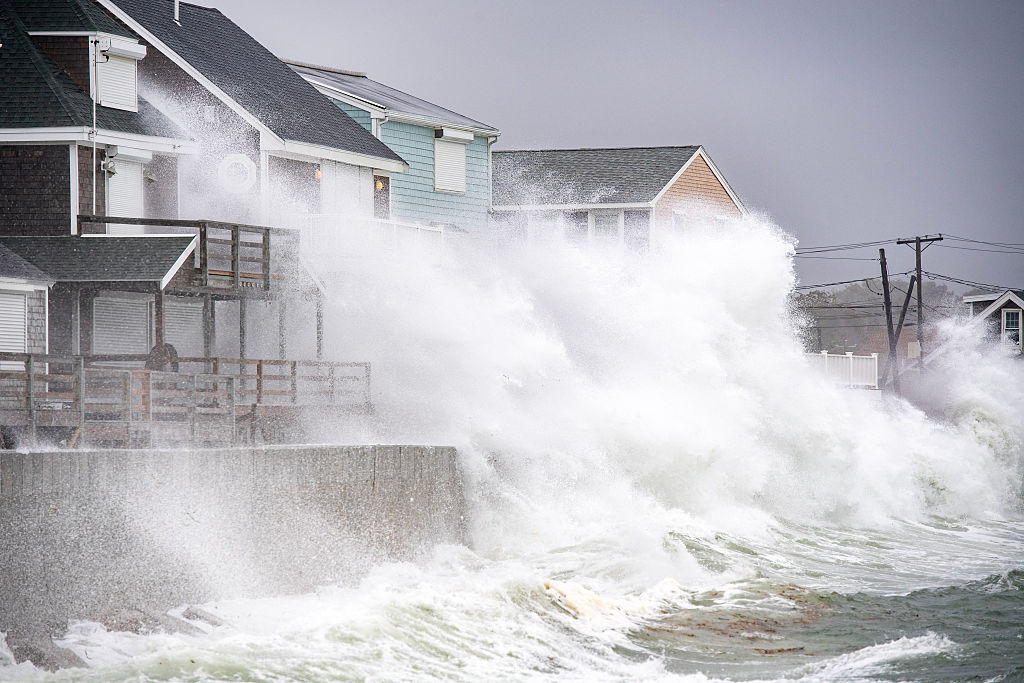

A powerful nor’easter knocked out power to more than 100,000 people and caused the cancellation more than 400 flights as it slowly moved up the Northeast coast on Sept. 26.
A city employee was killed by a fallen tree in Brooklyn, the New York City Housing Authority said.
Emergency crews in mid-Atlantic and New England states raced to restore power after downed trees contributed to outages for about 100,000 customers in the region.
The National Weather Service (NWS) warned in a forecast advisory early Saturday that the storm would bring wind gusts of 45–65 mph to eastern Long Island and southeastern New England while bringing major coastal flooding to the Mid-Atlantic coast.
Gusts indeed reached 45–65 mph on Long Island early Saturday, and 45–55 mph in New York City.
“Large breaking waves will continue to generate strong rip currents, beach erosion, road closures, and property damage for the Carolinas and Mid-Atlantic into Southern New England through Monday,” the NWS forecast said.
In an update late Saturday, the service said that the intense low pressure system is expected to turn northwest through Saturday night on approach to western Long Island or New Jersey. It is forecast to slow to near stationary along the New Jersey coast on Sunday, and weaken into Monday, before moving northeast across Cape Cod and the Gulf of Maine Monday night into Tuesday.
A storm warning remained in effect for northwest winds of about 29–40 mph, with gusts of up to 58 mph, until Sunday noon.
Nor’easters are not unusual as New England moves into the fall season, but “this might be a little earlier than average for a big storm,” said Bob Oravec, lead forecaster with the National Weather Service in College Park, Maryland.
The storm’s slow movement could worsen beach erosion by subjecting the coast to a prolonged period of strong winds and waves, he added.
New York Gov. Kathy said coastal flooding was the biggest threat, but heavy rains, powerful winds, and waves as high as 20 feet were also expected.
As of 11 a.m. ET on Saturday, Boston Logan International Airport had the highest combined total of inbound and outbound cancellations in the United States, with 249 flights canceled, according to data by flight-tracking website FlightAware.
Nantucket Memorial Airport had the second-highest number of inbound and outbound cancellations, with 66 flights being cut.
Martha’s Vineyard Airport had the third-highest number of cancellations, with 44 flights grounded.
Flights going to and from Philadelphia International Airport, and New York’s LaGuardia Airport and John F. Kennedy International Airport were also canceled due to the windy and wet weather.
Cape Air, a small U.S. regional airline based in the coastal village of Hyannis, Massachusetts, had the most airliner cancellations in the Northeast.
By midnight Saturday, delays appeared to be decreasing, with Boston Logan International Airport and John F. Kennedy International Airport reporting average delays of 43 minutes and 34 minutes respectively.
Over 100,000 customers lost power on Saturday, according to PowerOutage.us.
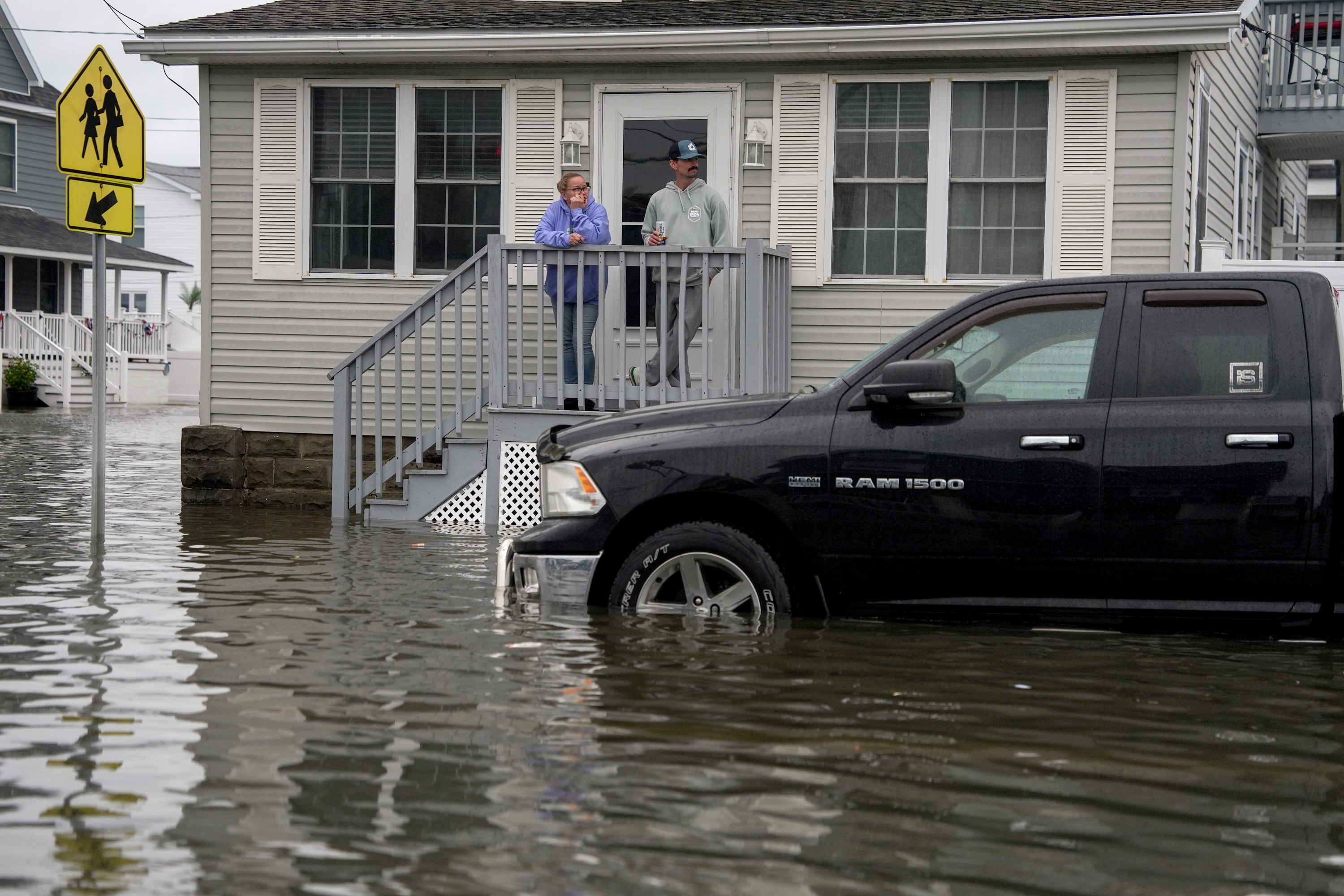 Residents look on from a balcony of a home along a flooded road during a nor’easter storm in Point Pleasant, N.J., on Sept. 26, 2026. (Ryan Murphy/Getty Images).
More than 20,000 people in Connecticut and over 20,000 in New York state, especially in Long Island’s Suffolk County, lost power Saturday morning, with outages ongoing into Sunday
Pennsylvania, Massachusetts and Rhode Island also reported thousands of outages each.
New York and New Jersey had state-of-emergency orders in effect on Saturday due to the storm.
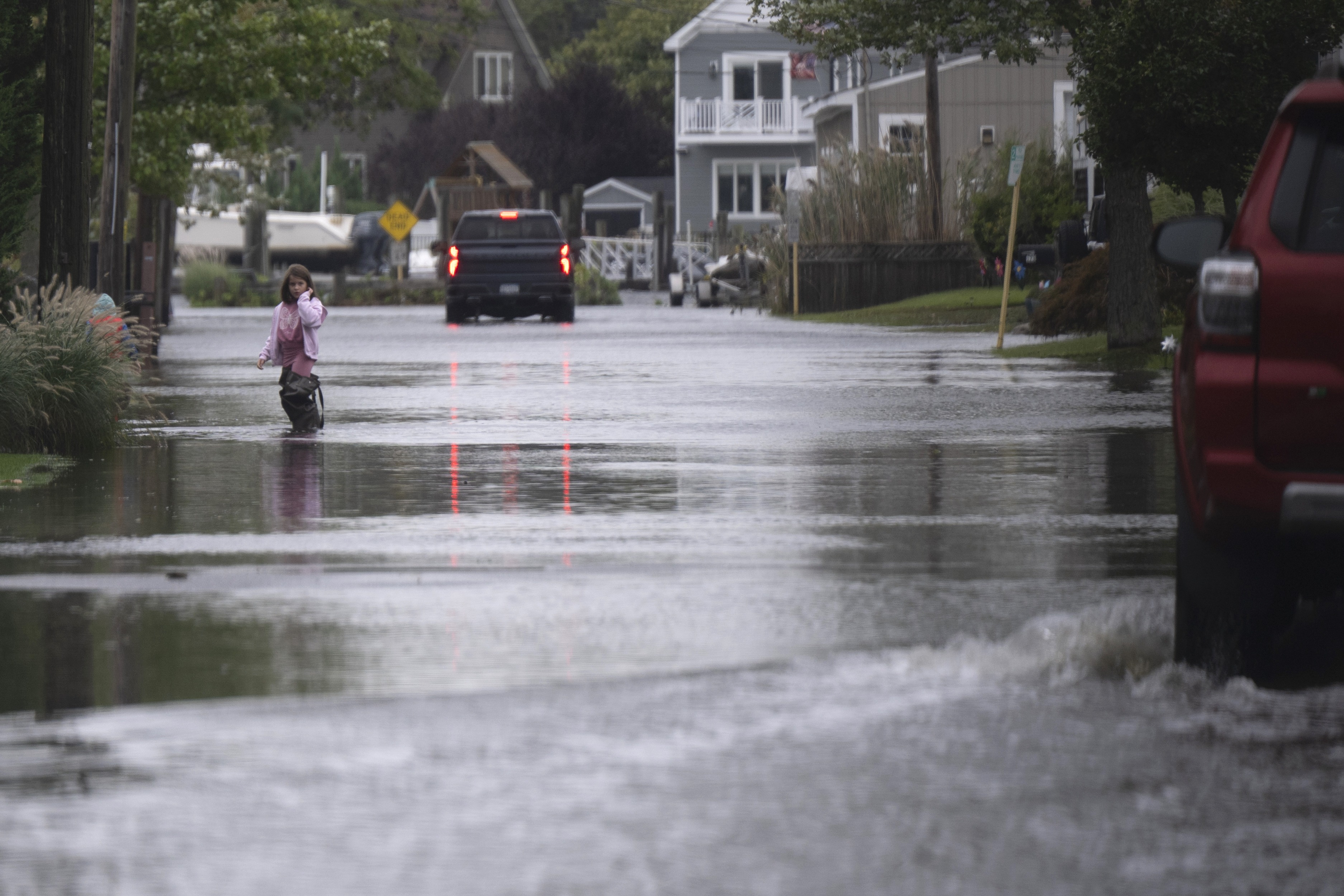 The streets are flooded on Araca Road as a Nor’easter hits the east coast of the United States in Babylon, N.Y., on Sept. 26, 2026. (Andrew Theodorakis/Getty Images)
The popular Global Citizen Festival in New York’s Central Park and Ed Sheeran’s shows that were scheduled for Sept. 25 and 26 at Gillette Stadium in the Boston area were canceled due to the Nor’easter.
“Due to the severe weather warnings in place in Boston and across New England throughout the weekend and following consultation with local officials, the promoter and tour have made the difficult decision to cancel the Ed Sheeran concerts at Gillette Stadium,” the 64,000-capacity venue announced on Friday.
 Friends Read Free
Copy
Facebook
Tweet
Friends Read Free
Copy
Facebook
Tweet