Oh, say, can you hear the strained voices and mumbled words of countless singers trying to render our national anthem? Because of its challenging vocal line and its militaristic lyrics, many people have suggested replacing “The Star-Spangled Banner” with another patriotic song as our national anthem.
During the past century, an assortment of random tunes that reflect the American spirit and way of life have been offered as our national anthem. One song in particular has been suggested numerous times, and not surprisingly so—“America the Beautiful,” often called America’s hymn.
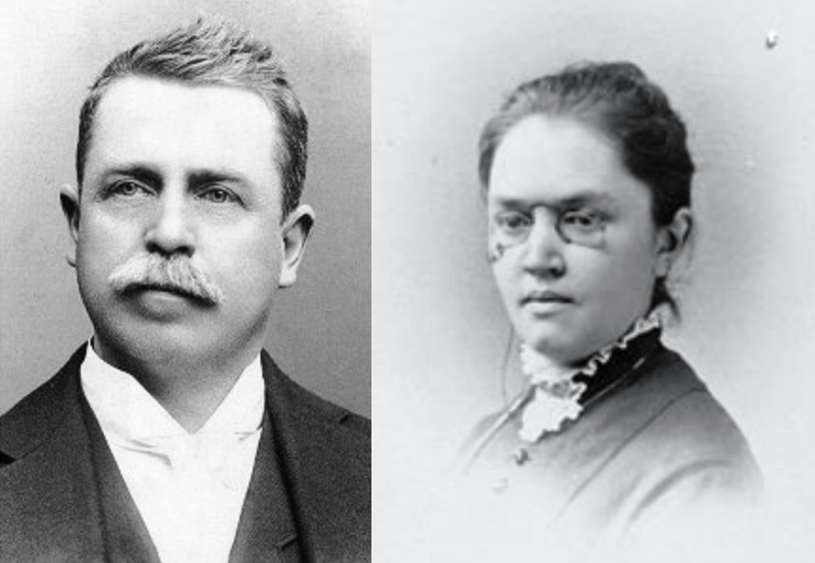
Like “The Star-Spangled Banner,” the words and music of “America the Beautiful” weren’t written together. The music began as a hymn by choirmaster and church organist Samuel A. Ward, who composed the music in 1882.
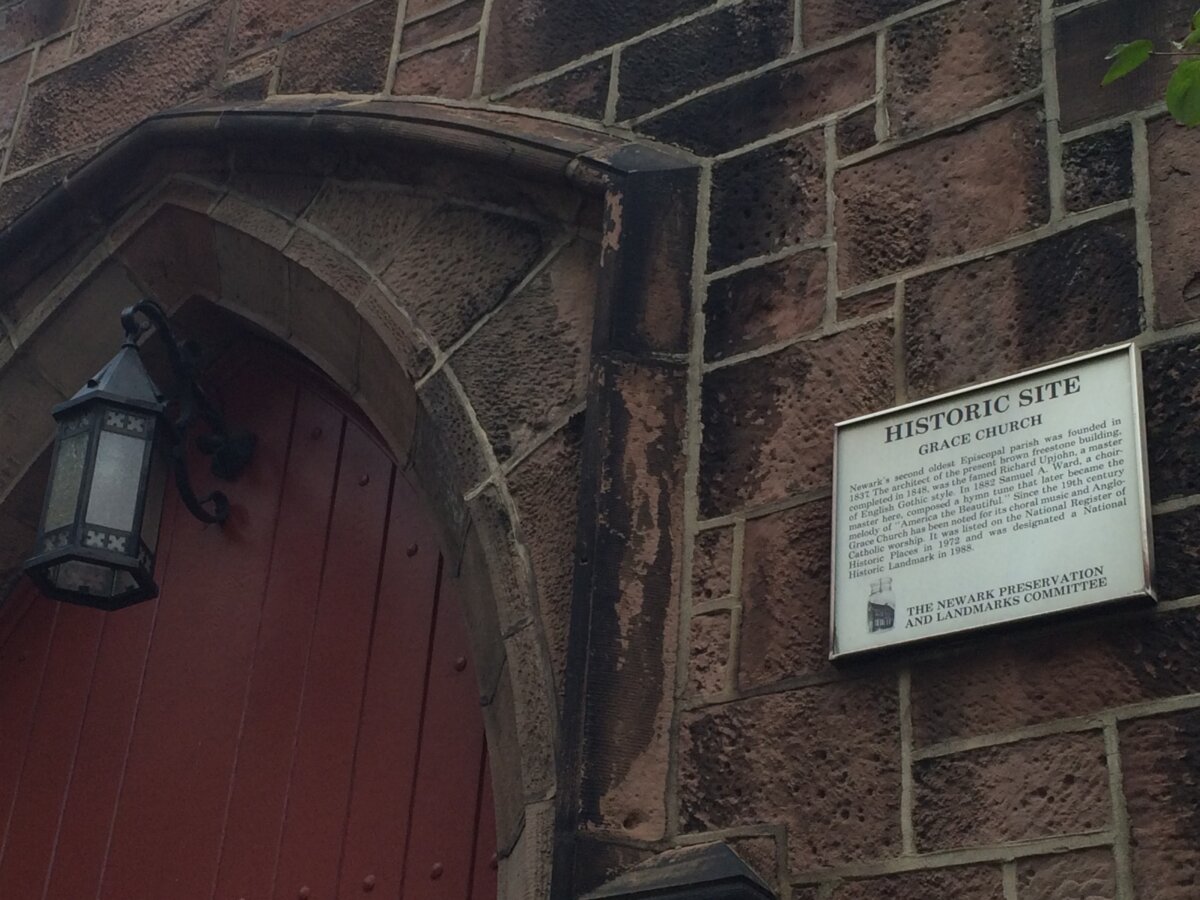
Ward was the organist at Grace Episcopal Church, in Newark, New Jersey, where he lived with his wife and four daughters. Although a gifted musician from a young age, Ward preferred to glorify God through playing, arranging, and composing music, instead of seeking personal fame.
As a young man, he opened a music store in New York to sell instruments and music as well as give lessons. He later formed an all-male choral group called the Orpheus Society, which became one of New York’s best-known choirs.
One day, in the bustle and confusion of a rowdy beach amusement park on Coney Island, this prayerful man found divine inspiration in the beauty of creation and the inherent divinity of his fellow man. He left the park feeling refreshed and uplifted.
While riding the paddle steamer back to the city, Ward heard two shipboard musicians playing a tune. The notes stuck in his head and rearranged themselves into a new melody. In order to remember this inspiration, Ward borrowed a friend’s removable shirt cuff to jot down the composition.
The next day, he set the words of the old English hymn “O Mother Dear, Jerusalem” to his new melody, which he named “Materna.” It was first published in a few obscure hymnals during the next few years.
This prayerful melody stands out from other old hymns because of its heartrending use of an unexpected chromatic interval in the second line. Ward chose a different harmony instead of a more predictable major chord. In it he catches his listeners’ ears, a reminder of the beauty in God’s unexpected plans.
A Special Poem
This moving melody gained national recognition in 1910, seven years after Ward’s death, when it was paired with a patriotic poem by a professor of English. Katharine Lee Bates (1858–1929) was a well-educated woman, a lover of literature, and a promoter of peace. She captured the majesty of the United States’ natural loveliness in a poem written hastily during a summertime adventure.
In the summer of 1893, Bates enjoyed a working holiday by teaching English at Colorado College. During the train ride from Wellesley College in Massachusetts to Colorado Springs, she saw the beauty that the growing nation encompassed, including Niagara Falls and the Chicago World’s Fair.
The impression of key sights remained in her mind and heart during an adventurous visit to Pikes Peak during the summer, which she recounted as follows:
“One day some of the other teachers and I decided to go on a trip to 14,000-foot Pikes Peak. We hired a prairie wagon. Near the top we had to leave the wagon and go the rest of the way on mules. I was very tired. But when I saw the view, I felt great joy. All the wonder of America seemed displayed there, with the sea-like expanse.”
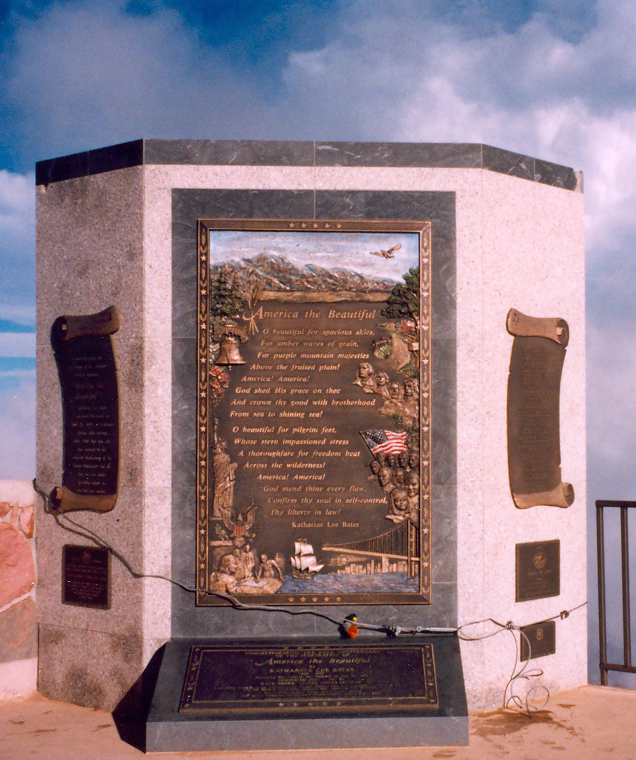
Using the trusty notepad and pen she carried with her at all times, she jotted down some phrases to describe what she felt on that mountaintop, later naming the resulting poem “Pikes Peak.” Today, that inspiration is commemorated on the peak by a plaque featuring the namesake poem.
The poem was first published two years later in the weekly journal, The Congregationalist, under the simple title “America. A Poem for July 4.” It immediately struck readers as not only a remarkable poem, but one that also needed to be sung, so people began setting it to music.
The journal was flooded with letters of praise as well as tunes to accompany the words. By 1900, at least 75 melodies had been written for this patriotic poem, but none of them stood out. Meanwhile, the poem itself continued to be reprinted in various publications nationwide.
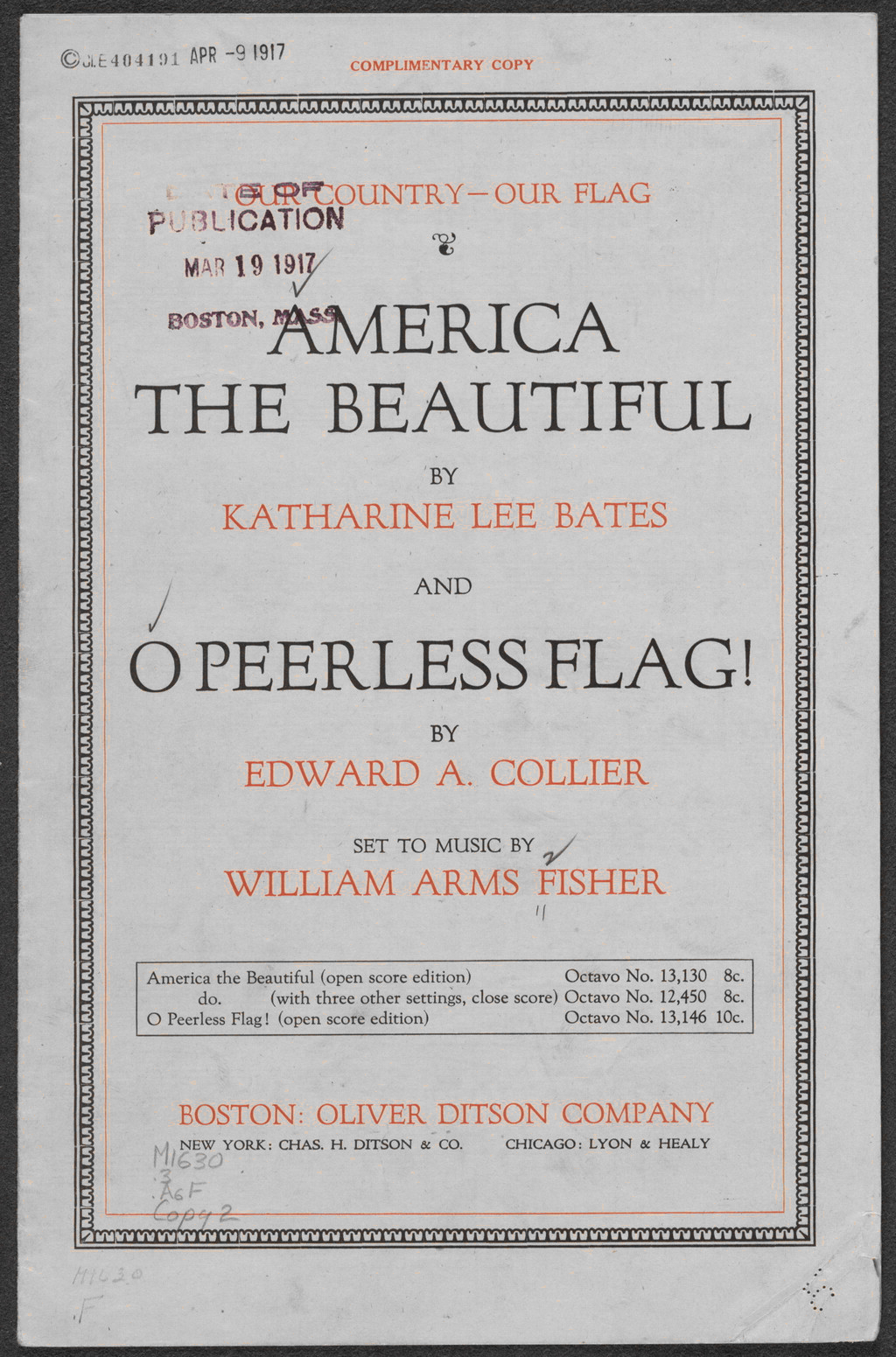
In 1904, a Bostonian Baptist minister, Clarence A. Barbour, turned to the hymnal for a divinely inspired melody to suit “America.” There, he found Ward’s “Materna.” The words and music we know today were first performed at Barbour’s church that year, and they were clearly a match made in heaven. He published them together in 1910 as “America, the Beautiful” in his bestselling hymnal “Fellowship Hymns.”
Bates produced three versions of this poem, published in 1893, 1904, and 1911, respectively. The 1911 iteration is the version we know from the song, and the 1904 version is very similar.
The 1893 publication features several different lines, describing “halcyon skies” instead of “spacious skies” and talking about “the enameled plain” instead of “the fruited plain.” Interestingly, the famous conclusion “from sea to shining sea” originated as the closing line of the 1904 version.
In the 116 years that have passed since this song’s publication, countless singers have lifted their voices in this beautiful hymn. All the military bands and choirs have produced uplifting renditions, but one of the most soulful is an a capella (unaccompanied) performance by the Air Force Band’s Singing Sergeants choir.
It’s inspiring to hear how this song has inspired the nation for generations by listening to earlier recordings, too. Operatic baritone Leonard Warren produced one of the most glorious solo renditions in a 1950 RCA Victor recording, and the all-male Shannon Quartet made a movingly simple yet breathtaking recording in 1927.
In 2026, the 250th anniversary of our nation’s founding, “America the Beautiful” continues to inspire with its message of patriotism, faith, tolerance, and humility.
See Part 2 to learn about the woman who composed the lyrics of “America the Beautiful.”
What arts and culture topics would you like us to cover? Please email ideas or feedback to features@epochtimes.nyc