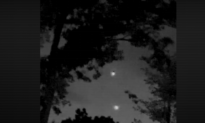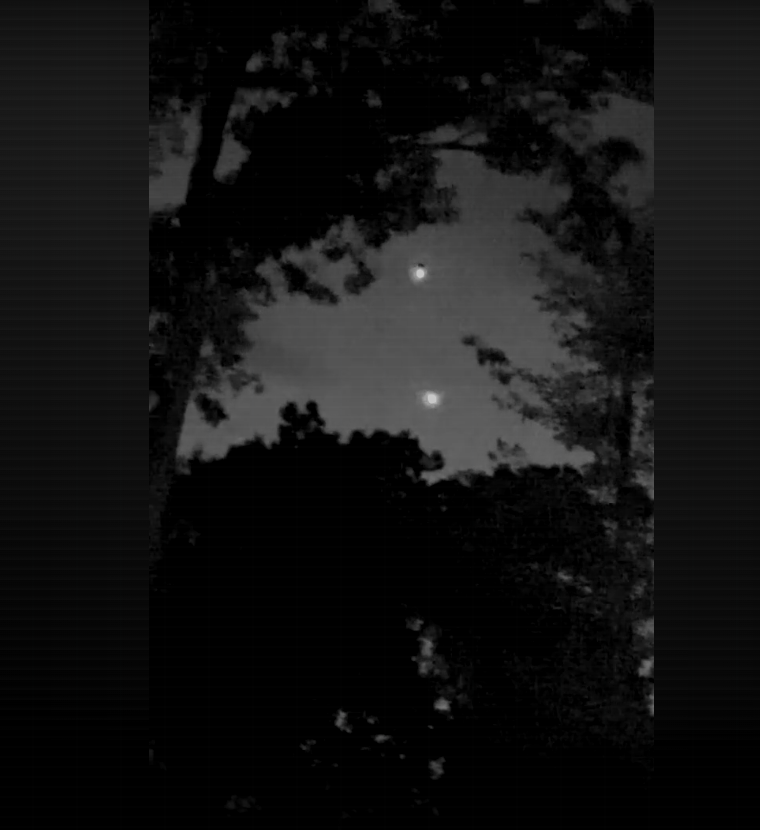

The Pentagon on Sept. 18 released its sixth batch of declassified and historical UFO files, including papers examining speculative concepts such as warp drives, cloaking devices, stargates, and wormholes.
The documents, produced through the Advanced Aerospace Weapon System Applications Program, examine subjects including discussions on ideas such as antigravity, negative-mass propulsion, and invisibility. The Pentagon cautioned that these were reference papers, not proof that the concepts are workable or validated.
The files span events from 1952 to as recent as 2025.
One 2010 file discusses “early experiments behind invisibility cloaking, describing several ways an object might be hidden from visual or sensor detection, including camouflage, transparency effects, and optical cloaking that bends light around an object.”
Another 2010 file examined wormholes and stargates as “hypothetical spacetime structures within general relativity that theoretically offer a means of faster-than-light travel or communication.”
A Pentagon research paper from the time describes injuries suffered by three healthy antenna engineers following what it called an “anomalous ‘accident.’”
Within 72 hours, the engineers experienced skin heat and redness, fever, pain, headaches, numbness, nausea, diarrhea, hair loss, heart palpitations, insomnia, and anxiety. Two developed extreme light sensitivity and inflamed, bloodshot eyes. One showed signs of radiation illness and later developed indications of malignant changes.
The paper attributed the symptoms to accidental close-range exposure to a mixture of radiofrequency, microwave, and ultraviolet radiation. It characterized the investigation as “extensive, but controversial.”
The files were published through the Presidential Unsealing and Reporting System for UAP Encounters, or PURSUE, according to Pentagon spokesman Sean Parnell.
Parnell did not describe the number or contents of the newly released files in the announcement. He said the Pentagon and other federal agencies are working on the next release and will continue publishing additional material.
Previous releases included a pitch involving a Hollywood actor to NASA and a 1957 report of a UFO sighting in Germany.
In 2001, space advocate Carol Rosin wrote a letter to a NASA official with a proposal to bringing her husband, actor Jon Cypher, to the official’s office to promote a space initiative. Her sales pitch stressed Cypher’s appearances on “Hill Street Blues” and “Major Dad,” his Broadway performance in “Man of La Mancha,” his ability to sing opera in four languages and his fondness for discussing space.
Rosin assured the recipient that their proposal would not cost NASA “a dime” and would require only as much time as he wanted. She then invited him and his associates to lunch or dinner.
The 1957 report was an FBI file from a U.S. citizen who was a war prisoner in Germany. He reported seeing a UFO while working in Germany in 1944.
 Friends Read Free
Copy
Facebook
Tweet
Friends Read Free
Copy
Facebook
Tweet