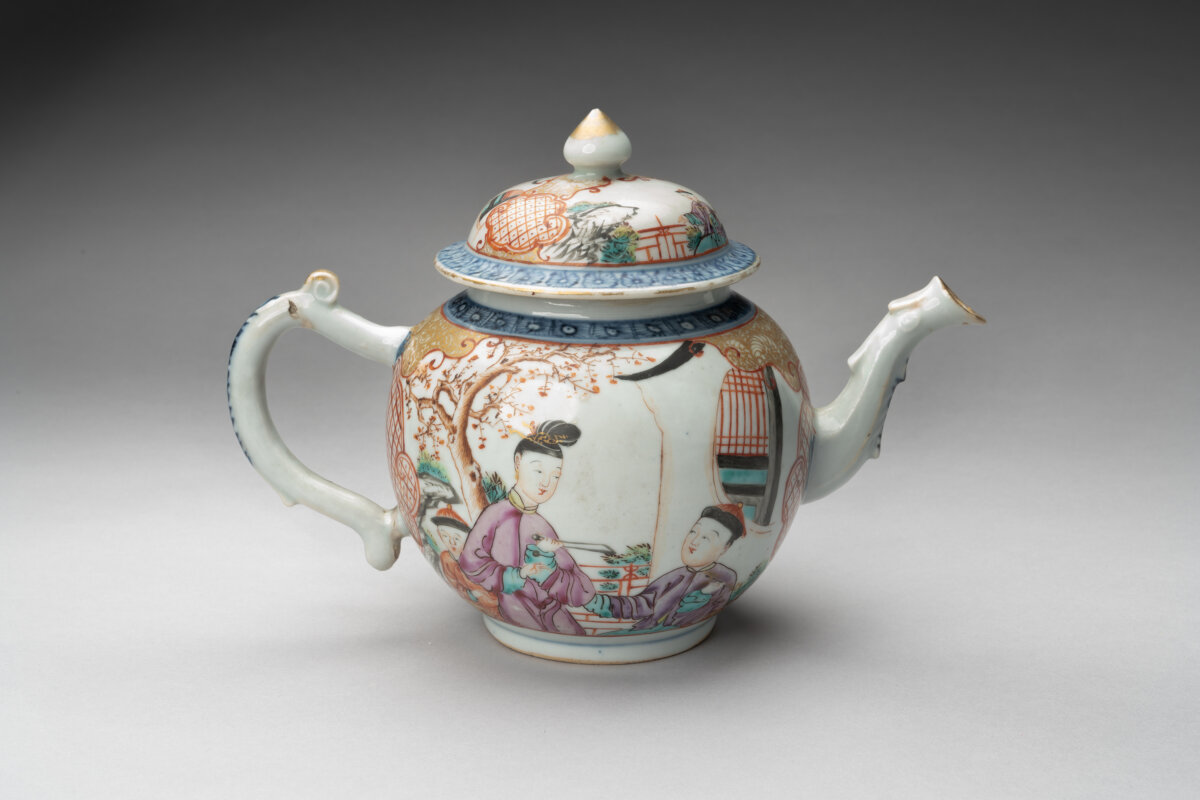
The fascinating exhibition “Seeking Profit and Power: Philadelphia, China Trade and the Making of America” has opened at the Independence Seaport Museum (ISM), situated atmospherically along the Delaware River in Philadelphia. On view through Jan. 3, 2028, the exhibit is one of many public programs taking place across the United States this year in honor of the nation’s 250th anniversary of Independence.
This show spotlights the history of America’s commercial and diplomatic exchange with China, especially the role Philadelphia played. Featuring approximately 150 objects that draw from the ISM’s holdings, museums, and private collections, visitors can navigate this important aspect of early trade while at the location where Philadelphia’s ships departed for China and returned to unload cargo.
The New Silk Road
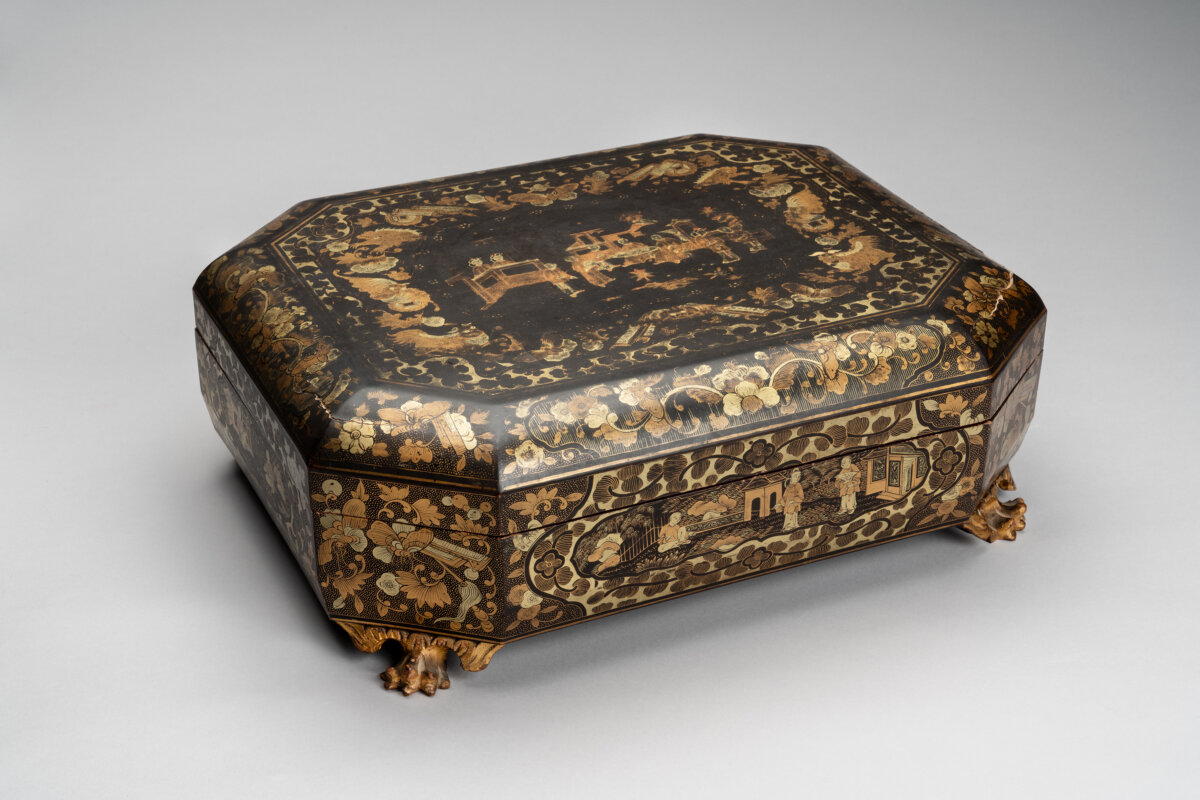
The active enterprise of Americans buying “made in China” goods can be traced to the earliest days of the burgeoning nation. The displayed 18th-and 19th-century objects showcase the luxury items that American merchants brought home along risky shipping routes: porcelain, silk, lacquerware, and tea. Indeed, it was tea that made-up 90 percent of Chinese exports to the United States.
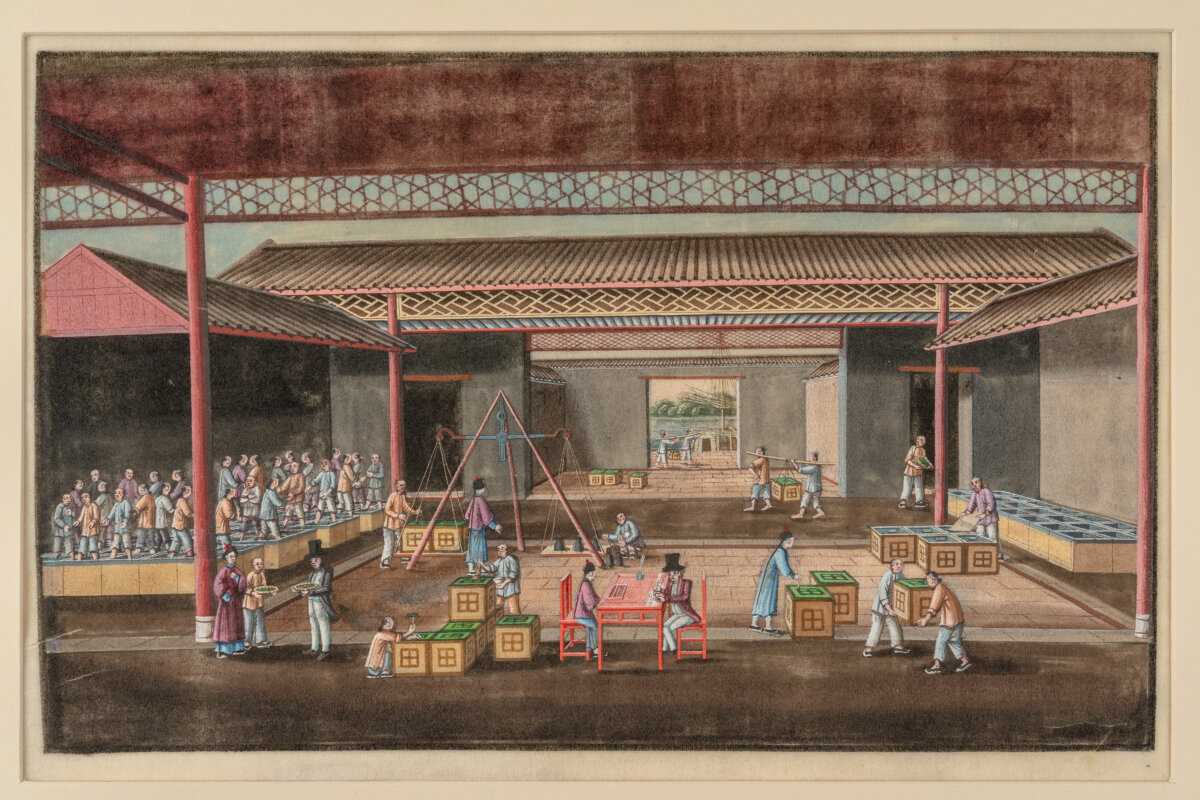
In the exhibit’s gouache on paper “A Tea Hong at Canton” by an unidentified Chinese artist, a typical trade scene is portrayed. A hong was a historic mercantile house for foreign trade in China. In the foreground are a Chinese purveyor and Western merchant engaged in discussion. Alongside them are crates tightly packed with tea leaves. Other crates are being loaded onto a docked ship visible in the background. On the left-hand side of the composition, Chinese workers are packing the crates by stepping on the leaves to compress them.
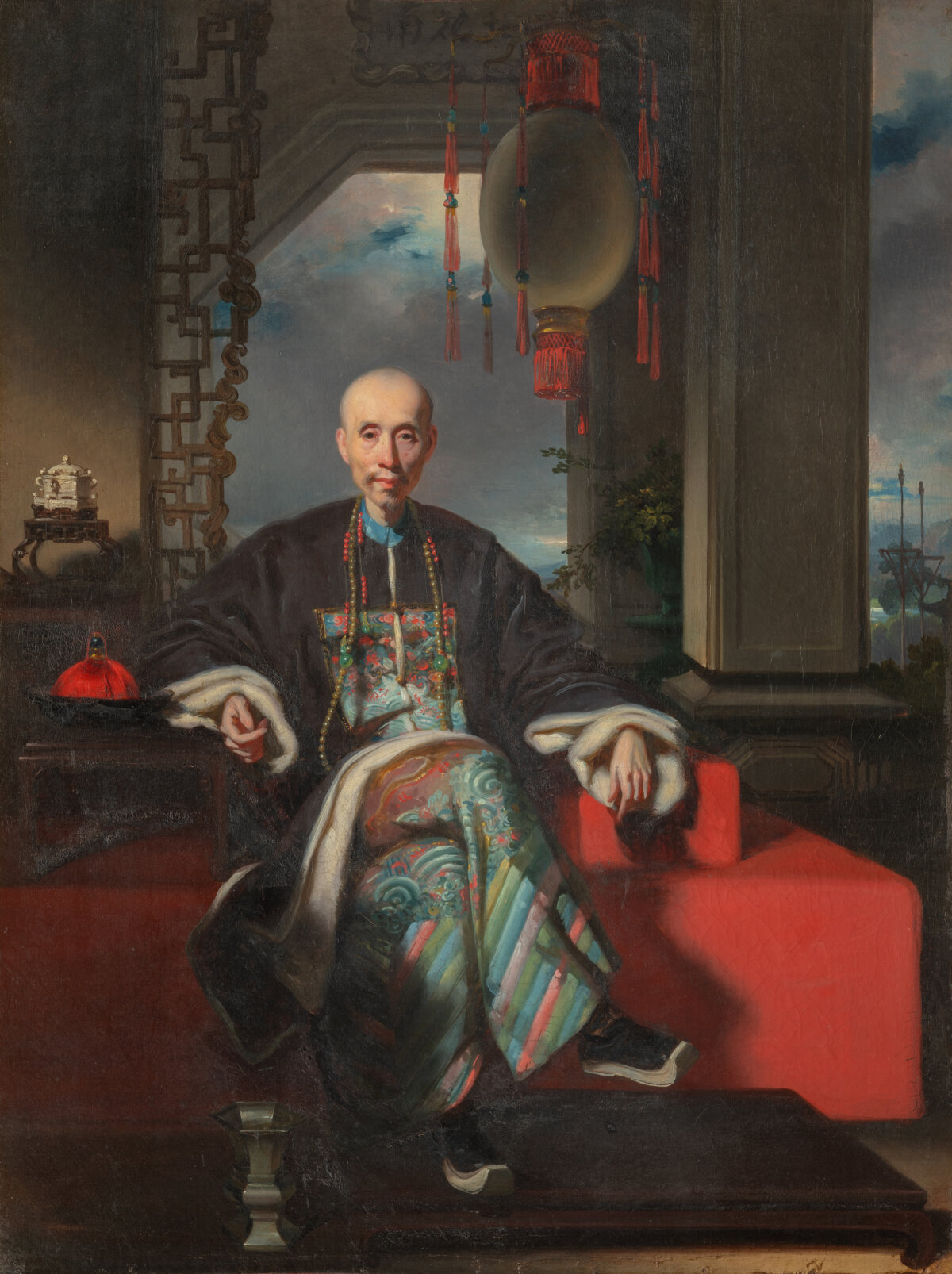
There are several paintings included in the exhibition. One is a striking circa 1825 portrait of Wu Bingjian, known as Houqua (1769–1843). Houqua was one of the most respected hong merchants of Canton and for a time was the richest man in the world. In 1757, the Qing dynasty restricted foreign maritime trade to the port of Canton, present-day Guangzhou. Hong merchants were the exclusive liaisons for trade with Westerners. Houqua commissioned portraits of himself and gave them to his trading partners, similar to how a person would distribute a business card today.
The ISM’s portrait descended through the family of Benjamin Chew Wilcocks (1776–1845). In 1813, the Philadelphian Wilcocks was commissioned as the consul in Canton. Serving until 1822, he remained in the city as a merchant. Upon his return to Philadelphia, he continued to invest in the China trade.
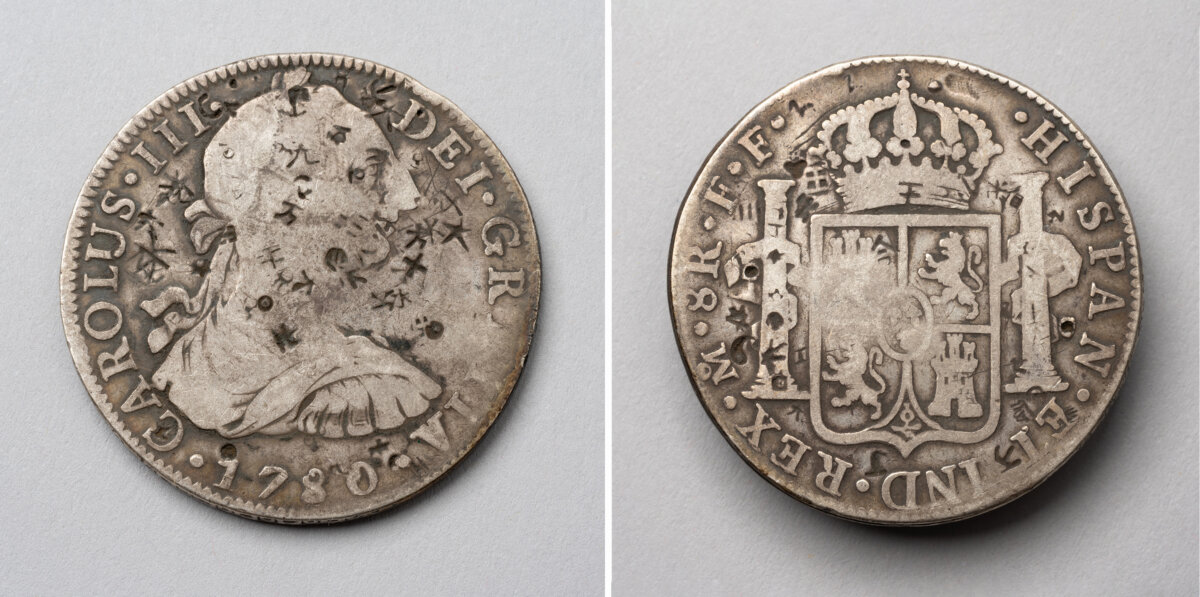
The exhibit addresses the currency American traders used in Chinese transactions. Chinese merchants always accepted silver for their wares. Spanish “Pieces of Eight,” called reales, were used for purchasing precious goods such as tea and porcelain. The ISM’s eight silver reales, a recent acquisition, date to 1780 and were made at the Imperial Mint in Mexico City (Casa de Moneda de Mexico).
The Museum writes, “These coins have markings or ‘chops’ stamped into the surface, which was a method of checking the coin to ensure it was not a counterfeit. Often these marks would have meanings, such as Chinese characters or Buddhist symbols.”
Pearl River Waterfront
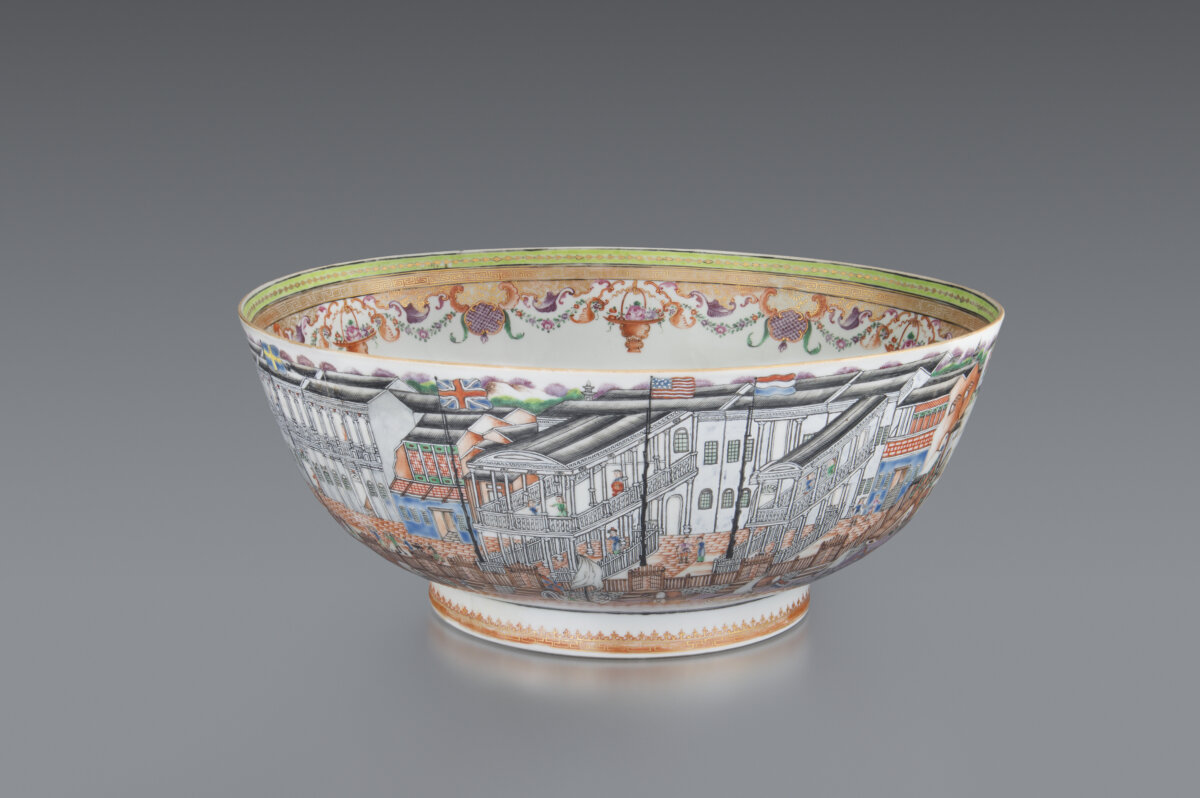
The Pennsylvanian H. Richard Dietrich, Jr. (1938–2007) was a collector of important Early American decorative and fine arts. He established the Dietrich American Foundation, which has lent an impressive porcelain punch bowl from circa 1784. Manufactured in Jingdezhen, China and decorated in Canton, the vessel depicts Canton’s bustling Pearl River waterfront with a row of hongs. Each hong flew their respective country’s flag, and the punch bowl displays the Danish, French, Imperial Austrian, Swedish, English, Dutch, and American flags. The bowl’s interior is believed to depict an image of the ship Empress of China.
This ship was commanded by Capt. John Green (1735–1796), a Philadelphian and former officer of the Continental Navy. The Empress of China was the first trading ship to voyage to and return from China after the Treaty of Paris ended the Revolutionary War. It sailed five months later. While it departed from New York Harbor, the ship was largely funded by Philadelphians. Its cargo contained ginseng roots and Spanish silver dollars.
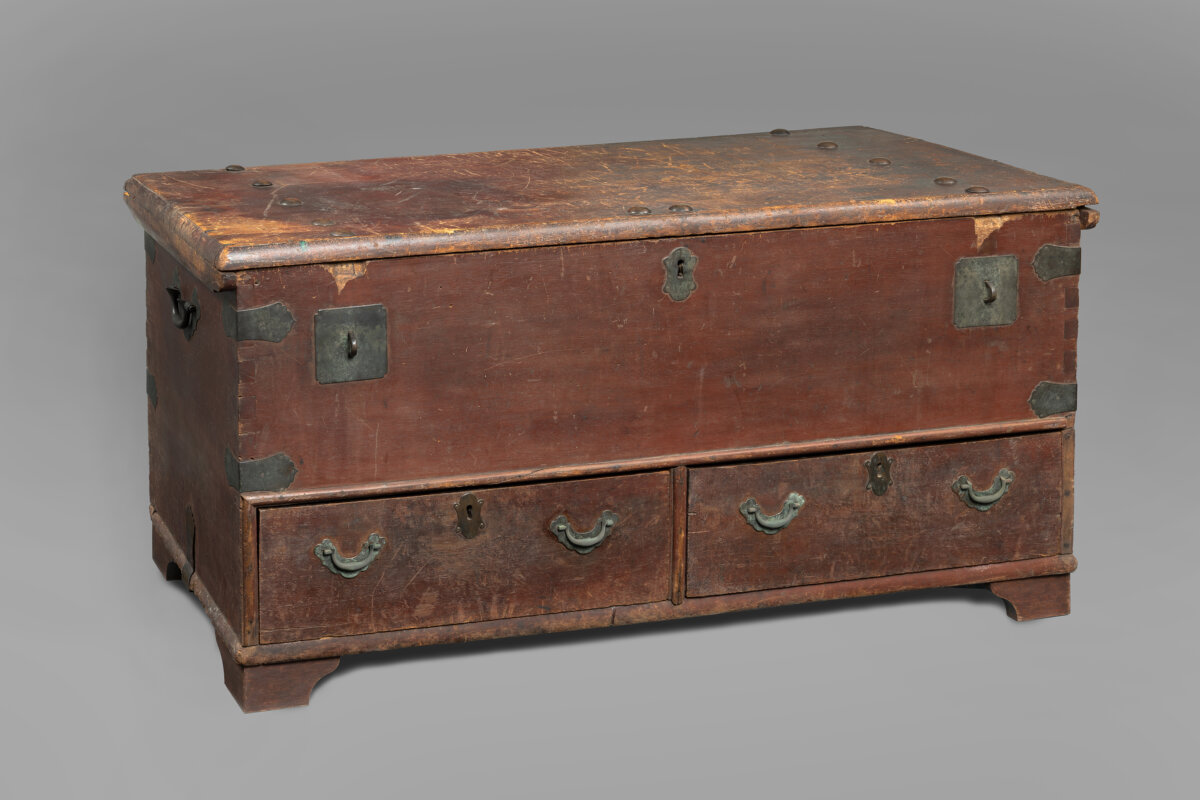
Visitors can see Green’s circa 1784 sea chest made of mahogany and bald cypress wood used to store his personal belongings. The container was either produced in port or aboard the ship. Knowledge of New England and Pennsylvanian cabinetwork is visible in the piece, which probably had multiple makers. The brass straps and handles are of Chinese origin and were likely affixed in Canton.
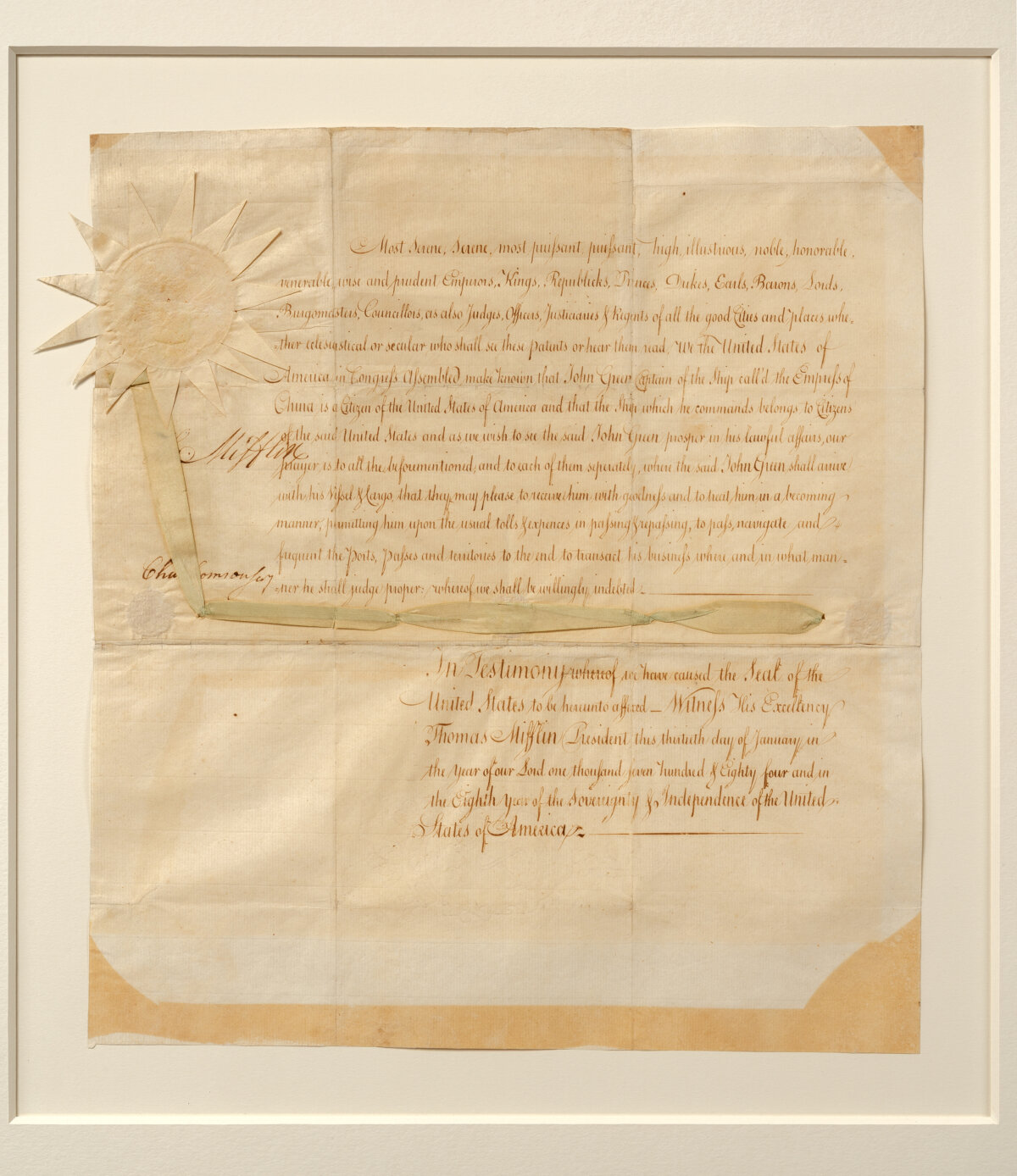
The ISM owns a letter Green carried on this voyage. The introductory document identifies Green as a U.S. citizen and requests that he be treated “in a becoming manner” and allowed to do business in China. Additional papers carried by Green were a copy of the Declaration of Independence and copies of several treaties made with different European powers. Their purpose, the Museum explains, was the following:
“To prove that he was representing a legitimate, if newly formed, independent nation. Captain Green’s Sea Letter illustrates that early Americans saw the Empress’ voyage as not only a private effort by merchants to make money, but also a quasi-diplomatic mission to introduce the new United States as a nation worthy of conducting trade on a global scale.”
Women’s Wares
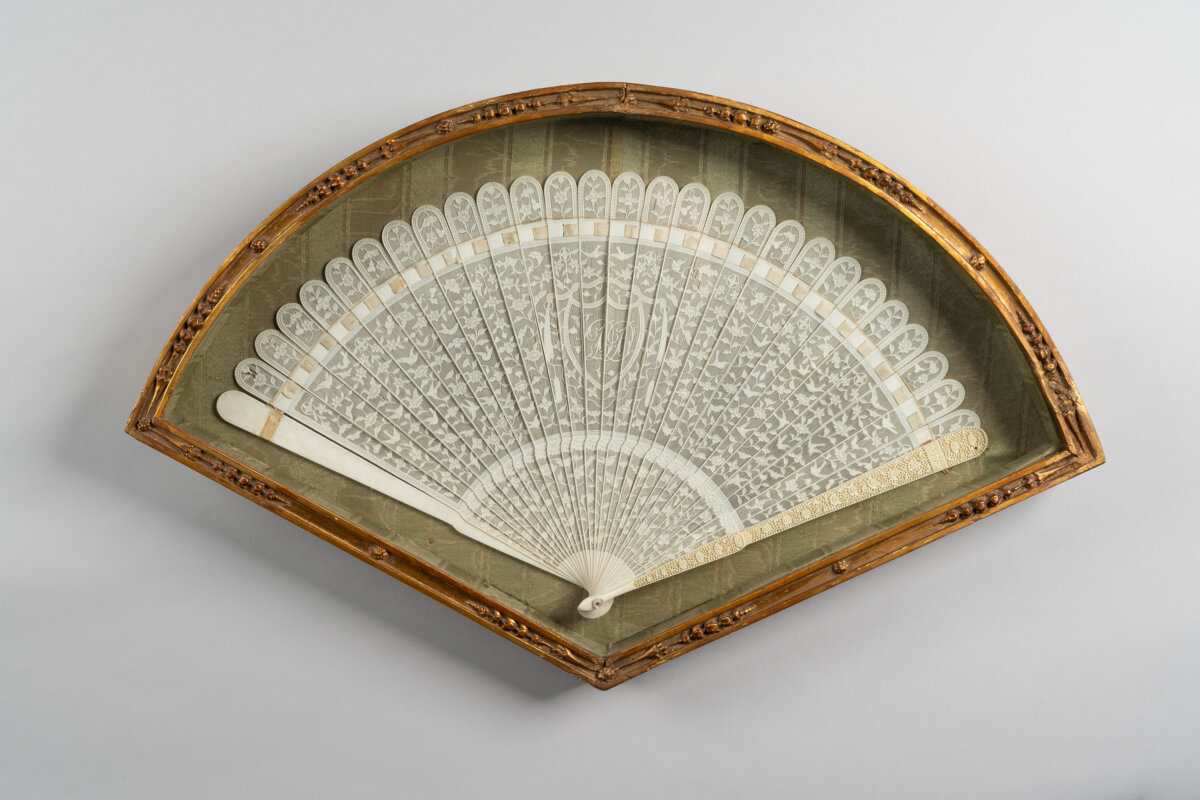
In addition to homewares, the exhibition highlights Chinese-made items exported specifically for female customers. An exquisite late-18th-century hand fan was made in Canton for Dorothy Dale (1767–1832), the wife of Capt. Richard Dale. Dale served in the Continental and United States Navies and participated in the China trade. Although it appears to be made of fine lace, the material is actually hand-carved ivory. It was customized with its owner’s initials.
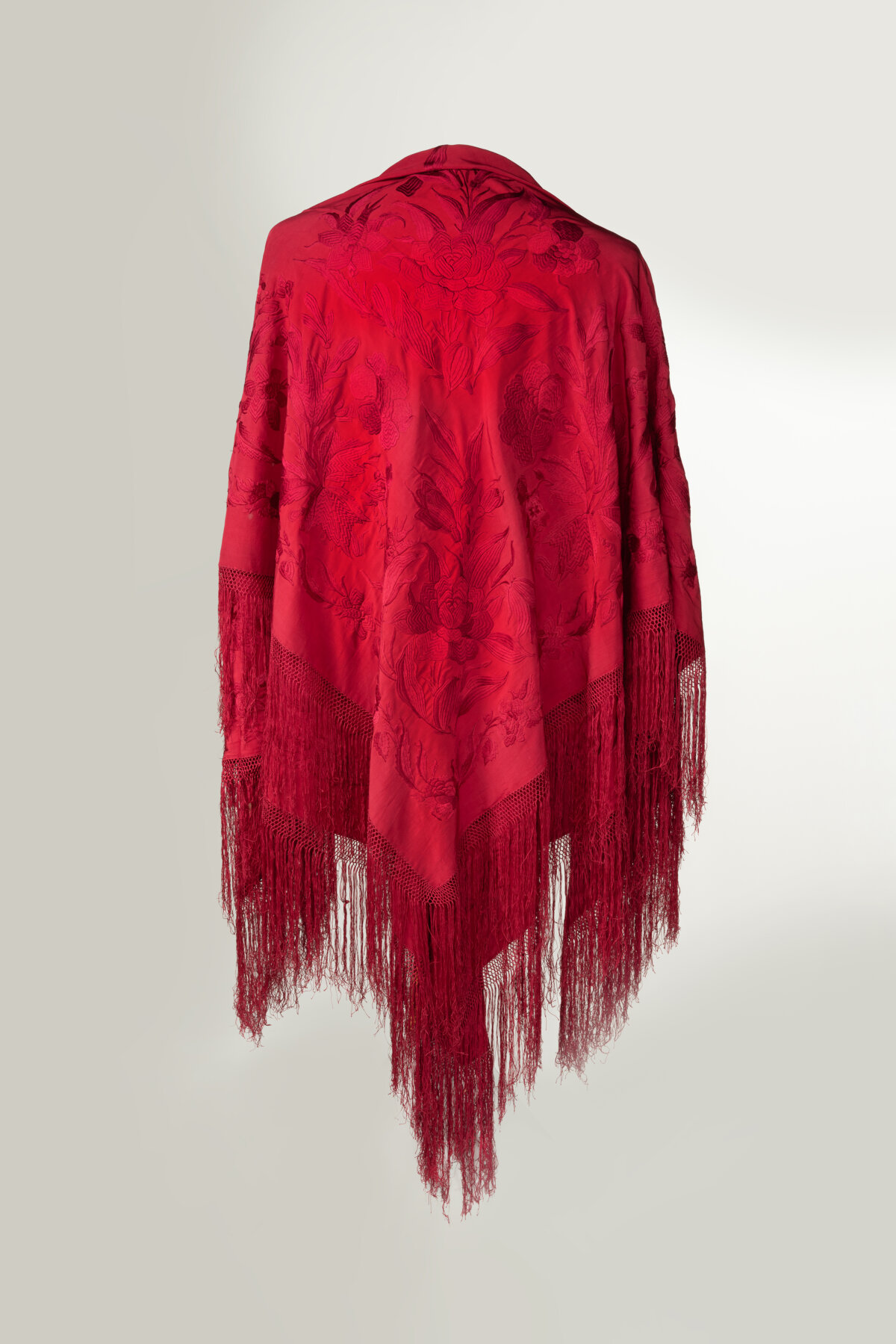
A beautiful textile in the exhibit is a mid-19th-century burgundy-colored shawl of Chinese silk crepe embroidered with silk floss. Made in Canton, it was purchased there by Rodney Fisher (1798–1863), a prominent Philadelphian merchant and the unofficial U.S. consul in Canton, for his wife, Eliza Bella Fisher (1808–1880). At that time, shawls such as this were sought-after accessories by fashionable women in Philadelphia.
Washington’s Porcelain Platters
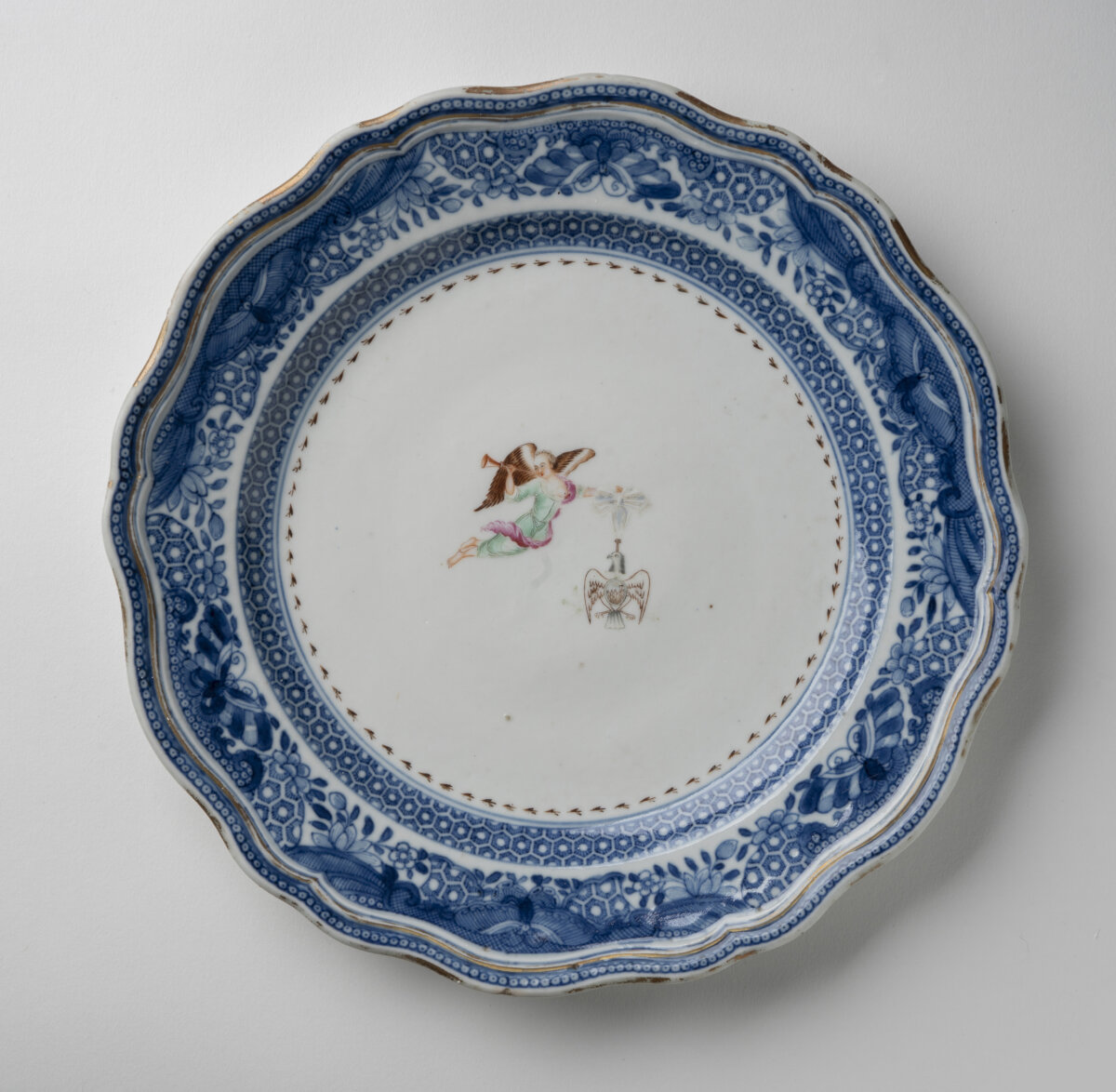
While the exhibit’s objects tell stories of men and women unknown to the general public, America’s most famous citizen is also represented. A distinguished loan is a porcelain, enamel, and gilt dinner plate owned by George Washington (1732–1799). The lender is the Society of the Cincinnati, the nation’s oldest patriotic organization. Washington was an original member and its first president general.
The circa 1784 to 1785 plate was made in Jingdezhen and features a Fitzhugh border, named for an official of the British East India Company who ordered a porcelain service with a design in underglaze blue with butterflies, lotus flowers, and other Chinese motifs. This plate’s plain white center has a specific decoration: the Society of the Cincinnati Eagle insignia suspended from a light blue-and-white ribbon and bow held by the female winged figure of Fame blowing a trumpet. The ISM states that it “shows how newly independent Americans were creating new national symbols, and attempting to define their national identity.”
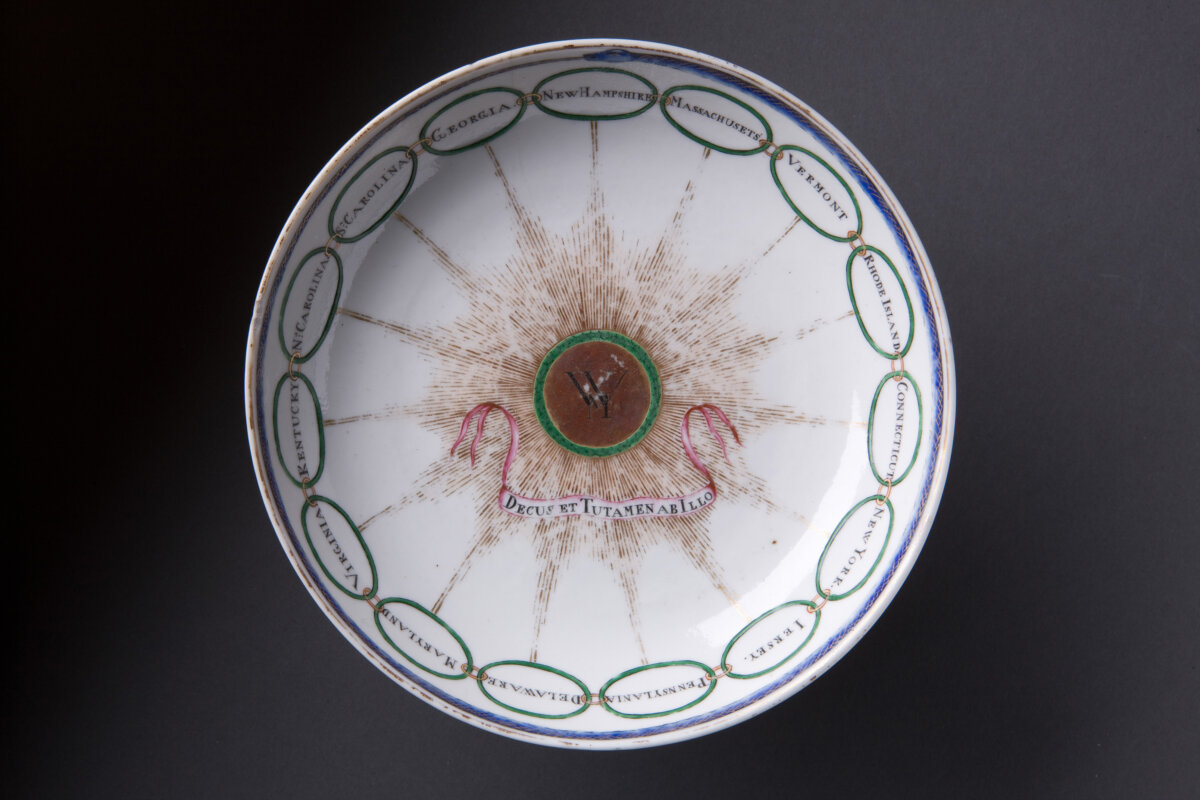
George Washington’s Mount Vernon lent the ISM a saucer owned by First Lady Martha Washington (1731–1802). This 1795 piece was brought from Canton by Dutch merchant Andreas Everardus van Braam Houckgeest (1739–1801) to Philadelphia. The china pattern features a chain of 15 wide green links outlined in black; each one contains a state name. The original 13 colonies are represented along with Kentucky and Vermont.
The ISM’s exhibit takes visitors on an extraordinary voyage that explores the impetus for American trade with China, its logistics, and its economic and geopolitical results. Philadelphia’s key role is celebrated, along with that of private American citizens. It is a fitting tribute to the country’s 250th birthday.
“Seeking Profit and Power: Philadelphia, China Trade and the Making of America” exhibition at the Independence Seaport Museum in Philadelphia will be on view through Jan. 3, 2028. To learn more, visit phillyseaport.org.