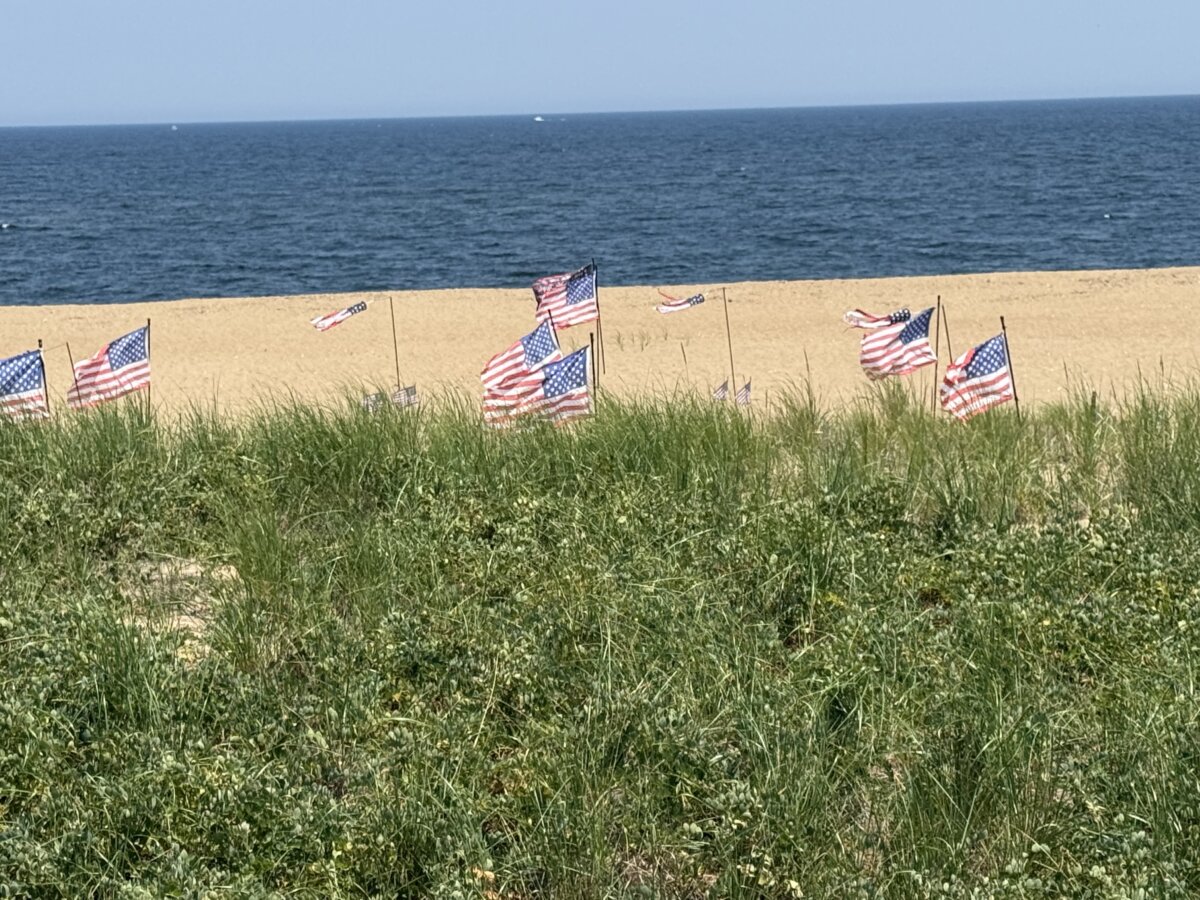

Marc Sarkady placed a handful of American flags on the sunny beach on Plum Island, Massachusetts, last week as he decorated for the nation’s 250th Independence Day, then a letter arrived in his mailbox saying the flags violated state environmental laws.
The town claimed the flags could interfere with and harm the beach and dune habitat of the piping plover and least tern, birds protected by state and federal species acts. The notice, which was also sent to two of his neighbors, urged Sarkady to comply with the laws or face penalties.
The flags were still standing on June 30 as the dispute continued in the New England seaside village.
“There are actually flags flying up and down the beach,” Sarkady told The Epoch Times. “Even though they threatened me and two of my neighbors, no one is taking the flags down.
“It has reawakened my spirit of being American, actually.”
Town Administrator Tracy Blais said the letter was sent to the homeowners on the island who had signed easements agreeing to protect habitats of the endangered birds as a reminder about state law.
“The letters were merely a reminder about the law with regard to the use of things identified as shore bird deterrents, especially Mylar streamers, as it could be a violation of state law,” Blais told The Epoch Times in a statement.
Blais said one resident reported a violation last year after streamers were used. The town wanted to remind the owners that the conduct was prohibited under the federal Endangered Species Act and state legislation regarding endangered species.
“This notice has absolutely nothing to do with American flags or patriotism,” Blais said. “It is only a reminder of the state and federal laws with regard to protection of shore birds.”
Sarkady said he received the letter threatening him with fines and penalties within the past week.
In the letter, the town states that noncompliance with Massachusetts fisheries, wildlife, and environmental laws “may result in state or federal enforcement actions” that carry “significant regulatory and financial penalties.”
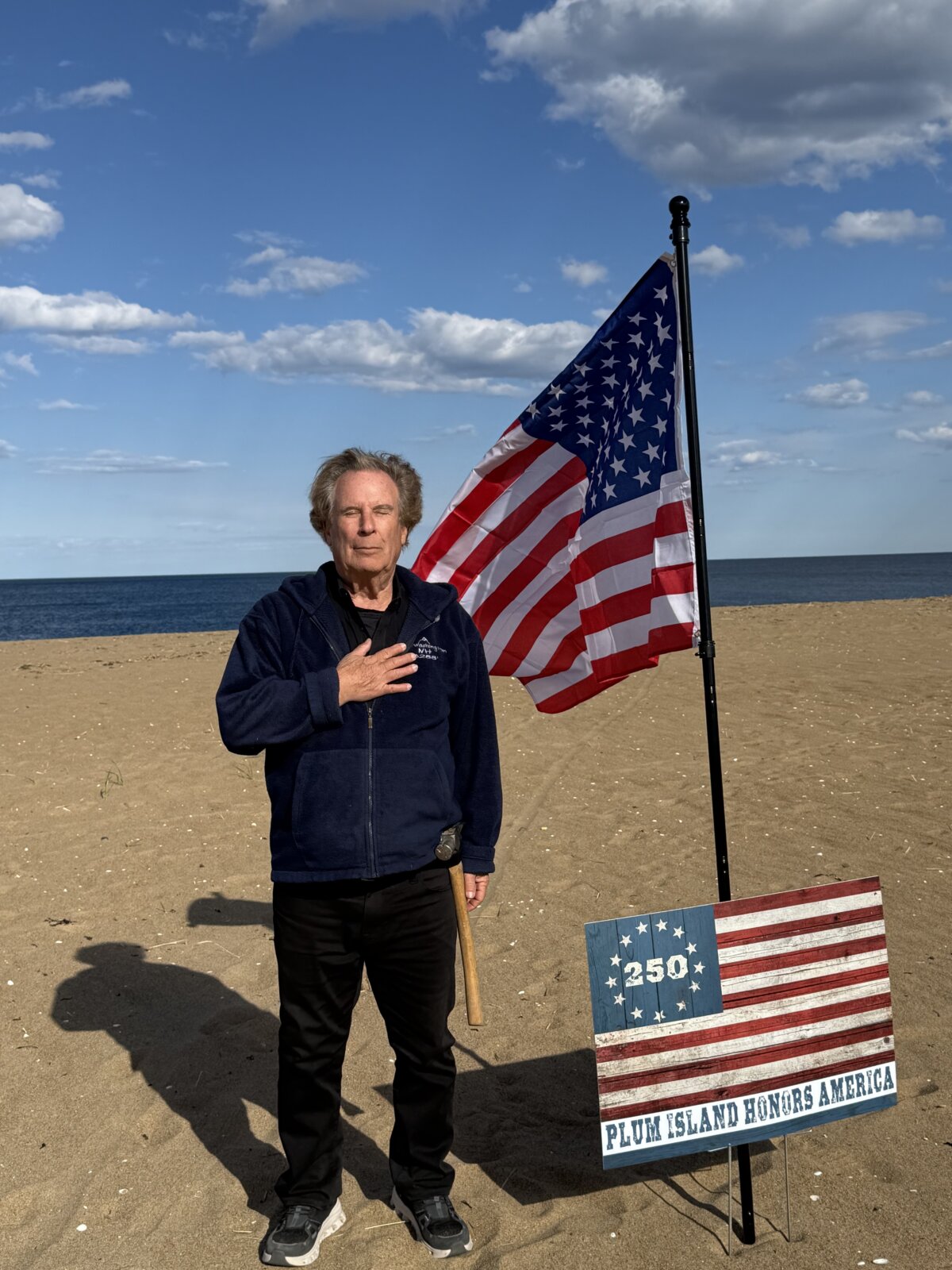
Sarkady put the flags up to celebrate America’s 250th birthday and to unite people on the island of about 3,000 residents.
“I’ve done this purposely to bring together all the different people on the island to be Americans—all together,” Sarkady said.
Sarkady’s career has always involved bringing people together, he said. As a consultant and leadership advisor, he worked with international mediation teams to facilitate the U.S.–Soviet Union arms control process and agreement between Soviet President Mikhail Gorbachev and U.S. President Ronald Reagan in the 1980s. He also assisted in the Middle East peace process in the 1990s, served as a special adviser to the United Nations, and continues to advise Fortune 500 corporations.
Locally, in the early 2000s, Sarkady helped save an old airport on Plum Island from closing, he said.
“I try to do things to help the town,” Sarkady said. “I’m not trying to give people a difficult time. I’m trying to make things better.”
Plum Island is one of three villages in the historical, coastal town of Newbury, about 30 miles north of Boston. The other two villages are Old Town and Byfield. Newbury was settled in 1634 by farmers from England.
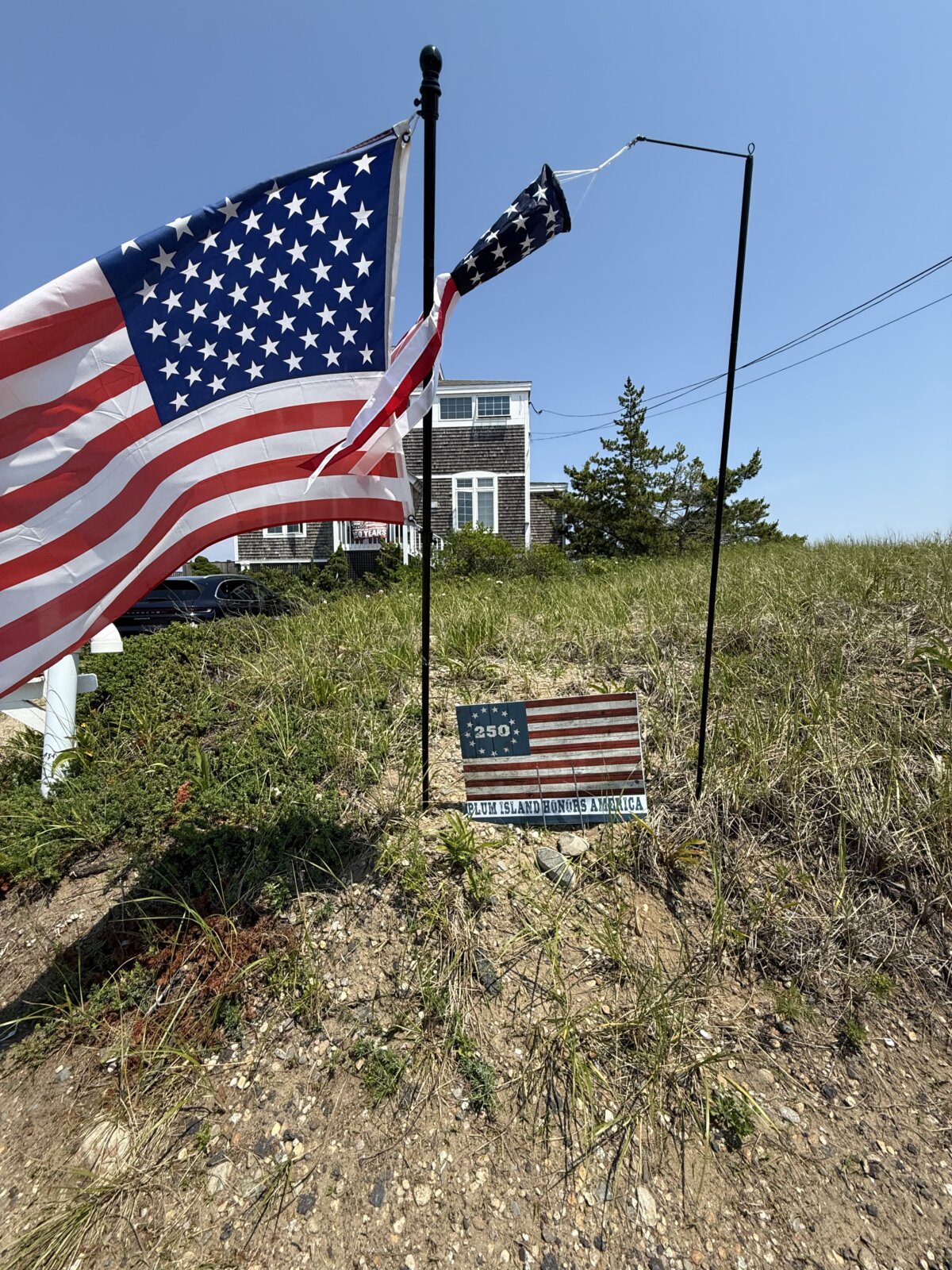
Sarkady said that after he received the letter, people started picking up more flags from him and displaying them around the island. He has handed out about 100 flags and about 100 signs that say “Plum Island honors America.”
“People all over the island have kind of picked up on this now,” he said.
Sarkady is working with the Pacific Legal Foundation, a national law firm that defends Americans from government overreach. The firm wrote a letter to the town responding to the notice given to homeowners, claiming violations of their First Amendment rights.
The town hasn’t responded to the letter but told The Epoch Times it regrets that the notice was “misconstrued as anything other than a procedural reminder” to the residents about their agreement to “do their part for endangered species.”
The incident has made Sarkady think about the American Revolution as the semiquincentennial arrives, he said.
“I’ve been thinking, why did we do this?” Sarkady said. “We did it for human rights. We did it so we could be free.
“And I feel like I’m standing for freedom right now.”
 Friends Read Free
Copy
Facebook
Tweet
Friends Read Free
Copy
Facebook
Tweet