
The Nov. 4 New Jersey and Virginia gubernatorial races are being closely watched, as they spotlight issues that could determine how campaigns nationwide approach the 2026 midterm elections.
In both mid-Atlantic states’ elections, voters’ chief concerns include taxes, health care, job generation, and inflation in the context of affordability, with spiking grocery prices, rising housing costs, and skyrocketing utility bills among their sources of anxiety.
With New Jersey customers paying on average 19 percent more for electricity in August 2025 than in August 2024, and Virginia utilities—after imposing 30 percent hikes from 2020 to 2023—receiving approval for 15 percent to 21 percent rate increases in the next two years, power bills may be among the factors that determine what party is in power in statehouses and governors’ mansions in 2026.
New Jersey and Virginia voters are demanding that candidates address electricity rates, a potential harbinger of elections to come, with an Oct. 20 Associated Press-NORC Center for Public Affairs poll showing that 36 percent of U.S. adults are stressed over utility costs.
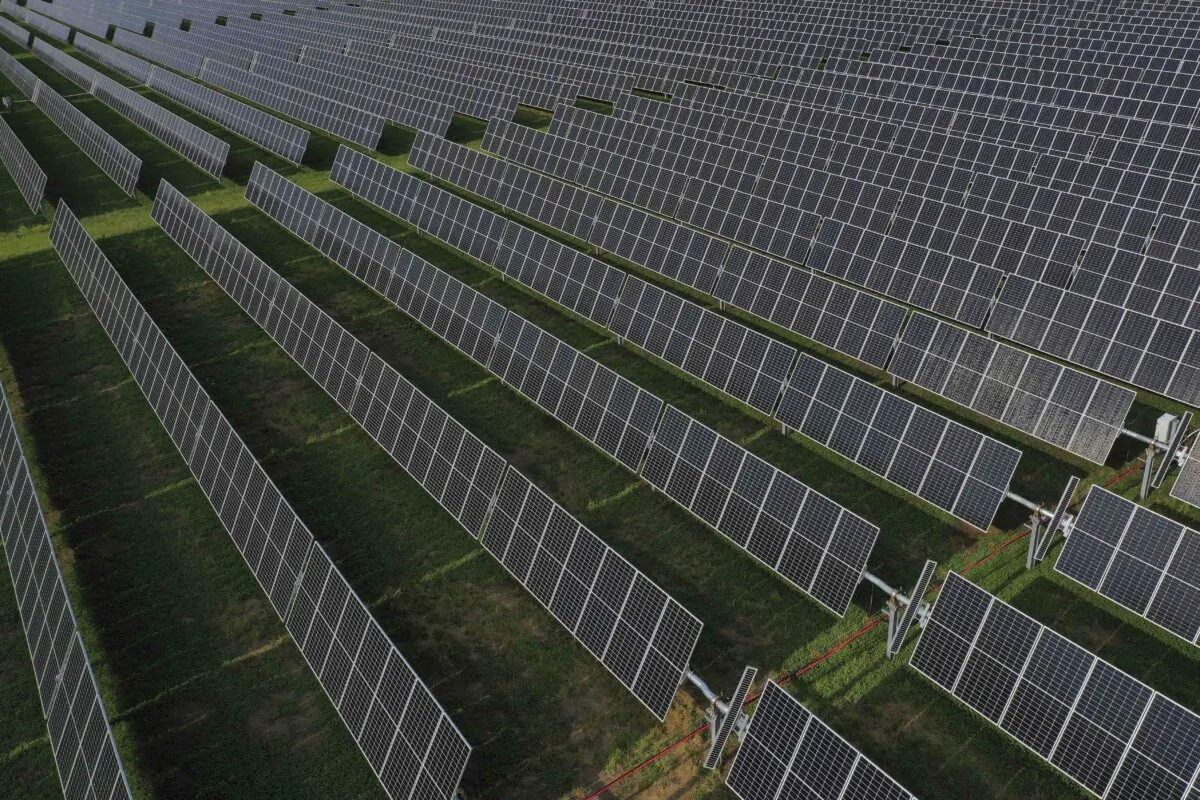
In both states, Democratic candidates are promoting green energy development—wind, solar, nuclear—associated with former President Joe Biden’s policies. They say the Republican-led adoption of the 2026 fiscal year budget, the One Big Beautiful Bill Act, will exacerbate electricity inflation because it terminates tax credits for renewable energies.
Republican gubernatorial hopefuls seeking to succeed term-limited governors in New Jersey and Virginia are aligned with President Donald Trump’s energy policies—which forsake renewables, especially wind—for natural gas and, in Virginia, coal. The president has declared an energy emergency and signed executive orders to increase production of fossil fuels, which he has said will lower energy costs.
That is not the only New Jersey–Virginia link. Both are served by PJM Interconnection, the nation’s largest regional transmission organization, with ratepayers in New Jersey and Virginia among the 67 million people across 13 states paying $14.7 billion for grid expansions, according to Monitoring Analytics.
A September Natural Resources Defense Council analysis states that PJM customers are already paying $20 to $30 more monthly because of increasing demand. The additional $14.7 billion “translates to a $70-per-month increase for the average household,” it reads.
This underscores the reality that electricity rates are calibrations of many costs influenced by many factors and that while governors appoint state public utility commissioners and direct regulatory oversight, their efficacy in lowering utility bills is limited, despite campaign pledges.
Doubling Down in Jersey
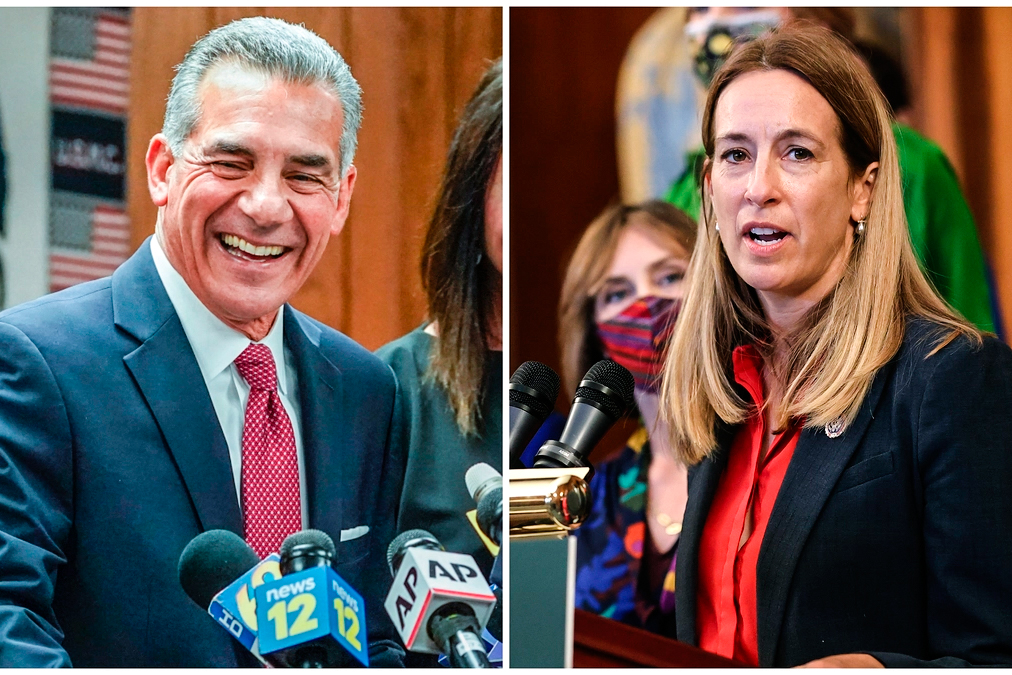
Rep. Mikie Sherrill (D-N.J.)—a four-term U.S. House representative, former federal prosecutor, and Navy veteran—and Jack Ciattarelli—a Republican and four-term state assemblyman making his third gubernatorial bid—have explicit energy plans in their campaign planks.
“When I take office, the average New Jersey family won’t see an increase in utility rates for an entire year,” Sherrill said on Aug. 20 when she unveiled her plan to declare a state of emergency to freeze utility rates. “I’ll massively expand cheaper, cleaner power generation and build an energy arsenal in our state.”
Broad-stroke components of her plan include modernizing natural gas plants; expanding solar, battery storage, and nuclear power investments; and requiring greater transparency for utilities and, most notably, PJM, which she maintains is responsible for delaying clean energy projects.
Among them was the Atlantic Shores Offshore Wind Project, a collaboration between Shell and EDF Renewables North America. The project, 20 miles offshore between Atlantic City, New Jersey, and Long Beach Island, New Jersey, was to generate enough electricity to power 700,000 homes by 2027.
Delays made the project untenable after the Trump administration paused all offshore wind power projects permitted but not under construction, prompting Shell to withdraw from the venture.
Echoing Trump’s disdain for “windmills,” Ciattarelli maintains that Democrats and Gov. Phil Murphy have committed the state to costly renewable energies and that Sherrill, if elected, would double down on policies already giving ratepayers sticker shock.
According to Ciattarelli, when Murphy assumed office eight years ago, New Jersey exported energy.
“Today, we import electricity and pay premium prices,” he said.
Ciattarelli’s energy plan is to “reverse this mess” with an “all of the above” approach that includes increasing natural gas capacity, withdrawing from the Regional Greenhouse Gas Initiative, making New Jersey an energy exporter by imposing a “permanent halt on offshore wind,” and, as he said in an Oct. 29 campaign video, expanding nuclear.
Both candidates support increasing nuclear energy, including Holtec International’s project to build four small modular reactors by 2031 at the Oyster Creek nuclear plant in Lacey Township, which was decommissioned after nearly 50 years of operation in 2018.

Old Dominion, New Data Centers
In Virginia’s race to succeed GOP Gov. Glenn Youngkin, Democrat Abigail Spanberger, a four-term U.S. House Representative and former CIA operations officer, and Republican Lt. Gov. Winsome Earle-Sears, a Marine Corps veteran and former state school board president, also have energy plans.
Spanberger’s plan is to make Virginia “energy independent” by “increasing local generation” through sources “with low or no fuel costs” and incentivizing solar projects in “common-sense locations such as abandoned mine sites, former industrial sites, rooftops, and parking lots.”
She supports Dominion Energy’s Coastal Virginia Offshore Wind project that will build 176 wind turbines 24 miles off Virginia Beach to generate enough electricity to power 660,000 homes. However, Dominion is largely supporting GOP statewide candidates in the 2025 elections.
Spanberger vows to “make sure data centers don’t drive up energy costs for everyone else” in Virginia, which is referred to as “data center alley” because it has the world’s highest concentration of these operations. According to Data Center Map, there are 4,098 data centers in the United States, including 643 in Virginia.
According to the Electric Power Research Institute, at least 25 percent of Virginia’s electricity is transmitted to data centers. A June Carnegie Mellon University/North Carolina State University analysis found that Virginia electricity bills could increase by 25 percent by 2030 from data center demand.
Earle-Sears’s “glad you asked” energy plan is, like Ciattarelli’s in New Jersey, an “all of the above” approach emphasizing a mix of sources, including oil, natural gas, and “clean coal.”
She is not opposed to renewables, but among her aims is the repeal of the Virginia Clean Economy Act, which calls for utilities to sunset carbon energy generation by 2045.
Earle-Sears said her policies are more realistic than Spanberger’s.
“That’s all she wants, is solar and wind,” she said during their Oct. 9 debate. “Well, if you look outside, the sun isn’t shining and the breeze isn’t blowing, and then what, Abigail, what will you do?”
Both support growing nuclear energy beyond Dominion’s two plants, which now generate 32 percent of Virginia’s energy.
 Friends Read Free
Copy
Facebook
Tweet
Friends Read Free
Copy
Facebook
Tweet