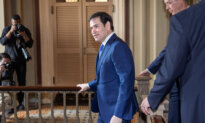

Testifying before the Senate on Jan. 28, Secretary of State Marco Rubio reported “good and decent progress” overseeing Venezuela since U.S. forces captured the country’s former leader, Nicolás Maduro, on Jan. 3.
After ordering the mission to capture Maduro to face federal charges for an alleged drug trafficking conspiracy, U.S. President Donald Trump announced that the U.S. government would manage Venezuela through a transitional period.
Thus far, the Trump administration has allowed Maduro’s deputy and political ally, Delcy Rodríguez, to take his place.
At a Senate Foreign Relations Committee hearing on Jan. 28, Rubio fielded numerous questions about the Trump administration’s plans for Venezuela.
Throughout his testimony, Rubio repeatedly described positive signs dealing with Rodríguez.
“I’m not here to claim to you this is going to be easy or simple. I am saying that in 3 1/2, almost four weeks, we are much further along on this project than we thought we would be,” Rubio said.
The secretary of state said the Trump administration had considered the possibility that Maduro’s removal would set off a violent power struggle between competing factions in Venezuela or exacerbate a migrant crisis with people fleeing the country.
“All of that has been avoided,” he said.
Rubio said continued U.S. sanctions on Venezuelan oil exports have served this broader effort to manage the post-Maduro transition.
He said Venezuela can now only export its crude oil with the permission of the U.S. government. Proceeds from these transactions will then flow into a U.S. government-controlled account, to then be spent “for the benefit of the Venezuelan people, not to fund the system that existed in the past.”
The U.S. government has seized five oil tankers connected with Venezuela since Jan. 3. Rubio said recent tanker seizures have played out with the support of the interim Venezuelan authorities.
“With the cooperation of the interim authorities, we seized one of those ships, we brought it back into Venezuelan waters, handed the ship off to the Venezuelans, who in turn fed it into this mechanism, the short-term mechanism that I described,” he said.
At other points in the hearing, senators pressed Rubio on the potential for a breakdown in the cooperation between the U.S. government and Venezuela’s interim authority.
Sen. Chris Murphy (D-Conn.) questioned whether such a breakdown would warrant further U.S. military action in Venezuela and whether such action would require congressional authorization.
“The president never rules out his options as commander in chief to protect the national interest of the United States,” Rubio replied.
“I can tell you right now, with full certainty, we are not postured to, nor do we intend or expect to have to, take any military action in Venezuela at any time.”
 Friends Read Free
Copy
Facebook
Tweet
Friends Read Free
Copy
Facebook
Tweet